25 Fun Facts About Irving Texas
Irving, Texas sits in the middle of a region defined by motion. Dallas is to the east, Fort Worth is to the west, and Irving lives in the space where the two cities’ growth, commerce, and travel patterns overlap. That location has shaped Irving for more than a century. It influenced where the town was founded, how it developed, and why it continues to attract residents, businesses, and visitors who want access without feeling completely swallowed by a single urban core.
Irving’s identity is often described through what surrounds it: major highways, corporate districts, and the steady activity tied to Dallas Fort Worth International Airport nearby. But Irving is more than a convenient midpoint. It has its own story, its own neighborhoods, and its own rhythm, blending long established community life with modern development that keeps reshaping the city’s skyline and street level culture.
From Prairie Land to a Planned Town
Before Irving existed as a named city, the land was part of the broad North Texas prairie. Farming and ranching shaped daily life, and small community hubs formed around practical necessities like schools, churches, and local stores. The area did not begin as a single town center. It was a patchwork of rural activity, with families living on spread out land and traveling into Dallas or Fort Worth when larger services or markets were needed.
Irving’s origin differs from many towns that grew gradually around a river crossing or an early trading post. Irving was planned with intention. In the early 1900s, Julius Otto Schulze and Otis Brown were involved in surveying a railroad route that would connect Dallas and Fort Worth. They recognized that a town placed along that route could become a stable stop for passengers, freight, and local commerce. That insight turned farmland into possibility.
In December 1903, town lots were sold at auction, marking the beginning of Irving as a distinct place rather than a loosely defined rural area. This early decision to anchor the community around transportation created a pattern that repeats throughout Irving’s history. Whenever a new form of movement arrived, rail, roads, or aviation, Irving grew into it.
Early Irving: Community Foundations and Daily Life
The first decades of Irving were shaped by practical community building. A town becomes real when it develops institutions that people rely on. In Irving, that meant the establishment of services that allowed residents to live locally rather than treating the area as a temporary settlement. A post office helped formalize the community’s presence, and schools became centers of identity and connection.
Life in early Irving carried the familiar marks of small town Texas. Neighbors tended to know each other, local businesses served everyday needs, and community events were as important for social bonds as they were for entertainment. Agriculture remained central for many residents, and the economy reflected the realities of a region where land and labor mattered.
Over time, the town’s location kept pulling it forward. Dallas and Fort Worth were expanding, and the space between them was becoming more valuable. Even when Irving’s growth was steady rather than explosive, its position on the map meant it was always close to the next wave of change.
Incorporation and the Road to Modern Growth
Irving incorporated on April 14, 1914, a step that signaled readiness for structured governance and coordinated development. Incorporation allowed the city to plan for public services, infrastructure, and the basics of civic life in a more organized way. This shift was important not only for growth, but for stability. It gave residents a clearer sense that Irving was not simply a rail adjacent settlement. It was a city that intended to manage its future.
For years, Irving remained smaller than the surrounding giants. That slower period played a quiet but meaningful role. It allowed neighborhoods to form with a strong sense of local identity, built traditions that lasted, and created civic habits that helped the city handle later expansion. Many communities struggle when growth arrives faster than local institutions can adjust. Irving’s earlier decades gave it time to develop a foundation before the metroplex boom accelerated.
Highways, Suburbs, and a City in the Commuter Era
After World War II, the Dallas Fort Worth region grew quickly, and Irving’s development followed the rise of the automobile. Highways and improved roads made it easier for people to live outside the urban core while still commuting to jobs across the region. Irving’s location suddenly became even more powerful. It was not only along a rail line. It was now deeply connected by road.
This era shifted Irving from a smaller community to a larger suburban city, with new housing, retail corridors, and workplaces spreading across former farmland. Neighborhoods expanded, schools grew, and shopping centers became part of the city’s daily routine. Irving began to look and feel more like the modern city people recognize today, with development patterns shaped by access, commute times, and the ability to move quickly across the metroplex.
Aviation and the Power of Being Near a Global Gateway
One of the most influential forces in Irving’s modern story is the presence of Dallas Fort Worth International Airport. The airport opened for commercial service on January 13, 1974, and it reshaped the region’s economic gravity. Airports of that scale do more than move passengers. They create logistics networks, hotel demand, conference activity, and a business ecosystem that favors nearby locations.
Irving benefited from that ripple effect. The city became a natural home for corporate offices, hospitality services, and industries that rely on travel and shipping. The airport also reinforced Irving’s reputation as a place where movement is constant. For residents, that can mean job opportunities and convenience. For visitors, it often means discovering that Irving is not just close to the airport, it is a city with its own destinations.
Las Colinas and the Rise of a Master Planned Identity
Las Colinas, founded in 1973, played a major role in shaping how people see Irving. It introduced a large scale master planned vision that combined offices, residential communities, waterways, and public spaces. Over time, Las Colinas helped Irving develop multiple centers of activity rather than relying on a single downtown. It became known for corporate towers, walkable areas, and distinctive features that gave Irving a more recognizable profile within the metroplex.
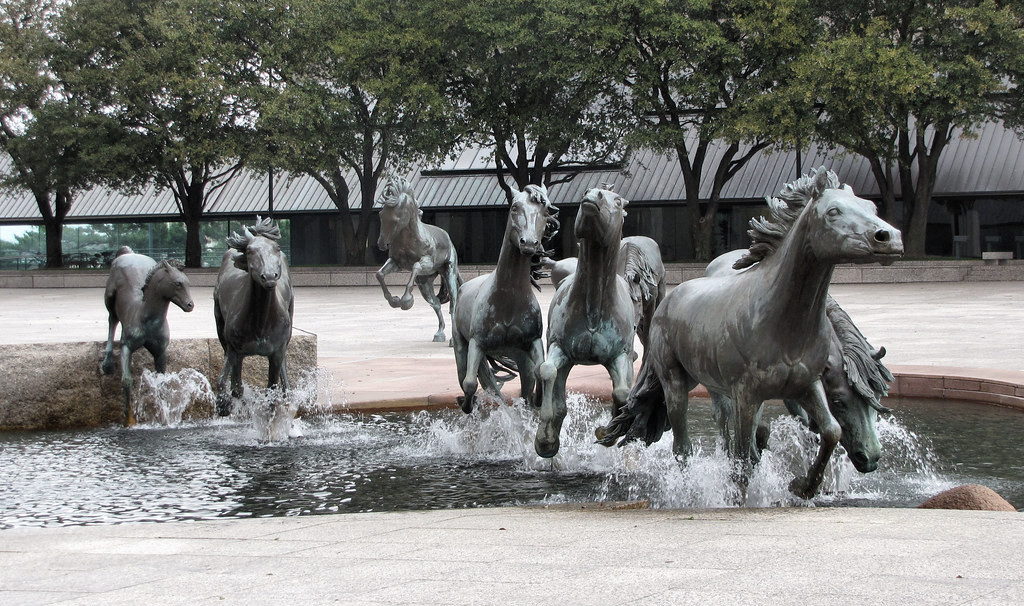
Public art and design have been part of that identity. The Mustangs of Las Colinas sculpture, for example, became an iconic symbol associated with the area. Water features like the Mandalay Canal added a scenic, pedestrian friendly layer to a city often described through highways. These elements helped Irving feel like a place to spend time, not only a place to pass through.
Parks, Trails, and Nature Along the Trinity
Irving’s outdoor side is sometimes overlooked, but it is an important part of the city’s everyday life. Green spaces and trails give Irving balance, especially in a region where development can feel intense. Campion Trail, running along the Elm Fork of the Trinity River, is one of the city’s most notable outdoor assets. It supports walking, running, cycling, and quiet moments that feel surprisingly removed from nearby traffic.
Parks and recreation areas also contribute to Irving’s family centered appeal. In a city where many people balance work, travel, and commuting, accessible outdoor spaces matter. They create routines, weekend traditions, and a sense of community that does not depend on shopping or nightlife.
Culture, Food, and Community Energy
Irving’s culture is shaped by its diversity and its role as a regional hub. The city’s food scene reflects global influences, with restaurants and markets representing many cuisines and traditions. This variety is not just a novelty. It is woven into daily life, from quick weekday meals to family celebrations and community gatherings.
The arts also play a role in Irving’s identity. Spaces like the Irving Arts Center give the city a creative presence, offering performances and exhibitions that add depth beyond the business district image. Entertainment areas and event venues support concerts, festivals, and nightlife, helping Irving function as both a residential city and a destination city.
Irving Today: A City Built Around Connection
Irving’s story is ultimately a story of connection. Rail helped create it, roads expanded it, and aviation amplified its reach. But connection is not only about transportation. It is also about people, neighborhoods, and the way a city makes room for different lifestyles. Irving holds long established communities alongside newer districts designed for corporate life and modern convenience. That blend can make Irving feel like several cities in one, each with its own pace and personality.
What makes Irving especially interesting is that it continues to evolve without losing the core advantage that started it all. Location still matters. Access still matters. And Irving keeps finding ways to turn those realities into growth, culture, and everyday livability.
25 Fun Facts About Irving, Texas
- Irving was founded through deliberate planning tied to a railroad route between Dallas and Fort Worth.
- Town lots were first sold in December 1903, marking Irving’s earliest organized beginning.
- Irving incorporated on April 14, 1914, formalizing the city’s local government.
- The city is located in Dallas County and sits near the geographic center of the larger metroplex region.
- Dallas Fort Worth International Airport opened for commercial service on January 13, 1974, and its presence has strongly influenced Irving’s economy and growth.
- Las Colinas, founded in 1973, is one of Irving’s best known districts and helped reshape the city’s modern identity.
- The Mustangs of Las Colinas sculpture is one of the most recognizable public artworks associated with Irving.
- The Mandalay Canal area in Las Colinas is known for its walkable setting and scenic water features.
- Irving’s dining culture reflects global influences, with a wide range of international cuisines found across the city.
- Campion Trail follows the Elm Fork of the Trinity River and offers a major route for walking, running, and cycling.
- Irving’s location makes it a popular home base for commuters who work across multiple parts of the metroplex.
- The city has a strong mix of business districts and established residential neighborhoods, giving it both corporate energy and community roots.
- Irving Arts Center is a major local hub for performances, exhibitions, and cultural events.
- Irving’s growth accelerated in the automobile era as highways expanded commuting options.
- The city’s early economy was closely tied to agriculture before suburban growth reshaped the landscape.
- Irving has become known as a city with multiple activity centers rather than a single downtown core.
- The hotel and conference presence in parts of Irving is strongly influenced by nearby airport traffic and regional business events.
- Irving’s diversity has helped expand the city’s specialty grocery stores and international markets.
- The city hosts community events and festivals that bring together residents from many backgrounds and neighborhoods.
- Irving’s original town development was influenced by the promise of transportation access, a theme that continues today.
- The city includes a mix of older, historic corridors and newer master planned areas built for modern lifestyles.
- Irving’s central location makes it convenient for day trips to attractions throughout the wider metroplex.
- Parks and recreation spaces help balance the city’s business focused image with outdoor options for families and fitness.
- Irving has long been shaped by regional growth patterns, expanding as Dallas and Fort Worth increased in size and influence.
- Irving’s story shows how a city can evolve from prairie farmland to a modern hub while staying anchored to one key advantage: connection.
Discover more from City Towner
Subscribe to get the latest posts sent to your email.