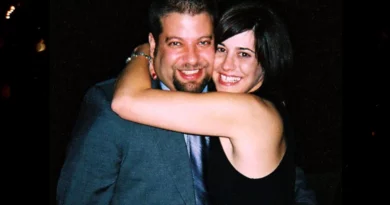
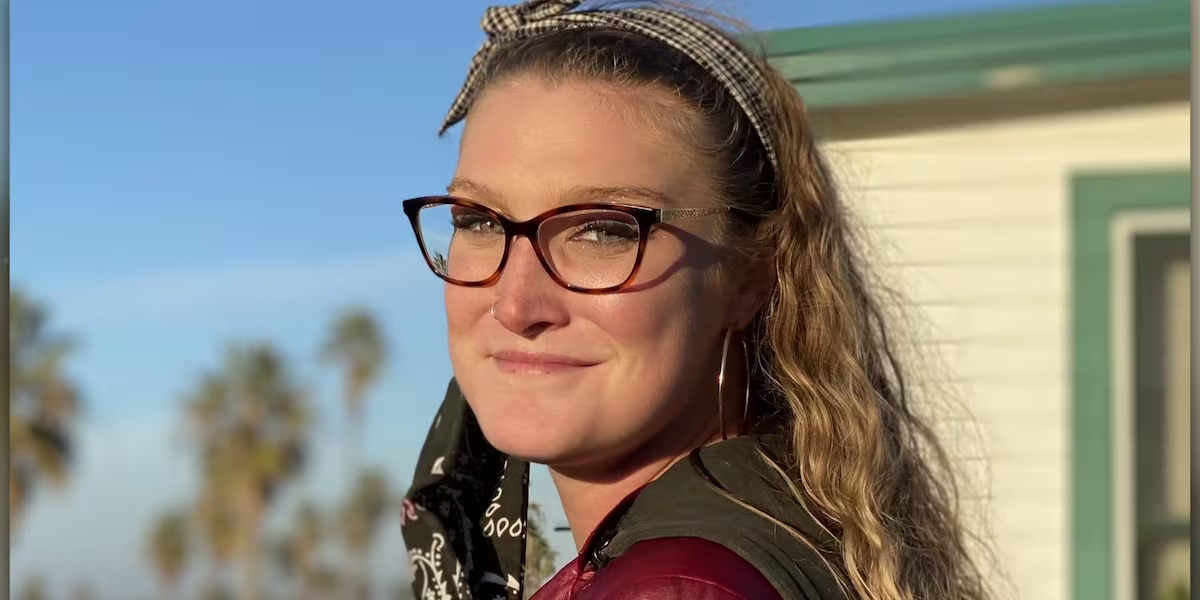
Chelsea Grimm Goes Missing in Williams Arizona
The disappearance of Chelsea Grimm became one of the most unsettling missing person cases tied to northern Arizona in recent years. On September 30, 2023, a journey that should have been part of a personal road trip instead became the starting point of a mystery filled with silence, confusion, and growing fear. Chelsea was traveling alone during a cross country drive when something went wrong near Williams, Arizona, and from that point forward her whereabouts became unknown.
Cases like this often hit especially hard because they begin in such an ordinary way. A woman is on the road, moving through the country with a destination in mind, managing her own schedule, her own plans, and the freedom that comes with travel. Then that movement suddenly stops making sense. Communication falls off, expected contact does not happen, and what should have been a normal stretch of travel becomes a source of panic for the people back home. That transformation from routine to mystery is part of what gives Chelsea Grimm’s disappearance such emotional force.
The Arizona landscape adds another layer to the case. Northern Arizona is beautiful, expansive, and full of wide open country that can feel peaceful one moment and overwhelming the next. The region around Williams carries a sense of distance and rugged openness that attracts travelers, campers, and people looking for solitude. But that same environment can also become deeply intimidating when someone disappears. Long roads, forest service routes, remote areas, and stretches of land with very little immediate help can all turn uncertainty into a far more serious danger.
Chelsea’s story has stayed with people because it combines the vulnerability of solo travel, the mystery of a missing person case, and the haunting image of a road trip interrupted in a place where nature can hide answers for a very long time. It is the kind of disappearance that forces people to confront how quickly independence and adventure can shift into fear when one person vanishes without explanation.
Who Chelsea Grimm Was Before She Went Missing
Before her name began appearing in missing person bulletins and search updates, Chelsea Grimm was a 32 year old woman with a life moving forward. She was not defined by disappearance. She was a person with history, identity, relationships, and a path she was actively traveling. Reports connected her to the San Diego area, and she was making a cross country trip at the time she vanished. That detail gives the case a personal and emotional backdrop because it means she was in the middle of something purposeful. She was not standing still. She was in motion, carrying plans for the days ahead.
That matters because missing person cases can sometimes flatten a victim into a few cold facts. But behind every timeline is a human being whose absence changes real lives. Chelsea was not simply the driver of an abandoned vehicle found in the Arizona desert. She was someone with family, people who knew her voice, people who expected to hear from her, and people who understood that something was deeply wrong when the normal rhythm of contact broke.
The fact that she was traveling alone also contributes to the emotional shape of the case. Solo travel can represent confidence, self direction, and freedom. It can also create vulnerability when something unexpected happens. A person on their own does not have an immediate witness beside them. If they miss a turn, experience vehicle trouble, run into the wrong person, or face a crisis in a remote area, the margin for safety can narrow fast. That possibility hovers over this case and is part of why it has remained so troubling.
Chelsea Grimm’s disappearance is painful not only because she went missing, but because she went missing while actively living her life. She was not a distant mystery with no context. She was someone on a journey, and that journey simply stopped making sense in a place where answers have been hard to find.
The Road Trip Into Northern Arizona
A road trip across the country carries its own emotional symbolism. It suggests movement, purpose, transition, and personal space. People drive long distances for weddings, family events, new beginnings, escapes, and ordinary obligations. The road can feel open and full of possibility. That is part of why disappearances during travel are so haunting. They take an experience associated with freedom and turn it into a source of danger and uncertainty.
Chelsea Grimm was traveling east during a solo cross country trip, and at some point she made her way into northern Arizona near Williams. That area, with its highways, forest roads, and remote desert terrain, sits in a part of the country where beauty and isolation often exist side by side. Many travelers pass through without a second thought, seeing only scenery and distance. But when a person disappears there, those same features begin to feel ominous.
The roads around Williams and Ash Fork can lead people into open country that is far less forgiving than it first appears. A small problem can become a major one when there are few people nearby, patchy communication, and miles of rough landscape all around. A driver with vehicle trouble may quickly find themselves in a difficult situation. A traveler who leaves a main route can disappear from easy view. An accident, a medical emergency, exposure, or an encounter with the wrong person can all become part of the fear surrounding a case like this.
That backdrop is part of why Chelsea’s disappearance captured attention. It was not only that she went missing. It was where she went missing. Northern Arizona can feel enormous, and when someone vanishes there the environment itself becomes part of the mystery.
September 30, 2023 and the Last Known Contact
The date that anchors Chelsea Grimm’s disappearance is September 30, 2023. That was the date tied to her last known contact and the point at which the normal trail of communication stopped. In missing person cases, last contact is often one of the most emotionally loaded facts because it represents the final moment when the missing person still feels reachable. After that moment, every unanswered message and every silence gains more weight.
For Chelsea’s loved ones, the disappearance would have started not as a public story but as an uneasy feeling that something was off. People who know someone well often recognize danger before authorities or strangers do. They know what kind of communication is normal, what habits are routine, and what silence means. When a person traveling alone suddenly becomes unreachable, fear can escalate fast because there are so many possible explanations and none of them are easy to dismiss.
That is one of the cruelest parts of disappearance cases. At first, hope and worry exist at the same time. Maybe there is no signal. Maybe there is a dead phone battery. Maybe there is a delay, a detour, or a simple misunderstanding. But as time passes, those harmless possibilities become harder to hold onto. Concern turns into dread. Dread turns into the realization that this may not be a delay at all, but the beginning of a real disappearance.
September 30, 2023, became that dividing line in Chelsea Grimm’s story. It marked the last point of ordinary contact before everything shifted into unanswered questions.
The Vehicle Found in the Desert
One of the most important and haunting developments in Chelsea Grimm’s case was the discovery of her white Ford Escape abandoned in the desert. Reports placed it in remote terrain north of Ash Fork on a forest service road, with two flat tires. That single discovery changed the emotional tone of the case immediately. An abandoned vehicle tells a powerful story even when it cannot explain everything. It says that something interrupted the trip. It says the driver did not continue in the expected way. It says the normal path of travel broke down somewhere out in open country.
Vehicles carry enormous symbolic weight in missing person cases. They are supposed to move a person safely from one place to another. When a vehicle is found without the person, it becomes evidence of separation between intention and outcome. Chelsea was supposed to keep moving. Instead, the vehicle stayed behind in a lonely landscape while she remained missing.
The detail about the two flat tires makes the case feel even more vulnerable and disturbing. It introduces the possibility of breakdown, delay, exposure, confusion, or an urgent decision made under pressure. A stranded vehicle in a remote area can create danger quickly, especially if the driver tries to walk for help, is disoriented, or faces a problem that keeps them from staying with the car. At the same time, the presence of flat tires does not explain the full disappearance. It only deepens the question of what happened after the vehicle stopped being usable.
Inside the vehicle, some belongings were reportedly still present, including a camera. That detail adds another layer of emotion because personal belongings left behind make a disappearance feel more abrupt. They suggest that whatever happened was not part of an ordinary plan. They suggest interruption. They suggest that the person did not simply decide to leave everything and vanish willingly without a trace.
Why the Location Matters So Much
Williams, Arizona, and the broader area near Ash Fork and Coconino County are not just background locations in this case. They are central to understanding why the disappearance has proven so difficult and why it feels so unsettling. The geography matters. Remote roads matter. Desert and forest terrain matter. Distance matters.
In a city, there are cameras, traffic, businesses, and a constant stream of people. In remote northern Arizona, there can be long stretches of nothing but land, sky, gravel, and silence. That kind of environment can swallow clues. A person can move only a short distance off a road and become difficult to spot. Weather, wildlife, and time can all complicate searches. Even when a vehicle is found, the surrounding land may hold very few answers.
This is part of what makes Chelsea Grimm’s case so haunting. The place where the trail narrowed is a place that naturally resists simple explanations. Remote country can hold onto mysteries. It can make a small search area feel impossibly large. It can take a single abandoned vehicle and turn it into the center of an enormous unanswered question.
That setting also affects the public imagination. People naturally picture the isolation, the silence, the long road, and the feeling of being alone in vast open terrain. It creates a case that is emotionally cinematic in a very dark way. The mind fills in the emptiness around the vehicle and wonders what happened in the space beyond it.
The Search for Answers
Once Chelsea Grimm was reported missing and her vehicle was found, the case shifted into a search shaped by both urgency and frustration. Searches in remote terrain are physically demanding and emotionally draining. Every hour matters, but the environment often slows everything down. Investigators, volunteers, loved ones, and private search efforts can all work hard and still come away with little more than uncertainty.
That is one of the hardest truths in missing person cases set in wilderness or semi wilderness areas. A lack of evidence does not mean a lack of effort. It means the environment is powerful. It means answers are difficult to force out of land that gives up very little quickly. Every trail can end in nothing. Every possible path can branch into dozens more. Every tip can raise hope and then fade.
Chelsea’s family reportedly returned to Arizona with additional help and a private investigator as time passed, showing how relentless the search for truth became. That persistence says a great deal about the emotional reality of the case. Families do not stop because the pain does not stop. They keep going because not knowing is unbearable. Every possible clue matters. Every rumor gets examined. Every return to the search area carries the hope that this might be the time something finally breaks open.
That persistence also keeps the case alive publicly. Missing person cases can fade if no one continues pushing. But Chelsea Grimm’s disappearance has remained present because the people who care about her have refused to let the silence become permanent.
The Emotional Weight of Being Officially Missing
One of the most painful realities in this case is that Chelsea Grimm remains officially missing. That status carries a special kind of grief. It is not the same as confirmed death, and it is not the same as ordinary absence. It places loved ones in a suspended emotional state where hope and fear live together without resolution.
Families of missing persons often endure a kind of suffering that is hard for outsiders to fully understand. There is no clean ending. There is no place where the mind can settle. Every possibility remains open, and that openness becomes its own torment. It means loved ones may imagine rescue one moment and disaster the next. They may cling to hope while also preparing themselves for the worst. They may feel guilty for believing one possibility over another. It is grief without finality, and that can go on for months or years.
Chelsea Grimm’s case carries exactly that kind of unfinished emotional burden. The vehicle was found, but she was not. The last contact is known, but the final truth is not. There are facts, but not answers. That tension is what keeps the disappearance so haunting. It is a story without a completed ending, and that incomplete state affects every person connected to it.
Why This Case Stays With People
Chelsea Grimm’s disappearance stays with people because it contains so many elements that linger in the mind. A woman traveling alone across the country. A stop in northern Arizona. A final contact date. A white Ford Escape abandoned in remote terrain with two flat tires. Belongings left inside. No clear explanation. No confirmed outcome.
These details form the kind of case that is difficult to forget because they feel both specific and universal. The specifics make it vivid. The broader themes make it relatable. Many people have taken road trips, driven through remote places, relied on their own judgment, and assumed they would simply arrive where they were going. Chelsea’s case disturbs that assumption. It reminds people how fragile normal travel can become when one thing goes wrong in the wrong place.
It also stays with people because the case remains open. Open cases invite continuing concern. They resist emotional closure. They create a sense that something important is unfinished, that someone is still out there unaccounted for, and that the story is still waiting for its final truth.
Remembering Chelsea Grimm
To write about the disappearance of Chelsea Grimm is to write about a life interrupted in the middle of motion. On September 30, 2023, in the Williams, Arizona, area, a cross country road trip became the start of a mystery that continues to trouble the people who care about her and the many others who have followed the case. Her story is painful because it is rooted in such ordinary freedom and such extraordinary uncertainty.
Chelsea should be remembered not only as a missing person, but as a woman who was actively living her life, making a long journey, and moving toward something ahead of her. The tragedy is not only that she is missing. It is that the normal promise of travel, direction, and purpose was replaced by silence and unanswered questions.
That is why the case still matters. It is not just about a vehicle found on a remote road or a last contact date on a timeline. It is about a human being whose absence has never been explained, a family still living with uncertainty, and a landscape that has held onto its secrets for too long.
Discover more from City Towner
Subscribe to get the latest posts sent to your email.