History of Tacoma Washington
Tacoma, Washington sits where the southern reaches of Puget Sound narrow into Commencement Bay, a deep natural harbor framed by tidelands, river deltas, and the long view of Mount Rainier. Long before the city had a name on maps used by newcomers, the place was defined by water routes, seasonal rhythms, and the resources of the surrounding lowlands. The shoreline, the rivers, and the upland prairies created natural corridors for travel and trade, while the bay offered shelter and access to the greater inland sea.
Tacoma’s history is often told as a story of transformation, from Indigenous homeland to port city, from timber frontier to industrial hub, from a smoke darkened boomtown reputation to a modern community balancing heritage with reinvention. That transformation did not happen in a straight line. It unfolded through moments of ambition and setback, through decisions about rail lines and shipping channels, through labor struggles and civic reforms, and through the everyday work of building neighborhoods, schools, churches, and cultural institutions that made the city feel like home.
Indigenous Roots and the Meaning of Place
For thousands of years, the lands and waters around Commencement Bay were home to Coast Salish peoples whose lives were intertwined with the tides, salmon runs, and the seasonal abundance of the region. Villages and gathering places existed along shorelines and river mouths, connected by canoe routes and trade networks that stretched across Puget Sound and beyond. The bay was not simply a scenic feature. It was a living system that shaped food, travel, ceremony, and relationships.
The arrival of outsiders brought new pressures that reshaped the region with startling speed. Disease, displacement, and the imposition of new legal systems disrupted communities that had long managed the area’s resources through deep knowledge and social responsibility. Treaties and federal policies redrew boundaries and attempted to compress a complex web of place based identity into simplified categories and restricted areas. Tacoma’s later growth, including its port and industrial base, would be built in ways that often ignored or minimized these earlier histories, even though the city’s geography and prosperity remained rooted in the same waters and landscapes that had sustained Indigenous life for generations.
Early Exploration and the First Waves of Settlement
European and American exploration came to the Puget Sound region in stages, with maritime expeditions mapping shorelines and naming landmarks through their own lenses. As the nineteenth century progressed, the promise of land and the pull of westward expansion drew settlers into the area. They encountered a region of immense natural wealth, dense forests of Douglas fir and cedar, navigable waterways, and prairies that could support farming and grazing.
In the early settlement period, what would become Tacoma was still a place of scattered claims and small communities rather than a consolidated city. The bay’s potential as a harbor was apparent, but turning that potential into a functioning port required capital, labor, and the infrastructure to connect waterfront to markets. That challenge would be answered by the most decisive force in Tacoma’s early growth, the railroad.
The Railroad Decision That Changed Everything
Few events shaped Tacoma’s destiny more than being chosen as the western terminus for a major transcontinental railroad. When the Northern Pacific Railway selected Tacoma as its endpoint in the early 1870s, the decision ignited a wave of speculation and development. A terminus meant more than trains. It meant jobs, warehouses, docks, hotels, banks, and a surge of people looking to build fortunes in a rising city.
The choice also intensified rivalries with other settlements in the region, particularly Seattle, which was also positioning itself as a trade and shipping center. Tacoma’s boosters embraced the railroad designation as proof that their city was destined for greatness. New neighborhoods began to take shape on the hills above the bay, while the waterfront filled with the practical structures of commerce, mills, shipping facilities, and rail yards.
The early city grew quickly and unevenly, marked by optimism and by the hardships common to fast boomtowns. Fires, economic swings, and unstable finances were recurring hazards. Yet the railroad connection anchored Tacoma’s identity as a gateway, a place where raw materials from the interior could meet the global reach of Pacific shipping lanes.
Timber, Mills, and the Rise of an Industrial City
Tacoma’s surrounding forests fueled the industries that defined the city for decades. Timber was not just a commodity. It was the foundation of Tacoma’s early economy and the physical material of its buildings and neighborhoods. Sawmills and lumber yards multiplied, and the city became known for the scale of its wood products industry.
Over time, Tacoma diversified beyond lumber into heavier manufacturing and processing. Smelting and other industrial operations took advantage of rail access, waterfront shipping, and the availability of labor. The skyline and air carried the signatures of this era, with industrial stacks, busy docks, and the constant movement of freight shaping daily life. The city’s working class neighborhoods grew alongside these industries, and Tacoma developed a strong labor identity, with unions and worker organizations becoming central to its political and social character.
Industrial success also came with costs. Smoke, grime, and environmental damage were often treated as the price of prosperity. For years Tacoma carried the nickname “City of Destiny” with pride, but it also gained a reputation tied to industrial pollution, especially during times when emissions and byproducts were poorly controlled. The tension between economic strength and environmental consequence would become one of the city’s long running themes.
Immigration, Community Building, and Cultural Layers
Like many American port and rail cities, Tacoma drew people from across the United States and from around the world. Workers arrived to build rail lines, load ships, run mills, and open businesses. Immigrant communities formed neighborhoods and commercial districts, bringing languages, faith traditions, and cultural practices that expanded Tacoma’s identity beyond its booster era image.
These communities built mutual aid societies, places of worship, and small businesses that served both their own members and the broader city. Tacoma’s history includes stories of opportunity and upward mobility, but it also includes discrimination, exclusion, and periods of intensified hostility during national crises. Wartime fear and economic competition could harden prejudices, shaping policies and social conditions that left deep scars.
Despite barriers, Tacoma’s cultural life grew richer through the arts, food traditions, and community institutions nurtured by its diverse residents. Over time, these layers of identity helped Tacoma develop a civic character that was both working class and creative, pragmatic and expressive.
Growth, Reform, and the Challenges of a Young City
Rapid growth created pressure on Tacoma’s governance and infrastructure. Streets, water systems, public transit, and schools had to keep pace with expanding neighborhoods. City leaders and civic organizations pushed improvements, sometimes inspired by national movements for urban reform. The early twentieth century brought efforts to modernize public services, regulate vice, and build parks and public spaces that reflected a more settled sense of civic pride.
Tacoma also faced the recurring challenge of economic cycles. When national downturns hit, industrial cities felt the shock sharply. Jobs could vanish quickly, and the consequences would ripple through families, local businesses, and city finances. During hard times, community networks and local resilience mattered as much as official policy. Tacoma’s ability to endure depended on both its industrial base and the social fabric built in churches, neighborhood groups, and labor organizations.
The Port, the Waterfront, and Tacoma’s Global Connections
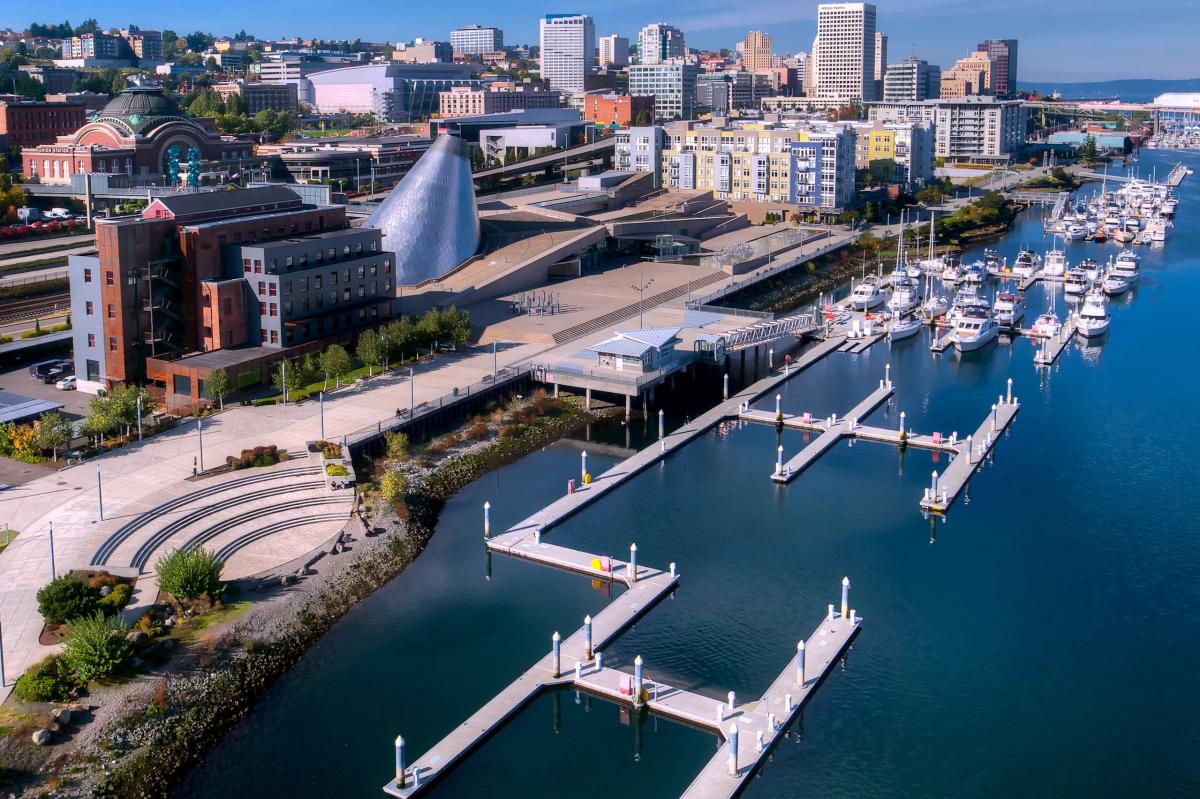
Tacoma’s port has long been one of its defining institutions, linking the city to regional agriculture, inland manufacturing, and international trade. The natural advantages of Commencement Bay supported this role, but the working harbor was also a human made environment shaped by dredging, construction, and constant adaptation to changing technologies.
As shipping evolved, the waterfront changed with it. The shift toward containerization in the mid twentieth century transformed ports worldwide, requiring new equipment, larger yards, and different labor patterns. Tacoma’s maritime economy adapted by investing in facilities and logistics networks, often in partnership with regional planning efforts. The port remained a powerful economic engine, but it also continued to raise questions about land use, environmental impacts, and the balance between industrial shoreline and public access.
War, Industry, and Social Upheaval
Major wars brought intense activity to Tacoma’s industries and port facilities. Production demands accelerated, and the city’s workforce expanded. Wartime also reshaped social dynamics, with migration increasing and housing pressure rising as workers arrived for defense related jobs.
At the same time, war intensified national anxieties that often harmed local communities. Families could be uprooted by policies driven by fear rather than fairness, and civil liberties could be curtailed. Tacoma’s wartime experience, like that of many American cities, included both patriotic mobilization and painful episodes of injustice that later generations would seek to remember and reckon with more honestly.
Environmental Reckoning and Civic Reinvention
By the late twentieth century, Tacoma began confronting the environmental legacy of its industrial era more directly. Cleanup efforts, emission controls, and changing public expectations pushed industry and government to respond to decades of pollution. This shift was not simply a technical process. It was cultural. Tacoma’s identity started to expand beyond the old image of smoke and mills, embracing a vision that included sustainability, waterfront restoration, and public health.
At the same time, the city pursued new economic paths. Healthcare, education, logistics, technology, and the arts grew in importance. Downtown revitalization efforts, museum development, and investments in public spaces signaled a broader reorientation. Tacoma’s historic buildings and older neighborhoods became assets, connecting residents to a tangible past even as new development reshaped skylines and corridors.
Reinvention brought its own tensions. As neighborhoods became more desirable, concerns about affordability and displacement emerged. The question of who benefits from growth became a central civic debate, echoing earlier eras when major economic decisions reshaped lives unevenly. Tacoma’s modern story includes efforts to build a more inclusive future, even as the city navigates the same pressures facing many growing urban areas.
Tacoma Today and the Living Weight of History
Tacoma’s history is visible in its geography and architecture, in the working waterfront and the residential hills, in the rail corridors and the old industrial districts, in the parks that frame views of water and mountain. It is also visible in the ways people talk about the city, with pride in its grit and creativity, its maker spirit, and its ability to evolve without losing its sense of place.
The city’s past continues to shape its choices. Decisions about the waterfront, housing, transportation, and environmental justice are not just policy debates. They are chapters in a longer story about what Tacoma values and what it wants to become. The “City of Destiny” label, once tied to railroad ambition, now feels more like an ongoing challenge. Destiny is not a guarantee, but a direction forged through planning, community action, and the willingness to learn from what came before.
Tacoma’s history is not only about industry, railroads, and institutions. It is also about families building lives across generations, about neighborhoods forming identities, about cultural communities creating spaces of belonging, and about the persistent relationship between people and the waters of Commencement Bay. The city remains, in the deepest sense, a place shaped by connection, to the region, to the world, and to its own layered past.
Discover more from City Towner
Subscribe to get the latest posts sent to your email.