
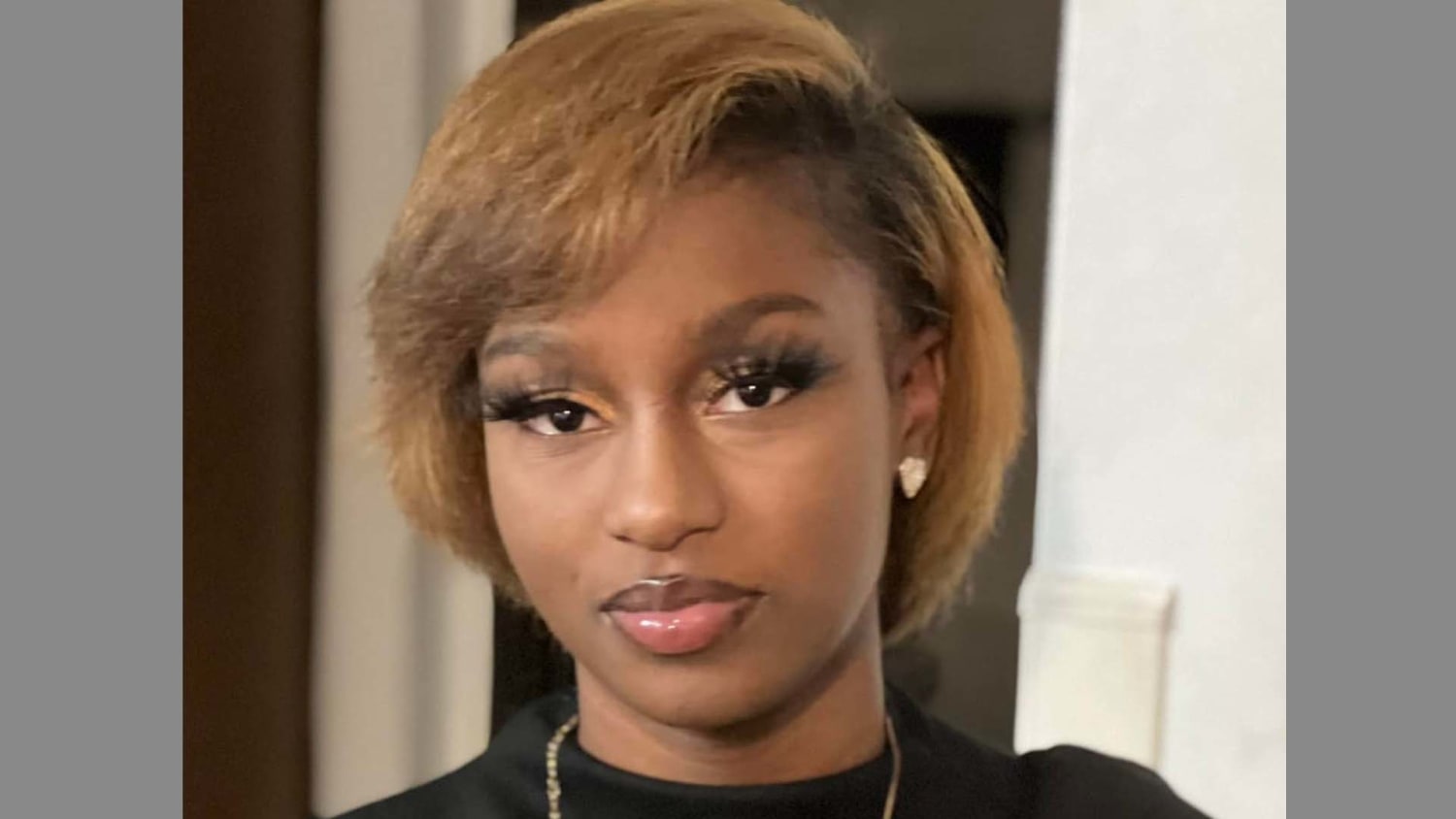
Zion Foster Killed By Her Favorite Cousin in Eastpointe Michigan
On January 04, 2022, Zion Foster was a 17 year old girl living in Eastpointe, Michigan, a close in community on the northeastern edge of Metro Detroit. It was the kind of winter night when the air cuts sharp, streets empty earlier, and a short trip across town can feel longer than it does in daylight. Zion’s disappearance began in ordinary circumstances, but within hours it became the nightmare every family fears, a loved one gone with no clear explanation and no reliable way to trace what happened next.
From the start, the most haunting part of Zion’s case was the absence of a clear ending. When someone vanishes, time becomes both enemy and mystery. Families replay last conversations, check messages, and retrace familiar routes, hoping for any small clue that points toward safety. In Zion’s case, those early hopes gave way to a harder reality as investigators came to believe that she had been killed and that her body had been disposed of in a way designed to prevent discovery.
The Last Known Window
The known facts of Zion’s final hours were constructed from a patchwork of statements, phone activity, and investigative findings. The timeline narrowed around the night of January 04, 2022, when Zion was last believed to be alive. Within that window, investigators focused on who she was with, where she may have gone, and what choices were made after she stopped being reachable.
In cases like this, the last known window matters because it defines everything that follows. It determines which cameras might exist along a route, which vehicles might have been nearby, and which stories can be tested against digital footprints. Every minute can become evidence. Every gap in time can become a battlefield in court.
A Disappearance That Did Not Behave Like a Runaway Case
Missing teenager cases often begin with uncertainty, but Zion’s disappearance soon took on the shape of something more serious. The longer she remained missing, the more the investigation centered on the possibility that she could not return because she had been harmed. The difficulty was that harm did not come with a visible crime scene. There was no public discovery of remains, no dramatic location where the worst could be proven in a single moment.
Instead, the case unfolded through inference and accumulation. Investigators had to prove the direction of events without the simplest proof that the public expects to see. For the community, that created a strange tension. People wanted certainty, but the case demanded patience and careful reasoning. For Zion’s family, it created an even harsher burden, a constant cycle of hope and grief without the closure that physical evidence can sometimes provide.
The Theory of What Happened
Prosecutors later alleged that Zion was killed on January 04, 2022, and that the person responsible took steps to conceal the death. The allegations centered on Jaylin Brazier, Zion’s cousin. According to the prosecution narrative presented in court, Zion’s death was not an accident followed by panic, but a homicide followed by deliberate disposal and deception.
This distinction matters because it shapes how jurors interpret behavior after the fact. In homicide trials, actions taken after a death can speak loudly. Attempts to hide evidence, create false timelines, or steer investigators away from key locations are often treated as signals that the truth is dangerous for the defendant. The state’s case relied on the idea that the cover up was not separate from the crime, but part of it.
The Landfill Search That Shocked the Region
One of the most unforgettable chapters of Zion’s case was the landfill search. Investigators believed her body may have been placed into a dumpster and then carried away with regular trash pickup into the waste stream. That belief led to an extraordinary decision, to search a landfill as if it were a crime scene.
Beginning in May 2022, crews worked through the Pine Tree Acres landfill in Lenox Township, Michigan, sorting and examining massive amounts of material. The effort lasted for months and drew national attention. It was physically brutal work, emotionally heavy for everyone involved, and agonizing for Zion’s family, because it offered one thing they desperately needed, a chance to bring her home, even if it could not bring her back.
The search ended in October 2022 without recovering Zion’s remains. That outcome was devastating, but it did not stop the case. It simply shifted the focus more fully onto the evidence that could be proven without a body.
A No-Body Murder Case
A no-body homicide case requires prosecutors to persuade a jury that a person is dead and that the defendant caused the death, even though the victim’s remains have not been recovered. That burden is heavy, and it forces the courtroom story to be built from supporting pillars such as digital location data, statements, timelines, inconsistencies, and the defendant’s actions after the disappearance.
In Zion’s case, the prosecution argued that the evidence formed a coherent chain. The chain did not depend on a single dramatic fact, but on the way multiple facts supported one another. When jurors accept that chain, they are making a judgment that the overall pattern is too consistent to be coincidence, and too damning to be explained away by confusion or bad luck.
The Charges and the Courtroom Fight
In June 2023, prosecutors charged Jaylin Brazier with second degree murder and tampering with evidence. The case that followed became a contest over interpretation. The state presented Zion’s disappearance as a homicide with deliberate concealment. The defense sought to challenge the certainty of that conclusion and to weaken the meaning of the evidence the state relied on.
Trials like this often come down to two questions. First, does the evidence prove death beyond a reasonable doubt. Second, does it prove that the defendant caused that death. Without remains, every statement and every timeline becomes more important. The courtroom becomes the place where behavior is dissected and where jurors decide whether the story the state tells is the only reasonable one.
Conviction and Sentencing
On May 16, 2024, a jury convicted Brazier of second degree murder and tampering with evidence. For Zion’s family, the conviction was a form of accountability, but it was not the resolution they had hoped for. A verdict can confirm wrongdoing, but it cannot replace a missing person, and it cannot restore the years that should have belonged to a teenager just beginning adulthood.
On June 03, 2024, the judge sentenced Brazier to a prison term of 38 to 90 years for the murder conviction, with an additional 5 to 10 years served consecutively for tampering with evidence. The sentence reflected the court’s view of the seriousness of the crime and the importance of punishment for the actions taken to conceal what happened.
The Grief That Continues Without Recovery
Even after a conviction, Zion Foster’s case carries a specific kind of pain. Many families describe the recovery of a loved one’s remains as the moment their grief becomes fixed in reality. It is a terrible milestone, but it can allow mourning to take a different shape. Without that recovery, there is a lingering sense of unfinished duty, a feeling that the victim is still out there, still waiting to be brought home.
For a community, that lingering absence becomes part of the story. People remember the landfill search, the headlines, the courtroom updates, but most of all they remember that Zion was a girl who should have had time. Her case is often cited as a reminder that homicide does not always leave a clean trail, and that determination, technology, and patient investigative work can still build a path to accountability.
Remembering Zion Foster
Zion Foster should be remembered as more than the shocking details of a case. She was a person whose life mattered to her family and friends, and whose disappearance disrupted an entire community. The dates and court outcomes are important because they mark accountability, but the heart of the story is simpler and more painful. A 17 year old girl disappeared on January 04, 2022, in Eastpointe, Michigan, and she never came home.
The legacy of this case is partly legal and partly human. Legally, it shows how prosecutors can pursue justice even without recovering a body. Humanly, it shows the cost of violence, the long shadow of unanswered questions, and the strength it takes for families to keep demanding truth when the evidence is buried in silence.
Discover more from City Towner
Subscribe to get the latest posts sent to your email.