
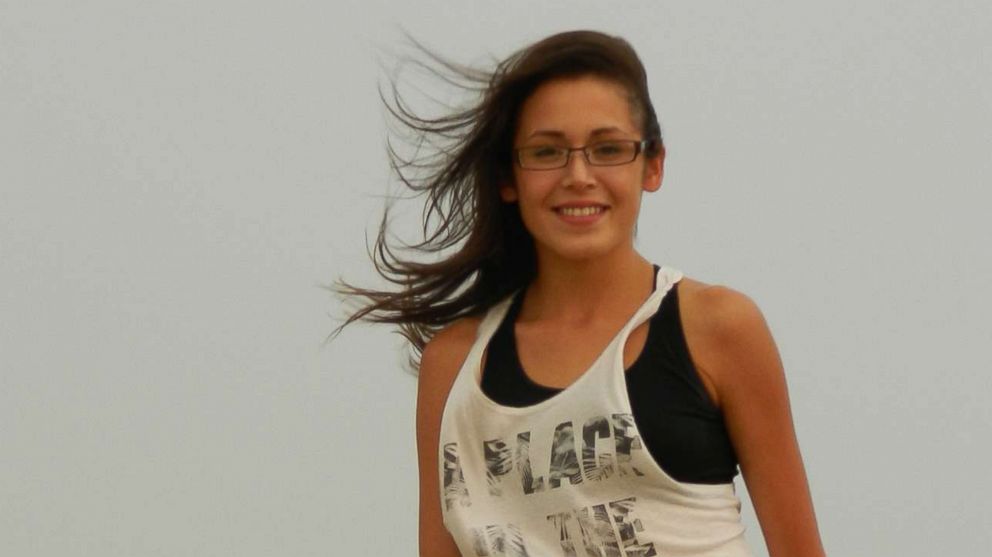
Ashley Loring HeavyRunner Goes Missing While Vigilantly Looking For Missing Indigenous Women in Browning Montana
Ashley Loring HeavyRunner was a 20 year old member of the Blackfeet Nation who disappeared from Browning, Montana, on June 5, 2017. She was an intelligent and ambitious college student with plans to continue her education, live with her older sister and build a future connected to environmental science and her community.
The last confirmed evidence of Ashley’s whereabouts came from a video recorded at a party in Browning. After that night, accounts of her movements became uncertain and sometimes contradictory. Some people claimed to have seen or communicated with her during the following days, but those reports have not been publicly verified with the same certainty as the party video.
Ashley has never been found. No remains have been recovered, no person has been charged and law enforcement has not publicly established whether she was abducted, killed, injured in an accident or taken somewhere against her will. Her disappearance remains under investigation and has become one of the most widely recognized cases connected to the crisis of missing and murdered Indigenous people.
Ashley’s Life Before She Vanished
Ashley Loring HeavyRunner was born on November 23, 1996, in Browning, Montana. She grew up on the Blackfeet Indian Reservation in northwestern Montana and maintained strong connections to her family, culture and community.
Ashley was described as outgoing, intelligent, athletic and hardworking. She had a close relationship with her older sister, Kimberly Loring, and was known to help her relatives with ordinary responsibilities around the family home and ranch.
During portions of their childhood, Ashley and her siblings spent time in foster care before eventually living with their grandparents. Life with their grandparents included riding horses, chopping firewood, cleaning stalls and spending time outdoors.
Ashley attended Blackfeet Community College, where she studied environmental science. Her academic interests reflected both personal ambition and a connection to the land surrounding her community. She reportedly received recognition for a college presentation involving buffalo, an animal with deep cultural importance to the Blackfeet people.
Ashley planned to move to Missoula and live with Kimberly. She also intended to continue her education at the University of Montana. Those plans gave her family additional reason to reject the idea that she had deliberately abandoned her life.
She was approximately 5 feet 2 inches tall and weighed between 90 and 105 pounds. She had brown eyes and dark brown or black hair. A checkmark shaped scar on the top of one hand was among her distinctive physical features.
The Party in Browning
Ashley was conclusively seen at a party in Browning on June 5, 2017. A video recorded that evening and later shared online showed her alive and socializing with other people.
The party video became the strongest publicly documented point in the timeline. It confirmed Ashley’s location that night, but it did not establish where she went after leaving the gathering.
No publicly released surveillance recording or independently verified witness account has created a clear path from the party to another confirmed location.
Investigators and family members later received reports that Ashley remained with friends or acquaintances for several days. Some accounts placed her with particular individuals on dates after June 5. Those statements may have been important to the investigation, but they have not produced a publicly verified final sighting.
The distinction between a confirmed sighting and an unverified account is crucial. The party video proves Ashley was present in Browning on June 5. Later claims depend on the memories and credibility of the people providing them.
The Delay in Recognizing She Was Missing
Ashley’s disappearance did not immediately cause widespread alarm. At first, relatives believed she might have been staying with friends or had misplaced her phone.
She had reportedly lost access to her phone before, making a short period without communication seem less unusual. Because Ashley was legally an adult, her absence was not initially treated as an emergency by everyone involved.
Concern increased when she failed to contact relatives and did not visit her father while he was hospitalized. Her silence became increasingly inconsistent with her close family relationships and ordinary behavior.
Kimberly had been traveling outside the country and expected to reconnect with Ashley upon returning. When Ashley did not answer calls or messages, Kimberly began contacting her sister’s friends through social media.
Those conversations produced no reliable explanation for Ashley’s whereabouts. Friends said they had not seen her, or they provided conflicting information about when she was last with them.
By the time the family realized Ashley was truly missing, several valuable days had passed. Locations had changed, memories had begun to fade and potential evidence may already have been disturbed.
Conflicting Dates and Accounts
Official agencies and media reports have used different dates when describing Ashley’s disappearance.
June 5, 2017, is generally recognized as the date of the last confirmed sighting because of the party video. Other accounts indicate that Ashley may have communicated with someone or remained with acquaintances between June 8 and June 11.
The FBI has used broader language stating that Ashley was last seen during the week of June 13, 2017. That phrasing may reflect witness reports investigators considered possible but could not publicly confirm in detail.
One account claimed Ashley was driven to meet another person on June 11 and later disappeared while the driver was asleep. That claim has not led to an arrest or a publicly proven conclusion.
These conflicting accounts created uncertainty during the most important portion of the investigation. Investigators needed to determine whether Ashley left the party alone, accepted a ride, stayed at another residence or traveled beyond Browning.
Without a reliable timeline, search teams faced an enormous geographical area and several possible starting points.
The Reported Highway 89 Sighting
One of the most significant reports involved a young woman allegedly seen running away from a vehicle along U.S. Highway 89 on the night of June 5.
The highway crosses the reservation and passes through long stretches of rural land. A person leaving a vehicle in that area could quickly become difficult to locate, especially at night.
The timing of the report caused searchers to consider whether the woman might have been Ashley. However, her identity was never publicly confirmed.
If the woman was Ashley, the sighting could indicate that she was frightened, attempting to escape or involved in a confrontation. If it was someone else, the report may have redirected valuable attention away from Ashley’s actual movements.
Family members and volunteers searched areas connected to the highway report. The rugged terrain, open fields, isolated properties and limited number of witnesses made the search difficult.
The Blackfeet Reservation covers approximately 1.5 million acres. Searching even a small portion of that land requires extensive manpower, equipment and coordination.
The Clothing Found During the Search
During a search connected to the Highway 89 area, Kimberly and another searcher discovered a damaged sweater and a pair of boots with red staining.
The family believed the items could have belonged to Ashley. They were turned over to law enforcement for examination.
The red staining was sometimes described publicly as possible blood, but no publicly available forensic result has confirmed that it was blood. There has also been no public confirmation that Ashley owned or wore the clothing.
The handling of the items became a major concern for the family. Kimberly later stated that the sweater was temporarily misplaced after it was submitted to authorities.
Although the item was eventually located, the family said it did not receive clear information about DNA testing or the complete results of any laboratory analysis.
The clothing remains one of the case’s most discussed pieces of possible evidence. However, without confirmed testing, its connection to Ashley cannot be established.
The Family’s Search for Ashley
Ashley’s family took a leading role in the search. Kimberly returned to the reservation, left her job and committed herself to finding her sister.
Relatives and volunteers searched fields, wooded areas, mountain locations, abandoned buildings, rural roads and private properties. They worked through heat, cold, rain, snow and mud.
Kimberly studied satellite images to identify roads, structures and areas that might have been overlooked. The family followed tips that led them across the reservation and into neighboring communities.
Some searches focused on trailers and properties associated with people Ashley may have known. During one search near Valier, bones were discovered and reported to law enforcement. They were later determined to be animal remains.
The family’s persistence kept Ashley’s case visible. Their work also highlighted the limited resources available to local officers responsible for covering the enormous reservation.
Searches could not be conducted everywhere at once. Even a well organized team could miss evidence concealed by vegetation, weather, animals or the passage of time.
Concerns About the Initial Investigation
Ashley’s relatives have repeatedly criticized the early response to her disappearance.
They said officials initially treated the case as a situation involving an adult who had chosen to leave. That assumption reduced the sense of urgency during a period when rapid action may have been critical.
When a person disappears voluntarily, that person typically takes clothing, money, personal items or transportation. The individual may also contact someone eventually. Ashley’s family believed her complete silence and abandoned plans should have signaled danger.
The family also raised concerns about communication among Blackfeet Law Enforcement, the Bureau of Indian Affairs and federal authorities.
Jurisdiction on tribal land can be complex. Responsibility may depend on where an incident occurred, whether a federal crime is suspected and whether the people involved are tribal members.
That complexity can lead to delays, uncertainty and confusion about which agency should take control.
Approximately nine months passed before the FBI publicly announced that it would lead the investigation. By then, the most important locations may have changed and potential witnesses had months to reconsider or alter their accounts.
The FBI Takes the Lead
The FBI assumed the leading role in February 2018 at the request of the Bureau of Indian Affairs.
By that time, numerous interviews and searches had already occurred. Several people were reportedly considered persons of interest, but law enforcement did not publicly identify them.
A person of interest is not necessarily a suspect and has not necessarily been accused of a crime. The term can refer to anyone who may possess useful information or whose movements require closer examination.
The investigation included interviews with people who attended the party, individuals Ashley may have stayed with and people connected to reported sightings.
Despite those efforts, authorities did not announce a recovery, arrest or confirmed explanation for her disappearance.
The FBI continues to list Ashley as missing. The case remains open, and investigators continue to request information from anyone who may know what happened.
The Possibility of Foul Play
Ashley’s family believes foul play is likely. Their belief is based on her close relationships, future plans, sudden silence and the inconsistent accounts of her final movements.
A voluntary disappearance would have required Ashley to abandon her education, family and plans without contacting anyone for years. She would also have needed to avoid all known official and personal connections.
Although such disappearances are possible, Ashley’s family has said the behavior would have been completely unlike her.
The possibility of an accident also remains. The reservation contains isolated roads, waterways, mountains and open land where an injured person could remain undiscovered.
However, the reported highway sighting, conflicting witness accounts and questions about people around Ashley have caused many observers to suspect that another person was involved.
Law enforcement has not publicly classified Ashley’s disappearance as a homicide. No verified physical evidence has established that she was killed.
Claims that a particular person murdered, trafficked or concealed Ashley remain unproven. No individual should be treated as responsible without evidence, charges or a legal finding.
The Crisis of Missing Indigenous People
Ashley’s case became nationally associated with the crisis involving missing and murdered Indigenous women and girls.
Indigenous families have reported long standing problems involving delayed responses, inadequate record keeping, limited police resources and confusion among tribal, state and federal agencies.
The remote geography of many reservations creates additional obstacles. Search teams may need to cover mountains, forests, rivers and isolated roads without sufficient personnel or equipment.
Families also describe cases in which missing Indigenous adults are initially labeled as runaways or assumed to have left voluntarily. Those assumptions can waste the earliest and most valuable hours of an investigation.
Ashley’s disappearance became a powerful example because her sister publicly described the difficulties the family experienced while asking authorities for help.
Kimberly later testified before federal lawmakers, using Ashley’s case to draw attention to broader failures affecting Indigenous communities.
The family’s advocacy transformed Ashley’s disappearance from a local missing person investigation into a nationally recognized call for reform.
Ashley’s Future Was Still Taking Shape
Ashley was only 20 when she disappeared. She was still developing her education, career and identity.
Her interest in environmental science could have led to work involving conservation, tribal lands, wildlife or natural resources. She had already demonstrated academic potential and pride in subjects connected to Blackfeet culture.
Her plan to live with Kimberly represented a new stage in her life. She intended to continue school and create greater independence while remaining connected to her family.
Those plans never had the opportunity to develop.
When discussing Ashley’s case, the unanswered questions can overshadow the person at the center. She becomes known through a missing poster, physical description and timeline rather than through her personality and ambitions.
Ashley was a student, daughter, sister, granddaughter and member of the Blackfeet Nation. Her life had meaning beyond the mystery of what happened to her.
The Passage of Time
Every year that passes makes the investigation more difficult.
Witness memories fade, physical locations change and people connected to the case move away. Evidence that once existed may be damaged or lost.
At the same time, the passage of time can create new opportunities. Relationships change, loyalties weaken and people who once feared speaking may become willing to provide information.
A witness who was young in 2017 may now understand the importance of what was seen or heard. Someone who received information secondhand may decide to identify the original source.
Investigators can also review old interviews and compare statements for inconsistencies. Advances in technology may improve the analysis of digital records, photographs or physical evidence preserved from the original investigation.
If remains are discovered, modern DNA methods could potentially identify Ashley even after many years.
The case may ultimately be solved by a single piece of information that confirms where Ashley went after the party.
The Questions That Remain
The most important unanswered question is what happened after Ashley was recorded at the party on June 5, 2017.
Investigators still need to establish who left with her, where she stayed and whether the later reported sightings were genuine.
The identity of the woman reportedly seen running from a vehicle on Highway 89 remains uncertain. Confirmation that the woman was Ashley could significantly change the timeline.
The clothing found during the search also remains unresolved in the public record. Clear forensic results could either connect the items to Ashley or eliminate them from consideration.
Questions also remain about the people who claimed to have been with Ashley after the party. Investigators must determine whether their statements were accurate, mistaken or intentionally misleading.
The absence of an arrest suggests authorities have not obtained enough evidence to prove that a particular person committed a crime.
A Family Still Searching
Ashley’s family has never stopped seeking answers.
Their search has included physical searches, public appeals, interviews, legislative testimony and media appearances. They have continued to speak Ashley’s name and remind the public that she remains missing.
Families of missing people experience a unique form of grief. They do not have confirmation of death, but they also cannot continue ordinary life as though the person will return at any moment.
Every unidentified body, new tip or search can create both hope and fear.
Ashley’s relatives want her found regardless of the outcome. If she is alive, they want her brought home safely. If she died, they want her remains recovered and the truth established.
They also want accountability for any person responsible and accountability from institutions that failed to respond with sufficient urgency.
The Continuing Search for the Truth
The disappearance of Ashley Loring HeavyRunner remains unresolved.
She was last conclusively seen at a party in Browning on June 5, 2017. Reports of later sightings and contact exist, but no publicly verified evidence has established her movements after that night.
Her family became alarmed when she stopped communicating, failed to visit her hospitalized father and abandoned her education and future plans.
Searches produced possible clues, including clothing with red staining, but no publicly released forensic result connected those items to Ashley.
The investigation was complicated by delayed action, limited tribal resources and jurisdictional confusion. The FBI eventually took the lead, but no arrest or recovery followed.
Ashley’s case remains open because the public evidence does not reveal whether she died, was abducted, suffered an accident or was taken somewhere against her will.
Someone may know where she went, who she was with and what happened during the days after the party. Until that person speaks or new evidence is discovered, Ashley’s family will remain without the answer they have sought since June 2017.
Ashley deserves to be found. Her family deserves the truth, and her case deserves the same urgency and attention given to every missing person.
Discover more from City Towner
Subscribe to get the latest posts sent to your email.