
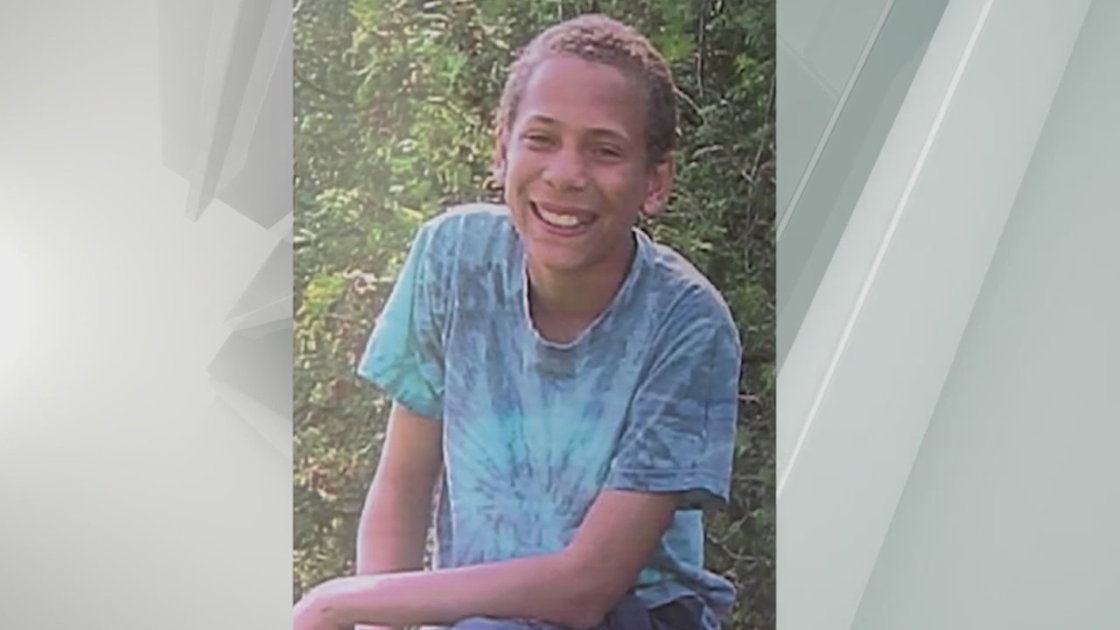
Jaliek Rainwalker Goes Missing While Temporarily Staying at His Adoptive Grandparents Home in Greenwich New York
The disappearance of Jaliek Rainwalker remains one of the most haunting missing child cases in upstate New York. Jaliek was only 12 years old when he vanished from Greenwich, New York, on November 1, 2007. More than a missing person report, his case became a troubling story about family, foster care, adoption, unanswered questions, and a search for truth that has lasted for years.
Jaliek was a biracial child, Black and White, with light brown hair and green eyes. He was known to have a slight speech impediment and was described as a child who had already lived through instability before he disappeared. His early life included time in foster care before he was adopted. By the time he vanished, he was living with his adoptive parents, Stephen Kerr and Jocelyn McDonald.
On paper, Jaliek’s disappearance began as a report that a child had run away. Over time, however, police and many who followed the case came to view it with far more suspicion. The idea that a 12-year-old boy disappeared on his own, left no verified trace, and remained hidden forever became harder for investigators to accept. The case was eventually treated as a probable homicide, though Jaliek’s remains have never been found and no one has been charged.
A Young Boy With a Difficult Road
Before Jaliek disappeared, he had already experienced a complicated childhood. He had been part of the foster care system and had reportedly faced emotional and behavioral struggles. Those details have often been mentioned in public accounts of the case, but they should not define him only by hardship. Jaliek was a child, and like every child, he deserved safety, patience, protection, and care.
He was adopted by Stephen Kerr and Jocelyn McDonald, and the family lived in the broader Greenwich area. Reports over the years have described tension in the home and difficulties managing Jaliek’s behavior. Some accounts have stated that he had angry outbursts or emotional struggles, which were later used to support the claim that he may have run away.
Still, children with behavioral challenges do not simply vanish without a trace. That is one reason Jaliek’s case has continued to trouble investigators and the public. His background may explain why adults around him framed the first hours of the case in a certain way, but it does not explain what happened to him.
The Last Known Night
The central timeline begins on November 1, 2007. Jaliek was last known to be with his adoptive father, Stephen Kerr. According to public accounts of the case, Kerr and Jaliek spent time together that evening before going to a home on Hill Street in Greenwich, New York. The house was reportedly connected to Kerr’s family and was not the family’s regular home at the time.
That night has become the key focus of the investigation. Kerr said he and Jaliek stayed at the Hill Street residence overnight. He later claimed that when he woke up the next morning, Jaliek was gone. A note was reportedly found, allegedly written by Jaliek, saying he was sorry and would not be a bother anymore.
The reported note has remained one of the most discussed pieces of the case. On the surface, it suggested a runaway or voluntary departure. But for many people, the note raised more questions than answers. A 12-year-old leaving in the night from a small village, wearing limited clothing, without any confirmed later sighting, would be extremely vulnerable. If Jaliek had walked away, someone likely would have seen him, helped him, or eventually found some trace of him.
The Morning Jaliek Was Reported Missing
Jaliek was reported missing on November 2, 2007. The initial claim was that he had run away. He was said to have disappeared from the Hill Street home sometime during the night or early morning. He was reportedly last seen wearing blue jeans, a yellow fleece pullover, and black sneakers.
From the beginning, the details were troubling. Jaliek was only 12 years old. He had no known independent way to disappear permanently. He had no confirmed survival plan, no verified contact with friends, and no later confirmed sighting. Despite searches, appeals, and public attention, no reliable evidence surfaced showing that he had successfully run away and started a new life.
Missing child cases often depend heavily on the first hours. Those early hours shape the search, the public message, and the assumptions investigators must work through. In Jaliek’s case, the runaway explanation became part of the early narrative, but it did not satisfy the growing concerns surrounding the circumstances of his disappearance.
Greenwich, New York, And the Search Area
Greenwich is a village in Washington County, New York. It is the kind of place where a missing child case can deeply shake the community. The area includes village streets, rural roads, wooded land, rivers, and nearby communities that can make a search both urgent and difficult.
The Hill Street location became central because it was the last known place associated with Jaliek before he vanished. Investigators also looked into other places connected to the family and searched areas where they believed evidence or remains might possibly be found. Over the years, searches extended beyond Greenwich and into other parts of the region as tips came in.
The fact that Jaliek disappeared from a small community made the absence of confirmed sightings more striking. If he had walked away on foot, especially wearing a bright yellow fleece, it would seem possible that someone might have noticed him. Yet the years passed with no confirmed public sighting that explained what happened.
The Reported Goodbye Note
One of the most unsettling details in the case is the alleged note. It was described as a short message in which Jaliek apologized and said he would not be a bother anymore. The note has often been cited as part of the claim that Jaliek ran away.
But a note alone does not solve a disappearance. Even if a child wrote something sad or apologetic, that does not prove he left safely, left willingly, or survived. Children can be pressured, frightened, manipulated, or misunderstood. A note can also become a convenient explanation when the rest of the evidence does not fully support it.
Public reports have said authorities believed the note was written by Jaliek, but that does not answer the larger question. Why did he vanish with no confirmed trace? Where did he go? How did a 12-year-old disappear permanently from a village without leaving evidence of travel, shelter, contact, or survival?
Those questions are why the note has remained a point of discussion rather than a final answer.
From Runaway Case to Probable Homicide
Over time, law enforcement’s view of Jaliek’s disappearance changed. The case was eventually elevated to a probable homicide investigation. That shift was significant because it showed investigators no longer believed the runaway explanation was enough.
A probable homicide classification does not mean every question has been answered. It means investigators believed the available facts pointed toward Jaliek being dead and likely the victim of foul play. That conclusion was based largely on the absence of any reliable evidence that he was alive after November 1, 2007.
No remains were found. No murder weapon was identified publicly. No person was charged. But the reclassification made clear that police considered the disappearance deeply suspicious. Jaliek was no longer being viewed simply as a missing child who had chosen to leave home. He was being viewed as a child who likely met with harm.
Stephen Kerr And the Person of Interest Designation
Stephen Kerr, Jaliek’s adoptive father, has long been a central figure in the case because he was reportedly the last known person with Jaliek before the disappearance. Police later named Kerr as a person of interest. That designation does not mean someone has been charged or convicted. It means investigators believe the person may have information important to the case or may be connected in a way that requires scrutiny.
Kerr has denied involvement in Jaliek’s disappearance. Jaliek’s adoptive mother, Jocelyn McDonald, has also denied involvement. Despite suspicion, public pressure, and years of attention, no charges have been filed against either adoptive parent.
The absence of charges has made the case even more frustrating for people who want answers. Investigators may suspect foul play, but suspicion is not the same as courtroom proof. Prosecutors need evidence strong enough to support criminal charges beyond reasonable doubt. In Jaliek’s case, the lack of a body and the passage of time have made that challenge even greater.
The Yellow Fleece And Other Questions
Jaliek was reportedly last seen wearing a bright yellow fleece pullover. That clothing detail became part of missing posters and official descriptions. The color mattered because a bright yellow top would be noticeable, especially if a child was walking alone.
Public reporting over the years has raised questions about items Jaliek was said to have taken or worn. Some reports have suggested that belongings connected to the runaway story were later found, adding doubt to the claim that he left prepared to survive on his own.
For many who follow the case, these details matter because they challenge the original explanation. If a child ran away, what did he actually take? Did he have money, transportation, food, shelter, or help? If he was wearing certain clothing, why was there no confirmed sighting? If he planned to leave, why did no evidence later show where he went?
The more those questions are examined, the more fragile the runaway theory appears.
Searches, Leads, And False Hope
Jaliek’s disappearance has produced many searches and tips over the years. Investigators searched areas connected to Greenwich and other parts of upstate New York. Law enforcement agencies, volunteers, and members of the public continued looking for clues long after the initial disappearance.
Like many long-term missing child cases, Jaliek’s case has also brought moments of hope that later faded. Tips have led investigators to new locations. Possible evidence has been examined. Public attention has surged at different times, especially on anniversaries of the disappearance or when new searches were reported.
In 2024, skeletal remains found in Troy, New York, led to renewed public speculation that they might be connected to Jaliek. That possibility was later ruled out through comparison. The remains were not Jaliek. For those who still hope for answers, that development was another painful reminder of how unresolved the case remains.
A Case That Still Grips the Public
Jaliek’s story has remained in public attention because it contains so many unresolved elements. He was a child. He disappeared from a known location. He was reportedly with an adult responsible for his care. The original runaway explanation became increasingly doubtful. Police later treated the case as a probable homicide. Yet no one has been charged.
True crime audiences, missing child advocates, local journalists, podcasters, and community members have continued discussing the case. Some are drawn to the mystery. Others are drawn to the child welfare questions. Many simply want Jaliek to be found and properly remembered.
At the heart of the case is not a puzzle for entertainment, but a missing boy who never came home. Jaliek’s life mattered before he became a headline. His story matters because he was vulnerable, because he depended on adults, and because the truth about what happened to him has never been fully brought into the open.
The Child Welfare Questions
Jaliek’s case also raises broader questions about foster care and adoption. When a child with a difficult background is placed in a home, support does not end at adoption. Families may need resources, supervision, counseling, and intervention when situations become unstable. Children with trauma histories need consistent protection, not blame for the effects of trauma.
Public accounts of Jaliek’s behavioral struggles have sometimes been repeated in ways that risk making him seem responsible for what happened. That framing is dangerous. A child’s emotional difficulties do not excuse neglect, harm, or failure to protect. They also do not make a disappearance less urgent.
The system around Jaliek had a responsibility to keep him safe. When a child disappears under suspicious circumstances, the question is not only what happened that night, but whether warning signs were missed before that night.
Why the Case Remains Unsolved
The case remains unsolved for several reasons. The most obvious is that Jaliek has never been found. Without remains, investigators may lack forensic evidence that could show how he died or where he was placed. The passage of time also makes witness memories less reliable, physical evidence harder to recover, and leads more difficult to verify.
Another challenge is the early framing of the case as a runaway situation. If crucial time was lost in the beginning, that may have affected search direction and evidence collection. In missing child cases, the first day can be critical. Any delay in treating a disappearance as suspicious can matter.
There is also the legal burden. Even if investigators believe Jaliek was killed, and even if they have a person of interest, they still need enough admissible evidence to bring charges. A case can be morally compelling and still legally difficult.
Jaliek Rainwalker’s Legacy
Jaliek Rainwalker would be an adult today. Instead, he remains frozen in public memory as a 12-year-old boy with green eyes, light brown hair, and a bright yellow fleece. His name continues to appear on missing person posters, cold case discussions, and investigative timelines.
His disappearance is painful because it feels preventable. A child was last known to be in the care of an adult, and then he was gone. The explanation given at the time has never fully answered the questions left behind. For Jaliek’s supporters, advocates, and those who still follow the case, justice means more than suspicion. It means answers.
Until those answers come, Jaliek’s case remains open. Someone may know what happened on or around November 1, 2007, in Greenwich, New York. Someone may know where Jaliek was taken, what happened after the Hill Street home, or what details have never been publicly revealed. Even after many years, one truthful statement could change the course of the case.
Remembering the Boy Behind the Case
It is easy for cold cases to become timelines, theories, and repeated facts. Jaliek Rainwalker deserves to be remembered as more than the mystery of his disappearance. He was a child who had already been through instability and deserved a chance to grow up safely. He deserved adults who protected him, a system that noticed danger, and a future that was not cut short.
His case continues because people have refused to let his name fade. Every article, search, podcast, and missing person listing keeps attention on the unanswered question that has followed this case since 2007.
What happened to Jaliek Rainwalker?
Until that question is answered, his disappearance remains one of Greenwich, New York’s most troubling mysteries and one of upstate New York’s most heartbreaking missing child cases.
Discover more from City Towner
Subscribe to get the latest posts sent to your email.