History of Columbus Georgia
Columbus, Georgia, is a city shaped by river power, frontier ambition, military influence, industry, civil rights, and cultural resilience. Located on the Chattahoochee River along the Alabama border, Columbus has long served as a gateway between Georgia and the broader Southeast. Its story begins long before its official founding, with Native peoples who lived along the river and used the land for travel, trade, agriculture, and community life.
Over time, Columbus became one of Georgia’s most important cities. It grew from a planned river town into a manufacturing center, then into a military city closely connected to Fort Benning, now known as Fort Moore. Its history includes cotton, mills, steamboats, railroads, war, economic change, downtown decline, riverfront renewal, and modern redevelopment. Columbus is a city where the past remains visible in brick mill buildings, historic neighborhoods, public monuments, riverwalks, museums, churches, and streets that have witnessed nearly two centuries of change.
Native Peoples and the Chattahoochee River
Before Columbus was founded, the area along the Chattahoochee River was home to Native peoples, especially the Muscogee, also known as Creek people. The river was central to life in the region. It provided water, fish, fertile land, transportation routes, and a natural boundary. Villages and trade paths connected communities throughout western Georgia and eastern Alabama.
The Chattahoochee was not simply a scenic feature. It was a lifeline. The river shaped settlement patterns, supported agriculture, and connected people across the region. Native communities developed deep relationships with the land, forests, streams, and riverbanks long before European American settlers arrived.
As settlers pushed deeper into Georgia, Native lands came under increasing pressure. Treaties, land cessions, conflict, and forced removal changed the region dramatically. The creation of Columbus came during a period when the United States and the state of Georgia were expanding westward into lands long inhabited by Native peoples. This history remains essential to understanding the city’s origins.
Founding of Columbus
Columbus was officially founded in 1828 as a planned city. It was named for Christopher Columbus and was laid out near the fall line of the Chattahoochee River. The fall line, where the Piedmont meets the Coastal Plain, created natural rapids and water power that would later support mills and factories.
The site was chosen for practical reasons. The Chattahoochee River offered transportation and trade potential, while the surrounding land offered opportunities for settlement, farming, and commerce. The city was planned with streets, lots, and public spaces, reflecting the ambitions of early leaders who believed Columbus could become an important commercial center.
Its location near the western edge of Georgia made it a frontier city in its early years. Across the river lay Alabama, and beyond that, expanding settlement routes into the Deep South. Columbus quickly became a place where traders, settlers, farmers, enslaved workers, merchants, and political interests met.
Early Growth and River Trade
The Chattahoochee River helped Columbus grow during its early decades. Steamboats moved goods and people along the river, connecting Columbus to markets farther south. Cotton became one of the region’s most important products, and the city developed as a shipping and trading center.
Warehouses, docks, shops, and businesses grew near the river. Farmers from surrounding areas brought cotton and other products into Columbus, where they could be sold, processed, or transported. The city became a key commercial point for western Georgia and eastern Alabama.
River trade also brought travelers, news, goods, and ideas. Columbus was not isolated. It was connected to a larger economic network that included plantations, ports, merchants, and financial interests. This growth was closely tied to the plantation economy and the labor of enslaved African Americans, whose work supported much of the region’s wealth.
Slavery and the Antebellum Economy
Like many Southern cities before the Civil War, Columbus developed within a society built on slavery. Enslaved people worked in homes, fields, workshops, riverfront businesses, construction, and early industrial operations. Their labor was central to the city’s economy, yet their lives were controlled by laws and systems designed to deny freedom and basic rights.
The cotton economy shaped Columbus and the surrounding region. Plantations and farms depended on enslaved labor, and the city benefited from the trade, processing, transportation, and financing of cotton. Businesses connected to cotton helped Columbus become prosperous, but that prosperity was deeply tied to human suffering and racial injustice.
African Americans, both enslaved and free, contributed to the city’s early development in countless ways. They built, carried, cleaned, cooked, farmed, repaired, transported, and labored in conditions that were often harsh and dangerous. Their presence and contributions are an essential part of Columbus history.
Industrial Growth Before the Civil War
Columbus became one of the South’s important early industrial cities. The power of the Chattahoochee River made it possible to operate mills and factories, and local leaders promoted manufacturing as a way to expand the city’s economy beyond trade and agriculture.
Textile mills, ironworks, and other industrial enterprises began to appear. The city’s industrial capacity made it different from many smaller Southern towns that relied almost entirely on agriculture. Columbus had a growing manufacturing base, skilled workers, river power, and commercial connections.
This industrial growth would later make Columbus strategically important during the Civil War. Its factories could produce supplies, textiles, weapons, and other materials needed by the Confederacy. The city’s industrial strength became both a source of pride and a target during wartime.
Columbus During the Civil War
During the Civil War, Columbus played an important role as an industrial and supply center for the Confederacy. Its mills and factories produced uniforms, weapons, equipment, and other war materials. Because of its manufacturing capacity and location, the city became strategically valuable.
The war brought hardship to Columbus, as it did to communities across the South. Men left to fight, families faced shortages, and the local economy became increasingly tied to the Confederate war effort. Enslaved people continued to labor under brutal conditions while also seeking ways to survive, resist, or pursue freedom as the war transformed the South.
One of the most significant events in the city’s Civil War history came in April 1865. Union forces attacked Columbus near the end of the war. The Battle of Columbus took place on April 16, 1865, after Confederate General Robert E. Lee had surrendered at Appomattox Court House on April 9, 1865. Because of its timing, the battle is often remembered as one of the last major land battles of the Civil War.
Reconstruction and the Struggle After the War
After the Civil War, Columbus faced the difficult transition of Reconstruction. The end of slavery transformed society, politics, labor, and daily life. Newly freed African Americans sought family reunification, education, work, land, political participation, and greater control over their lives.
Reconstruction brought hope, but also intense resistance. White political and social leaders worked to maintain control, and racial violence, intimidation, discriminatory laws, and economic exploitation limited the freedoms African Americans had gained. Like many Southern cities, Columbus struggled with the meaning of emancipation and citizenship.
The city’s economy also had to adjust after the destruction and disruption of war. Mills, businesses, railroads, and farms worked to rebuild. Industrial development remained important, but the social order of the city had changed forever.
Textile Mills and Industrial Identity
In the decades after the Civil War, Columbus continued to build its identity as an industrial city. Textile mills became especially important. The Chattahoochee River provided power, and mill villages developed around factory life. Workers and families lived near the mills, creating communities closely tied to industrial labor.
Mill work shaped daily life for many people. The hours were long, the work was demanding, and wages were often modest. Yet the mills provided employment and helped make Columbus a major manufacturing center. The city became known for textiles and related industries, which supported the local economy for generations.
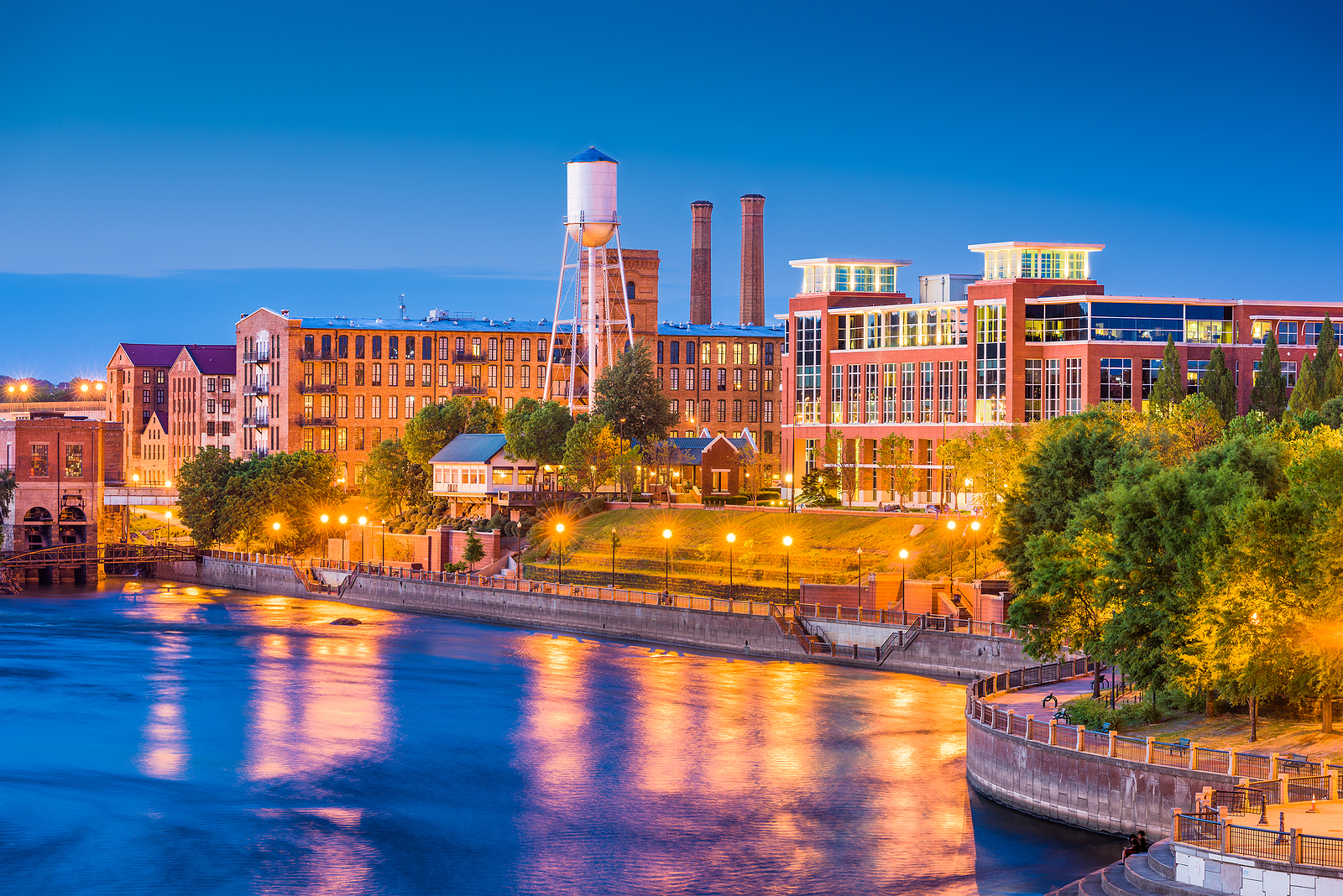
The architecture of this industrial era remains part of Columbus today. Old brick mill buildings, riverfront structures, and industrial spaces help tell the story of the city’s manufacturing past. Many of these buildings have been restored or adapted for new uses, linking modern redevelopment to historic industry.
Railroads, Commerce, and Urban Growth
Railroads strengthened Columbus’s connections to the broader region. While the river had been essential to early trade, rail transportation allowed goods and people to move more efficiently to other cities and markets. Railroads helped support industry, commerce, and population growth.
As the city expanded, new neighborhoods, churches, schools, and businesses developed. Downtown Columbus became the center of commercial life, with banks, stores, offices, theaters, hotels, and civic buildings. The city served both local residents and people from nearby rural areas who came to shop, trade, work, and conduct business.
Urban growth also reflected social divisions. Race, class, occupation, and neighborhood shaped how people experienced the city. African American communities built churches, schools, businesses, civic organizations, and cultural institutions despite segregation and discrimination.
The Rise of Fort Benning
One of the most important developments in Columbus history was the establishment and growth of Fort Benning, now Fort Moore. The military post began during the twentieth century and became one of the most significant Army installations in the United States. Its presence transformed Columbus socially, economically, and culturally.
The installation brought soldiers, military families, civilian workers, contractors, and national attention to the area. Columbus became closely tied to military life, with businesses, housing, schools, and services shaped by the needs of the post. Generations of soldiers trained nearby, and many families settled in the city after military service.
Fort Benning also connected Columbus to major national and global events. World War II, the Cold War, Vietnam, the Gulf War, the wars in Iraq and Afghanistan, and modern military training all affected the region. The military became one of the defining pillars of the city’s identity.
Civil Rights and Racial Change
The history of Columbus includes the struggle for civil rights and racial equality. Like other Southern cities, Columbus experienced segregation in schools, housing, transportation, public spaces, employment, and voting. African American residents faced discrimination, but they also built strong communities and challenged injustice.
Churches, educators, students, activists, and local leaders played roles in pushing for change. The civil rights era brought pressure to desegregate public institutions and expand equal rights. Change was often slow and met with resistance, but African American citizens continued to organize, advocate, and demand fair treatment.
The legacy of segregation remains part of the city’s history, but so does the legacy of resilience. Black communities in Columbus contributed to education, business, politics, faith, culture, military service, music, and civic life. Their efforts helped shape the modern city.
Downtown Decline and Renewal
Like many American cities, Columbus experienced downtown decline during the mid and late twentieth century. Suburban growth, highway development, shopping centers, and changes in industry pulled people and businesses away from the traditional urban core. Older buildings aged, and some areas struggled with disinvestment.
Over time, local leaders, businesses, residents, and preservation advocates began working to renew downtown. Historic buildings were restored, cultural attractions expanded, and the riverfront became a major focus. Downtown Columbus gradually transformed into a place for restaurants, events, offices, apartments, museums, and recreation.
This renewal did not erase the city’s past. Instead, it used history as part of the city’s future. Old industrial buildings, historic streets, and riverfront spaces became assets rather than forgotten remnants. The revival of downtown helped strengthen civic pride and attract visitors.
The Chattahoochee RiverWalk and Riverfront Revival
The Chattahoochee River remains one of Columbus’s most important features. In modern times, the city has embraced the riverfront as a place for recreation, tourism, history, and community life. The RiverWalk gives residents and visitors a scenic way to experience the city’s natural and historic setting.
The riverfront revival has helped reconnect Columbus to the waterway that shaped its founding. People can walk, bike, gather, attend events, and enjoy views of the river. The area also connects to whitewater recreation, which has brought new energy and attention to downtown.
This transformation shows how Columbus has reimagined its historic landscape. What was once primarily a working river tied to trade and industry has also become a public space for leisure, health, and local identity.
Museums, Culture, and Historic Memory
Columbus has preserved and interpreted its history through museums, historic sites, art spaces, and cultural institutions. The city’s story includes Native history, military history, industrial development, African American history, architecture, regional art, and the daily lives of ordinary residents.
Cultural institutions help residents and visitors understand the many layers of Columbus history. They show that the city is not defined by one era alone. It is a place shaped by frontier settlement, slavery, war, industry, segregation, military service, redevelopment, and creativity.
The arts have also become an important part of modern Columbus. The city supports theater, music, visual arts, festivals, public events, and educational programs. This cultural life adds depth to the city and helps connect its historic identity with contemporary expression.
Modern Columbus and Regional Importance
Today, Columbus is one of Georgia’s major cities. Its economy includes military activity, health care, education, finance, manufacturing, tourism, retail, and public services. The city’s location on the Alabama border gives it a regional role that extends beyond Georgia.
Columbus has also become known for outdoor recreation, especially along the Chattahoochee River. Downtown redevelopment, historic preservation, universities, museums, and entertainment venues have helped broaden the city’s appeal. The city continues to balance its industrial and military heritage with newer forms of growth.
Modern Columbus is diverse and complex. It includes historic neighborhoods, suburban development, military families, college students, longtime residents, new businesses, and visitors. Its identity is rooted in the past but not limited by it.
Legacy of Columbus Georgia
The history of Columbus, Georgia, is the story of a city built beside a powerful river and shaped by nearly two centuries of change. From Native lands and early frontier planning to cotton trade, slavery, industrial growth, the Civil War, Reconstruction, textile mills, military expansion, civil rights, and downtown renewal, Columbus has played an important role in Georgia history.
Its legacy is visible in the Chattahoochee River, old mill buildings, historic districts, military connections, cultural institutions, and communities that have endured through change. Columbus has faced hardship, conflict, and transition, but it has also shown resilience and reinvention.
Today, Columbus stands as a city where history is not hidden. It can be seen in the riverfront, heard in community stories, felt in historic neighborhoods, and understood through the institutions that preserve its memory. Its past continues to shape its present, making Columbus one of Georgia’s most historically rich and distinctive cities.
Discover more from City Towner
Subscribe to get the latest posts sent to your email.