Jamie Rochelle Grissim Disappeared in Vancouver Washington
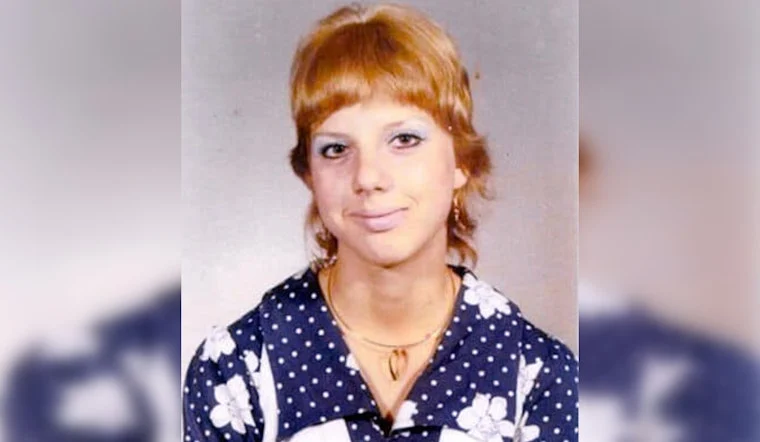
The disappearance of Jamie Rochelle Grissim is one of the most haunting missing person cases connected to Vancouver, Washington. Jamie was only 16 years old when she vanished on December 7, 1971, after leaving Fort Vancouver High School. She was expected to return home that afternoon, but she never arrived. What began as a missing teenager case later grew into something far more troubling after her personal belongings were discovered in a rural area of Clark County.
Jamie’s case has remained unresolved for decades. Her disappearance is painful not only because she was so young, but also because early assumptions may have delayed the seriousness with which her case was handled. Like many missing teenage girls from that era, Jamie was initially viewed through the lens of a possible runaway. Over time, however, the evidence pointed in a darker direction. Her belongings were found far from where she was expected to be, and investigators later came to suspect foul play.
The mystery of what happened to Jamie has endured for more than 50 years. Her family has lived with unanswered questions, and the public record has slowly filled in pieces of a story that still lacks its most important answer. Jamie has never been found. No one has been convicted in her disappearance. Yet her name remains tied to one of the most disturbing periods in Clark County history, a time when several young women and girls disappeared or were found murdered in the same broader region.
Who Was Jamie Rochelle Grissim?
Jamie Rochelle Grissim was a 16-year-old girl living in Vancouver, Washington, at the time of her disappearance. She was a teenager with a life that should have been unfolding in ordinary ways. She attended school, had friends, and was part of a family that expected her to come home at the end of the day. Instead, her life was interrupted by a disappearance that has never been fully explained.
Jamie is often described as creative, spirited, and artistic. She enjoyed drawing and writing poetry, and she had a personality that left a lasting impression on those close to her. She was not just a name on a missing person poster. She was a young girl with interests, emotions, relationships, and dreams. Those details matter because cases like hers can become reduced to timelines and theories, while the person at the center can fade behind the mystery.
At 16, Jamie was still a child in many ways, even though teenagers are often expected to act independently. She was at an age where she may have seemed old enough to walk home from school, but she was still vulnerable. Her disappearance shows how quickly a normal day can turn into a tragedy, especially when a young person is alone and traveling between familiar places.
The Day Jamie Disappeared
On December 7, 1971, Jamie attended Fort Vancouver High School in Vancouver, Washington. She reportedly had only two classes that day, which meant she was expected home earlier than usual. After leaving school, she was believed to be walking home. She was supposed to arrive sometime in the early afternoon.
But Jamie never made it home.
When she did not return, concern began to grow. Her absence was not normal. She had a routine, and people expected to see her. As the hours passed, her disappearance became more alarming. Still, like many cases involving teenage girls during that period, there appears to have been an early assumption that she might have run away.
That assumption would later become one of the most painful parts of the case. When a missing teenager is treated as a runaway, the urgency of the search can be reduced. Time is critical in any disappearance, and the first hours and days often matter the most. In Jamie’s case, the early belief that she may have left voluntarily may have slowed the kind of response that could have preserved evidence, identified witnesses, or clarified her movements.
There was no confirmed sign that Jamie had safely gone somewhere else. She did not return home. She did not contact loved ones. She did not resume her normal life. Her disappearance became a silence that stretched from one day into weeks, then months, then decades.
Where Jamie Was Last Seen
Jamie was last known to be in Vancouver, Washington, after leaving Fort Vancouver High School. The school and her home were part of her familiar world, the kind of route a teenager might take without much concern. But somewhere between leaving school and arriving home, Jamie vanished.
Vancouver sits in Clark County, in southwestern Washington, just north of Portland, Oregon. In the early 1970s, the area included both developed neighborhoods and more rural regions outside the city. That geography became important in Jamie’s case because her belongings were eventually found away from the school and away from her expected route home.
The rural areas of Clark County, including Dole Valley, would later become central to the investigation. Dole Valley was not simply a random location in Jamie’s story. It became the place where some of her personal belongings were found, suggesting that whatever happened to her may have extended beyond the city and into the more isolated countryside.
The Discovery of Jamie’s Belongings
Months after Jamie disappeared, her school identification and other personal items were found along Dole Valley Road in rural Clark County. This discovery changed the meaning of the case. If Jamie had run away voluntarily, it was difficult to explain why belongings connected to her would be found in a rural area away from her expected path.
The discovery raised serious concerns that Jamie had met with foul play. Personal belongings can become powerful evidence in missing person cases because they reveal where a person or their possessions may have been after they vanished. In Jamie’s case, the items did not provide a complete answer, but they strongly suggested that the runaway theory did not fit.
The location of the belongings also mattered. Dole Valley was a remote and wooded area, the kind of place where someone could leave evidence, hide a crime, or move without being easily seen. It was far different from the school route Jamie was expected to travel. The fact that her items were found there gave investigators and family members a reason to believe something terrible had happened.
For Jamie’s loved ones, the discovery must have been devastating. It provided proof that she had not simply disappeared into a new life, but it did not bring her home. It gave the case direction, but not closure. It confirmed fear without answering the deepest question.
A Case Once Viewed as a Runaway
One of the most troubling aspects of Jamie’s disappearance is the early perception that she may have run away. In the 1970s, missing teenagers were often treated differently from younger children. If a teen had any history of independence, conflict, foster care placement, or ordinary adolescent behavior, authorities sometimes leaned toward the belief that the teen had left by choice.
That mindset could be dangerous. It allowed vulnerable young people to fall through the cracks. A teenager could be in danger, abducted, injured, or killed, but the case might not receive the urgency it deserved because of assumptions about age or behavior. Jamie’s case reflects that larger problem.
Even if a teenager has run away before, every disappearance must be treated seriously until safety is confirmed. A runaway can still become a victim. A teenager can still be harmed. A young person can still be targeted by someone older, stronger, or more manipulative. In Jamie’s case, the later discovery of her belongings suggested that the original assumption may have been tragically wrong.
The delay in recognizing the potential seriousness of her disappearance may have cost investigators valuable time. Witness memories fade. Evidence is lost. People move away. Locations change. In a case like Jamie’s, the early days may have held clues that were never fully recovered.
The Shadow of Other Clark County Cases
Jamie Rochelle Grissim’s disappearance did not remain isolated in public memory. Over time, her case became associated with a larger pattern of violence against young women and girls in Clark County during the 1970s. Several cases from that era involved victims whose remains or belongings were connected to rural areas outside Vancouver.
One name often discussed in connection with this period is Warren Leslie Forrest, a convicted killer who has been linked by investigators to multiple cases involving young women. Authorities have publicly considered him a suspect in several unsolved cases. Jamie has been described as a possible early victim, though no one has been convicted in her disappearance.
The connection is partly based on geography and timing. Jamie vanished in 1971, and her belongings were found in the Dole Valley area. Other victims connected to the same general rural region were later found nearby. This does not prove exactly what happened to Jamie, but it explains why investigators have continued to examine her disappearance in the context of other crimes from that time.
For families, these connections can bring mixed emotions. On one hand, they may offer a possible explanation after years of uncertainty. On the other hand, they can deepen the horror of what may have happened and raise painful questions about whether earlier action could have prevented later crimes.
The Search for Jamie
The search for Jamie has continued in different forms over the years. At first, the search was for a missing teenager who had failed to come home. Later, it became a search for evidence, remains, witnesses, and answers. Decades later, investigators and supporters have continued to revisit rural areas, review old records, and appeal to anyone who may know something.
Cold cases depend on persistence. Even when years pass, information can still surface. A witness may come forward late in life. A person who was once afraid to speak may finally decide to talk. A forgotten memory may return after seeing a news story. Advances in investigative methods can also bring new attention to old evidence.
In Jamie’s case, the Dole Valley area remains important. Because her belongings were found there, and because other cases have been tied to the same region, searches have focused on trying to determine whether Jamie’s remains may be somewhere in the rural landscape. Searches of wooded areas are difficult, especially after decades. Terrain changes. Vegetation grows. Weather alters the land. Human memory becomes less precise.
Still, the effort continues because Jamie has never been found. Until there is a confirmed answer, her case remains open.
The Pain Carried by Her Family
For Jamie’s family, the disappearance created a lifetime of grief without finality. When someone dies and their death is confirmed, loved ones can mourn with certainty, even through terrible pain. But when someone disappears, grief becomes suspended. Families are left between hope and fear, unable to fully grieve and unable to fully move forward.
Jamie’s loved ones had to live with questions that no family should have to carry. Did she suffer? Was she afraid? Did someone see her after she left school? Could she have been saved if the case had been treated differently from the beginning? Was there a witness who never came forward? Is she still somewhere waiting to be found?
Those questions do not fade simply because time passes. In fact, time can make them heavier. Birthdays pass. Holidays pass. Anniversaries pass. Generations change, but the missing person remains frozen in memory at the age they were when they vanished. Jamie will always be 16 in the public record, forever connected to the afternoon she did not come home.
Why Jamie’s Story Still Matters
Jamie Rochelle Grissim’s case still matters because justice delayed is not the same as justice denied. As long as a case remains unsolved, there is still value in telling the story. Public attention can bring forward information. Renewed discussion can correct old assumptions. Remembering Jamie as a person keeps her from being erased by time.
Her story also matters because it reflects the way missing girls were sometimes treated in past decades. Too many cases were minimized because the victim was a teenager, because she came from a complicated home situation, or because authorities believed she had simply left. Jamie’s disappearance reminds us why every missing child deserves urgency, care, and a serious investigation from the beginning.
It also matters because rural crime scenes can hide the truth for a long time. A person can vanish in a city, but evidence may appear miles away in a wooded area. A case can seem confusing until investigators connect geography, timing, behavior, and patterns across multiple crimes. Jamie’s case is part of a broader reminder that missing person investigations often require patience, resources, and the willingness to reexamine old conclusions.
Remembering Jamie Rochelle Grissim
Jamie Rochelle Grissim was 16 years old when she disappeared from Vancouver, Washington, on December 7, 1971. She had gone to school, left after her classes, and was expected home in the early afternoon. She never arrived. Months later, her school identification and personal belongings were found in the Dole Valley area, pointing the case toward suspected foul play.
More than five decades later, Jamie remains missing. Her case has been examined alongside other Clark County crimes from the 1970s, and investigators have continued to search for answers. Yet the central truth remains painfully simple. A teenage girl left school and never came home.
Jamie should be remembered not only for the mystery of her disappearance, but for the life she had before it. She was creative, young, and loved. She had thoughts, talents, and a future that was taken from her. Her story deserves to be told with care, and her name deserves to remain known.
The disappearance of Jamie Rochelle Grissim is still an open wound in Vancouver and Clark County history. It is a story of a young girl lost, a family left searching, and a community still waiting for the truth. Until Jamie is found and the full story is known, her case remains unfinished.
Discover more from City Towner
Subscribe to get the latest posts sent to your email.