
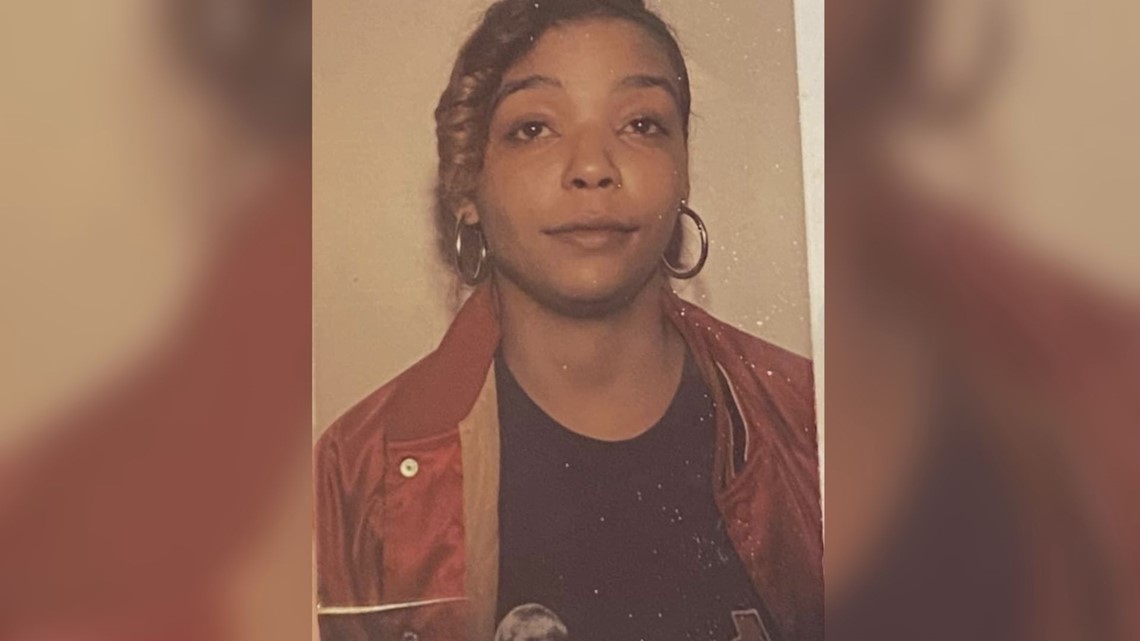
Cathleen Dennis Disappears in Grand Rapids Michigan
Cathleen “Cathy” Dennis was a 28 year old mother from Omaha, Nebraska, whose life became connected to one of the most troubling chapters in the criminal history of Grand Rapids, Michigan. On July 10, 1995, Cathleen disappeared after she was reportedly seen entering an older light colored Chevrolet near Division Avenue and Putnam Street Southwest. She was never seen by her family again, and her remains have never been recovered.
Cathleen had traveled from Omaha to Grand Rapids with her sister, Deanna Dennis. The sisters occasionally left their hometown together to earn money through sex work, believing that traveling elsewhere would reduce the chances of being recognized by people they knew. Their trip to Grand Rapids was supposed to be temporary. There was no indication that Cathleen planned to abandon her family, disappear voluntarily, or permanently cut off contact with her children.
The sisters arrived in Grand Rapids by bus during the first part of July 1995. They rented a hotel room and spent time near Division Avenue, an area that was known at the time for bars, street activity, and commercial sex work. During the night and early morning hours, the sisters separated as they attempted to meet customers. What happened after that separation became the central mystery surrounding Cathleen’s disappearance.
The Last Known Sighting
Cathleen was last seen near the intersection of Division Avenue and Putnam Street Southwest. Her sister reportedly observed her getting into a light colored Chevrolet. The vehicle was described as an older model, possibly manufactured during the 1960s. There was no confirmed description of the driver, and investigators were unable to publicly establish the vehicle’s license plate number.
The sighting was significant because it was the final known moment in which Cathleen was seen alive. The area was active during the late night and early morning hours, but no witness came forward with a complete account of where the vehicle went or who was driving it.
At approximately 4:00 a.m., Deanna was ready to leave the area and return to the hotel. She searched for Cathleen but could not locate her. Cathleen did not return to their room, contact her sister, or make arrangements to travel back to Omaha. As the hours passed, it became clear that something was wrong.
Cathleen’s disappearance was officially associated with July 10, 1995. Some accounts have referred more broadly to the weekend beginning July 7, 1995, but July 10 remains the date most commonly listed in missing person records.
A Family Forced to Search
Cathleen’s family did not believe she had chosen to leave. She was a mother of two children, and relatives said it was completely out of character for her to disappear without contacting them. Even if she needed time away, they believed she would have reached out to let someone know she was safe.
Deanna attempted to report her sister missing, but the family later said the case did not receive the immediate urgency they expected. According to relatives, Cathleen’s involvement in sex work influenced how some people viewed her disappearance. The family believed that she was not initially treated with the same concern that might have been given to someone with a different occupation or background.
With few answers, family members began conducting their own search. They distributed flyers and looked through streets, alleys, dumpsters, vacant areas, and places where Cathleen might have been injured or abandoned. The search was emotionally exhausting. They were looking for someone they loved while confronting the possibility that she had become the victim of a violent crime.
The lack of confirmed information made the situation even more painful. Cathleen had seemingly vanished within a relatively small area, yet there was no clear trail showing where she had been taken.
The Human Being Behind the Case
Cathleen Dennis was more than a missing person record. She was a daughter, sister, mother, and friend whose absence permanently altered the lives of those closest to her.
Relatives remembered her as cheerful and playful. She was described as someone with an energetic personality and a memorable laugh. Her loved ones wanted the public to understand that the circumstances of her disappearance did not define her entire life.
Cathleen’s children were still young when she disappeared. Her son, Tommy Dennis, was approximately 7 years old. Growing up without his mother meant living with unanswered questions about what happened, whether she suffered, and whether her body would ever be found.
For many years, the family received no definitive explanation. Each anniversary brought another reminder that Cathleen had not come home. The absence of remains also denied the family the opportunity to hold a funeral and create a final resting place where they could mourn.
A Dangerous Period in Grand Rapids
Cathleen disappeared during a period when numerous women were reported missing or found murdered in and around Grand Rapids. Between the early and middle 1990s, the city experienced a disturbing series of cases involving vulnerable women.
Many of the victims had connections to Division Avenue. Some were involved in sex work, struggled with substance use, or lived in circumstances that placed them at greater risk of violence. Several women disappeared after getting into vehicles with unknown men.
The similarities caused investigators and members of the public to question whether one person or several offenders were targeting women in the area. The cases created fear among women who worked near Division Avenue and frustration among families who believed their loved ones had not received enough attention.
Although investigators explored possible connections, authorities did not immediately prove that every disappearance and murder was committed by the same offender. The victims had different backgrounds, and some cases contained more physical evidence than others. Still, the pattern was difficult to ignore.
Cathleen’s disappearance became part of the larger mystery involving Grand Rapids’ missing and murdered women. For years, her case remained open with no publicly identified suspect who could explain what happened after she entered the Chevrolet.
The Investigation of Garry Artman
A major development occurred decades later through the investigation of Garry Artman. Artman was a former long haul truck driver who had connections to western Michigan. His work allowed him to travel extensively and move through different cities and states.
In 2022, DNA evidence connected Artman to the 1996 murder of Sharon Hammack. Hammack had been sexually assaulted, stabbed, and strangled before her body was left beside a road in Caledonia Township, Michigan.
Artman was arrested, prosecuted, and convicted of Hammack’s murder in 2023. He received a sentence of life in prison without the possibility of parole.
The DNA evidence in Hammack’s case led investigators to examine whether Artman might have been responsible for other murders and disappearances involving women in the Grand Rapids area. Detectives began questioning him about multiple cases, including the disappearance of Cathleen Dennis.
Artman was also charged in connection with the 2006 murder of Aundria Bowman, whose remains had been discovered in Allegan County. However, he died before that case went to trial.
Statements Made Before Artman’s Death
Artman was seriously ill with lung cancer while investigators questioned him. Before his death in December 2023, he reportedly admitted killing multiple women and provided information about crimes that had remained unresolved for years.
During one interview, Artman described encountering a Black woman who had left a bar near Division Avenue. He reportedly remembered that the woman had an injured arm, cast, or sling. Investigators believed this detail was consistent with information connected to Cathleen.
Artman allegedly said he killed the woman and disposed of her body in a dumpster. Although he did not provide investigators with the location of Cathleen’s remains, authorities believed the details of his account strongly suggested that he was describing her.
The location, time period, physical description, and circumstances of the encounter reportedly matched Cathleen’s disappearance. Investigators eventually concluded that Artman was likely responsible for her death.
However, there are important limits to what has been legally and scientifically established. Artman was never tried or convicted in Cathleen’s case. No publicly disclosed DNA evidence directly connected him to her disappearance, and Cathleen’s remains were not found as a result of his statements.
The Possibility of a Dumpster Disposal
The claim that Cathleen’s body was placed in a dumpster created an especially difficult obstacle for investigators. If her remains were collected with commercial trash, they may have been transported to a landfill before anyone realized she was missing.
Searching a landfill years or decades later would be extremely difficult. Waste is compacted, moved, covered, and exposed to environmental damage. Even when investigators know the approximate location and date of disposal, locating human remains can require an enormous search involving heavy equipment and forensic specialists.
In Cathleen’s case, investigators did not appear to receive enough precise information from Artman to identify a specific dumpster, collection route, or landfill location. By the time he made the statements, nearly 30 years had passed.
The passage of time likely eliminated many opportunities to recover physical evidence. Businesses may have closed, buildings may have been demolished, roads may have changed, and potential witnesses may have died or forgotten important details.
A Suspect Who Could Not Face Charges
Artman’s death prevented prosecutors from filing charges against him in Cathleen’s case or presenting the evidence before a jury. This left the family with a probable explanation but no courtroom resolution.
A criminal trial could have required investigators to disclose evidence, question witnesses, examine Artman’s statements, and allow the defense to challenge the case. Without that process, the conclusion that Artman killed Cathleen remains an investigative belief rather than a criminal conviction.
Artman’s statements may have offered the family some understanding of what likely occurred, but they did not answer every question. The family still does not know exactly where Cathleen was killed, how long she was with her attacker, or where her remains were taken.
There is also no opportunity to ask Artman additional questions. His death ended the possibility that he might provide more specific information about Cathleen or other victims.
The Treatment of Vulnerable Victims
Cathleen’s case highlights the dangers faced by women involved in sex work and the consequences that can occur when their disappearances are not treated with immediate urgency.
People who commit violent crimes sometimes target victims they believe will not be quickly reported missing. Offenders may assume that a victim’s occupation, homelessness, substance use, criminal record, or unstable living situation will cause authorities or the public to dismiss the disappearance.
Cathleen’s family has consistently emphasized that her work did not make her less deserving of protection. She had children who loved her, relatives who searched for her, and a future that was taken from her.
The case also demonstrates why early evidence collection is critical. Surveillance recordings, witness memories, vehicle descriptions, hotel records, telephone activity, and physical evidence can disappear quickly. Any delay in treating a disappearance as suspicious can make a later investigation significantly more difficult.
Modern law enforcement agencies have increasingly recognized the importance of treating missing adults as potential victims when the circumstances are unusual. Adults have the right to leave voluntarily, but an unexplained disappearance that is inconsistent with a person’s routine can indicate danger.
The Search for Cathleen’s Remains
Cathleen Dennis remains officially listed as a missing person because her body has never been recovered and scientifically identified. Her case cannot be fully resolved without finding her remains or obtaining evidence that conclusively establishes what happened.
Authorities believe Artman killed her, but investigators may still seek information from anyone who was in the Division Avenue area during July 1995. A witness may remember the older Chevrolet, Artman’s movements, a conversation, or suspicious activity involving a dumpster.
Even a small detail could help confirm the sequence of events. Someone who did not understand the importance of what they saw in 1995 might recognize its significance today.
The recovery of Cathleen’s remains would give her family the chance to bring her home. It would also provide forensic evidence that might confirm the cause of death and strengthen the investigative conclusion about who killed her.
A Case Without Complete Closure
The disappearance of Cathleen Dennis is no longer entirely unexplained, but it is also not fully solved. Investigators have identified Garry Artman as the person they believe was responsible, yet the most important physical evidence remains missing.
Cathleen vanished on July 10, 1995, near Division Avenue and Putnam Street Southwest in Grand Rapids, Michigan. She was last seen getting into an older light colored Chevrolet. Her family searched for her, raised awareness, and waited for answers for decades.
Nearly 30 years later, statements attributed to Artman gave investigators a likely account of her fate. He reportedly described killing a Black woman in the Division Avenue area and disposing of her body in a dumpster. Authorities believed that woman was Cathleen.
For her family, the information was both meaningful and devastating. It offered an explanation for why she never returned, but it did not bring her remains home. It also did not allow them to see her suspected killer held legally accountable for her death.
Cathleen’s case remains a reminder that every missing person matters, regardless of occupation or personal circumstances. Her children, sister, and extended family continue to carry the loss of a woman whose life ended far from home.
Until Cathleen is found, an essential part of the story remains unfinished.
Discover more from City Towner
Subscribe to get the latest posts sent to your email.