Thelma Cobb Disappears After Visiting Friends in Fort Branch Indiana
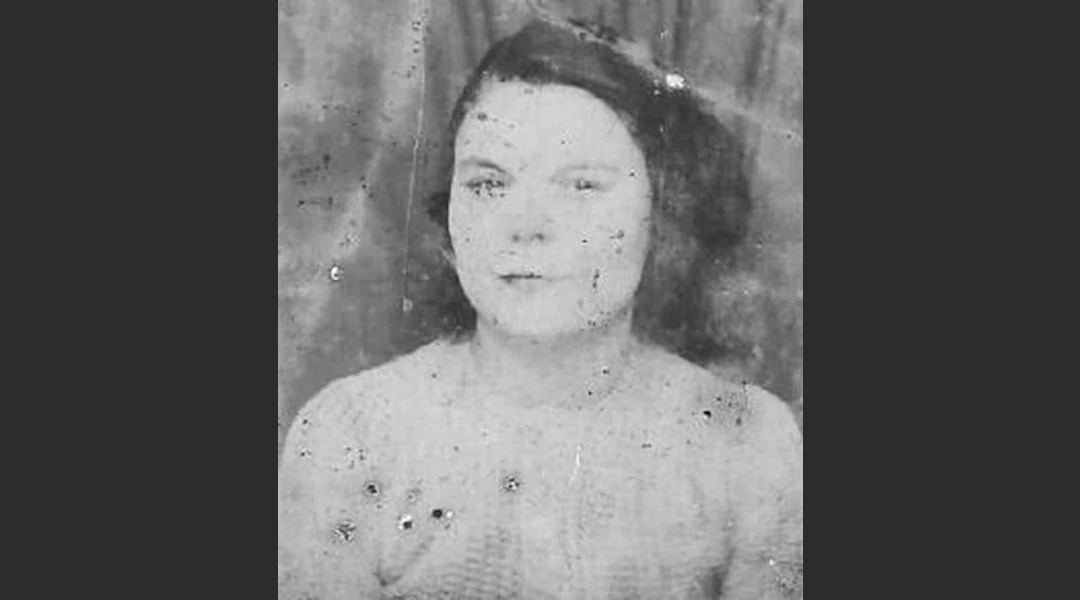
The disappearance of Thelma Jean Cobb remains one of Indiana’s oldest unresolved missing person cases. Thelma vanished during 1946 after reportedly traveling to visit relatives in Fort Branch, Indiana. Missing person records commonly list January 1, 1946, as the date she disappeared, although the surviving information does not establish that date with complete certainty.
Thelma was approximately 30 years old when she went missing. She had spent years working closely with a family in the Edwardsport area and was trusted with responsibilities that went far beyond ordinary household work. Her sudden disappearance left behind unanswered questions involving a bus trip, family relationships, legal documents, guardianship duties and an estate that remained unsettled for years.
No confirmed trace of Thelma has ever been found. She was eventually declared legally dead, but that court action did not determine where she went or what happened to her. Decades later, her case remains open to multiple possibilities, including foul play, an accident or a deliberate decision to leave her former life behind.
Thelma Cobb’s Life Before She Disappeared
Thelma Jean Cobb was born around 1916 and grew up as part of a large Indiana family. She was described as a white woman with brown hair and brown eyes. Estimates placed her height between approximately 5 feet 2 inches and 5 feet 5 inches, while her weight was believed to have been between 115 and 130 pounds.
Before she vanished, Thelma worked as a housekeeper for Romie Walters and his family in Edwardsport, Indiana. Romie was a widowed coal miner whose wife had died years earlier. Thelma reportedly became an important figure in the Walters household, helping care for the home, the children and an elderly relative.
Her role appears to have expanded over time. Rather than simply cleaning or performing routine domestic work, Thelma was reportedly trusted to manage significant parts of the family’s daily affairs. She developed a close relationship with the Walters children and was later given legal responsibilities involving two of the younger children.
The arrangement suggests that Romie Walters considered Thelma reliable and capable. She was reportedly appointed guardian of two of his children, Richard and Rose Marie. She also became involved in managing matters related to the Walters estate.
These duties placed Thelma in an unusual position. She was not a biological member of the family, yet she held responsibilities that would normally be given to a close relative. This relationship later became central to speculation about her disappearance.
The Reported Trip to Fort Branch
The most commonly repeated account states that Thelma traveled from the Edwardsport or Vincennes area to Fort Branch, Indiana. She reportedly went there to visit her father, John H. Cobb, and her stepmother.
Fort Branch is located in Gibson County in southwestern Indiana. During the 1940s, travel between small Indiana communities often depended on buses, trains and private vehicles. A bus trip would not have been unusual, particularly for someone traveling between towns without access to a car.
According to the traditional account, Thelma completed her visit and then boarded a bus to return home. She never arrived at her expected destination. Somewhere between leaving her relatives and reaching Edwardsport, she disappeared.
The publicly available history of the case does not clearly identify the bus company, the route, the station or the time she was supposed to arrive. There is also no widely available record of a bus driver or fellow passenger confirming that Thelma was actually aboard.
This lack of detail makes it difficult to establish her final confirmed movements. It is possible she boarded the bus and disappeared after leaving it. It is also possible that she never entered the bus at all. The known narrative may have been reconstructed from family memories long after the event.
Uncertainty Surrounding the Date
Missing person databases generally list January 1, 1946, as the date Thelma Cobb disappeared. However, that date may have been selected as an approximate administrative date because the actual day was unknown.
January 1 is frequently used in historical records when only the year of an event is known. In Thelma’s case, surviving family accounts reportedly acknowledged uncertainty about exactly when she was last seen.
Court and estate information has created additional questions. Some researchers have reported finding documents that appeared to include Thelma’s signature later in 1946. One document was reportedly connected with estate activity during September 1946.
If Thelma personally signed paperwork in September, she could not have disappeared on January 1. However, the existence of a later dated document does not automatically prove she remained present until that date. A document may have been signed earlier and filed later, completed through a representative or interpreted incorrectly.
Without the original investigative file and fully authenticated court records, the conflict cannot be conclusively resolved. The safest conclusion is that Thelma disappeared sometime during 1946, while January 1, 1946, remains the officially listed date.
The Walters Estate
Thelma’s relationship with the Walters family became one of the most discussed aspects of the case because she was involved in the management and distribution of family property.
Romie Walters reportedly changed certain estate arrangements and placed Thelma in an important administrative role. His oldest son, Louis Eugene Walters, had been serving in the military during World War II, which may have made it difficult for him to manage family matters.
Thelma’s position may therefore have been practical rather than suspicious. She was present in the household, understood its daily operation and had already been trusted with the care of younger family members.
Some accounts have claimed that Thelma received a portion of the Walters estate. They further suggest that her interest in the estate would return to the Walters children if she died. This arrangement led to speculation that someone might have benefited financially from her disappearance.
The possible inheritance motive has remained one of the most persistent theories, but the available financial evidence appears uncertain. Later researchers have suggested that the amount involved may have been relatively small. One account indicated that approximately $350 was ultimately distributed among the Walters children from Thelma’s estate.
That amount would have had greater value in the 1940s and 1950s than it would today, but it was not necessarily a fortune. The financial arrangement may still have produced conflict, although the available information does not prove that anyone harmed her for money.
Questions About Thelma’s Will
Another unusual detail concerns Thelma’s own estate planning. She reportedly prepared a will that named the Walters children as beneficiaries instead of leaving her property to members of her biological family.
This decision could be explained by the close relationship she had developed with the children. She may have viewed herself as their caretaker, protector or substitute maternal figure.
It may also indicate that Thelma expected to remain connected with the Walters family for many years. Her guardianship duties and estate involvement suggest that she had built much of her adult life around that household.
However, the will also complicated matters after she disappeared. Until Thelma could be declared dead, the property and legal interests connected with her name could not be fully resolved.
This delay may explain why Louis Walters later petitioned the court to have her legally declared dead. While that action has sometimes been viewed suspiciously, it may also have been a necessary legal step after years without contact.
Reports of Unusual Behavior
Family stories have suggested that Thelma acted frightened or unusually cautious before she vanished. One account described her closing curtains, hiding near a bed and appearing concerned that someone was watching or following her.
If accurate, such behavior could indicate that Thelma believed she was in danger. She may have been facing a threat that she did not fully explain to relatives.
It is also possible that her actions were misunderstood or remembered inaccurately. Stories passed through several generations can change as details are repeated. Without a statement written at the time, it is impossible to know what Thelma was feeling.
Still, these reports are significant because they suggest that her disappearance may not have been completely unexpected. Someone who believed she was being watched might have been preparing to flee. The same behavior could also indicate fear of a specific person.
The identity of that person, if one existed, remains unknown.
The Possibility of Foul Play
Foul play has long been considered a possible explanation for Thelma Cobb’s disappearance. Her responsibilities within the Walters household, her connection to an estate and reports that she seemed frightened have all contributed to this theory.
If Thelma was harmed, the crime may have occurred before she reached the bus, during the trip or after she returned to another location. The absence of a known crime scene has prevented investigators from determining where to focus.
A person connected with the Walters family may have had knowledge of her schedule and financial affairs. Someone outside the household could also have encountered her while she traveled.
Women traveling alone in the 1940s faced risks that were not always documented or investigated thoroughly. Communication between small police departments was limited, and missing adult women were sometimes assumed to have left voluntarily.
If Thelma was killed soon after she disappeared, the person responsible may have relied on the rural landscape, an abandoned mine, a river or another isolated area to conceal her remains.
No publicly identified suspect has ever been charged in connection with her disappearance.
Unidentified Remains in the Region
Family discussions have referred to unidentified female remains discovered in Indiana after Thelma vanished. One woman was reportedly found in a mine, while another was said to have been recovered from a river.
According to those accounts, Thelma’s father did not travel to determine whether either woman was his daughter. The reason for that decision is unclear. He may have believed neither description matched Thelma, lacked the ability to travel or found the identification process too distressing.
It is unknown whether official comparisons were ever conducted. Identification methods in the 1940s relied heavily on clothing, dental work, personal belongings and visual recognition. DNA testing did not exist.
If records and remains from those unidentified cases still survive, modern forensic testing could potentially determine whether either woman was related to Thelma’s family. However, historical records may be incomplete, and remains may have been buried or lost.
The possibility that Thelma was recovered but never identified cannot be ruled out.
The Theory That She Left Voluntarily
Another theory is that Thelma chose to disappear. An adult woman in 1946 could leave one community, change her name and establish a new life with fewer records than would be possible today.
There were no national computer databases, electronic financial records, mobile phones or social media accounts. A person could move to another state and avoid detection, particularly if relatives did not know where to search.
Thelma may have felt trapped by her responsibilities to the Walters family. Serving as housekeeper, guardian and estate administrator could have created substantial pressure. She may have wanted freedom from those obligations.
Her reported fearfulness could support this theory if she believed leaving secretly was the only way to protect herself. She may have concealed her plans to prevent someone from following her.
However, abandoning her family, legal responsibilities and property without any later confirmed contact would have been a drastic decision. There is no verified evidence that she used another identity or lived elsewhere after 1946.
The voluntary disappearance theory remains possible, but unproven.
The Legal Declaration of Death
After Thelma had been missing for approximately seven years, Louis Eugene Walters filed a petition asking the court to declare her legally dead.
The request was granted on November 13, 1953. This legal ruling allowed unresolved property and estate matters connected with Thelma to be settled.
A declaration of death based on prolonged absence does not establish that a person was murdered. It also does not determine an exact date or cause of death. The ruling simply recognizes that someone has been missing without communication for the legally required period.
For Thelma’s relatives, the court decision may have provided administrative closure, but it did not provide personal answers. There was no funeral based on identified remains and no known grave containing her body.
The legal process ended the uncertainty surrounding her property while leaving the mystery of her fate untouched.
Weaknesses in the Original Investigation
Very little is publicly known about the original search for Thelma Cobb. It is unclear when she was officially reported missing, which law enforcement agency first investigated or what interviews were conducted.
Investigators may have questioned her father, stepmother and members of the Walters family. They may also have contacted bus operators and searched transportation routes. However, those records have not been widely released.
The delay between Thelma’s disappearance and modern public attention probably caused valuable evidence to disappear. Witnesses died, memories faded and documents were lost.
Even basic facts remain uncertain, including the exact day she vanished and the location of her final confirmed sighting. These gaps make it difficult to separate verified information from family tradition.
The case demonstrates the challenges involved in investigating a historical disappearance. Modern investigators must often rebuild the timeline from court files, census records, newspaper archives and memories recorded many decades later.
Why the Case Remains Unsolved
Thelma Cobb’s disappearance remains unsolved because there is no confirmed crime scene, no identified body, no proven suspect and no reliable account of her final movements.
The uncertain date creates a major obstacle. Investigators cannot confidently determine which local events, transportation records or unidentified remains should be compared with her case.
The passage of time has also reduced the likelihood of obtaining direct testimony. Anyone who saw Thelma during 1946 would now be deceased or extremely elderly.
Physical evidence may never have been collected. Even if clothing, letters or household items were preserved, it is unknown whether they remain available for examination.
Family DNA may provide the best remaining opportunity for progress. A genetic profile could potentially be compared with unidentified remains in Indiana or surrounding states.
The Enduring Mystery
The disappearance of Thelma Cobb is more than a historical curiosity. It is the unresolved story of a woman who occupied an important place in two families and then vanished without a confirmed explanation.
She was a daughter, sister, caretaker and legal guardian. Her life had become deeply connected to the Walters household, yet she also maintained ties to her biological family in Fort Branch.
Her reported bus trip should have been ordinary. Instead, it became the final known chapter of her life.
Whether Thelma encountered violence, suffered an accident or deliberately created a new identity remains unknown. Each theory explains part of the story, but none accounts for every detail.
The estate arrangement raises questions but does not prove a financial motive. The reported fearfulness suggests danger but may reflect inaccurate memories. The possibility of unidentified remains offers hope for forensic identification, but no confirmed match has been announced.
Until new records, DNA evidence or previously unknown testimony emerges, the disappearance of Thelma Cobb will remain an enduring Indiana mystery.
Discover more from City Towner
Subscribe to get the latest posts sent to your email.