
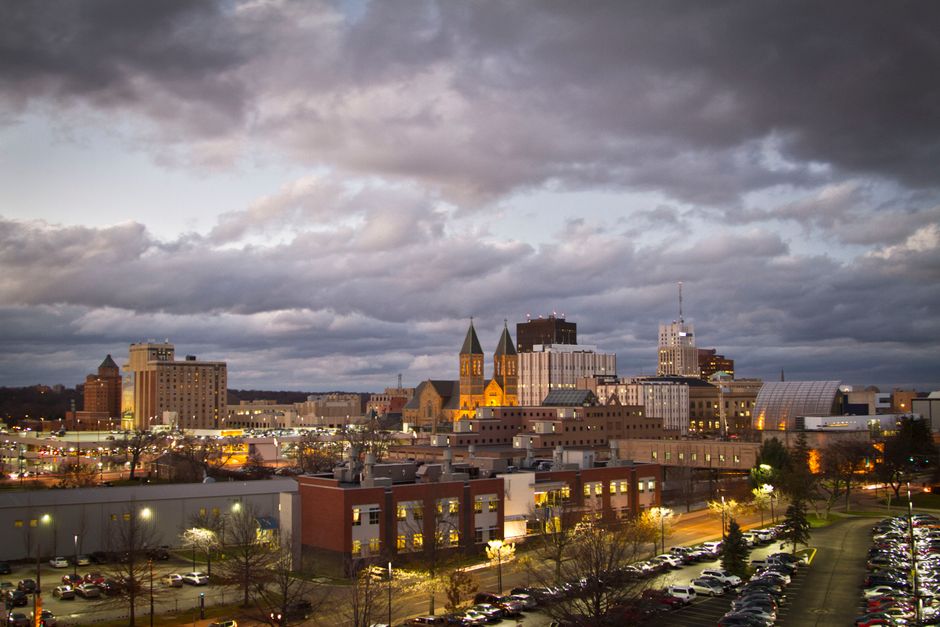
The History of Akron, OH: From Canal Town to Rubber Capital
Akron, Ohio, stands as a testament to American innovation, resilience, and transformation. Situated along the Little Cuyahoga River about 40 miles south of Cleveland, Akron is the seat of Summit County and, with a population nearing 200,000, is one of Ohio’s largest cities. Its story is one of rapid growth, industrial might, reinvention, and cultural richness. This article explores the history of Akron, OH, tracing its journey from a small canal town to the famed “Rubber Capital of the World” and into the dynamic, diversified city it is today.
Early Foundations: The Canal Era
Akron was founded in 1825 by Simon Perkins and Paul Williams. The city’s name, derived from the Greek word ákron meaning “summit” or “high point,” reflects its location at the highest elevation along the Ohio and Erie Canal. The canal was a transformative force for Akron, connecting the city to major waterways and opening up trade routes that spurred early economic growth.
The completion of the Ohio and Erie Canal in 1832 was a turning point. The canal not only facilitated the movement of goods and people but also attracted settlers, entrepreneurs, and laborers. By 1836, the villages of North Akron and South Akron merged, forming the City of Akron. The canal era established Akron as a regional hub for commerce and industry, setting the stage for later developments.
Industrialization and the Rise of the Rubber Industry
The arrival of the first train in 1852 further accelerated Akron’s growth, making it accessible to broader markets and fostering industrial expansion. In the late 19th century, the city diversified its manufacturing base, producing everything from cereals to clay products. However, it was the rubber industry that would define Akron’s identity for generations.
The Birth of the Rubber Capital
In 1871, Dr. Benjamin Franklin Goodrich relocated his rubber company to Akron, lured by the city’s transportation links and available workforce. B.F. Goodrich’s move marked the start of a new industrial era. Over the next few decades, other giants followed:
- Goodyear Tire and Rubber Company (founded in 1898)
- Firestone Tire and Rubber Company (founded in 1900)
- General Tire (founded in 1915)
These companies transformed Akron into the undisputed “Rubber Capital of the World.” The city’s population boomed as workers flocked to jobs in tire and rubber manufacturing. Innovations in tire production, especially with the rise of the automobile industry, cemented Akron’s place in industrial history. By the early 20th century, Akron was not only producing tires but also playing a role in airship development and other rubber-based technologies.
Social Change and Urban Growth
Akron’s rapid industrialization brought profound social and demographic changes. The city’s population doubled during the 1910s, making it one of the fastest-growing cities in the United States at the time. Immigrants from Europe and migrants from the American South arrived in large numbers, drawn by employment opportunities in the factories.
This growth led to the development of distinct neighborhoods, vibrant cultural communities, and an expanding infrastructure of schools, churches, and civic institutions. The city’s prosperity supported the founding of the University of Akron in 1870, which would later become a center for polymer science and technology, continuing Akron’s legacy of innovation.
Challenges and Transformation: The Post-Industrial Era
The mid-20th century brought both prosperity and challenges. Akron’s population peaked around 1970, but the following decades saw significant changes. The decline of the American rubber industry, driven by global competition, automation, and shifting consumer preferences, led to plant closures and job losses. The 1913 “Great Flood” had already ended the canal era, and now the city faced the need to reinvent itself once more.
Industrial Restructuring
The economic restructuring of the 1970s and 1980s was difficult, but Akron’s leaders responded with determination. The city diversified its economy, investing in education, healthcare, and biomedical research. The University of Akron became a leader in polymer science, attracting new industries and research opportunities. Community organizations, government, and business leaders worked together to revitalize downtown, promote affordable housing, and invest in parklands and public amenities.
Suburban growth was another significant trend. Between 1950 and 1960, Summit County’s suburban communities grew rapidly, adding nearly 88,000 residents. While Akron’s population declined from its peak, the metropolitan area remained robust, with over 700,000 residents in the broader region today.
Akron Today: A City of Innovation and Community
Modern Akron is a city that honors its past while looking to the future. The legacy of the rubber industry lives on in the city’s culture, museums, and institutions. The Akron History Center and other local museums celebrate the city’s industrial achievements and diverse heritage.
Today, Akron is known for its high quality of life, affordable housing, and access to scenic parks and recreation areas. The city’s economy is anchored by manufacturing, healthcare, education, and technology. The University of Akron remains a leader in polymer science, supporting both research and local industry. Community events, arts festivals, and a thriving downtown continue to attract residents and visitors alike.
Key Milestones in Akron’s History
- 1825: Akron founded by Simon Perkins and Paul Williams at the summit of the Ohio and Erie Canal
- 1832: Ohio and Erie Canal opens, connecting Akron to regional markets
- 1836: North and South Akron merge to form the city
- 1852: First train arrives in Akron
- 1871: B.F. Goodrich moves rubber factory to Akron
- 1900: Firestone Tire and Rubber Company founded
- 1913: Great Flood destroys the canal system
- 1914: General Tire established in Akron
- 1970: City’s population peaks
- 1980s: Major industrial restructuring and economic diversification
Exploring Historic Akron
For those interested in exploring Akron’s history firsthand, the city offers a wealth of sites and experiences:
- The Akron History Center: Exhibits on the city’s industrial, social, and cultural history
- The Ohio and Erie Canal Towpath Trail: Walk or bike along the historic canal route
- Stan Hywet Hall & Gardens: The former estate of Goodyear co-founder F.A. Seiberling
- University of Akron: Home to the National Polymer Innovation Center and the Center for the History of Psychology
Conclusion: Akron’s Enduring Legacy
The history of Akron, OH, is a story of ambition, adaptation, and community spirit. From its beginnings as a canal town to its rise as an industrial powerhouse and its modern reinvention, Akron exemplifies the power of innovation and resilience. Its legacy as the Rubber Capital of the World remains a source of pride, while its ongoing transformation points to a bright future.
For anyone interested in American industrial history or the evolution of Midwestern cities, Akron offers a fascinating case study. To delve deeper, consider visiting local museums, walking the canal towpath, or exploring the city’s historic neighborhoods. Akron’s story is far from over—and its next chapter is being written every day.
Photo by Stephen Leonardi on Pexels
Discover more from City Towner
Subscribe to get the latest posts sent to your email.