
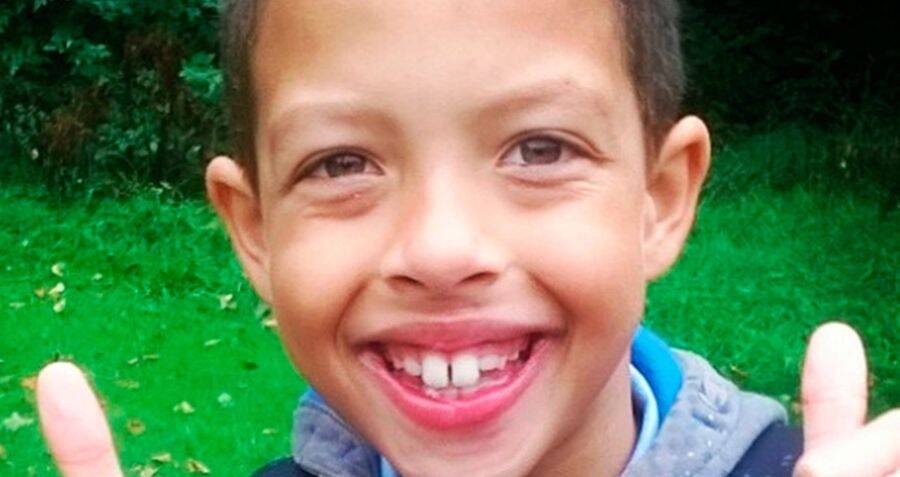
The Disappearance of Noah Donohoe in Belfast Ireland
On June 21, 2020, Belfast was pulled into a story that would not fade. Noah Donohoe, a 14-year-old boy with a quiet confidence and a growing independence, left home on his bicycle to meet friends. It was an ordinary plan on an ordinary day, the kind of routine that marks the beginning of teenage freedom. By nightfall, that routine had shattered into confusion, fear, and an expanding search that gripped the city.
The disappearance of Noah Donohoe quickly became one of the most painful and widely discussed missing person cases in recent Northern Irish history. The circumstances were unusual, the timeline complex, and the unanswered questions deeply unsettling. For many people in Belfast and far beyond, this case has remained a symbol of a family’s grief and a community’s shared demand for clarity.
Noah Donohoe and the life he was beginning to build
Noah was described as bright, gentle, and thoughtful. He was at an age where life begins to open into wider choices and stronger friendships. Like many teenagers, he had routines, favorite routes, and places he expected to go without much thought. The normality of his day before he vanished is a key reason the case resonated so strongly.
The hours leading up to his disappearance were not initially framed as extraordinary. He had plans, he had a destination, and he had a bike that gave him freedom across the city. This familiar rhythm of a young person moving through their environment is part of what made the abrupt shift into crisis so shocking.
The journey that ended in uncertainty
On June 21, 2020, Noah set out to meet friends in Belfast. The route he intended to take was not treated as a dangerous or unusual trip for a teenager. Yet as the day unfolded, his movements began to diverge from what family and friends expected.
CCTV footage later became central to the public understanding of his last known hours. It appeared to show Noah moving through areas of the city in a manner that suggested distress or disorientation. Reports indicated that he may have fallen from his bike at one point, and later footage raised further questions about his condition and state of mind.
This sequence created a troubling narrative, not because it offered certainty, but because it presented a chain of events that seemed difficult to reconcile with a straightforward explanation. To the public, the footage became a painful puzzle. To the family, it represented moments of a child still alive in the city, yet moving toward an unknown outcome.
The search that united a city
As news spread that a 14-year-old boy had gone missing, Belfast responded quickly. Volunteers joined formal search teams. People shared information across social media, distributed posters, and combed areas where he might have traveled. The collective urgency was driven by the universal fear of a young person alone and vulnerable.
Search efforts focused on likely routes, nearby neighborhoods, and spaces where a missing cyclist might have been injured or lost. The scale of public involvement reflected both the emotional intensity of the case and the complicated geography of Belfast. The city’s roads, waterways, and hidden spaces became part of an anxious collective map, one that people hoped would lead to a safe discovery.
The devastating discovery
Six days later, on June 27, 2020, Noah’s body was found in a storm drain in north Belfast. The discovery ended the official missing person search, but it did not end the sense of mystery. Instead, it marked the beginning of a new and more complex chapter.
A post-mortem concluded that drowning was the cause of death. Yet the location and circumstances intensified public questions. A storm drain is not a place most people imagine a child could reach without a series of unusual events. The environment itself raised concerns about access, visibility, and the likelihood that someone could disappear into such an area without immediate detection.
The gap between Noah’s last known sightings and the recovery of his body continued to haunt discussions of the case.
The questions that refuse to settle
From the earliest days of public reporting, the case was defined by uncertainty. How did Noah’s journey unfold in the way it did. What might have happened between the moments captured on CCTV and the outcome that followed. Was there a medical episode, an accident, an encounter, or a chain of decisions propelled by confusion or fear.
These questions have never been purely abstract. They have been shaped by the emotional reality of a family trying to understand the final hours of a child’s life. They have also been fueled by a community that watched a young boy vanish in circumstances that seemed to defy normal expectations.
The discussion around the case has frequently returned to the challenges of reconstructing a day when critical moments may have occurred out of sight. It is that absence of a clear narrative, rather than a lack of caring or attention, that has kept the case in the public consciousness.
The role of investigation and public scrutiny
In any high-profile case involving a child, public trust in the investigative process becomes a crucial part of the story. The disappearance of Noah Donohoe was no exception. The family’s calls for transparency and thorough review became a major theme as the case progressed.
Public attention was shaped by the belief that every detail mattered. The handling of CCTV, the evaluation of timelines, and the interpretation of Noah’s behavior were not merely technical questions. They became moral ones, tied to the fundamental expectation that a child’s final hours should be fully and carefully understood.
Over time, the case became a point of wider reflection on how missing person investigations are managed, how evidence is evaluated, and how families are supported when the answers feel incomplete.
A family’s grief and determination
Behind every headline and every timeline is a family living a reality that cannot be summarized in a single sentence. For Noah’s loved ones, the loss has been both personal and public. They have carried grief while also navigating a long, demanding effort to push for clarity about what happened.
The determination to seek answers has reflected a core truth of cases like this. The discovery of a body can bring closure to one chapter, but it does not automatically bring understanding. The need to know how and why something occurred can be as powerful as the need to know where a missing person is.
The family’s voice has been central to ensuring that Noah’s story is not reduced to a single conclusion, but treated as a case that still deserves careful attention.
The lasting impact on Belfast
The disappearance and death of Noah Donohoe left a lasting mark on Belfast. The case became a shared memory of a city watching and hoping, then mourning. It also became a story that sparked debates about safety, accountability, and the visibility of vulnerable moments in urban spaces.
For many people, the emotional impact has remained strong because Noah seemed like any child. He could have been anyone’s son, nephew, neighbor, or friend. That sense of closeness is what turned the case into a collective heartbreak.
Why this case still matters
Even years later, the disappearance of Noah Donohoe continues to matter because the story sits at the intersection of tragedy and unanswered questions. The facts of the timeline are known in broad outline, yet the meaning of those facts is still contested in public conversation.
It is a reminder that some losses are not only about what happened, but about the spaces left behind by what cannot be fully explained. It is also a reminder that public attention can be an expression of care, a community’s refusal to forget a child whose final journey remains hard to understand.
Noah’s name remains a quiet but powerful presence in discussions about missing children, urban vulnerability, and a family’s right to seek the fullest possible truth.
Discover more from City Towner
Subscribe to get the latest posts sent to your email.