History of Garland Texas
Long before Garland became a familiar name on North Texas maps, the land that would become the city was a mix of prairie, creek bottoms, and small homesteads shaped by the rhythms of weather and water. Early settlement in the area grew around what people could reach, farm, and trade. The most important natural marker was Duck Creek, which helped define local routes and made certain spots practical for living and gathering.
In the mid 1800s, small communities began to form as more settlers moved into Dallas County. Life was rural and scattered, organized around family farms, churches, and the basic services that made frontier communities possible. What later became Garland did not start as one unified town. It started as neighbors living close enough to depend on each other, but far enough apart that local identity formed in separate pockets.
Those early pockets mattered because Garland’s origin story is not just about growth. It is about rivalry, compromise, and the powerful influence of transportation. In North Texas, rail lines often decided which places rose and which places faded. Garland’s earliest years were shaped by that truth.
Duck Creek and Embree, Rival Communities on the Prairie
Two communities became central to the story: Duck Creek and Embree. Duck Creek developed earlier and gained enough structure to feel like a real settlement, including a post office by the mid 1800s. Embree emerged nearby and took its name from a local physician, giving it a distinct identity separate from Duck Creek.
As both places grew, competition followed. Rivalries in small towns can be surprisingly intense because they touch everyday life. Where people went to church, where they traded goods, and where the post office sat all mattered. In an era when mail connected people to business, news, and family, a post office was not just convenient, it was status. A post office could help a settlement grow, attract commerce, and become the name people recognized.
This rivalry created a local tension that could have lasted for decades, with each community trying to pull influence toward itself. Instead, a new factor entered the picture and changed everything. Railroads began reshaping North Texas, and once the tracks and depots arrived, the map of opportunity shifted.
Railroads Create a New Center
In the late 1800s, rail expansion pushed through North Texas with the power to elevate some towns overnight. When rail lines bypassed older settlement centers, residents faced a hard choice: adapt or be left behind. Duck Creek, despite its earlier start, found itself challenged when rail development favored nearby locations.
A depot became the new heart of local activity because it connected farmers and merchants to broader markets. A depot meant goods could move faster, mail could flow more reliably, and travelers could arrive without weeks of planning. In 1886 a depot associated with the Santa Fe line helped draw growth toward a neutral location between Duck Creek and Embree, shifting attention away from older patterns of settlement.
By December 1887, the pressure to resolve the post office dispute pushed the communities toward a practical compromise. The post office was moved to a spot between the rivals, creating a new shared center. That move did more than settle an argument. It helped unify local identity by giving residents a reason to think of themselves as part of the same place.
The new location took the name Garland, honoring Augustus Hill Garland, who served as United States Attorney General. Naming carried symbolism. It marked a fresh start and a shared civic identity, one tied to a wider national narrative rather than a local rivalry.
Incorporation and Early Town Life
Garland’s formal civic life took shape quickly once the center shifted. On April 18, 1891, Garland incorporated, absorbing the older communities and solidifying itself as the primary town in the area. Incorporation meant local governance, organized services, and a stronger platform for growth. It also meant that decisions about streets, commerce, schools, and public safety could be made with a unified goal.
In the late 1800s and early 1900s, Garland looked like a hardworking North Texas town built around agriculture and local industry. Cotton played a major role across the region, and towns like Garland supported that economy with mills and gins. Early Garland also included churches and schools that acted as community anchors. Life centered on production, trade, and the steady work of building a town from scratch.
The railroad presence continued to shape the pace of development. Depots were more than buildings, they were gateways. A depot helped define where businesses clustered, where streets developed, and where people invested. When a new Santa Fe depot was constructed in 1901, it reflected Garland’s growing importance and reinforced the city’s relationship with regional rail networks.
Storms, Setbacks, and the Determination to Keep Building
North Texas history includes dramatic weather, and Garland’s past reflects that reality. The region’s storms tested early infrastructure and community resilience. When severe weather hit, it could damage buildings, disrupt commerce, and shake confidence, but it could also strengthen local determination. Communities that survived these moments often developed a culture of rebuilding and adaptation.
As Garland moved into the early twentieth century, progress also meant modern utilities and a push to improve everyday life. In 1920 local leaders supported the development of an electrical generator plant that helped advance local power capacity and contributed to the municipal utility tradition that remains part of the city’s civic structure. Electrification mattered because it changed daily routines, supported businesses, and made Garland more attractive for industrial growth.
By the 1920s and 1930s, Garland had built enough civic foundation to endure hard moments and continue evolving. That pattern, setbacks followed by renewed building, became a recurring theme in the city’s story.
From Farm Town to Manufacturing City
The most dramatic shift in Garland’s history came with industrial growth, especially during and after World War II. Across the United States, wartime production transformed local economies, and North Texas became a key region for aerospace and manufacturing. Near Garland, aircraft related operations expanded rapidly. This brought new jobs, new technical skills, and a new sense of the city’s potential.
Industrial activity changed Garland’s identity. The city began moving from an agriculture centered economy toward manufacturing and engineering. That shift shaped neighborhoods too. When factories and plants arrive, housing follows. Retail follows. Schools expand. Roads widen. Garland started to look less like a small rail town and more like an emerging suburban industrial city.
After the war, industrial facilities that had served wartime purposes were repurposed for peacetime production. Food manufacturing became part of the local economy, and Garland developed a broader industrial base that included everything from equipment and fabrication to consumer goods. These changes gave the city stability and helped set the stage for the population boom that followed.
Resistol and the Power of a Signature Industry
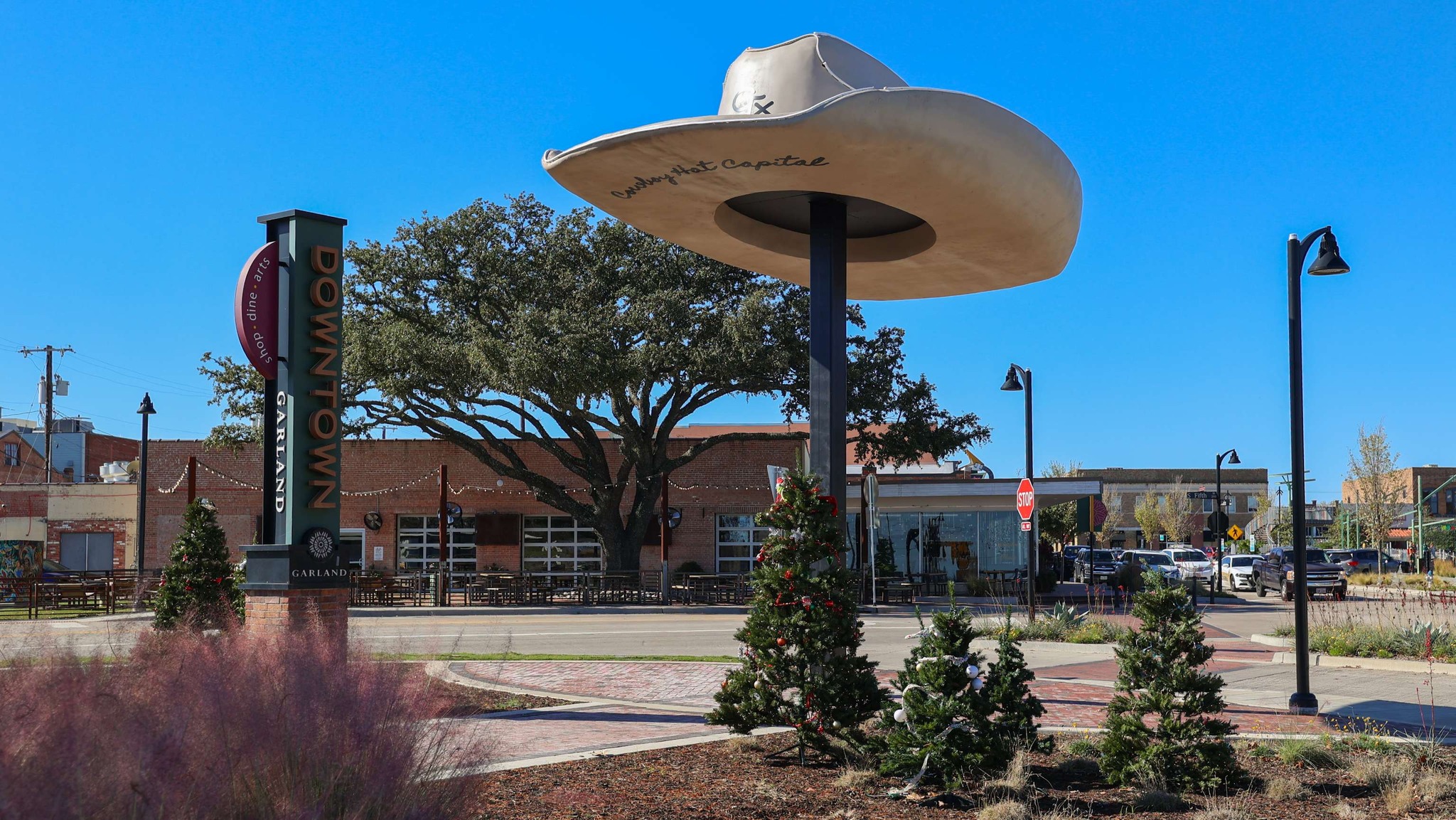
One of the most memorable chapters in Garland’s industrial story involves hats. In 1927 a hat company formed in Dallas under the name Byer Rolnick, and by 1938 the operation moved into a larger facility in Garland. Over time, the Resistol brand became closely associated with the city, turning hat manufacturing into a recognizable piece of Garland’s identity.
This kind of signature industry does more than provide jobs. It creates local pride. It gives residents a story to tell about what their city makes and why it matters. A long running manufacturing presence also creates generations of workers who build community identity around shared work, shared routines, and shared economic stability.
Garland’s broader manufacturing base continued to expand through the mid and late twentieth century, including electronics and defense related production in the region. Over time, the city developed a reputation as a place where manufacturing and technical work were not abstract ideas but daily reality.
Suburban Growth and the Postwar Population Boom
After World War II, Garland experienced the same suburban surge that reshaped much of America, but it hit with special force in the Dallas area. New highways, new jobs, and expanding regional business activity made Garland a natural place for families to settle. It offered proximity to Dallas while maintaining its own city services and community identity.
Population growth accelerated as neighborhoods expanded and new residents arrived from across Texas and beyond. This growth changed the city’s rhythm. Schools expanded. New churches formed. Parks and recreation became more central to city planning. Shopping corridors developed, and Garland increasingly functioned as a self sufficient city rather than a satellite community.
Growth also brought challenges, including the need for reliable water and infrastructure. North Texas weather swings between heavy rain and long dry stretches, and during drought periods communities had to plan carefully. Meeting the needs of a growing population required long term thinking and regional coordination, pushing Garland to modernize utilities and expand capacity.
Modern Garland, A City with Layers
Today Garland’s history is visible in layers rather than in a single historic downtown story. The city is part of the Dallas Fort Worth metroplex, but it retains a distinct identity shaped by its unusual origin as a compromise town born between rivals. That origin still matters because it reflects a theme that runs through Garland’s past: practical decisions made for long term survival.
Modern Garland blends legacy industry, diverse neighborhoods, and a growing regional identity that is tied to transportation and connectivity. Rail lines that once defined the city’s creation have been joined by highways and modern transit options, reinforcing Garland’s role as a connected community. Business growth, retail expansion, and civic redevelopment reflect a city that keeps reinventing itself while still carrying recognizable echoes of its earlier chapters.
Garland is also a place where local culture is shaped by ordinary resilience. It grew through rail decisions, industrial shifts, storms, and waves of migration into the region. It adapted from a rural landscape into a manufacturing center, then into a large suburban city with its own civic life. That arc, from prairie settlements to a modern urban community, is the heart of Garland’s history.
Why Garland’s History Still Matters
Garland’s story matters because it shows how cities are often born from very practical conflicts and compromises. It also shows how transportation decisions can reshape communities in lasting ways. A moved post office, a rail depot, and a strategic location created the foundation for a city that would grow far beyond what early residents could have imagined.
The city’s evolution also reflects bigger American patterns: the transition from agriculture to manufacturing, the impact of wartime production, and the suburban expansion that followed. But Garland’s history is not just a reflection of national trends. It has its own distinctive character rooted in rivalry turned unity, rural roots turned industrial strength, and a steady focus on building a city that can support families and opportunity.
Discover more from City Towner
Subscribe to get the latest posts sent to your email.