
The Diggs Family Massacre in Teaneck New Jersey
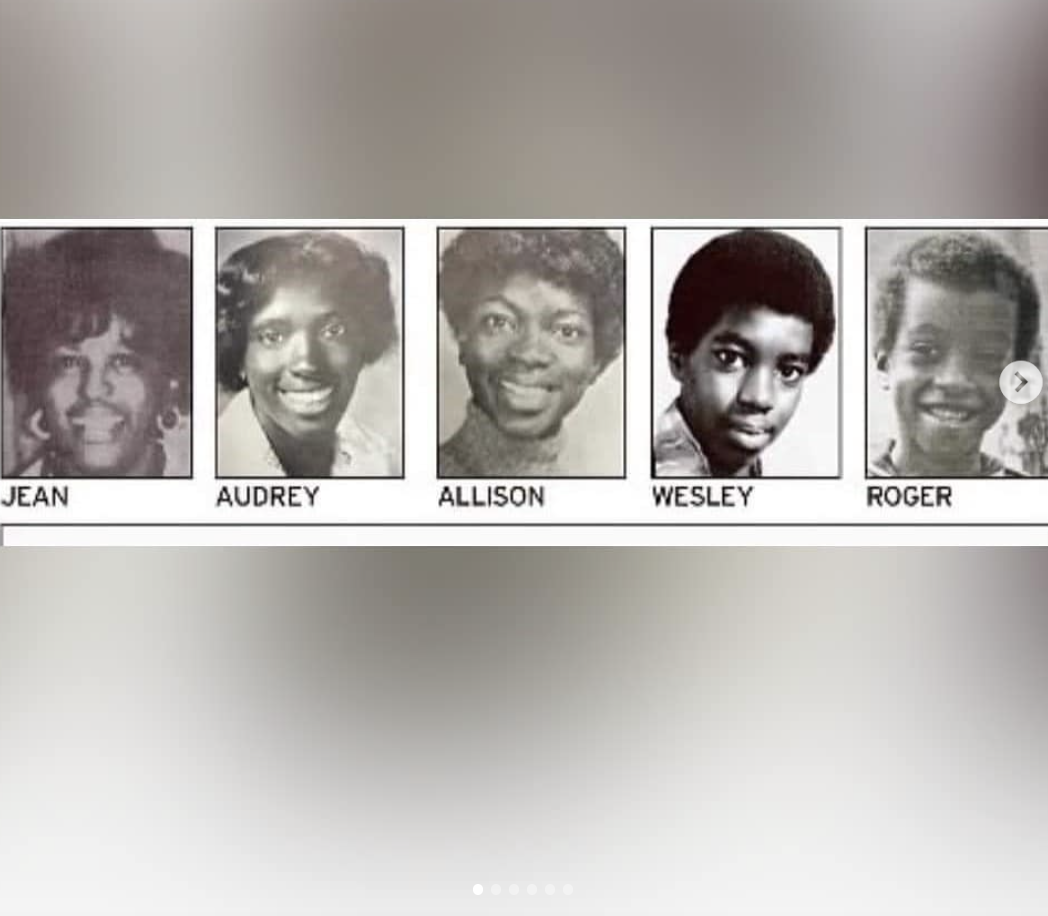
On December 22, 1975, one of the most haunting crimes in New Jersey history unfolded inside a home in Teaneck. What should have been an ordinary winter day became the setting for a tragedy that would echo through Bergen County for decades. Jean Diggs and four of her children, Allison, Audrey, Wesley Jr., and Roger Diggs, were killed inside their family home, leaving behind grief, fear, and unanswered questions that have never fully gone away.
The Diggs family murders stand out not only because of the number of victims, but because of the deep sense of shock they caused in the community. Crimes involving entire families often leave a different kind of scar. They break the illusion that home is always the safest place. In this case, the horror was magnified by the youth of the children and by the mystery that surrounded the killings from the very beginning.
Teaneck was known as a stable suburban township, a place where families built routines, children went to school, and neighbors expected life to follow a familiar rhythm. The Diggs murders interrupted that sense of order in the most brutal way possible. The crime was not just devastating for the relatives and loved ones left behind. It also forced an entire community to confront the reality that evil or violence could arrive without warning, even in places that seemed secure.
The Victims at the Center of the Story
At the center of this case was Jean Diggs, a mother whose life ended alongside those of four of her children. The names of Allison, Audrey, Wesley Jr., and Roger Diggs remain inseparable from the case because they remind people that this was not just a headline or a police investigation. It was the destruction of a family unit. Each victim represented a life interrupted, a future erased, and a circle of loved ones left to wrestle with the aftermath.
Family murder cases are especially painful because they compress so much loss into a single moment. Instead of one life being stolen, several are taken at once, leaving surviving relatives and investigators to sort through a scene of overwhelming grief. In cases like this, the emotional weight becomes almost impossible to measure. There are birthdays that never arrive, school years that never begin, holidays that become painful reminders, and a house that no longer feels like a place of warmth and safety.
For the public, the names often become part of a larger story about crime and mystery. But behind each name was a real person with habits, routines, and relationships. The enduring sadness of the Diggs family murders comes from that simple truth. It was not only a criminal act. It was the violent end of everyday lives.
December 22, 1975 in Teaneck
The date itself has become permanently tied to the case. December 22, 1975 came just days before Christmas, a time when many homes are filled with decorations, shopping lists, school breaks, family visits, and plans for celebration. That contrast has made the Diggs family murders even more chilling in the public imagination. A season associated with comfort and togetherness instead became associated with violence and loss.
Teaneck, located in Bergen County, was not the kind of place most people associated with a mass family killing. Its suburban setting contributed to the shock. When a crime this severe happens in a large city, some outsiders may wrongly treat it as part of a broader pattern of urban violence. But when it happens in a suburban home, the crime often feels more intimate and more unsettling to the wider public. It creates the impression that nowhere is fully protected from tragedy.
That sense of disbelief often lingers in old murder cases. People who remember them decades later do not just recall the facts. They remember the feeling that came with hearing the news. In the Diggs case, that feeling was a mixture of horror, sadness, and confusion. The violence seemed almost impossible to process.
The House on Carlton Terrace
The location of the murders became part of the case’s identity. The Diggs family home on Carlton Terrace in Teaneck was transformed from a private residence into a crime scene, and from there into a place forever associated with one of Bergen County’s most disturbing unsolved cases. In family murder investigations, the home itself often becomes symbolic. It is supposed to be a shelter, a place where parents and children sleep, eat, talk, and live ordinary lives. When violence erupts there, the betrayal of that expectation can be as unsettling as the crime itself.
The fact that the victims were found inside their own home gave the case an especially heavy emotional impact. It suggested vulnerability in the most personal setting possible. The walls of a house can protect a family from weather, noise, and the outside world, but they cannot always protect against a determined attacker. That truth can be difficult to face, and in this case it became impossible to ignore.
For neighbors and local residents, the address itself became unforgettable. A street that had once blended into the normal geography of suburban life was suddenly marked by tragedy. That is often how notorious crimes alter a place. The location becomes a permanent part of the story, even after years pass and the neighborhood changes.
The Investigation and Early Questions
When investigators began piecing together what had happened, they faced a case that was both emotionally devastating and deeply complex. Family murder scenes often raise immediate questions about motive, access, timing, and relationships. Investigators must determine whether the killer came from outside the home, whether the victims knew the person, and whether the crime was planned or impulsive. Every detail matters, from the order of the killings to the condition of the house to the possibility of missing evidence.
In the Diggs family murders, uncertainty became one of the defining features of the case. Like many old unsolved crimes, it has long been surrounded by theories, speculation, and conflicting interpretations. Some discussions focused on whether the case may have involved someone known to the family. Others looked at whether early investigative assumptions may have complicated the search for the truth. When a case remains unsolved for decades, even small early decisions can take on major significance in hindsight.
The passage of time often makes these questions harder rather than easier. Witness memories fade. Physical evidence can degrade. Investigative leads that once seemed promising may reach dead ends. At the same time, the mystery tends to deepen in the public imagination. The less people know for certain, the more the unanswered questions begin to define the story.
Why the Case Still Haunts People
The Diggs family murders remain haunting because they combine several of the most troubling elements found in true crime history. There were multiple victims, young children, a home setting, a suburban community, and the absence of a clear resolution. Together, those elements create a case that people struggle to forget.
Unsolved family killings often carry a special kind of unease. They suggest not only a violent act, but a failure of closure. No final answer means no complete accounting of responsibility. It means that surviving relatives, investigators, journalists, and members of the public are left with fragments rather than a finished narrative. Cases like this endure precisely because they feel unfinished.
There is also the emotional force of imagining what the family represented. The Diggs household was a real family with routines and relationships, and in a single stretch of violence those lives were erased. That kind of total loss can be difficult for people to accept. It creates a story that feels almost frozen in time, with the last known moments overshadowing everything that came before.
Teaneck’s Memory of the Crime
For communities, certain crimes become part of local memory even when they happened decades earlier. The Diggs family murders became one of those cases for Teaneck. Even as the township continued to grow and change, the case remained part of its darker history. New residents might learn about it through old newspaper archives, long time neighbors, or true crime retellings. Those who lived closer to the events often carried their own memories of the fear and sadness that followed.
A community does not experience a crime only through police reports. It experiences it through silence, rumor, anxiety, and the way people talk to one another afterward. Parents become more cautious. Neighbors lock doors earlier. Streets that once felt ordinary take on a strange emotional weight. In especially notorious cases, the memory becomes generational. People who were not even born when the murders happened grow up hearing about them.
That is part of why the Diggs case continues to resonate. It is no longer just an investigation from 1975. It is part of Teaneck’s historical memory, part of Bergen County’s catalogue of unsolved tragedies, and part of the larger American pattern of family murder cases that continue to attract attention long after the original headlines faded.
The Burden of an Unsolved Murder
There is something uniquely painful about an unsolved homicide. Even in cases where the facts of the killings are known, the lack of a definitive answer creates a lingering wound. Families are denied closure. Communities are denied resolution. Investigators are denied the ability to say the work is truly finished.
In the Diggs family murders, that burden is multiplied because there were five victims. An unsolved killing of one person is devastating enough. An unsolved slaughter of a mother and four children becomes a burden that hangs over everyone connected to the case. It raises hard questions about whether the truth was missed, whether evidence was overlooked, or whether the killer simply slipped away.
Old cases also confront the limits of the era in which they were investigated. In 1975, forensic science did not offer the same tools available today. Investigators relied heavily on witness statements, interviews, physical scene analysis, and whatever trace evidence they were able to recover. Modern readers sometimes look back and wonder whether newer technology might have changed the course of the case. That possibility adds another layer of frustration to unsolved crimes from the past.
Why the Story Endures
The Diggs family murders endure because they strike at some of the deepest fears people have about safety, family, and justice. A mother and four children were killed in their own home, in a quiet New Jersey community, days before Christmas. Those facts alone are enough to make the case unforgettable. The lack of a clear ending has only deepened its hold on the public imagination.
Cases that remain unsolved often survive through repetition. Each retelling keeps the names alive. Each summary, article, discussion, or documentary reference becomes part of the chain that prevents the victims from disappearing into history. In that sense, public memory serves an important function. It keeps attention on lives that mattered and reminds people that unresolved crimes are not truly finished stories.
The Diggs family case also speaks to a broader truth about violent crime. The damage does not end when the police leave the scene. It spreads outward through relatives, neighborhoods, and decades. It shapes memory. It alters the emotional map of a place. It changes how people tell the story of a town and of a time.
A Tragedy That Still Demands Reflection
More than anything, the Diggs family murders remain a tragedy that demands reflection. Jean Diggs, Allison, Audrey, Wesley Jr., and Roger Diggs were not meant to become part of a lasting mystery. They were a family whose lives ended in violence, and the enduring attention around the case reflects both the horror of what happened and the human need to keep asking why.
The story continues to matter because it is about more than an unsolved crime. It is about a family lost, a community shaken, and a search for answers that never fully ended. Decades later, the case still holds power because it represents unfinished justice. It reminds people that some crimes do not fade with time. They remain, waiting in the background of history, asking to be remembered.
The Diggs family murders on December 22, 1975 remain one of the most haunting crimes associated with Teaneck, New Jersey. The passage of years has not softened the sorrow at the center of the case. If anything, time has sharpened its mystery. The names of Jean, Allison, Audrey, Wesley Jr., and Roger Diggs continue to echo because the loss was so complete and the answers so incomplete.
Discover more from City Towner
Subscribe to get the latest posts sent to your email.