Kristin O’Connell Found Dead in a Cornfield After Going For a Walk in Ovid New York
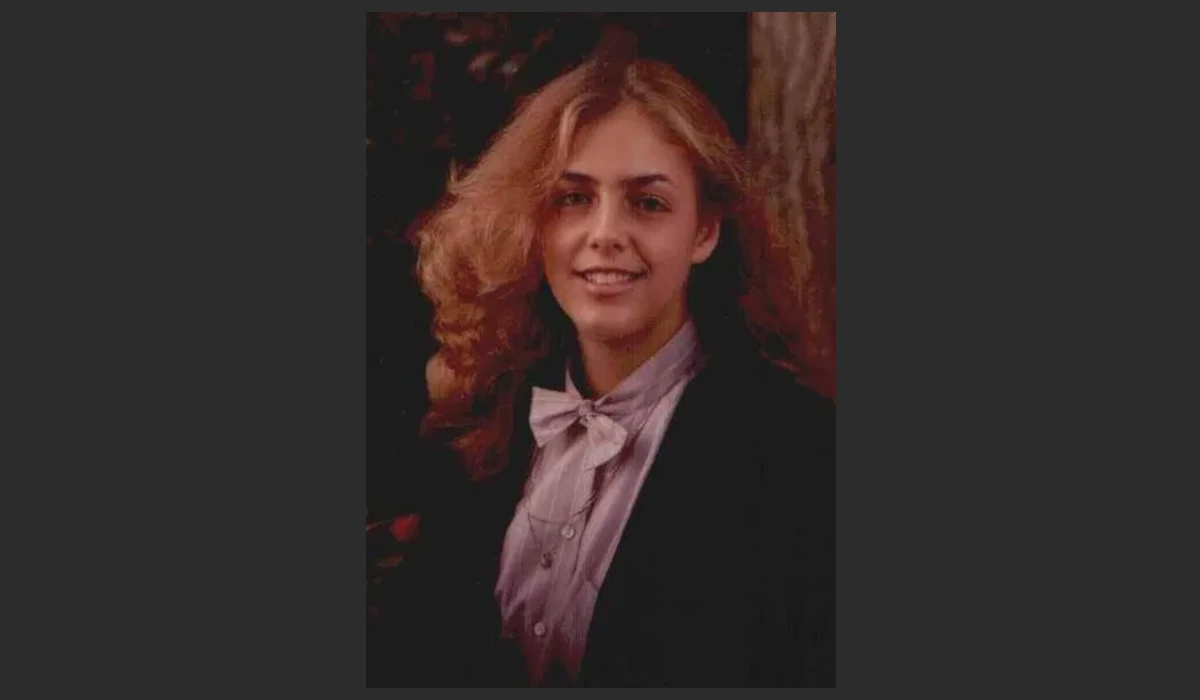
Kristin Mary O’Connell was a 20 year old college student from Burnsville, Minnesota, whose summer trip to the Finger Lakes region of New York ended in a brutal and still unsolved murder. She was last seen during the late evening of August 14, 1985, after reportedly leaving a gathering near County Road 139 in Ovid, New York. Two days later, searchers found her body in a nearby cornfield.
Kristin had traveled more than 1,000 miles from home to visit a young man she had met during spring break in Florida. The trip was supposed to be an opportunity to spend time with someone she was interested in and explore a part of the country that was unfamiliar to her. Instead, she soon decided to shorten the visit and return home.
On the night she disappeared, Kristin reportedly walked away from a trailer alone, barefoot and without her purse. Witnesses later described seeing her along the rural road, but no confirmed account established where she went afterward or who encountered her during her final moments.
Her body was discovered on August 16, 1985. She had been stabbed in the chest, and her throat had been cut. She had been left unclothed in the cornfield. No person has ever been arrested or charged with her murder.
More than 40 years later, Kristin’s death remains one of the most haunting unsolved homicides in New York’s Finger Lakes region. Investigators have followed thousands of leads, interviewed numerous people and preserved hundreds of items of evidence, but the identity of her killer remains unknown.
Kristin’s Life Before the Trip
Kristin was born on January 12, 1965. She grew up in Burnsville, Minnesota, and was remembered by relatives as a caring, sociable and compassionate young woman.
At the time of her death, Kristin was studying hotel and restaurant management. She hoped her education would eventually lead to a career in the hospitality industry, and she reportedly dreamed of working in Hawaii.
Kristin enjoyed meeting people and experiencing new places. She also cared about others and volunteered to help children whose mothers were staying at a shelter for victims of domestic violence. Her willingness to support families in difficult circumstances reflected the empathy remembered by those who knew her.
She loved nature, animals and outdoor activities. Friends and relatives described her as someone who could connect easily with others and approach unfamiliar situations with confidence.
Kristin was entering adulthood with educational plans, personal ambitions and a future that was still taking shape. Her trip to New York was meant to be part of that expanding independence, not the final journey of her life.
The Meeting in Florida
During spring break in 1985, Kristin traveled to Captiva Island, Florida. While there, she met a young man from New York.
The two remained in contact after the vacation. Later that summer, Kristin agreed to travel east and visit him in Ovid, a small rural community in Seneca County.
Kristin’s journey reportedly took her through Boston before she continued into central New York. The young man and another person met her and drove her to Ovid, where she arrived on August 12, 1985.
Ovid was very different from Kristin’s home in suburban Minnesota. The community was surrounded by farmland, rural roads and small settlements. Kristin did not know the area well and had no established network of local friends or relatives.
She depended heavily on the people she had traveled to visit. That unfamiliarity would later become an important part of the investigation because she reportedly left alone at night without transportation, shoes or her purse.
A Visit That Did Not Go as Planned
The visit apparently did not develop in the way Kristin expected. Within a short time of arriving, she contacted her mother and said she intended to cut the trip short.
Kristin reportedly planned to return to Boston before traveling back to Minnesota. The reason for her decision has never been fully established in the public record.
Her desire to leave has led to questions about whether she felt uncomfortable, disappointed or unsafe. However, no confirmed evidence shows that she specifically feared the young man she had traveled to visit or anyone else in Ovid.
A change of plans alone does not establish that a crime was about to occur. Kristin may simply have realized that the visit was not enjoyable or that she wanted to return home sooner than expected.
Still, the timing remains significant. Kristin had arrived only days earlier and was already preparing to leave. Before she could begin that journey home, she disappeared.
The Gathering Near County Road 139
On August 14, 1985, Kristin was reportedly at a gathering held at a trailer near County Road 139 in Ovid.
The complete list of people present has not been publicly established in detail. Investigators interviewed people connected to the gathering and attempted to reconstruct Kristin’s activities before she vanished.
At approximately 11:00 p.m., Kristin reportedly decided to take a walk. She left the trailer alone.
She was barefoot and did not take her purse. Those details have remained among the most puzzling elements of the case.
Walking alone at night in an unfamiliar rural area without shoes would have been uncomfortable and potentially dangerous. The road was dark, and nearby fields and properties would have been difficult for an outsider to navigate.
The fact that Kristin left her purse behind suggests she expected to return shortly. She may have wanted fresh air, needed time alone or intended to walk only a short distance.
It is also possible that the account of why she left was incomplete. Without Kristin’s own explanation, investigators had to rely on statements provided by the people who last saw her.
The Final Known Sightings
Witnesses later reported seeing Kristin walking along County Road 139.
Some accounts stated that two men were walking behind her. Another witness reportedly saw Kristin speaking with someone inside a stopped vehicle.
The identities of every person seen along the road have never been publicly resolved. It is unclear whether investigators located the two men, identified the vehicle or determined who was inside it.
If Kristin entered a vehicle, willingly or by force, it could explain how she moved from the roadway to the cornfield where her body was eventually found.
If she continued walking, her attacker may have approached her on foot or intercepted her farther along the road.
Some later accounts claimed that a scream was heard shortly after Kristin was seen near a vehicle. That detail has circulated in discussions of the case, but the complete circumstances and reliability of the report have never been fully explained publicly.
The final sightings created possible clues but no clear answer. Kristin disappeared somewhere between the trailer, the roadway and the place where she was killed.
The Delay Before She Was Reported Missing
Kristin did not return to the trailer that night.
The young man she had traveled to visit reportedly notified authorities the following day, approximately 13 hours after she was last seen.
The delay has attracted considerable attention because Kristin was unfamiliar with Ovid, had no shoes and had left her purse behind. Those circumstances could have indicated that she was vulnerable or in immediate danger.
However, no one was charged with delaying the report or interfering with the early search.
The people at the gathering may initially have believed Kristin had gone somewhere else, accepted a ride or found another place to stay. Because she was an adult, they may not have understood immediately that her absence represented an emergency.
Nevertheless, the missing hours were important. During that time, weather conditions changed, vehicles traveled through the area and potential physical evidence may have been disturbed.
The delay also gave the killer more time to leave Ovid, conceal evidence or create an explanation for the night’s events.
The Search Through Rural Ovid
After Kristin was reported missing, authorities and volunteers began searching the surrounding area.
Local firefighters joined the effort, examining roads, fields and properties near the trailer. Searchers had to work through farmland where tall crops and uneven terrain limited visibility.
Kristin was a visitor with little knowledge of the area. Investigators could not assume she had followed a familiar route or traveled toward a particular destination.
The search therefore focused on the places closest to her last known location and the roads where witnesses believed they had seen her.
Because she was barefoot, investigators may have considered whether she had been injured while walking or sought shelter at a nearby residence. They also had to examine the possibility that she had accepted a ride.
Hope that Kristin would be found alive ended when searchers entered a cornfield on August 16, 1985.
The Discovery in the Cornfield
Kristin’s body was found in a cornfield near the area where she had disappeared.
The discovery confirmed that she had not simply become lost or left Ovid voluntarily. She had been the victim of a violent homicide.
Kristin had suffered a stab wound to the chest, and her throat had been cut. Her body had been left unclothed.
The condition in which she was found raised questions about whether the killing involved a sexual motive, an attempt to destroy evidence or an effort to humiliate and dehumanize her.
Publicly discussed findings have indicated that investigators did not establish a completed sexual assault. However, the removal of her clothing remains significant because the killer may have taken it, discarded it elsewhere or removed it to eliminate trace evidence.
The cornfield provided concealment but also created challenges for investigators. Vegetation could hide footprints, discarded objects and other evidence.
Heavy rain reportedly fell during the period between Kristin’s disappearance and the discovery of her body. Water may have washed away blood, fingerprints, fibers, footprints and biological material.
The weather likely reduced the amount of usable evidence available to investigators at a time when forensic science was far less advanced than it is today.
The Original Homicide Investigation
New York State Police began a major investigation into Kristin’s death.
Detectives interviewed people at the gathering, residents of the surrounding area and anyone believed to have traveled along County Road 139 during the critical period.
They examined reports involving the two men allegedly seen behind Kristin and the vehicle that may have stopped near her. They also investigated people she had met during her visit.
Over the following decades, police pursued thousands of leads. The investigation generated hundreds of pieces of physical evidence and numerous theories.
Despite that work, no arrest followed.
The rural setting created both advantages and disadvantages. A small community may have a limited number of people who could have encountered Kristin, but local relationships and loyalties can make witnesses reluctant to speak.
If the killer was a stranger traveling through Ovid, identifying that person would have been extremely difficult without a clear vehicle description, forensic profile or confirmed witness.
If the killer was a local resident, someone in the community may have noticed unusual behavior, injuries, missing clothing or sudden travel after the murder.
The Stranger Theory
One theory suggested that Kristin encountered a passing motorist and became the victim of a crime of opportunity.
A stranger could have seen a young woman walking alone, barefoot and without obvious protection. The attacker may have offered her a ride or stopped under the appearance of providing assistance.
This theory could explain why investigators struggled to identify a personal motive or connect a known individual to the homicide.
However, Ovid was a small community, and some members of Kristin’s family questioned whether an unknown person could enter the area, commit such a violent crime and leave without attracting attention.
A stranger theory also depends heavily on the reported vehicle encounter. If Kristin was seen speaking to someone in a stopped vehicle, identifying that vehicle could have been critical.
No publicly confirmed evidence has established who was inside the vehicle or whether it had any connection to the murder.
The Possibility of a Local Killer
Another possibility is that Kristin was killed by someone who lived in or knew the Ovid area.
A local person would have understood the roads, fields and secluded locations. That knowledge could have helped the killer choose a cornfield where Kristin’s body would not be visible from the road.
A local attacker may also have known the people at the gathering or learned that Kristin was an outsider with limited knowledge of the area.
Over the years, residents have discussed rumors and suspicions involving various people. Some individuals received attention from investigators, but no public evidence has proved that any named person committed the crime.
In 2014, two Ovid men publicly stated that they believed police were examining them because a relative had reported seeing blood on them around the time of Kristin’s murder.
The men denied involvement and said the blood came from slaughtering a pig for a roast. Neither man was arrested or charged.
Their public statements revealed that investigators continued examining old information, but they did not establish guilt.
The Evidence Preserved From 1985
Authorities preserved hundreds of items associated with the investigation.
Reported evidence has included clothing, hairs, fibers, material from Kristin’s fingernails, a pillowcase and other objects collected during the original inquiry.
The existence of preserved evidence offers hope because modern laboratories can detect biological material that could not be analyzed effectively in 1985.
However, old evidence presents complications. Items may contain DNA from multiple people, including innocent friends, searchers, medical personnel and investigators.
Environmental exposure can degrade biological material. Rain, soil, heat and the passage of time may reduce the quality of any surviving profile.
Even if a laboratory develops a DNA profile, investigators must determine how the material reached the evidence. DNA belonging to someone who interacted with Kristin innocently before the murder would not by itself prove involvement.
The greatest value would come from a strong profile recovered from a location where innocent contact would be difficult to explain.
The Dispute Over Modern Testing
Kristin’s family has spent years urging authorities to apply newer forensic techniques to the preserved evidence.
Outside experts offered assistance using advanced DNA analysis, but disagreements arose over laboratory approval, state regulations and control of the evidence.
New York authorities declined some offers from private laboratories and documentary teams. Officials maintained that the homicide remained an active investigation and that evidence had to be handled according to established legal and scientific requirements.
Kristin’s family viewed those decisions as missed opportunities. They believed technology capable of identifying the killer was available but was not being used aggressively enough.
The disagreement reflected a broader challenge in cold cases. Families want immediate use of every available method, while law enforcement agencies must protect evidence, follow accreditation rules and ensure that testing will be admissible in court.
Testing also consumes material. Investigators must consider whether using a limited sample with one method could prevent better testing later.
Advances That Could Change the Case
Modern forensic science offers possibilities that investigators in 1985 could not have imagined.
Touch DNA testing can sometimes recover genetic material from skin cells left on clothing or objects. More sensitive methods can work with small or degraded samples.
Forensic genetic genealogy may allow investigators to compare an unidentified DNA profile with relatives listed in public genealogy databases. That process has helped solve numerous decades old murders.
A genealogical lead would not by itself prove guilt. Investigators would need to identify the contributor, collect a confirmatory sample and establish that the person’s DNA was connected to the crime rather than innocent contact.
Ballistic evidence is less central in Kristin’s case because she was killed with a knife, but trace materials such as hairs and fibers could still help connect a person, vehicle or residence to her body.
Reexamining photographs, witness statements and old timelines may also reveal inconsistencies that were not recognized during the original investigation.
Questions Surrounding the Final Timeline
The exact timing of Kristin’s death remains uncertain.
She was last officially seen at approximately 11:00 p.m. on August 14, 1985. The attack may have occurred before midnight or during the early morning of August 15.
This explains why some accounts describe the murder as taking place on August 14 while others use August 15.
Her body was found on August 16.
The timeline between the trailer and the cornfield remains the central mystery. Investigators still need to determine whether Kristin continued walking, entered a vehicle or met someone she already knew.
They also need to establish whether she was killed in the cornfield or attacked elsewhere and moved afterward.
The public record does not reveal whether blood evidence, drag marks or other scene findings answered that question.
No One Has Been Charged
No person has been arrested, prosecuted or convicted for Kristin’s murder.
The young man she traveled to visit has never been publicly proven responsible. The people at the gathering have not been charged.
The two men who said they received investigative attention in 2014 have not been charged.
The people reportedly walking behind Kristin and the person in the stopped vehicle have not been publicly identified as her killers.
Rumors involving local residents, drugs, sexual motives or a community conspiracy remain unproven.
The absence of charges does not mean investigators have no theories. Police may have examined individuals closely without obtaining enough evidence to support prosecution.
A criminal case requires more than suspicion. Prosecutors must be able to prove the identity of the killer beyond a reasonable doubt using reliable evidence that can survive courtroom challenges.
A Mother’s Decades Long Search for Justice
Kristin’s mother has spent more than four decades seeking answers.
She has advocated for renewed testing, spoken publicly about the case and challenged authorities to make full use of available technology.
For a parent, the passage of time does not reduce the need for justice. Every year without an arrest represents another year in which the person responsible has avoided accountability.
Kristin’s family knows how she died, but they do not know why she was selected, what happened during her final moments or who took her life.
That uncertainty creates a continuing form of grief. The family buried Kristin but could not close the story of her death.
New testing represents hope, but it also carries the possibility of disappointment. A sample may be too degraded, may contain multiple contributors or may produce a profile that does not match anyone in available databases.
Still, the family continues because even a small chance of identifying the killer is worth pursuing.
Remembering Kristin Beyond the Crime
Kristin should not be remembered only as the victim found in a cornfield.
She was a young woman with educational goals, compassion for vulnerable families and dreams of building a career in hospitality.
She traveled because she was open to new experiences and willing to trust someone she had met. Her decision to visit New York did not make her responsible for the violence committed against her.
Kristin was at an age when much of her adult life was still ahead. She should have had the opportunity to finish school, pursue her career, travel and build relationships.
Her killer denied her all those possibilities.
The details of the crime are important because they may help solve the case, but they should never overshadow the life that was taken.
A Murder Still Waiting to Be Solved
The murder of Kristin Mary O’Connell remains one of the Finger Lakes region’s longest unresolved homicide cases.
Kristin arrived in Ovid on August 12, 1985, after traveling from Minnesota to visit a young man she had met in Florida.
She soon decided to return home. Before she could leave, she attended a gathering near County Road 139.
At approximately 11:00 p.m. on August 14, she reportedly walked away alone, barefoot and without her purse. Witnesses later reported seeing her along the road, possibly followed by two men and speaking with someone in a vehicle.
She did not return.
Her body was found in a nearby cornfield on August 16. She had been stabbed in the chest, her throat had been cut and her clothing had been removed.
Investigators pursued thousands of leads and preserved extensive evidence, but no arrest followed.
The solution may now depend on advanced DNA testing, a new witness or the reevaluation of information collected decades ago.
Someone may know who encountered Kristin on County Road 139. Someone may remember a vehicle, a confession, bloodstained clothing or unusual behavior after the murder.
Until that information is provided and supported by evidence, Kristin’s killer remains unidentified.
Kristin deserved to return home to Minnesota. Her family deserves the truth, and the person who ended her life should finally be held accountable.
If you have any information, please call:
New York State Police
Troop E, Major Crimes Unit, Canandaigua, New York
(585) 398-4100
or e-mail the information to:
nysvicap@troopers.ny.gov
Discover more from City Towner
Subscribe to get the latest posts sent to your email.