
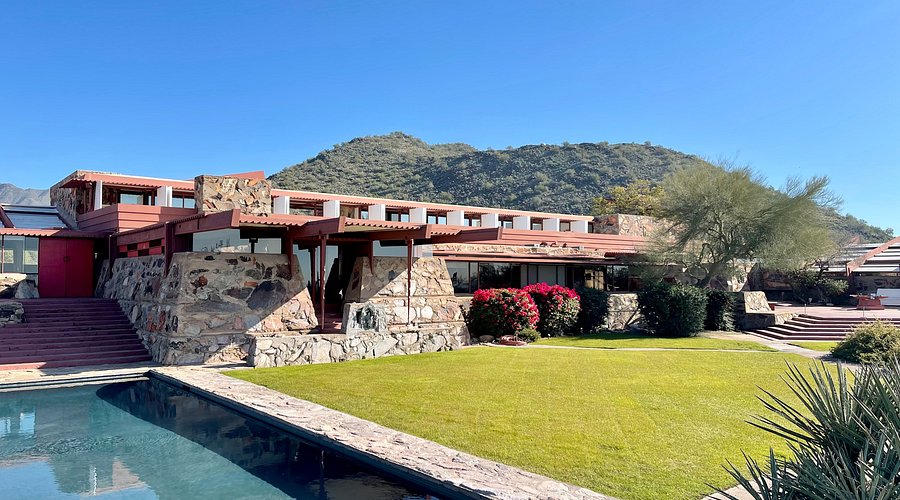
Taliesin West: A Desert Masterpiece in Scottsdale Arizona
Taliesin West is one of the most striking places in Scottsdale because it feels inseparable from the Sonoran Desert around it. This is not a building that simply occupies land. It reads like an idea shaped by sunlight, stone, and horizon, built to sit low and wide as if it has always belonged there. Visitors often arrive expecting a famous architectural site and leave with something more. Taliesin West offers an atmosphere, a sense of quiet intelligence, and a close look at how a creative life can be organized around place.
Set against desert slopes and long views, Taliesin West invites you to slow down and pay attention. The materials, angles, and transitions between indoors and outdoors make the experience feel like a conversation between architecture and landscape. Even if you know very little about design, you can feel the intention in the way spaces open, narrow, shade, and reveal.
The Vision Behind The Place
Taliesin West was created as a winter home, studio, and working campus for architect Frank Lloyd Wright and the community of apprentices who learned and worked alongside him. The site was meant to be functional, but it was also meant to teach. It demonstrated principles Wright believed in deeply, especially the idea that architecture should harmonize with its environment rather than fight it.
In the desert, that meant building with respect for sun and heat, shaping shade with overhangs and screens, and creating spaces that feel comfortable by design rather than by brute force. Taliesin West reflects a mindset where beauty and practicality are not separate goals. They are the same goal, achieved through careful choices.
The result is a place that feels both intimate and expansive. Some areas pull you close with lower ceilings and filtered light, while others open outward to the desert, reminding you that the landscape is not a backdrop. It is part of the building’s identity.
An Architecture That Looks Like It Grew From The Desert
One of the first things people notice at Taliesin West is the way it blends into the terrain. The lines are horizontal, the structures feel grounded, and the textures echo the rocky surroundings. Instead of trying to dominate the view, the site frames it, guiding your attention toward mountains, sky, and the subtle changes in desert color throughout the day.
The design language is full of purposeful contrasts. Light can be soft and scattered in one passageway, then bold and direct in an open courtyard. Materials shift from rugged to refined. The geometry feels strong, yet it is softened by the way the desert light moves across surfaces.
Taliesin West is also a reminder that great architecture is not only about what you see from a distance. It is about how you move. The experience changes as you walk, because Wright’s spaces are choreographed. You are guided through a sequence of reveals, pauses, and viewpoints, like turning pages in a book.
A Living Campus, Not A Frozen Monument
Taliesin West stands out among historic sites because it still carries a sense of work and learning rather than pure museum stillness. It is known as a place where education and design culture have continued, which gives it a living energy. You are not only touring a relic. You are visiting an environment built for creative practice.
That feeling becomes clear when you consider how the campus was used. It was not just a residence. It was a studio, a gathering space, and a learning ground where apprentices absorbed lessons through daily life. The desert climate shaped the schedule and the routines, and the architecture supported that rhythm with courtyards, breezeways, and shaded areas that make outdoor movement feel natural.
This sense of a working place can be deeply inspiring. It suggests that creativity is not only a spark. It is a system, a set of habits, and a relationship with place. Taliesin West demonstrates how a physical environment can support that kind of disciplined imagination.
What It Feels Like To Tour Taliesin West
A visit to Taliesin West is often guided, and that format fits the site well. The story matters. Without it, you might admire the shapes and views but miss the deeper meaning. With it, you begin to notice details that would otherwise slip by: why one wall sits the way it does, why a corridor turns, why a courtyard opens to a particular angle of the sky.
As you move through the spaces, you may find yourself paying attention to the practical genius behind the beauty. Shade is not random. It is planned. The relationship between interior and exterior is not decorative. It is essential. Taliesin West often feels like an early lesson in passive design, where comfort comes from orientation, airflow, and thoughtful structure rather than constant mechanical correction.
The desert light is part of the tour, too. Depending on the time of day, the place can feel calm and silvery or bold and dramatic. Morning can highlight sharp edges and fresh air. Late afternoon can stretch shadows and warm the stone. The site shows you how architecture is never static. It changes with weather, season, and time.
The Emotional Impact Of The Space
People often expect Taliesin West to be impressive, and it is. What surprises many visitors is how personal it can feel. There is a sense of presence, as if you are walking through ideas that were lived in rather than simply drawn. The place communicates values: respect for nature, confidence in craftsmanship, and the belief that design can shape how people think and feel.
Taliesin West also invites reflection on the desert itself. The Sonoran Desert is often misunderstood as empty, but time there reveals its complexity. The site encourages that shift in perception. You begin to notice texture, resilience, and subtle beauty. The building does not distract you from the desert. It helps you see it.
In that way, Taliesin West is not only about architecture. It is about attention. It trains you to look longer, listen more closely, and appreciate the way thoughtful design can deepen your connection to a place.
Tips For Making The Visit More Rewarding
To get the most out of Taliesin West, approach it like an experience rather than a quick stop. Wear comfortable shoes, bring water, and be prepared for outdoor walking. The desert environment is part of the site, and your comfort will shape your ability to enjoy the details.
If you can, consider visiting when temperatures are milder. Cooler weather makes it easier to linger, and you will likely find yourself wanting to linger. Give yourself time afterward as well. Taliesin West can leave you with a quiet, thoughtful mood, the kind that pairs well with a calm meal, a scenic drive, or a slow evening in Scottsdale.
Also, allow yourself to be curious even if architecture is not your usual interest. The site is approachable because it is human. It was built for living and learning, not just for looking. That is why it resonates.
Why Taliesin West Matters In Scottsdale’s Identity
Scottsdale is often associated with leisure, resorts, and polished experiences, and Taliesin West fits that reputation in a deeper way. It represents a high standard of design and a respect for the desert landscape that influences how many people see the city. It is a cultural anchor that gives Scottsdale more dimension, connecting the area not only to tourism but also to a broader story about art, education, and American architecture.
Visiting Taliesin West can change how you experience the rest of Scottsdale. You may begin to notice the city’s relationship with the desert more clearly: the way buildings sit low against the horizon, the way courtyards create shade, the way outdoor living is treated as essential rather than optional. Taliesin West sharpens your eye, and that gift stays with you.
Discover more from City Towner
Subscribe to get the latest posts sent to your email.