
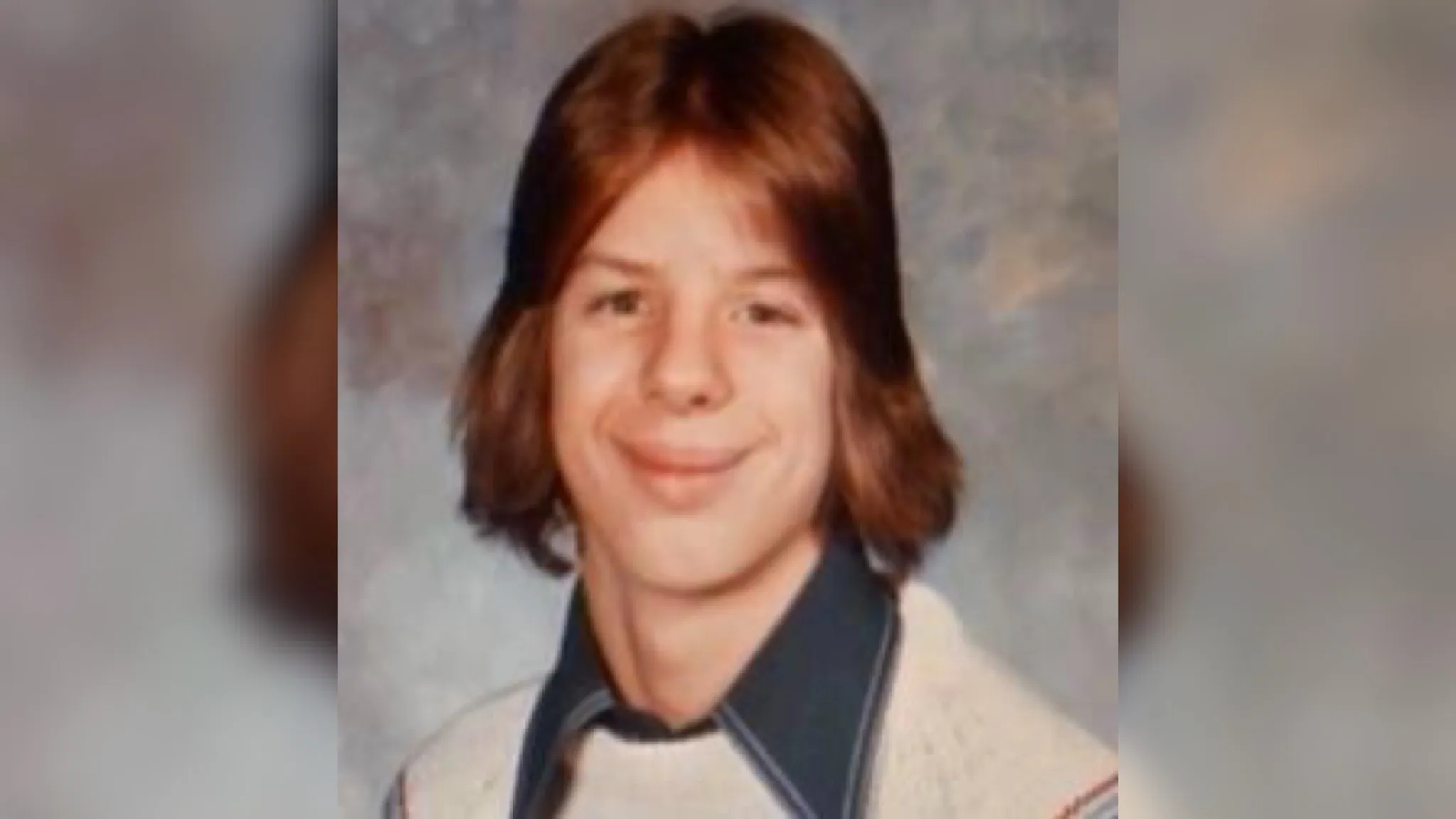
Kurt Sova Found Dead After Going Missing At Party in Newburgh Heights Ohio
The death of 17 year old Kurt Sova remains one of the most troubling unsolved cases in the history of Newburgh Heights, Ohio. Kurt disappeared after attending a house party on October 23, 1981, and his body was discovered five days later in a nearby ravine. Although the evening of October 23 marked the beginning of the mystery, investigators were never able to determine exactly when he died, where he spent the missing days, or what caused his death.
The case has continued to attract attention because of its confusing timeline, contradictory witness accounts, unexplained sightings, and unusual events that occurred while Kurt was missing. His body showed no obvious signs of fatal violence, yet the circumstances surrounding its discovery strongly suggested that important information had been withheld.
More than four decades later, no one has been charged in connection with Kurt’s death. His family spent years searching for answers, believing that people who attended the party knew more than they admitted. The unresolved case remains a painful example of how a seemingly ordinary night can become the beginning of a mystery that lasts for generations.
Kurt Sova’s Life in Newburgh Heights
Kurt Sova was born on July 15, 1964, and lived with his family in Newburgh Heights, a small community near Cleveland, Ohio. He was the youngest of four sons and was described by relatives as a generally responsible teenager who did not have a history of running away.
Kurt attended high school and lived a relatively normal life. His mother, Dorothy Sova, later emphasized that her son usually followed the rules of the household and normally returned home by approximately 10:00 or 11:00 at night. He was not known for disappearing without contacting his family.
According to those close to him, Kurt was not an experienced heavy drinker. This detail became important because alcohol played a significant role in witness descriptions of his final known evening. Friends and party guests said he became severely intoxicated or ill, but the amount of alcohol later detected in his body did not fully explain his death.
At the time of his disappearance, Kurt was 17 years old, approximately 5 feet 11 inches tall, and weighed around 136 pounds. He had brown hair and brown eyes. On the night he vanished, he was wearing clothing that included a bright yellow shirt, an item his family believed should have made him easy to notice during the searches that followed.
The House Party on October 23, 1981
On Friday, October 23, 1981, Kurt left his family home and met a friend nearby. The friend was planning to attend a party at a duplex on Harvard Avenue in Newburgh Heights, and Kurt decided to accompany him.
The gathering reportedly included more than a dozen people. Many of the attendees were older than Kurt, and some were individuals he did not know well. Alcohol was readily available, including strong grain alcohol that could quickly affect someone who was inexperienced with drinking.
During the party, Kurt reportedly consumed a substantial amount of alcohol and became noticeably intoxicated. Witnesses said he became sick and had difficulty remaining steady. His condition eventually became serious enough that his friend decided to take him outside for fresh air.
Kurt was reportedly placed near a fence outside the duplex. His friend then returned upstairs to retrieve a jacket. The friend claimed that he was gone only briefly, but when he came back outside, Kurt had disappeared.
This moment became the last widely accepted sighting of Kurt on the night of the party. No one offered a clear explanation for how a severely intoxicated teenager could have left the area so quickly without being noticed.
The Initial Search for Kurt
When Kurt did not return home, his family immediately became concerned. His absence was completely out of character, and he had not contacted anyone to explain where he was staying.
His parents began calling friends and searching places where they thought he might have gone. As the hours passed without any sign of him, the possibility that he had simply stayed with a friend became increasingly unlikely.
On October 25, 1981, Kurt’s family officially reported him missing. Dorothy Sova began distributing flyers and questioning people who might have seen her son. Family members searched streets, school grounds, industrial areas, dumpsters, wooded spaces, and ravines throughout Newburgh Heights.
One of the locations they examined was the area near Harvard Avenue where Kurt’s body would later be found. Kurt’s father and brother maintained that his body was not present when they searched. They believed the bright yellow shirt he was wearing would have been clearly visible.
Their claim later raised the possibility that Kurt’s body had been moved to the ravine after the family had already searched it.
Conflicting Statements About the Party
As Dorothy investigated her son’s disappearance, she learned that he had attended the party at the Harvard Avenue duplex. She approached a woman associated with the residence and asked about the gathering.
According to Dorothy, the woman initially denied that a party had occurred. She also denied that Kurt had been at the duplex. This statement appeared to conflict with what Kurt’s friend and other witnesses had reported.
Dorothy later spoke with a pizza delivery driver who reportedly confirmed delivering food to the residence during a gathering. When Dorothy confronted the woman again, she allegedly admitted that there had been a party and that Kurt had attended.
The changing account immediately created suspicion. It was unclear why someone would deny that the party happened unless the person was afraid of legal trouble, attempting to protect someone, or concealing something that occurred inside the duplex.
No public evidence proved that the woman was responsible for Kurt’s death. However, the initial denial damaged the credibility of people connected to the gathering and strengthened the Sova family’s belief that party guests were withholding information.
The Reported Sighting After the Party
One of the most confusing elements of the case involved a reported sighting several days after Kurt disappeared. A friend named David Trusnik claimed that he saw Kurt walking along a busy road less than one mile from the Sova home.
According to the account, Kurt was walking with another boy. David stopped and offered Kurt a ride. Before Kurt entered the vehicle, a van reportedly approached.
Kurt allegedly called out the name “Franco” and walked toward the van. He and the other boy then entered it and left the area.
David said he did not know at the time that Kurt had been reported missing. By the time he learned about the search, Kurt’s body had been found.
Investigators were never able to publicly identify Franco, locate the van, or independently confirm that the person seen along the road was actually Kurt. The sighting remained important because the original autopsy findings suggested that Kurt might have survived for several days after the party.
The possibility that Kurt was alive after October 23 created a major question. Where had he been staying, and why had he not contacted his family?
The Stranger’s Disturbing Prediction
Another unsettling incident occurred at a neighborhood record store where a missing person poster featuring Kurt had been displayed.
An unidentified man reportedly looked at the poster and told the store manager that it could be taken down. The stranger allegedly said that Kurt would be found dead in two days.
Approximately two days later, Kurt’s body was discovered.
The man’s identity was never publicly established. Investigators could not determine whether he had genuine knowledge of Kurt’s location, whether he had heard a rumor, or whether his statement was a cruel coincidence.
The prediction became one of the most frequently discussed aspects of the case. If the stranger knew where Kurt was, he may also have known when the body would be placed in the ravine. However, without identifying him, investigators could not determine whether the statement had any real connection to Kurt’s death.
The Discovery of Kurt’s Body
On October 28, 1981, three boys discovered Kurt’s body in a ravine near Harvard Avenue. The location was close to the duplex where the party had been held five days earlier.
Kurt was found lying in an area near industrial buildings and warehouses. His clothing was still on his body, and there was no obvious evidence that he had been shot, stabbed, strangled, or severely beaten.
He had minor bruises and scratches, but none appeared serious enough to cause his death. One of his shoes was reportedly found wedged among nearby rocks, while the other shoe was missing.
The body’s location immediately troubled Kurt’s family. They believed the ravine had already been searched and that his bright clothing would have been noticed. The condition and placement of the body led them to suspect that it had been brought to the ravine shortly before its discovery.
No confirmed evidence established who might have moved the body or what type of vehicle could have been used.
The Uncertain Time and Cause of Death
The autopsy failed to provide a clear cause of death. Kurt had no fatal injuries, and there was no disease that obviously explained why a healthy 17 year old had died.
The medical examination also created a major timeline problem. The original estimate suggested that Kurt had been dead for only approximately 24 to 36 hours before his body was discovered on October 28, 1981.
If that estimate was correct, Kurt was alive for several days after leaving the party on October 23. This would mean that he died around October 26 or October 27, not on the night he disappeared.
The estimate raised more questions than it answered. Investigators needed to determine where Kurt had spent those days, who had been with him, and why he was unable or unwilling to return home.
Time of death estimates are not always exact, especially when a body has been exposed to outdoor temperatures, moisture, changing weather, or other environmental conditions. It is possible that the original estimate was inaccurate, but no later finding conclusively resolved the issue.
Because of this uncertainty, October 23, 1981, is most accurately described as the date of Kurt’s disappearance and last confirmed activity, rather than a proven date of death.
The Role of Alcohol
Witnesses consistently described Kurt as extremely intoxicated at the party. Some accounts indicated that he drank grain alcohol, which is much stronger than ordinary beer or wine.
Alcohol may have caused Kurt to become disoriented, lose consciousness, vomit, fall, or experience a medical emergency. A heavily intoxicated person could also be vulnerable to exposure, choking, aspiration, injury, or exploitation by others.
However, the amount of alcohol detected during the autopsy was reportedly not sufficient by itself to explain his death. This did not mean that Kurt had not been extremely drunk earlier. If he survived for several days, his body could have metabolized most of the alcohol before he died.
The lack of a fatal alcohol level made it difficult to classify the case as a simple overdose. It also left open the possibility that alcohol contributed indirectly to his death rather than causing it on its own.
The Theory of an Accident and Cover Up
One of the most common theories is that Kurt suffered an accident or medical emergency during or shortly after the party. The people present may have panicked and decided not to call an ambulance because alcohol had been provided to a minor.
Under this theory, Kurt could have fallen, choked, passed out, or become dangerously ill. Party guests may have believed that he would recover and placed him somewhere to sleep.
If his condition worsened, those involved might have feared arrest or punishment. They could have hidden him in a basement, garage, vehicle, warehouse, or another nearby location before moving his body to the ravine.
This theory could explain why the party was initially denied. It might also explain why the body was not seen during earlier searches.
The theory remains unproven. There is no publicly confirmed evidence showing that Kurt was kept in a particular building or vehicle. However, his family believed that someone from the party knew what happened and chose to remain silent.
The Possibility That Kurt Left With Someone
Another possibility is that Kurt left the duplex voluntarily or was picked up by someone he knew. Although he was severely intoxicated, he may have attempted to walk home, visit another friend, or travel to a different gathering.
The reported sighting involving the van and the person named Franco supports the possibility that Kurt was moving around Newburgh Heights after the party. If the sighting was accurate, Kurt may have spent several days with people who never came forward.
He could have suffered a later accident or medical emergency while inside a private home or vehicle. Those present might then have moved his body to avoid responsibility.
The difficulty with this theory is the lack of independent evidence. No confirmed witness placed Kurt at another house, no one identified Franco, and no vehicle was publicly connected to the case.
The Death of Eugene Kvet
Several months after Kurt’s death, another teenager named Eugene Kvet was found dead in a ravine along the same general street.
Eugene had reportedly been missing for several days before his body was discovered. Like Kurt, he was said to be missing one shoe. The two teenagers were also acquainted.
These similarities caused some people to question whether the deaths were connected. Both involved teenage boys, unexplained missing periods, ravines, and missing footwear.
Investigators never publicly established a connection between the cases. The similarities may have been coincidental, but they added another layer of mystery to an already confusing investigation.
Without evidence of a common suspect, location, or method of death, the possible link remained speculation.
Problems With the Investigation
The early investigation faced several challenges. Witnesses had been drinking, memories were inconsistent, and some people reportedly changed their stories.
The duplex where the party occurred may not have been treated as a crime scene because it was not immediately known that Kurt had died. Valuable evidence could have been lost, cleaned, moved, or overlooked during the first days of the investigation.
Forensic science in 1981 was also more limited than it is today. Investigators did not have access to modern DNA testing, advanced digital records, cell phone location data, surveillance cameras, or comprehensive computerized databases.
The unexplained delay between Kurt’s disappearance and the discovery of his body made the investigation even more difficult. Authorities could not determine whether the duplex, the ravine, a vehicle, or another unknown location was the actual scene of death.
A Family’s Search for Answers
Dorothy Sova refused to let her son’s case be forgotten. She collected newspaper stories, witness information, notes, and possible leads for many years.
She continued to question the official explanations and remained convinced that people knew what happened to Kurt. Her efforts helped preserve information that might otherwise have disappeared as witnesses moved away or died.
Dorothy died in 2014 without learning the truth. Kurt’s brother Kevin later provided investigators with boxes of materials she had collected.
The family’s dedication helped generate renewed interest in the case. Investigators revisited old interviews, reconsidered the original timeline, and sought assistance from students and independent researchers.
Despite those efforts, no arrest followed, and no definitive cause of death was established.
Renewed Attention to the Case
In 2019, Newburgh Heights police renewed their examination of Kurt’s death. Criminal justice students from Tiffin University assisted in reviewing documents and organizing information.
The case was later presented at a large cold case event where investigators, researchers, students, and members of the public studied the known evidence and proposed new theories.
The renewed review generated publicity and encouraged people with information to come forward. However, none of the publicly discussed leads solved the case.
The passing of time created serious obstacles. Memories had faded, evidence was limited, and many of the people associated with the original investigation were elderly or deceased.
Even so, authorities continued to treat the case as unresolved. Kurt’s death remained listed among Ohio’s unsolved homicide investigations.
Questions That Remain Unanswered
The central questions surrounding Kurt Sova’s death have remained unchanged since 1981.
Investigators still do not know whether Kurt left the party on his own or was taken somewhere by another person. They do not know where he spent the time between October 23 and the discovery of his body on October 28.
It remains unclear whether the reported sighting near the van was accurate. The identity of Franco has never been publicly confirmed, and the stranger who predicted Kurt’s death has never been identified.
Authorities have also been unable to explain why the party was initially denied, why Kurt’s body appeared in an area his family said had already been searched, or why one of his shoes was missing.
Most importantly, no medical or investigative finding has conclusively explained how Kurt died.
The Lasting Mystery of Kurt Sova
The death of Kurt Sova remains disturbing because the case contains numerous suspicious details without a single piece of evidence strong enough to reveal the complete truth.
Kurt was last reliably seen sick and intoxicated outside a house party on October 23, 1981. His body was found five days later near the same street, but the autopsy suggested that he may have remained alive for several days.
The absence of fatal injuries does not mean that no crime occurred. Someone could have failed to obtain medical help, concealed his condition, moved his body, or withheld information from investigators.
It is also possible that Kurt’s death resulted from an accident that became surrounded by secrecy because witnesses feared consequences.
Whatever happened, the people who last saw Kurt alive may have held the key to solving the case. Their conflicting accounts and silence prevented his family from receiving the answers they deserved.
Kurt Sova was more than the subject of a cold case. He was a son, brother, friend, and teenager whose life ended under circumstances that remain unexplained. His family’s long search for the truth continues to define a mystery that began on October 23, 1981, in Newburgh Heights, Ohio.
Discover more from City Towner
Subscribe to get the latest posts sent to your email.