
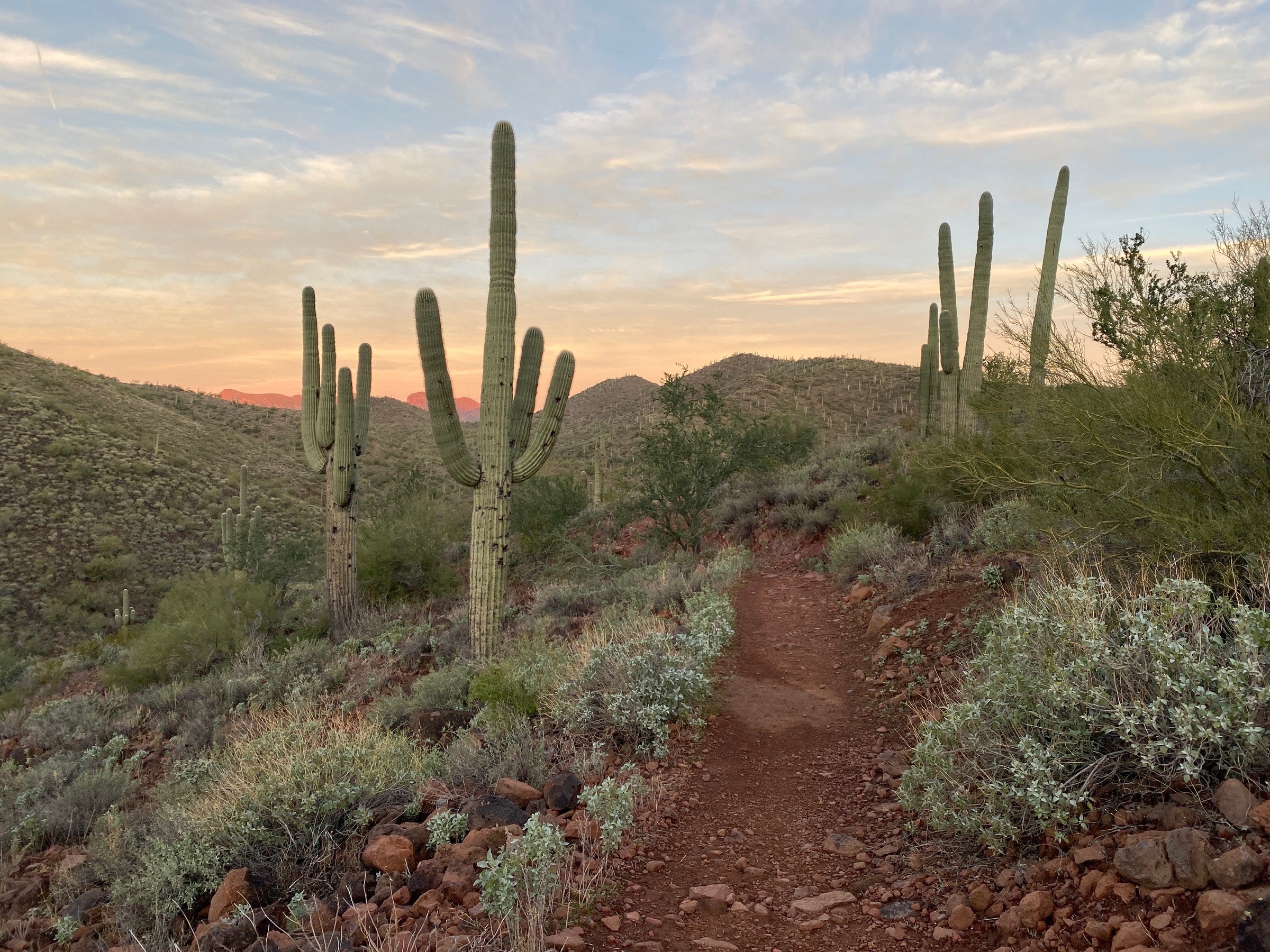
Pipeline Canyon Trail in Peoria Arizona
Pipeline Canyon Trail offers one of the most memorable ways to experience the rugged desert landscape surrounding Lake Pleasant near Peoria, Arizona. Located within Lake Pleasant Regional Park, the trail combines classic Sonoran Desert scenery with expansive lake views, rocky hillsides, desert vegetation, wildlife viewing opportunities, and a distinctive canyon crossing that helps make the hike stand out from many other trails in the Phoenix metropolitan area.
For travelers visiting Peoria, Pipeline Canyon Trail provides an opportunity to leave the city’s developed neighborhoods behind and experience a dramatically different side of the region. Within a relatively short drive, hikers can find themselves surrounded by mountains, open desert, towering saguaros, sparkling water, and wide Arizona skies.
The trail is especially attractive because hikers do not need to climb an enormous mountain or commit to an all day trek to enjoy impressive scenery. Pipeline Canyon Trail can be explored as its own hike or connected with other trails within Lake Pleasant Regional Park to create a longer adventure.
A Scenic Desert Trail Near Peoria
Pipeline Canyon Trail is located inside Lake Pleasant Regional Park northwest of central Peoria. The park covers a large area surrounding Lake Pleasant, one of the most popular recreation destinations in central Arizona.
While Lake Pleasant is widely known for boating, fishing, camping, kayaking, and other activities on the water, the surrounding desert contains an extensive network of hiking trails. Pipeline Canyon Trail is one of the park’s primary hiking destinations and provides visitors with an excellent introduction to the terrain surrounding the reservoir.
The landscape feels noticeably different from the heavily developed portions of the Phoenix metropolitan area. Mountains rise from the desert around the reservoir, while numerous coves and fingers of water extend between the hills.
Pipeline Canyon Trail follows the contours of this rugged landscape, providing changing perspectives of both the lake and surrounding desert. In some locations, hikers travel relatively close to the shoreline. Other portions climb above the water and provide broad views across the reservoir.
The combination of desert and water is one of the trail’s greatest attractions. Arizona is famous for its dry landscapes, so seeing a large body of blue water surrounded by brown and green desert hills creates a striking contrast.
Hiking Through the Sonoran Desert
Pipeline Canyon Trail provides a close look at the Sonoran Desert ecosystem that defines much of southern and central Arizona. Hikers can encounter saguaros, palo verde trees, creosote bushes, cholla, prickly pear cactus, barrel cactus, and numerous smaller desert plants.
The saguaro cactus is particularly noticeable throughout the landscape. Some grow alone on exposed hillsides, while others appear in large groups extending toward distant mountains. Their distinctive shapes create the classic Arizona scenery that many visitors hope to see.
The desert changes considerably with the seasons. During periods of favorable winter rainfall, spring can bring colorful wildflowers to portions of the landscape. Yellow, purple, orange, and white blossoms may appear among the cactus and rocky terrain.
Summer creates an entirely different environment. Temperatures around Lake Pleasant can become dangerously hot, particularly during the middle of the day. Shade is limited along much of Pipeline Canyon Trail, making the cooler months generally more comfortable for hiking.
Fall gradually brings more pleasant conditions, while winter often provides some of the best hiking weather of the year. Clear skies, mild daytime temperatures, and distant mountain views can create excellent conditions for exploring the park.
The Famous Canyon Crossing
One of the most recognizable features associated with Pipeline Canyon Trail is its crossing near a narrow inlet of Lake Pleasant. Depending on water levels and park conditions, hikers may encounter the distinctive floating bridge associated with the trail.
The crossing gives Pipeline Canyon Trail a character that is unusual among desert hikes. Instead of simply following rocky ridges and dry washes, the route interacts directly with the changing shoreline of Lake Pleasant.
Because Lake Pleasant is a reservoir, however, water levels can rise and fall considerably throughout the year. Portions of the trail or crossing area can be affected by changing water levels. At certain times, sections may become submerged or inaccessible.
Visitors should therefore understand that the hiking experience can change from one season to another. A section that is dry and easy to cross during one visit may look completely different several months later.
The changing shoreline is part of what makes the area interesting. The landscape around the reservoir is constantly influenced by water management, rainfall, drought conditions, and seasonal changes.
Views of Lake Pleasant
Lake Pleasant dominates many of the views from Pipeline Canyon Trail. From elevated sections of the route, hikers can look across broad sections of the reservoir toward distant mountains.
Depending on the location and water level, small islands, narrow coves, peninsulas, and rocky shorelines may be visible throughout the lake. Boats frequently appear in the distance, particularly during weekends and warmer months.
The scenery becomes especially dramatic when sunlight reflects from the water while shadows stretch across the surrounding mountains. Early morning hikers can enjoy softer light and cooler temperatures, while late afternoon can produce beautiful colors across the desert.
Photography enthusiasts will find plenty of potential subjects along the trail. Saguaros can be framed against the lake, mountain ridges can be photographed across the reservoir, and desert vegetation provides interesting foreground elements.
Wildlife can also occasionally provide unexpected photographic opportunities.
Wildlife Along Pipeline Canyon Trail
The desert surrounding Lake Pleasant supports a surprisingly diverse collection of wildlife. Hikers who move quietly and pay attention to their surroundings may see birds, reptiles, rabbits, ground squirrels, and other desert animals.
Larger wildlife also inhabits the region, although sightings are less predictable. Animals generally avoid heavily traveled areas during busy periods and may be easier to observe during quieter mornings.
Birdwatching can be particularly rewarding because the combination of desert habitat and a large reservoir attracts species associated with both environments. Birds may be seen soaring above ridges, resting in desert vegetation, or searching for food near the water.
Reptiles are another natural part of the Sonoran Desert environment. During warmer weather, hikers should remain alert for rattlesnakes and other snakes that may be resting near rocks, vegetation, or the trail.
Most wildlife encounters can be enjoyed safely by maintaining distance and avoiding attempts to touch, feed, or disturb animals.
How Difficult Is Pipeline Canyon Trail?
Pipeline Canyon Trail is generally approachable for hikers with a reasonable level of fitness, although conditions can influence how difficult the experience feels.
The terrain includes dirt trail, rocky sections, gradual climbs, descents, and exposed desert terrain. Some portions travel along hillsides where hikers should pay attention to footing.
The basic Pipeline Canyon Trail route is often described as roughly 4 miles depending on the exact trailhead, turnaround point, and route used. Visitors can also combine Pipeline Canyon with neighboring trails to create longer hikes.
For many recreational hikers, the trail offers a good balance between scenery and physical effort. It provides enough elevation and rugged terrain to feel like a genuine desert hike without requiring the sustained climbing associated with some of Arizona’s more demanding mountain trails.
The greatest challenge is often not elevation but weather. A moderate desert hike can become extremely difficult when temperatures rise.
When to Hike Pipeline Canyon Trail
The most comfortable period for hiking Pipeline Canyon Trail is generally from fall through spring.
Winter can be particularly enjoyable. Daytime temperatures are often much more suitable for hiking than during the summer, and cooler air can make longer walks far more comfortable.
Spring is another appealing season. Desert plants may bloom following favorable rainfall, and temperatures can remain pleasant during mornings.
Fall gradually becomes comfortable as Arizona’s intense summer heat begins to disappear.
Summer requires considerably more caution. Temperatures around Peoria and Lake Pleasant can reach dangerous levels. The exposed terrain provides relatively little dependable shade, meaning hikers can quickly experience heat stress or dehydration.
Anyone hiking during warmer months should consider beginning around sunrise and finishing well before temperatures reach their afternoon peak.
Preparing for the Hike
Water should be one of the first considerations when preparing for Pipeline Canyon Trail. Arizona’s dry climate can cause people to lose moisture quickly, sometimes without realizing how much they are sweating.
Hikers should carry more water than they expect to need, particularly during warmer conditions.
Sun protection is equally important. Sunscreen, sunglasses, lightweight protective clothing, and a wide brimmed hat can make the hike more comfortable.
Proper footwear is also helpful because the trail includes loose rocks and uneven desert terrain. Hiking shoes or trail shoes with dependable traction are generally preferable to casual footwear.
A small backpack can carry water, snacks, sunscreen, identification, a basic first aid kit, and other essentials.
Because cellular reception can vary in outdoor recreation areas, hikers should not depend entirely on their phone for navigation or emergency communication.
Watching for Desert Heat
Heat deserves special attention when hiking anywhere around Peoria.
Arizona’s desert temperatures can become extreme, especially between late spring and early fall. A hike that feels comfortable shortly after sunrise can become dramatically hotter a few hours later.
The body can lose large amounts of water during physical activity. Dehydration can produce headaches, dizziness, weakness, confusion, nausea, and other symptoms.
Heat exhaustion and heat stroke can develop quickly in extreme conditions. Visitors unfamiliar with Arizona sometimes underestimate the combination of direct sunlight, dry air, and high temperatures.
Turning around before reaching a planned destination is always better than pushing farther when water is running low or someone in the group begins feeling unwell.
Exploring Lake Pleasant Regional Park
Pipeline Canyon Trail is only one part of the Lake Pleasant Regional Park experience.
Visitors can combine hiking with boating, kayaking, fishing, camping, picnicking, wildlife observation, and shoreline exploration. This makes the park particularly appealing for families or groups whose members enjoy different types of outdoor recreation.
The reservoir is one of the major water recreation destinations serving the Phoenix metropolitan area. Marinas and boat ramps provide access for people heading onto the water, while campgrounds allow visitors to extend their stay overnight.
Hikers who have additional time can explore other trails around the park. Connecting trails can increase distance and provide access to higher viewpoints overlooking the reservoir.
Spending an entire day in the park allows visitors to experience several different environments rather than simply arriving for a short hike and leaving immediately afterward.
Combining Pipeline Canyon With Other Trails
More ambitious hikers can use Pipeline Canyon Trail as part of a larger route through Lake Pleasant Regional Park.
One popular possibility is combining sections of Pipeline Canyon with trails leading toward higher terrain such as Yavapai Point. These combinations can add mileage and elevation while providing increasingly expansive views.
Longer routes require additional preparation. Hikers should carefully evaluate distance, temperature, water supply, sunset time, and physical conditioning before extending the hike.
Trail junctions also deserve attention. Carrying a park map or using an offline trail map can help hikers remain oriented.
The ability to customize the experience is one of the advantages of hiking at Lake Pleasant. Visitors can choose a relatively short walk or assemble several trail segments into a more substantial outing.
Photography Opportunities Along the Trail
Pipeline Canyon Trail offers excellent opportunities for landscape photography.
The reservoir provides a dramatic backdrop that changes depending on elevation, weather, sunlight, and water level. Morning sunlight can illuminate mountain faces while sections of the lake remain shadowed.
Saguaros make excellent foreground subjects. Positioning a cactus against the blue water can create photographs that immediately communicate the character of the Arizona desert.
Clouds can transform the landscape as well. While Arizona is famous for clear skies, changing weather can produce dramatic cloud formations over the mountains.
After rainfall, colors in the desert may appear richer, and seasonal vegetation can add unexpected shades of green.
Sunrise and sunset generally provide softer light than the middle of the day, although hikers planning to be on the trail near darkness should carry appropriate lighting.
Why the Trail Feels Different From Urban Peoria
One of the most interesting parts of visiting Pipeline Canyon Trail is realizing how quickly the environment changes when traveling away from Peoria’s developed neighborhoods.
Peoria contains shopping centers, sports facilities, restaurants, residential communities, entertainment districts, and major roadways. Traveling north toward Lake Pleasant gradually replaces that urban scenery with increasingly open desert.
Mountains become more prominent, development becomes less dense, and enormous sections of undeveloped land stretch toward the horizon.
By the time visitors reach the hiking areas around Lake Pleasant, the atmosphere can feel far removed from metropolitan Phoenix.
This contrast makes Pipeline Canyon Trail especially valuable as a recreational destination. Residents can experience wilderness scenery without traveling across the state, while tourists can combine urban attractions and outdoor adventures during the same trip.
Visiting During Spring Wildflower Season
Spring can transform the desert surrounding Pipeline Canyon Trail.
Following winters with sufficient rainfall, wildflowers may appear across hillsides, washes, and open sections of desert. The exact timing and intensity of blooms vary considerably from year to year.
Some seasons produce widespread displays, while others are much less dramatic.
Visitors fortunate enough to encounter strong blooms can see the normally subdued desert landscape filled with bright colors.
Cactus flowers provide another seasonal attraction. Different species bloom at different times, adding color throughout portions of spring and early summer.
Photography and sightseeing can become particularly popular during strong wildflower years, so hikers seeking quieter conditions may prefer weekday mornings.
Trail Etiquette and Desert Conservation
Protecting the desert environment is important because damage can remain visible for many years.
Hikers should remain on established trails whenever possible. Walking across undisturbed desert can damage fragile vegetation and biological soil surfaces.
Plants should never be removed from the park, including cactus, flowers, or pieces of desert vegetation.
Trash should be packed out or disposed of properly in designated containers.
Wildlife should be observed from a distance, and feeding animals should be avoided. Human food can alter natural behavior and create problems for both animals and visitors.
Hikers should also respect other trail users. Allowing faster hikers to pass, keeping noise at reasonable levels, and maintaining control of permitted pets contributes to a better experience for everyone.
A Great Outdoor Addition to a Peoria Visit
Pipeline Canyon Trail provides a completely different experience from Peoria’s restaurants, shopping districts, sports attractions, and entertainment areas.
A visitor could spend one day exploring urban Peoria and another hiking beside Lake Pleasant. The combination provides a broader understanding of what makes this part of Arizona appealing.
The northern portion of Peoria sits near enormous areas of desert wilderness, creating easy access to outdoor recreation that many major metropolitan areas cannot offer.
For travelers taking a road trip through Arizona, Lake Pleasant can also serve as a scenic stop between the Phoenix area and destinations farther north.
Even visitors who do not consider themselves serious hikers can appreciate the scenery around the trailhead and recreation areas.
Why Pipeline Canyon Trail Is Worth Visiting
Pipeline Canyon Trail stands out because it brings together several features that people associate with Arizona while adding something unexpected.
There are saguaros, rocky mountains, open desert, intense blue skies, and sweeping views. But there is also the enormous presence of Lake Pleasant, creating a beautiful contrast between desert terrain and water.
The trail is accessible enough for many recreational hikers while still providing the feeling of exploring Arizona’s backcountry.
Its changing shoreline means the experience can look different from season to season. Water levels rise and fall, vegetation changes, wildflowers occasionally cover the desert, and wildlife activity shifts throughout the year.
Whether visitors come for hiking, photography, exercise, wildlife watching, or simply a quiet morning outdoors, Pipeline Canyon Trail provides an excellent introduction to the natural landscape surrounding Peoria.
For anyone exploring Peoria and looking for an outdoor adventure beyond the city’s developed attractions, Pipeline Canyon Trail deserves a place on the itinerary. The combination of rugged Sonoran Desert scenery, Lake Pleasant views, wildlife habitat, and easily accessible hiking makes it one of the area’s most rewarding places to explore on foot.
Discover more from City Towner
Subscribe to get the latest posts sent to your email.