
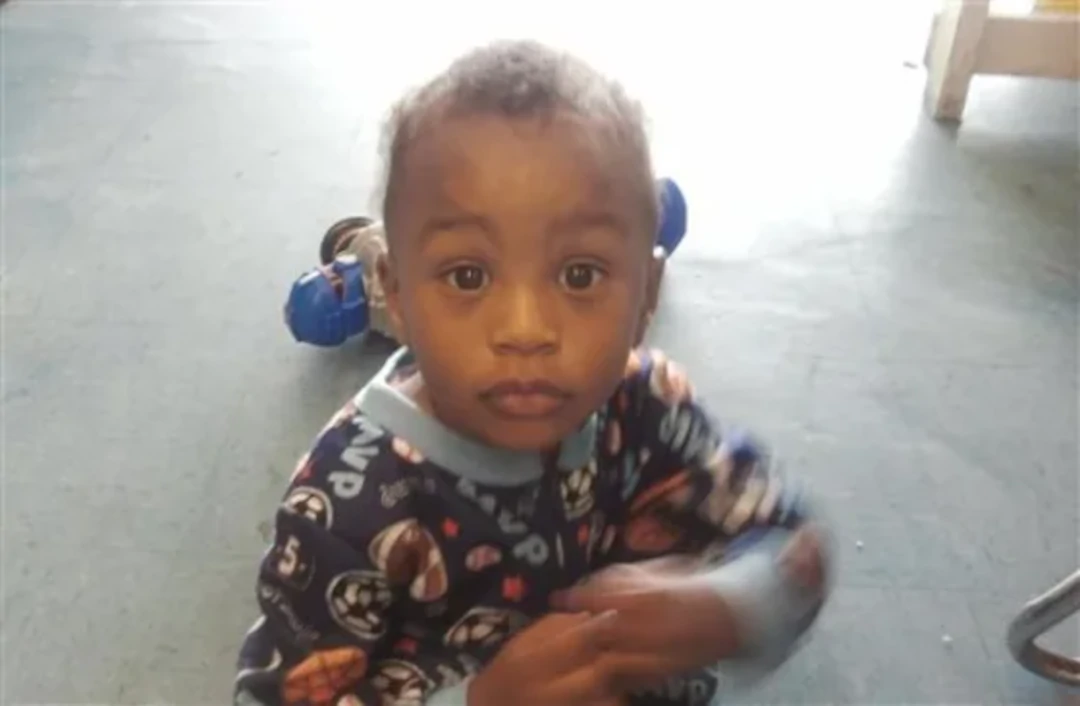
Amir Jennings Goes Missing in Columbia South Carolina
Amir D’Rod Jennings was only 18 months old when he disappeared from Columbia, South Carolina, in late 2011. He was last reliably seen on November 29, 2011, while in the care of his mother, Zinah Jennings. In the days that followed, no relative, friend, neighbor, or investigator could confirm where the little boy had gone.
Amir’s disappearance quickly developed into one of South Carolina’s most troubling missing child cases. His mother gave investigators several conflicting accounts about his location, but none of the people she named could confirm that Amir had been left with them. Searches stretched across South Carolina, North Carolina, and Georgia, yet no verified trace of the child was found.
Authorities eventually came to suspect that Amir had been harmed. However, his body was never recovered, no one was charged with his murder, and the evidence has never conclusively established whether he was killed, abandoned, secretly placed with another person, or taken somewhere outside the region.
The absence of a body and the lack of a reliable witness left investigators with a deeply disturbing question that remains unanswered. What happened to Amir Jennings after November 29, 2011?
Who Amir Jennings Was
Amir was born on June 28, 2010. He was a Black child with black hair and brown eyes. At the time he disappeared, he stood approximately 2 feet 2 inches tall and weighed about 25 pounds. He had several teeth, including a noticeable space between his upper front teeth.
His family called him “Mir Mir.” Photographs taken before his disappearance show a small child with round cheeks, bright eyes, and an expressive face. Because he vanished before reaching his second birthday, he had little ability to identify himself, describe his family, or seek help from an adult.
Amir lived primarily with his mother in Columbia. His father, Roderick Mitchell, did not live with him but had contact with Amir and saw him shortly before the disappearance. Investigators have said that Amir’s father cooperated with the case and was not considered responsible for what happened.
Amir’s maternal grandmother, Jocelyn Jennings, also played an important role in his life. She later became one of the strongest public voices calling for answers and continued attention to the case.
The Last Confirmed Day
November 29, 2011, is considered the most reliable date of Amir’s final confirmed sighting. That day, his father reportedly visited him at a residence on Lady Street in Columbia. Amir’s grandmother also saw him around that time.
Later that day, Zinah took Amir to a bank on Forest Drive. Employees remembered seeing the toddler inside the building. Witnesses recalled Amir moving around the lobby and briefly passing through the bank doors before returning inside.
This bank visit became extremely important because it was the final occasion on which independent witnesses could confirm that Amir was alive and physically present with his mother.
There were no confirmed public sightings of Amir after that day. No reliable surveillance recording, photograph, medical visit, child care record, or witness account established his location after November 29.
At the time, no one watching Zinah and Amir inside the bank could have known that the visit would later become the final documented moment in the child’s life.
The Days After the Bank Visit
Several days after Amir was last seen, Zinah returned to the same bank without him. Witnesses reportedly believed that she appeared confused or distracted. She withdrew most of the money from her account.
Around the same period, Zinah traveled outside Columbia. Reports later placed her in Augusta, Georgia, where she met a man at a gas station. Amir was not with her, and she apparently did not mention having a young child.
Zinah’s movements became difficult for relatives to follow. Her family had initially believed that she and Amir might be traveling, possibly in Atlanta or another city. When relatives asked about the child, however, Zinah reportedly offered vague or inconsistent responses.
Amir’s grandmother became increasingly concerned. On December 8, 2011, she reported Zinah and Amir missing. The report marked the beginning of a case that would quickly shift from a missing mother and child investigation into a search centered almost entirely on Amir.
Zinah Jennings Is Found Without Her Son
Police located Zinah on December 24, 2011, after she was involved in a vehicle collision near Millwood Avenue and Lady Street in Columbia. Officers found her with a burgundy 2004 Dodge Neon.
Amir was not inside the car.
When police questioned Zinah about the child, she reportedly gave contradictory answers. At one point, she claimed that she did not have a child. At other times, she said Amir was staying with friends or relatives in different locations.
She named people who supposedly had custody of him, but investigators checked those accounts and found that Amir had not been left with them. One person she mentioned as a caregiver could not be verified as someone who actually existed.
These inconsistent statements immediately raised serious concern. If Amir had been safely placed with someone, investigators expected Zinah to provide a name, address, telephone number, or other information that could be confirmed. Instead, each explanation created more uncertainty.
Zinah eventually surrendered to authorities on December 29, 2011. She was charged with unlawful conduct toward a child because she could not produce Amir and would not provide a credible explanation for his disappearance.
The Search of the Dodge Neon
Investigators searched Zinah’s car as part of the effort to determine what had happened to Amir. The search produced several disturbing findings.
Cadaver dogs alerted to areas of the Dodge Neon, including the trunk and rear seating section. Such alerts can indicate that the scent of human decomposition was present in or around a vehicle.
However, a cadaver dog alert does not by itself prove that a body was transported in a car. Investigators still need physical evidence to confirm whose scent was detected, when it was deposited, and how it came to be there.
Police also recovered items connected to Amir, including clothing and a blanket. A small amount of blood reportedly found on the blanket was identified as Amir’s. The amount was not enough to establish that he had suffered a fatal injury.
A shovel was also recovered during the investigation. Its presence contributed to suspicion, but it did not provide investigators with a burial location or direct proof that it had been used in connection with Amir’s disappearance.
Together, the dog alerts, the blood, the shovel, and Zinah’s inconsistent statements created a troubling picture. Still, none of those pieces of evidence provided the exact answer investigators needed.
Searches Across Several States
Authorities launched extensive searches in and around Columbia. Investigators checked residences, wooded areas, roads, trash sites, and places connected to Zinah’s movements.
One major search focused on a large area near a church in Richland County. Search teams covered miles of land, looking for clothing, remains, personal items, disturbed ground, or anything else connected to Amir.
Because Zinah had traveled through parts of Georgia and the Carolinas, the investigation crossed state lines. Police considered the possibility that Amir had been left with someone in another city or abandoned somewhere during one of Zinah’s trips.
Investigators followed leads in South Carolina, North Carolina, and Georgia. Despite the size of the search, no confirmed trace of Amir was found.
No witness could prove that Zinah had handed Amir to another caregiver. No hospital or social service agency reported receiving an unidentified child matching his description. No burial site was discovered.
The searches demonstrated the difficulty of investigating the disappearance of a very young child when the last known caregiver refuses or is unable to provide a clear account.
Questions About Zinah’s State of Mind
During the investigation and later court proceedings, witnesses described concerns about Zinah’s behavior before Amir disappeared.
Friends and family members said that she had become overwhelmed after becoming a mother. Some witnesses claimed that she talked about giving Amir away or selling him. Others testified that she made frightening statements about harming him.
These accounts were presented in court, but they did not prove that she carried out any specific threat. They did, however, help prosecutors argue that Amir had been placed in an unsafe and unstable environment.
Zinah’s family also discussed her mental health. She was described as experiencing serious emotional and psychological problems after Amir’s birth. She was later diagnosed with schizophrenia.
Mental illness may help explain confused behavior, paranoia, contradictory statements, or an inability to communicate clearly. It does not, however, establish what happened to Amir. It also does not prove that Zinah intentionally harmed him.
Her mother continued to express doubt that Zinah had deliberately killed Amir. At the same time, the family acknowledged that Zinah had not provided the information needed to bring the child home.
The Trial of Zinah Jennings
Prosecutors did not charge Zinah with murder. Without Amir’s remains, a confirmed cause of death, or direct evidence showing that he had been killed, the state could not establish a homicide case beyond a reasonable doubt.
Instead, Zinah was tried for unlawful conduct toward a child. Prosecutors argued that she had placed Amir at unreasonable risk, failed to protect him, abandoned him, or knowingly concealed his whereabouts.
The trial began in August 2012. The state presented evidence concerning Zinah’s inconsistent stories, the condition of the vehicle, the blood on the blanket, the cadaver dog alerts, and testimony about her behavior.
The defense challenged the prosecution’s interpretation of the evidence. A defense witness testified that she believed she had seen Amir with Zinah at a consignment store after the date he was thought to have disappeared.
That sighting was never conclusively verified. There was no photograph, video, fingerprint, or independent evidence proving that the child seen in the store was Amir.
On September 7, 2012, the jury found Zinah guilty of unlawful conduct toward a child. She received a 10 year prison sentence, the maximum penalty available for the offense.
The conviction held her legally accountable for endangering Amir, but it did not solve the central mystery. The trial ended without revealing where Amir was.
Release From Prison Without New Answers
Zinah served approximately four years in prison before being released. After her release, investigators attempted to speak with her again about Amir.
No publicly announced information from those conversations led to the child’s recovery.
By that point, years had passed since Amir’s disappearance. Physical evidence had become harder to locate, witness memories had faded, and locations connected to the case had changed.
Zinah remained the last person known to have custody of Amir, but she was never charged with killing him. The legal system punished her for unlawful conduct while leaving the suspected fate of her son unresolved.
Her release was painful for many observers because Amir remained missing while the only person believed to know what happened was no longer incarcerated.
The Possibility That Amir Was Given Away
One theory considered by investigators was that Zinah had secretly given Amir to another person.
Witnesses said she had previously talked about giving him away. If that happened, Amir could have been raised under a different name by someone who did not know that he was the subject of a national missing child investigation.
This possibility has never been completely ruled out. However, investigators found no confirmed adoption arrangement, custody transfer, family placement, or caregiver who admitted receiving him.
A secret transfer would have required someone to hide Amir for years without seeking formal medical care, school enrollment, identification records, or government services under his real name.
Although difficult, such a situation would not be impossible. This is one reason authorities continued to release updated images showing what Amir might look like as he grew older.
The Possibility of Foul Play
Investigators have also considered the possibility that Amir died shortly after his last confirmed sighting.
The cadaver dog alerts, the blood on the blanket, Zinah’s refusal to provide a verifiable caregiver, and testimony about her behavior all contributed to the suspicion of foul play.
If Amir died, investigators still do not know where, when, or how it happened. They also do not know where his remains were taken.
No confession has been made public. No witness has described seeing Amir injured or deceased. No forensic evidence has identified a location where a fatal event occurred.
This lack of proof is why the case remains an endangered missing child investigation rather than a legally established murder.
The suspicion is strong, but suspicion cannot replace evidence.
The Importance of the Age Progression Image
Because Amir was only 18 months old when he disappeared, photographs from 2011 provide limited help in showing what he might look like today.
Forensic artists created an age progression image estimating how Amir could appear as a teenager. They studied photographs of Amir and members of his family to approximate the development of his facial features.
The image cannot show exactly how he would look. Genetics, health, hairstyle, weight, and life experiences all influence a person’s appearance over time.
Still, an age progression image can be valuable. Someone may recognize a teenager or young person who resembles Amir and who has an unusual history, missing documents, or questions about his childhood identity.
The image also keeps Amir’s name and face visible. It reminds the public that the missing toddler would now be much older.
A Grandmother’s Search for the Truth
Amir’s grandmother has continued to speak publicly about the case and express hope that answers will eventually be found.
For a family, an unresolved disappearance creates a unique form of grief. There is no confirmed death to mourn and no living child to embrace. Every possibility remains painful.
If Amir died, his family wants to recover his remains and provide a proper burial. If he survived, they want him to know his identity and understand that relatives never stopped searching for him.
The case has also forced the family to confront Zinah’s role. She was Amir’s mother and the last known person responsible for his safety. Her continued silence or inability to explain his whereabouts has made the family’s grief even more complicated.
Why the Case Remains Unsolved
Several factors have prevented investigators from fully resolving Amir’s disappearance.
The first is the lack of a body. Without remains, investigators cannot determine a cause or manner of death, establish the location of a crime, or obtain certain types of forensic evidence.
The second is the lack of a reliable account from Zinah. Her conflicting stories forced investigators to spend time checking false leads instead of following a clear timeline.
The third is the possibility of interstate travel. Amir could have been taken through multiple cities and states during the period when his location was unknown.
The fourth is Amir’s age. At 18 months old, he could not call for help, give someone his full name, or explain where he lived.
Finally, the passage of time has made the investigation increasingly difficult. Locations change, records disappear, vehicles are destroyed, and memories fade.
Despite those challenges, the case remains open. A single credible witness or new piece of evidence could still change everything.
The Continuing Search for Amir
Amir Jennings remains missing. Authorities have not announced that he is alive, but they have also not recovered evidence sufficient to declare his death with certainty.
The public is asked to consider both possibilities. Amir may have been harmed, or he may have been raised under another identity.
Anyone who knew Zinah in November or December 2011 may possess important information. A person may remember seeing her with Amir, seeing her without him, helping her travel, storing belongings, cleaning the Dodge Neon, or hearing statements about what happened.
Someone may have withheld information because of fear, loyalty, confusion, or the belief that the details were unimportant. Years later, even a small memory could help investigators establish a route, location, or timeline.
The disappearance of Amir Jennings began with a final confirmed sighting inside a Columbia bank on November 29, 2011. After that moment, his life became hidden behind inconsistent stories and unanswered questions.
Until Amir is found or reliable evidence establishes his fate, the case remains unfinished.
Discover more from City Towner
Subscribe to get the latest posts sent to your email.