Freddie Mae Brandon Murdered in Her Apartment in Los Angeles California
The Murder of Freddie Mae Brandon
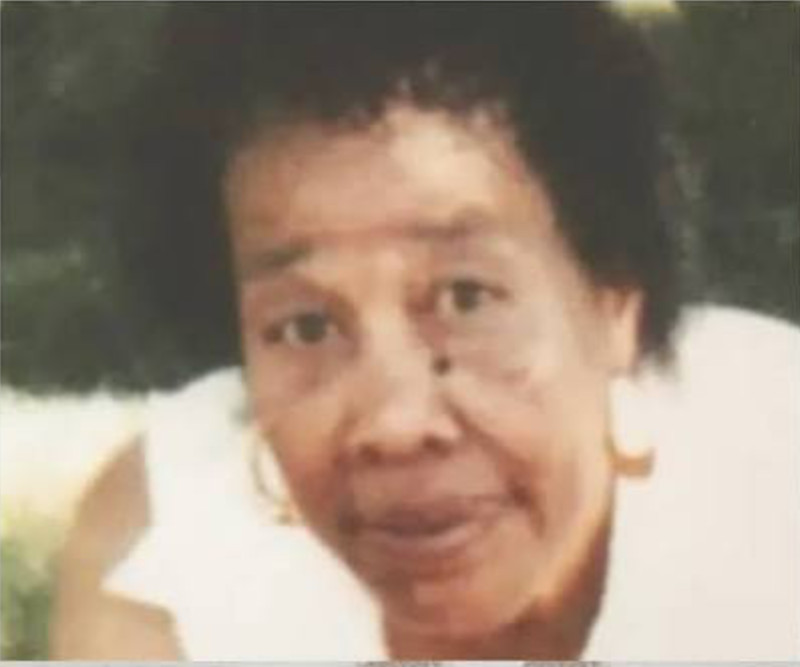
Freddie Mae Brandon was a 78 year old grandmother whose life came to a violent and unexplained end inside her Los Angeles apartment on March 30, 2018. Her death shocked her family and neighbors because she was an elderly woman with limited mobility who had lived in the same community for years and was not known to be involved in anything that would obviously place her in danger.
What initially appeared to be a possible medical emergency quickly became a homicide investigation. Freddie was discovered unresponsive inside her residence by her granddaughter. The condition of the apartment immediately raised concerns because furniture and belongings appeared disturbed, suggesting that something unusual had happened before Freddie died.
An autopsy later determined that Freddie had not died from natural causes. She had been strangled with a ligature, meaning some type of object or material had been tightened around her neck until she could no longer breathe. The manner of death was ruled a homicide.
Despite the violent nature of the crime and the evidence found inside the apartment, no one has been publicly identified as Freddie Brandon’s killer. No clear motive has been established, and the case remains unsolved.
Who Was Freddie Mae Brandon?
Freddie Mae Brandon was born on April 23, 1939, in Mississippi. She later moved to California and built a life centered around her children, grandchildren, and extended family.
Freddie was the mother of 7 children and grandmother to 19 grandchildren. She had raised her children largely as a single mother and became an important figure within several generations of her family.
Relatives remembered Freddie as energetic, independent, and full of personality despite her age and physical limitations.
She loved old school music and enjoyed dancing, earning her the nickname “Rock Steady Freddie.” That nickname reflected the lively personality her family remembered and the way she connected with music and family gatherings.
Cooking was another important part of Freddie’s life.
She was especially known for preparing meals during holidays and family celebrations. Easter was particularly meaningful because family members often gathered around her food and traditions.
By 2018, Freddie had lived in her Los Angeles apartment for more than 20 years. She was familiar with the neighborhood and many of the people who lived or worked nearby.
Her home was supposed to be a place where she felt comfortable and secure.
Instead, it became the scene of her murder.
Freddie’s Life in Los Angeles
Freddie lived in a ground floor apartment on West Boulevard in South Los Angeles.
The area is associated with neighborhoods including Hyde Park and Park Mesa Heights and sits near major streets such as Slauson Avenue and Crenshaw Boulevard.
Freddie had been in the neighborhood long enough to develop relationships with people around her.
Residents reportedly knew her, and she was familiar with businesses and people nearby.
At the time of her death, Freddie lived with her granddaughter Rashanda Jones.
Her age and physical condition meant that she was not as mobile as she had once been. Freddie used a walker and also had a pacemaker.
Those limitations later became an especially disturbing part of the case because relatives believed she would have had little ability to defend herself against a stronger attacker.
The Afternoon of March 30, 2018
On March 30, 2018, Rashanda Jones returned to the apartment she shared with Freddie.
At approximately 4:00 p.m., she discovered her grandmother unresponsive.
Emergency services were contacted.
The initial situation reportedly appeared as though Freddie might have suffered a medical emergency such as cardiac arrest. Because Freddie was elderly and had health concerns, a sudden natural death would not initially have seemed impossible.
Once authorities examined the apartment and Freddie’s condition, however, the situation began to look suspicious.
Freddie was pronounced dead at approximately 4:36 p.m.
What had started as an emergency medical response quickly developed into a potential crime scene.
The Condition of the Apartment
Investigators examining Freddie’s apartment observed that the residence appeared disturbed.
Furniture had reportedly been moved or knocked over.
A dresser was said to have been overturned or displaced.
Various personal belongings appeared scattered around the apartment.
The disarray created an immediate possibility that someone had entered the residence to burglarize or rob Freddie.
Investigators also focused attention on the rear portion of the apartment.
A screen or protective covering near the back entrance appeared to have been cut or damaged.
That raised the possibility of forced entry.
If someone had cut through a screen or protective barrier to get inside, investigators had to consider whether Freddie had been targeted by a burglar.
However, the apparent burglary theory would soon become much less straightforward.
Questions About Whether Anything Was Stolen
One of the strangest aspects of the investigation was that authorities reportedly did not believe anything significant had been taken from Freddie’s apartment.
That detail created a major question.
If someone had entered the home intending to steal, why would the person leave without taking valuable property?
There are several possible explanations, although none has been publicly confirmed.
The intruder may have been interrupted.
The attacker may have been searching for one specific item.
The apartment could have been deliberately disturbed to create the appearance of a burglary.
It is also possible that the person responsible entered for an entirely different reason and caused the disorder during a confrontation.
Investigators have never publicly announced which scenario they believe is most likely.
The apparent lack of theft has remained one of the most puzzling elements of the case.
The Autopsy Reveals a Homicide
Early observations reportedly raised the possibility that Freddie had suffered some type of head injury or violent assault.
The full truth became clearer after the medical examination.
An autopsy determined that Freddie died from asphyxia caused by ligature strangulation.
Ligature strangulation occurs when a cord, piece of clothing, rope, wire, belt, or another object is tightened around a person’s neck.
The pressure can restrict airflow and blood circulation, eventually causing unconsciousness and death.
The finding made it clear that Freddie had not simply suffered a fall or sudden medical emergency.
Someone had intentionally used an object to strangle her.
Her death was therefore classified as a homicide.
A Particularly Vulnerable Victim
Freddie’s age and health made the homicide especially disturbing.
She was 78 years old.
She used a walker to move around.
She had a pacemaker.
Family members believed she would have struggled to defend herself physically.
The crime therefore raised disturbing questions about why anyone would attack an elderly woman who posed little threat.
There was no publicly known history suggesting that Freddie was involved with violent people or dangerous activity.
She was primarily known as a mother, grandmother, neighbor, and longtime community resident.
That made the search for a motive extremely difficult.
Did Freddie Know Her Killer?
Investigators had to consider whether the killer was a stranger or someone Freddie knew.
The apparent damage near the rear entrance might suggest forced entry by someone unfamiliar with her.
However, the public evidence does not conclusively establish that the killer entered through the damaged area.
It is possible that Freddie opened the door for someone she recognized.
Elderly residents often interact with relatives, neighbors, maintenance workers, delivery people, friends, and other familiar individuals.
If Freddie knew the person who arrived at her apartment, she may not have initially considered the individual dangerous.
That possibility would significantly change the nature of the investigation.
Instead of looking exclusively for a random intruder, detectives would need to examine people connected with Freddie’s daily life.
No publicly released evidence has answered that question.
The Mystery of the Rear Entrance
The condition of the rear entrance became one of the most discussed pieces of physical evidence.
A screen or grate around the back door appeared to have been cut.
That could indicate that someone attempted to gain access without using the front entrance.
However, investigators would still need to determine when the damage occurred.
If the screen had been damaged before March 30, it might have had nothing to do with the killing.
If forensic evidence showed that it had recently been cut, it could support the theory of an intruder.
Authorities have never publicly released enough forensic information to determine which explanation is correct.
Because of that, the damaged rear entrance remains significant but inconclusive.
No Clear Motive Emerges
A strong motive can often help detectives narrow down suspects.
In Freddie’s case, no obvious motive became public.
Robbery did not fully explain the crime because nothing significant appeared to be missing.
There was no known romantic conflict.
There was no publicly established financial dispute.
There was no announced connection to gangs, drugs, or organized criminal activity.
There was also no public evidence of a longstanding enemy who wanted Freddie dead.
That left investigators with a homicide that appeared deeply personal in its violence but unclear in its purpose.
Strangulation requires close physical contact between the attacker and victim.
That fact may suggest rage, control, panic, or an attempt to silence the victim.
However, without knowing who committed the crime, investigators could not publicly explain why Freddie was strangled.
Freddie’s Family Demands Answers
Freddie’s family was devastated by her death.
Her daughter Mia Brandon became one of the relatives who publicly appealed for information.
Family members struggled with the idea that someone could enter Freddie’s home, violently kill her, and then disappear without explanation.
The apparent lack of theft made the loss even harder to understand.
From the family’s perspective, the most valuable thing taken from the apartment was Freddie herself.
Her relatives emphasized that she was loved by a large family and had been a central presence in their lives.
They wanted anyone with information to come forward, even if that information seemed insignificant.
A suspicious vehicle, unfamiliar visitor, unusual noise, or conversation overheard around the time of the killing could potentially help investigators.
The Vigil for Freddie
On April 8, 2018, relatives, friends, neighbors, and community members gathered to remember Freddie.
The vigil gave people an opportunity to celebrate her life while also calling for justice.
Family members spoke about Freddie’s personality and her love of music.
They remembered her as “Rock Steady Freddie,” the woman who could bring energy to a gathering and who had spent decades caring for her family.
The gathering also highlighted the enormous number of people affected by her death.
Freddie was not simply an anonymous homicide victim.
She was a mother.
She was a grandmother.
She was a longtime neighbor.
She was someone whose absence would be noticed at every future family gathering.
The Difficulties Facing Investigators
Homicide investigations often depend on several categories of evidence.
Detectives may use fingerprints, DNA, surveillance footage, phone records, witness statements, financial records, and forensic evidence.
A case can become extremely difficult when none of those elements produces a clear suspect.
Freddie’s apartment would have contained DNA and fingerprints from many legitimate visitors because she had lived there for years and shared the home with a family member.
That can make forensic evidence difficult to interpret.
Investigators would need to distinguish normal contact from evidence connected with the homicide.
The neighborhood setting may also have created challenges.
If no surveillance camera captured the killer entering or leaving, detectives would have to rely heavily on witnesses.
And if the murder occurred during a period when neighbors were away or not paying attention, the killer could have left without being noticed.
Why Strangulation Matters
The method used to kill Freddie may reveal important information about the crime.
Ligature strangulation generally requires an attacker to remain physically close to the victim.
It is not typically instantaneous.
That means the killer likely had sustained physical contact with Freddie.
The attacker would also have faced the possibility of leaving biological or trace evidence behind.
Fibers, skin cells, fingerprints, hair, or DNA might have been transferred during the struggle.
If investigators recovered such evidence, modern forensic testing could potentially become important even years later.
Advances in DNA technology have helped solve many cold cases that once appeared impossible.
Whether usable DNA exists in Freddie’s case has not been publicly disclosed.
The Possibility of a Staged Burglary
Because investigators reportedly did not believe valuables were missing, one possible theory is that the disarray was staged.
Staging occurs when someone deliberately alters a crime scene to mislead investigators.
A killer who knew the victim might attempt to make the homicide appear to be a random break in.
Furniture could be overturned.
Drawers could be opened.
Belongings could be scattered.
An entrance could potentially be damaged.
If that happened in Freddie’s apartment, the person responsible may have hoped police would focus on an unknown burglar rather than someone connected with her.
There is no public evidence confirming that the scene was staged, but the possibility remains important because of the apparent mismatch between the condition of the apartment and the lack of stolen property.
An Unsolved Case
Years after Freddie Brandon’s murder, the most important questions remain unanswered.
No publicly identified killer has been arrested.
No prosecution has taken place.
No conviction has brought closure to her family.
Investigators have not publicly announced a definitive motive.
They have not explained whether Freddie knew her attacker.
They have not publicly identified the object used to strangle her.
They have not revealed whether DNA or other forensic evidence was recovered.
The absence of public answers does not necessarily mean detectives have no evidence.
Police often withhold crucial details during unsolved homicide investigations.
Certain facts may be known only to investigators and the person responsible.
Those details can later be used to determine whether a confession or tip is legitimate.
Remembering Freddie Mae Brandon
Freddie Brandon’s murder remains disturbing because of how ordinary her life appeared before the crime.
She was an elderly grandmother living in a familiar apartment in a neighborhood she had known for decades.
She had raised children and watched grandchildren grow.
She cooked for family gatherings.
She listened to oldies and danced.
She had become known affectionately as “Rock Steady Freddie.”
Then, on March 30, 2018, someone entered or was allowed into her home and ended her life.
The person responsible left behind a grieving family and a mystery that has lasted for years.
The Search for Justice Continues
The murder of Freddie Mae Brandon remains an example of how a homicide can stay unresolved even when investigators know where the victim died and how she was killed.
Freddie was found inside her Los Angeles apartment on March 30, 2018.
The residence appeared disturbed.
There was apparent damage near the rear entrance.
Nothing significant was believed to have been stolen.
An autopsy established that Freddie died from ligature strangulation.
She was physically vulnerable and would have had difficulty defending herself.
Despite those facts, authorities have never publicly identified the person who strangled her.
Until someone comes forward, forensic evidence produces a breakthrough, or investigators uncover information capable of identifying the killer, Freddie’s family will continue living without the answers they have sought since 2018.
Freddie Mae Brandon deserves to be remembered not only for the violent circumstances of her death but for the decades of life that came before it.
She was a mother, grandmother, cook, music lover, neighbor, and central figure in a large family.
Her murder remains unsolved, but the search for justice continues.
Discover more from City Towner
Subscribe to get the latest posts sent to your email.