
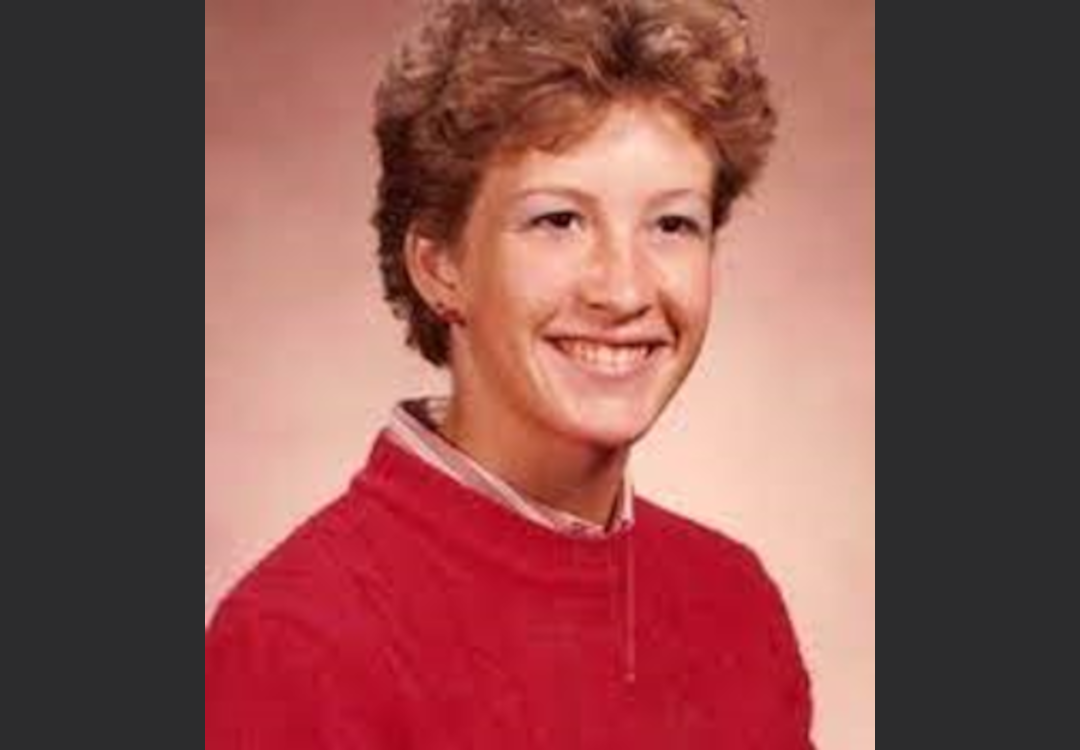
Amy Diesman Gunned Down at Convenience Store in Pierce Township Ohio
On September 12, 1987, a quiet community in Clermont County, Ohio, was shaken by the murder of 19 year old Amy M. Diesman. Amy was working an early morning shift at a convenience store in Pierce Township when someone entered the business and shot her twice in the head. Within minutes, an ordinary overnight shift became the scene of a homicide that would remain unresolved for decades.
Amy was a young mother, college student and recent high school graduate whose life appeared to be moving forward. She had a four month old daughter and had recently started working at the Merwin Stop N Go convenience store near Ohio Route 125 and Merwin Ten Mile Road. The job was still relatively new to her when she was killed.
The circumstances surrounding her death created questions that investigators would struggle to answer for years. There was no obvious sign of a robbery, no evidence that Amy had been sexually assaulted and little indication that a violent confrontation had occurred before the shooting. Investigators eventually considered the possibility that Amy may have known the person who killed her.
Despite an arrest and murder charge years later, nobody was ever convicted of Amy’s killing. The case remains one of the unresolved homicide investigations associated with Clermont County and the greater Cincinnati area.
Amy’s Life Before the Murder
Amy M. Diesman was born on December 18, 1967. She grew up in the New Richmond area of Ohio and developed a reputation as an intelligent and active student.
Amy attended New Richmond High School, where she participated in several activities. She was involved in athletics, including track, tennis and basketball, and she was also recognized academically as a member of the National Honor Society.
After graduating from high school, Amy enrolled at Northern Kentucky University. She was attempting to build a future while also taking care of her infant daughter.
At only 19 years old, Amy was balancing responsibilities that included motherhood, college and employment. The convenience store position provided income while she continued moving forward with her education and personal life.
Nothing about the early morning hours of September 12, 1987, initially suggested that Amy was about to become the victim of a homicide.
The Early Morning Shift
Amy was working at the Merwin Stop N Go convenience store in Pierce Township during the early morning hours of September 12, 1987.
The store was located near Ohio Route 125 and Merwin Ten Mile Road in Clermont County, east of Cincinnati. Like many convenience stores operating during overnight and early morning hours, customers could enter at almost any time.
Investigators reconstructed a particularly important period shortly before Amy was discovered.
At approximately 5:27 a.m., authorities believe Amy was inside the store with at least 2 customers. One was a woman. The other was a man whose identity later became a major question in the investigation.
The female customer apparently left the store. That may have left Amy alone inside with the unidentified man.
What happened during the next several minutes remains uncertain.
Investigators have never conclusively established whether the unidentified man remained inside and killed Amy, whether he left before the shooting or whether another person entered after he departed.
The short window between the final known customer activity and the discovery of Amy’s body became one of the most important elements of the case.
Amy Is Found Behind the Counter
Only minutes after the last known activity inside the store, another customer entered.
Instead of finding Amy standing behind the counter assisting customers, the person discovered her behind the counter.
Amy had suffered gunshot wounds to the head.
Emergency authorities were contacted, but the injuries were fatal.
Investigators determined that Amy had been shot twice with a .25 caliber firearm. Evidence recovered from the scene reportedly included a bullet that had traveled into a package of doughnuts inside the store.
The murder weapon was not recovered.
Based on the known timeline, investigators believed Amy was probably killed sometime between approximately 5:27 a.m. and 5:35 a.m.
The narrow period meant that the killer may have entered and escaped in only a matter of minutes.
Questions About the Motive
One of the most puzzling aspects of Amy’s murder was the apparent absence of a clear motive.
Convenience store killings are sometimes connected to robberies, particularly during overnight shifts when an employee may be working alone. However, investigators did not find convincing evidence that robbery was the primary reason Amy was killed.
There was also no evidence that she had been sexually assaulted.
Those findings forced investigators to consider other possibilities.
Detectives reportedly believed Amy may have been comfortable with whoever was near her immediately before the shooting. Evidence at the scene suggested that she may have been performing routine cleaning duties shortly before she was attacked.
She reportedly still had a cleaning rag in her possession when she fell.
That detail was significant because it did not suggest Amy had been involved in an extended argument or physical struggle immediately before she was shot.
If someone unfamiliar had entered the store and aggressively threatened her, investigators might have expected to find signs that Amy attempted to resist, retreat or defend herself.
Instead, the scene raised the possibility that the attack happened suddenly and without warning.
Investigators therefore explored the theory that the killer may have been someone Amy knew.
The Unidentified Male Customer
One of the greatest mysteries surrounding Amy’s murder involved the man believed to have been inside the store shortly before the shooting.
Investigators determined that a male customer was present around the same period as a female customer.
After the woman left, the man may have remained inside with Amy.
Authorities have never publicly established his identity with certainty.
That made him extremely important to investigators.
If he remained inside the store, he could have been a witness to what happened. He could also have possessed information about Amy’s final moments.
Investigators also had to consider the possibility that he was responsible for the shooting.
However, the available evidence never conclusively established what happened after the woman departed.
It was possible the man left peacefully and someone else entered afterward.
The uncertainty surrounding the unidentified customer became one of the obstacles investigators faced while attempting to reconstruct the final minutes of Amy’s life.
Physical Evidence From the Store
Investigators collected evidence from the convenience store in hopes that forensic testing would eventually identify the killer.
Among the items examined was a sweatshirt connected with Cincinnati radio station WEBN.
Authorities considered whether the sweatshirt might have belonged to the killer or another person who had recently been inside the store.
Years later, investigators attempted to use improved forensic technology to obtain DNA from evidence associated with the case.
The sweatshirt reportedly failed to produce useful DNA evidence capable of identifying a suspect.
The absence of usable DNA has complicated the investigation because many older unsolved homicide cases have eventually been solved through modern genetic testing.
The firearm used to kill Amy was also never recovered.
Without the weapon, investigators lost another potential way to directly connect a person to the murder.
Investigators Focus on Someone Close to Amy
As detectives examined Amy’s relationships and personal life, investigators eventually focused heavily on her boyfriend, Scott Lee Austin.
Austin was also the father of Amy’s infant daughter.
Authorities reportedly considered him a suspect for several years after the murder.
The investigation continued quietly as detectives attempted to gather enough evidence to support criminal charges.
By the early 1990s, prosecutors believed they had enough evidence to take the case before a grand jury.
That development represented the closest authorities would come to prosecuting someone for Amy’s murder.
The 1993 Murder Indictment
On February 11, 1993, approximately 5 and a half years after Amy was killed, a Clermont County grand jury indicted Scott Lee Austin for aggravated murder.
The indictment was a major development.
At the time, Austin was reportedly serving as a second lieutenant in the United States Army and was stationed in Germany.
He returned to the United States to face the accusation.
An indictment does not establish guilt. It means prosecutors presented evidence to a grand jury and convinced jurors that there was probable cause for the criminal case to proceed.
The decision nevertheless demonstrated that prosecutors believed evidence connected Austin to Amy’s death strongly enough to pursue an aggravated murder charge.
The anticipated trial could have provided answers to questions Amy’s family and the community had been asking since September 12, 1987.
Instead, the case against Austin collapsed before a jury could determine what happened.
The Prosecution Falls Apart
Several months after the indictment, prosecutors encountered a major problem.
An important witness in the case became unavailable.
The identity of that witness and the exact nature of the expected testimony have not been clearly explained in widely available public accounts.
Without the witness, prosecutors apparently concluded they could not successfully proceed with the aggravated murder case.
On August 26, 1993, prosecutors sought dismissal of the charge against Austin.
The case therefore never reached a full criminal trial.
Austin was not convicted of killing Amy.
Because the charge was dismissed rather than resolved through a guilty verdict, the murder officially remained unsolved.
The collapse of the prosecution became another mystery within the larger investigation.
Questions remained about what evidence originally convinced prosecutors to indict Austin and why the missing witness was considered important enough that the entire case could not continue without that person’s testimony.
A Case Without a Conviction
The dismissal of the 1993 prosecution returned investigators to the difficult position they had faced before the indictment.
Amy had been murdered, investigators had developed theories and prosecutors had once identified a person they believed could be charged, but no court had established who killed her.
Austin could not legally be described as Amy’s convicted killer because no such conviction occurred.
The distinction is essential when discussing the case.
Although investigators and prosecutors focused on him strongly enough to obtain an indictment, Amy’s homicide remained legally unresolved.
Authorities also continued considering evidence surrounding the unidentified male customer and other information gathered during the investigation.
The Possibility Amy Knew Her Killer
Investigators have repeatedly examined the possibility that Amy knew the person responsible for her death.
Several aspects of the crime scene encouraged that theory.
There was no clear robbery motive.
There was no evidence of sexual assault.
There was no obvious prolonged struggle.
Amy appeared to have been conducting ordinary cleaning duties immediately before she was shot.
Those circumstances suggested that the killer might have approached Amy without initially causing her alarm.
Someone Amy recognized could potentially have entered the store, spoken with her and remained nearby without creating suspicion.
A sudden attack could then have occurred before Amy realized she was in danger.
However, this theory has never been proven.
It remains possible that Amy was killed by a stranger who entered the store and attacked before she had time to react.
The Effect on Amy’s Family
Amy’s death left her family facing both grief and unanswered questions.
Perhaps the most heartbreaking consequence involved Amy’s four month old daughter, who would grow up without her mother.
Amy had only recently begun adulthood.
She had graduated from high school, entered college, become a mother and started working toward financial independence.
Her murder abruptly ended all of those possibilities.
Amy was buried at Laurel Cemetery in New Richmond on September 16, 1987.
Friends, relatives and members of the community attempted to preserve her memory after her death.
An award bearing Amy’s name was established at New Richmond High School, and efforts were made to provide support for her young daughter.
A Community Searches for Answers
Amy’s murder generated significant attention in the Clermont County area.
The killing of a 19 year old woman working alone inside a neighborhood convenience store created fear and concern throughout the surrounding community.
Stop N Go reportedly offered a $10,000 reward for information leading to the arrest and conviction of the person responsible.
Investigators interviewed people, examined Amy’s relationships and attempted to reconstruct the movements of customers who had entered the store.
Despite those efforts, investigators were unable to produce a conviction.
Over time, the case gradually became one of the area’s cold cases.
Renewed Attention Decades Later
Investigators have continued revisiting Amy’s murder as forensic science and investigative techniques have improved.
Cold cases sometimes receive renewed attention because evidence that provided little information during the 1980s may produce additional results decades later.
DNA technology, computerized databases, improved ballistic comparisons and digital record analysis have helped solve numerous crimes that once appeared impossible to resolve.
Amy’s case has been reviewed with those possibilities in mind.
Pierce Township investigators have publicly discussed the investigation and encouraged anyone with information to come forward.
The passage of time can create investigative problems because witnesses die, memories fade and evidence deteriorates.
At the same time, time can sometimes help an investigation.
People who were once afraid to speak may eventually decide to cooperate. Relationships and loyalties can change. Someone who protected another person decades earlier may no longer have a reason to remain silent.
Investigators continue hoping that someone knows information capable of explaining what happened inside the Merwin Stop N Go during those crucial minutes on September 12, 1987.
Important Questions That Remain
Several major questions remain unanswered.
Who was the male customer believed to have been inside the store shortly before Amy was killed?
Did Amy know her killer?
Was the shooting connected to something in Amy’s personal life, or was she randomly targeted while working?
Why did prosecutors believe there was enough evidence to charge Scott Lee Austin with aggravated murder in 1993?
Who was the important witness who became unavailable before the case could go to trial?
What information was that witness expected to provide?
Could any evidence still preserved from the crime scene eventually produce useful DNA or forensic information?
And most importantly, who fired the 2 shots that ended Amy’s life?
Until those questions are answered, the murder remains unresolved.
Remembering Amy Diesman
It is easy for an unsolved homicide to eventually become defined by evidence, suspects, theories and investigative timelines.
Amy Diesman was more than the victim at the center of a cold case.
She was a 19 year old woman beginning adulthood, a student, an athlete, a daughter and a young mother.
She had recently graduated from high school and was attending college while raising her infant daughter and working.
During the early morning hours of September 12, 1987, someone entered or remained inside the Merwin Stop N Go in Pierce Township and changed the lives of Amy’s family forever.
The killer escaped without being convicted.
Nearly 4 decades later, Amy’s case continues to represent both an unresolved murder and an unanswered promise to a family that has spent years waiting to learn exactly what happened.
The investigation remains a reminder that the passage of time does not erase a homicide.
As long as evidence remains, witnesses are alive and investigators continue examining the case, there is still a possibility that information could emerge that finally identifies the person responsible for the murder of Amy Diesman.
Discover more from City Towner
Subscribe to get the latest posts sent to your email.