
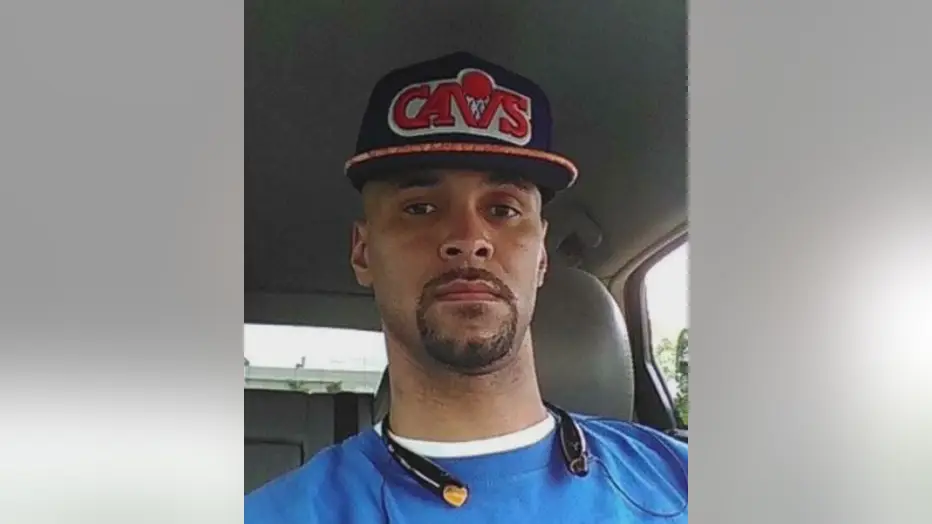
David Carter Allegedly Killed and Dismembered by Ex-Girlfriend in Melvindale Michigan
The murder of David Carter remains one of the most disturbing and emotionally devastating cases tied to Melvindale, Michigan. What began as the disappearance of a 39 year old father quickly became something far darker, a case marked by fear, violence, and a level of cruelty that left a family and community in shock. The broad public outline of the case is deeply painful on its own. A man disappeared from his apartment in Melvindale, police later said they believed he had been killed there, and his remains were eventually found far from home in Ohio. That sequence alone is enough to make the story unforgettable.
Some homicide cases become known because of their mystery. Others remain in public memory because of the brutality involved. David Carter’s case carries both of those elements. It is horrifying because of what investigators say happened, and it is also emotionally unresolved because the person charged in the case has remained a fugitive in the strongest public reporting. That means the story is not only about loss. It is also about the years of waiting that followed, the long stretch of uncertainty, and the frustration that comes when a family knows what was taken from them but still cannot point to a final courtroom answer.
The case hits especially hard because David Carter was not some distant figure living at the edge of society. He was a father. He was a man with family, with people who knew him, worried about him, searched for him, and then had to face the unbearable truth of what had been done to him. That human core is what makes this more than a crime story. It is the story of a life interrupted by violence and of a family forced to live with the aftermath.
Who David Carter Was
Before his name became attached to one of the most disturbing homicide cases in the Detroit area, David Carter was known first as a person, a father, and a member of a family that loved him. Public reporting repeatedly emphasized that point, identifying him not only by name and age but as a Melvindale father. That detail matters because it changes the emotional frame of the case. He was not simply a victim discovered in a grim investigation. He was somebody whose absence created immediate pain in the lives of the people closest to him.
At 39 years old, David was in the middle of adult life, not the beginning of it and not the end. He was at the stage where responsibilities deepen, where relationships are established, and where a person’s presence carries real weight in the lives of children, relatives, and friends. When someone at that point in life is murdered, the loss spreads through many layers at once. The family does not only lose a loved one. Children lose a father. Friends lose someone steady in the fabric of their days. A community loses a familiar life that should have continued.
That is one of the reasons the story still resonates. It is not only about the horror of the crime. It is also about the ordinary humanity of the victim. The more brutal the crime, the more important it becomes to remember that the person at the center of it had a real life beyond the headlines. David Carter was not defined by the violence that ended his life. He was a man whose life had value long before the case ever reached the news.
The Melvindale Apartment at the Center of the Case
According to the strongest public reporting, investigators believe David Carter was killed at his apartment in the Gale Gardens area of Melvindale. That detail is central to understanding why the case feels so unsettling. A person’s home is supposed to represent safety, privacy, and a barrier between the outside world and the intimate space of daily life. When police say they believe a person was murdered inside that space, it changes the emotional shape of the crime. It means the violence did not happen in some distant unknown setting. It happened in the place where the victim should have been most secure.
That fact makes the case feel especially personal and invasive. There is something uniquely disturbing about crimes that begin in the home because they violate more than the body. They violate the sense of shelter and familiarity that a home is supposed to provide. For David’s loved ones, the apartment would have become not just a residence, but the place where the ordinary world ended and a nightmare began. It is difficult to emotionally separate a murder from the place where it occurred when that place should have symbolized stability and safety.
The Melvindale setting also matters because it grounds the case in a community, not just in a crime scene. This was not some anonymous location with no emotional meaning. It was part of a real city, near real neighbors, in a place where people lived ordinary lives. That contrast between normal neighborhood life and extreme violence is one reason the case left such a deep impression. It showed how abruptly horror can enter a setting that, on the surface, looks entirely ordinary.
Late September and Early October 2018
The timeline of David Carter’s case is one of the most important parts of the public story. Reporting says he was reported missing in late September 2018, and his remains were found about five days later in early October 2018. That compressed timeline added urgency and dread from the start. A missing person case was not left hanging for months before the public learned something terrible had happened. Instead, the fear escalated quickly, and the worst outcome followed almost immediately.
That short period between disappearance and discovery is emotionally significant. In many cases, families spend long stretches suspended between hope and fear. In David’s case, the turn from missing person to homicide came fast, but that speed did not make the pain easier. If anything, it likely intensified it. There was little time to process the disappearance before the reality of murder arrived. For loved ones, the emotional movement from confusion to horror must have been crushing.
This is one reason the case still feels so raw in public memory. The timeline did not allow for the kind of gradual unfolding that sometimes softens a story, even if only slightly. Instead, it moved rapidly from concern to devastation. The public quickly went from hearing about a missing Melvindale father to learning that his remains had been found and that police believed a killing had occurred back in Michigan.
The Discovery in Ohio
One of the most horrifying aspects of David Carter’s case is that his remains were found in garbage bags along Interstate 75 in Ohio. That detail is what moved the case from a troubling disappearance into a truly shocking homicide. It is difficult to overstate how much emotional weight that discovery carries. It not only confirmed death. It also revealed a level of violence and concealment that made the case immediately stand out as especially brutal.
The location of the discovery added another disturbing layer. Ohio was not where David had disappeared. It was not where his life was rooted. The fact that his remains were allegedly transported and left along a major highway far from home makes the crime feel even colder. It suggests planning, movement, and an attempt to distance the body from the life it belonged to. That kind of act deepens the horror because it transforms the killing into something more than a moment of violence. It becomes a sequence of deliberate acts meant to hide, confuse, or delay the truth.
For the family, that discovery must have been shattering. It is one thing to learn that a loved one has died. It is another to learn that the death involved such degradation and distance. The emotional pain of homicide is already enormous. When the circumstances involve dismemberment and disposal far from home, the suffering takes on another dimension. It forces loved ones to confront not only loss, but the cruelty of what was done after death.
The Public Allegations Against Tamera Williams
The strongest current reporting says that Tamera “Tammy” Williams was charged in David Carter’s murder and has remained a fugitive. Public sources say police believe she shot David Carter at his apartment in Melvindale and then discarded his body parts along I-75 near Findlay, Ohio. Those allegations gave the case a clear public suspect, but they did not bring the closure families usually hope for after charges are filed. That is because a charge is not the same thing as resolution when the accused has not been brought into custody and the case has not been fully adjudicated in court.
This fugitive aspect is a major reason the case continues to feel unfinished. Publicly naming a suspect can sometimes shift a case into a new emotional stage where people believe justice is finally close. But when the accused disappears and remains on the run, the story enters a different and often more frustrating phase. Now the family knows who authorities say is responsible, but the legal system still cannot fully act because the person has not been captured. That gap between accusation and accountability can be agonizing.
The fact that Williams was later placed on the U.S. Marshals’ 15 Most Wanted list underscores how serious the manhunt became and how strongly authorities believed she remained the critical figure in the case. Yet even that high profile development did not erase the pain of delay. For the family, each passing year without an arrest would have reinforced the sense that the case remained emotionally and morally open.
The Pain of a Family Waiting
Every homicide devastates a family, but unsolved or unresolved homicide forces loved ones to carry an additional burden. They are not only grieving the person who was taken. They are also waiting for the world to catch up to what they already know, that something terrible happened and that accountability is still missing. In David Carter’s case, that waiting appears to have lasted for years, with public reports continuing to emphasize the fugitive status of the accused and the family’s ongoing need for answers.
For a child, losing a father is already one of life’s deepest injuries. For a family, having to live with that loss while also knowing the accused remains at large creates a second wound layered on top of the first. Grief is one thing. Grief mixed with uncertainty, anger, and delay is something even harder. It can make every anniversary feel sharper, every public update feel emotionally risky, and every mention of the case reopen pain that never fully closed.
This is one reason the murder still resonates publicly. It is not only about what happened to David. It is also about what happened to the people left behind. They have had to live not just with his death, but with the long shadow cast by a case that entered the fugitive stage instead of moving directly into resolution.
Why the Case Still Matters
The murder of David Carter still matters because it brings together several elements that make a case especially hard to forget. A father disappears from his Melvindale apartment. Police say he was killed there. His remains are found in bags along an Ohio highway. A woman is charged, then vanishes. Years later, she is still being highlighted in some of the strongest reporting as one of the nation’s most wanted fugitives. That is not the kind of story that slips easily out of public memory.
It also matters because it reflects how violence can rupture ordinary life in a way that feels both deeply personal and widely unsettling. This was not a case built around some distant underworld that most people feel removed from. It centered on a home, a father, a relationship, and a community. That makes the loss feel close. It makes the crime feel less like an abstract true crime story and more like a violation of the normal world people depend on.
Finally, the case matters because unresolved justice keeps the victim’s story active. As long as the accused remains at large in the strongest current reporting, the murder remains unfinished in the eyes of the public. That unfinished quality is what gives the story its enduring emotional force. It asks to be remembered because it has not yet reached the ending that should have followed such a devastating crime.
Remembering David Carter
To write about the murder of David Carter is to write about more than a criminal case. It is to write about a 39 year old father from Melvindale whose life was taken in violence and whose family has had to live with both grief and delay ever since. He should not be remembered only through the horrifying details of the crime. He should also be remembered as a person whose life mattered before the headlines, before the investigation, and before the fugitive hunt.
His story remains painful because it combines so many forms of loss at once. There was the loss of his life. There was the loss of safety in the place where he lived. There was the loss of dignity in the way his remains were later found. And there has been the long loss of time, year after year without the kind of courtroom closure families deserve.
Even now, the core truth remains devastatingly simple. A father disappeared from Melvindale in late September 2018. Police say he was murdered there. His remains were discovered in Ohio days later. And the case, as publicly presented in the strongest reporting, still carries the ache of unfinished justice. That is why David Carter’s story continues to matter and why his name should not be forgotten.
Discover more from City Towner
Subscribe to get the latest posts sent to your email.