Anthony Craig Brown Jr. Shot & Killed in New Orleans Louisiana
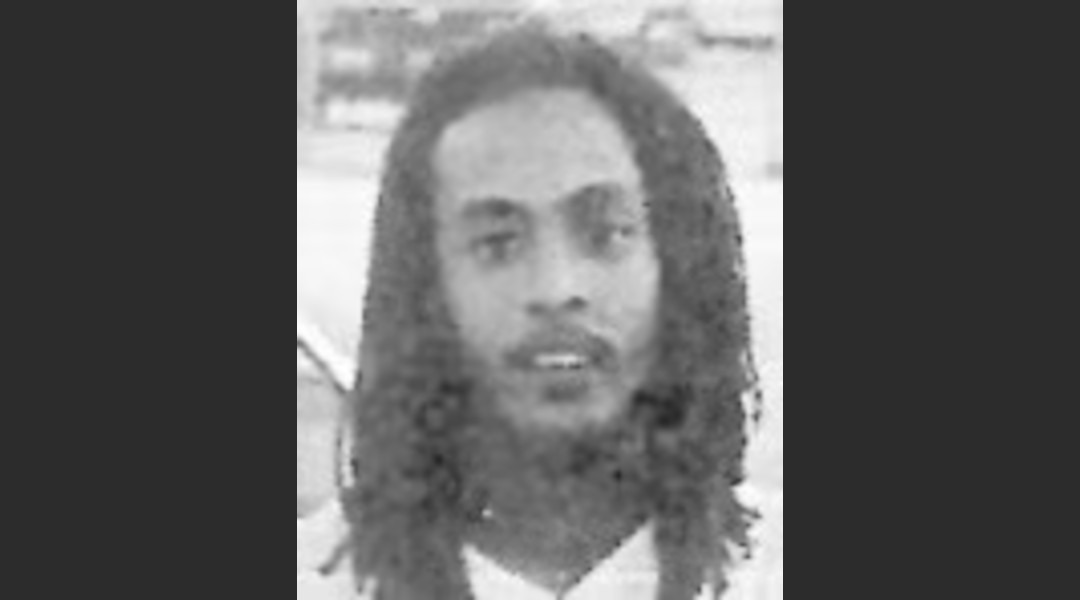
Anthony Craig Brown Jr. was a 23 year old father whose life ended in a shooting in New Orleans, Louisiana, on December 27, 2012. His body was discovered outside a residence in the 1800 block of North Rocheblave Street in the city’s 7th Ward. He had suffered fatal gunshot wounds and was pronounced dead.
The killing occurred two days after Christmas, during a period normally associated with family gatherings and holiday celebrations. Instead, Anthony’s relatives were forced to confront a sudden loss and begin preparing to bury a young man who had a daughter, parents, siblings and a large extended family.
Public information about the crime remains limited. No confirmed account explains what Anthony was doing outside the residence, who approached him or what happened immediately before he was shot. No publicly identified suspect, confirmed motive or arrest has emerged from the available record.
The lack of answers has left Anthony’s murder as one of the many unresolved New Orleans homicides in which the most basic facts are known, but the identity of the person responsible remains hidden.
Anthony’s Life and Family
Anthony Craig Brown Jr. was born on October 29, 1989. He was the son of Michelle Jones and Anthony C. Brown Sr. and grew up as part of a large family.
Anthony had several siblings, including Kali, Dinara, Kennedy, Arione and Tavist. He was also connected to numerous grandparents, aunts, uncles, cousins and friends who were affected by his death.
Most importantly, Anthony was the father of a daughter named Saniyah Brown. His murder did not only take a son and brother from his family. It also took a father from a young child who would have to grow up without him.
Public records provide little information about Anthony’s education, employment or daily routine. They do not describe his long term goals, interests or the plans he may have had for his daughter and himself.
That absence is common in reports about homicide victims. Police accounts often focus on the time, location and manner of death while saying little about the person who lived before the crime.
Anthony’s obituary preserved a fuller picture of the network surrounding him. He was not simply a man found outside a residence. He belonged to a family that knew his personality, remembered his childhood and expected him to continue growing into adulthood.
The Afternoon of December 27, 2012
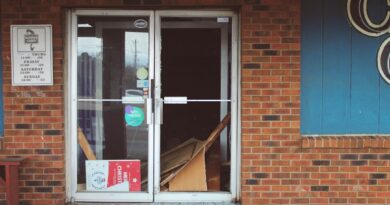
Anthony was found at approximately 3:30 p.m. on December 27, 2012. The discovery occurred outside a home in the 1800 block of North Rocheblave Street.
The location was in the 7th Ward of New Orleans, a historic section of the city made up largely of residential streets, neighborhood businesses and homes situated relatively close to one another.
Anthony had been shot. His wounds were fatal, and he was pronounced dead.
The available information does not establish precisely when the gunfire occurred. It is unclear whether authorities responded immediately after someone heard shots or whether Anthony was discovered after the shooter had already left the area.
The person who first found him has not been publicly identified in the available accounts. It is also unclear whether that person was a resident, visitor, pedestrian or someone passing through the neighborhood.
The crime occurred during the afternoon rather than late at night. That raises the possibility that people were outside, driving nearby or looking through windows when the shooting happened. However, no publicly confirmed witness account has provided a clear description of the attack.
The North Rocheblave Street Crime Scene
The 1800 block of North Rocheblave Street was a residential location. Anthony was found outside a home, but the public record does not explain his connection to the property.
He may have known someone who lived there, been visiting the area or simply passed through the block. There is no confirmed information establishing whether the residence belonged to a relative, friend or acquaintance.
Investigators would have needed to determine whether Anthony was shot where he was found. A victim can sometimes be attacked in one location and moved to another, but there is no public evidence showing that Anthony was transported after the shooting.
If shell casings, blood patterns or bullet damage were found near his body, those details could have helped detectives establish that the crime occurred at that exact location. The results of any such examination have not been publicly released.
Police likely searched the surrounding area for evidence, including shell casings, bullets, weapons, fingerprints and objects that may have been dropped by the shooter.
They may also have examined nearby homes and businesses for surveillance recordings. In 2012, residential security cameras were not as common as they are today, but some properties may still have captured vehicles or people traveling through the area.
No public account confirms whether useful video existed or whether investigators recovered physical evidence capable of identifying the gunman.
Anthony’s Final Hours
Very little is publicly known about Anthony’s activities before he was killed. There is no confirmed timeline describing where he had been earlier that day, whom he spoke with or why he went to North Rocheblave Street.
Establishing a victim’s final movements is often one of the first priorities in a homicide investigation. Detectives may review telephone records, text messages and statements from relatives or friends to determine whom the victim planned to meet.
They may also examine whether the victim received threats, became involved in a dispute or changed plans shortly before the shooting.
In Anthony’s case, none of those details has been released publicly. There is no verified information about a meeting, argument, robbery or confrontation.
It is unknown whether Anthony arrived at the location on foot, in a personal vehicle or as a passenger with someone else. No getaway vehicle or suspect description has been publicly associated with the crime.
The absence of a detailed timeline makes it difficult for the public to understand whether Anthony was specifically targeted or became the victim of an unexpected encounter.
The Unknown Motive
No publicly confirmed motive has been established for Anthony’s murder.
Investigators may have considered whether the killing resulted from a personal disagreement, robbery, retaliation or another conflict. However, no reliable information has shown that any one explanation was accepted by police.
If Anthony was deliberately targeted, the shooter may have known where he would be and approached him at the residence. If the attack was spontaneous, it could have begun with an argument or confrontation that quickly became deadly.
Robbery would be another possible explanation, but there is no public confirmation that money, a telephone, jewelry or other property was taken from him.
It is also possible that Anthony was not the intended target, although nothing in the known record supports or eliminates that possibility.
Without witness testimony, forensic evidence or an admission from the person responsible, motive remains one of the central unanswered questions.
A motive does not excuse a killing, but identifying one can help detectives narrow the list of possible suspects and reconstruct the events leading to the crime.
The Search for Witnesses
Because Anthony was found in a residential area during the afternoon, investigators likely searched for anyone who saw or heard something unusual.
A nearby resident may have heard gunshots, looked outside and noticed a person running from the block. Someone driving nearby may have observed a suspicious vehicle.
A witness could also have seen Anthony speaking with another person before the shooting without realizing that the interaction would later become important.
Even an incomplete observation can assist investigators. The color of a car, the direction in which someone fled or the clothing worn by a person near the scene can help confirm or challenge other evidence.
Witnesses sometimes hesitate to cooperate because they fear retaliation. This concern can be especially strong when a shooting occurs close to the witness’s home.
Others may distrust law enforcement or believe that they did not see enough to be helpful. Some people may share information privately within the neighborhood while refusing to provide a formal statement.
That silence can prevent detectives from building a case strong enough for an arrest. Police may have a theory about who committed a murder but lack witnesses willing to place that person at the scene.
The Challenges of an Outdoor Shooting
Outdoor shooting scenes present difficult investigative conditions. Evidence can be moved, damaged or contaminated by weather, traffic and emergency activity.
Shell casings may reveal the type of weapon used and can sometimes be compared with evidence from other crimes. However, a casing does not identify the shooter unless the firearm is recovered or additional evidence establishes possession.
Bullets can also provide valuable ballistic information, but they may become damaged after striking objects or passing through a victim.
DNA and fingerprints are not always available. A shooter who does not leave the weapon behind may leave little physical evidence that can be connected directly to a name.
Witness descriptions can also be unreliable when an attack happens quickly. People may hear shots and see someone fleeing but fail to observe the person’s face.
The passage of time creates additional problems. Memories fade, people move and relationships change. Evidence that seemed insignificant at first may become difficult to locate years later.
These challenges do not make a case impossible to solve, but they can explain why some homicide investigations remain open for many years.
The Absence of a Public Suspect
No person has been publicly identified as the suspect in Anthony’s murder.
That does not necessarily mean detectives never developed a person of interest. Investigators can examine someone closely without releasing that person’s name, particularly when the available evidence is insufficient to support an arrest.
Police may interview relatives, friends, associates and people connected to the location where the victim was found. They may compare statements, verify alibis and examine telephone activity.
If detectives believe a particular person was involved but cannot establish the case beyond suspicion, they may continue investigating privately while waiting for stronger evidence.
Prosecutors require proof that can survive courtroom examination. A rumor, inconsistent statement or unverified accusation is not enough to prove guilt beyond a reasonable doubt.
Without an official arrest, court filing or law enforcement announcement, no individual should be accused of killing Anthony. The identity of the person responsible remains legally and publicly unresolved.
A Violent Year in New Orleans
Anthony’s murder occurred near the end of a difficult year for New Orleans. The city recorded 193 homicides during 2012.
Although each killing had its own circumstances, the number of cases placed tremendous pressure on detectives, forensic personnel and prosecutors. Every homicide required a crime scene investigation, witness interviews, evidence testing and continued follow up.
Anthony was killed only four days before the end of the year. His death became part of a larger pattern of violence affecting families throughout the city.
Statistics can show the scale of violence, but they can also make individual victims seem interchangeable. Anthony’s death was not simply another number added to a yearly total.
He was a 23 year old father whose daughter lost him shortly after Christmas. His parents lost their son, his siblings lost their brother and his friends lost someone they expected to remain in their lives.
The human impact continued after the police left North Rocheblave Street and the crime scene tape was removed.
The Grief Left Behind
Sudden violent death gives families little time to prepare emotionally. Anthony’s relatives went from celebrating the holiday season to arranging a funeral.
They had to identify his remains, notify loved ones and confront the fact that someone had intentionally taken his life.
His daughter faced a lifelong loss. She would grow older with memories provided by relatives, photographs and stories rather than the daily presence of her father.
Parents who lose an adult child often experience grief mixed with unanswered questions. They may repeatedly think about the victim’s final hours and wonder whether anything could have prevented the death.
When a murder remains unsolved, that grief can become connected to frustration and anger. The family knows that the victim is gone, but they do not know who caused the loss or why.
Every birthday, holiday and anniversary can return attention to the unanswered case. December 27 becomes not only a date on the calendar but the day Anthony’s future ended.
Remembering Anthony Beyond His Death
Anthony should be remembered as more than the victim of a shooting.
He was a father, son, brother, relative and friend. The people close to him knew qualities that do not appear in crime reports, including his humor, habits, personality and relationships.
A homicide report usually summarizes a life through age, location and cause of death. Those facts are necessary, but they cannot explain the full effect of losing someone.
Anthony’s daughter lost future conversations, guidance and shared experiences. His siblings lost the opportunity to grow older beside him. His parents were forced to bury the child they had expected to outlive them.
Remembering the person behind a case is important because unsolved murders can become defined entirely by mystery. The questions about the killer begin to overshadow the life that was taken.
Justice would involve identifying the person responsible, but it would also involve recognizing that Anthony’s life mattered independently of the investigation.
The Possibility of New Evidence
Unsolved homicide cases can receive new life when someone decides to speak after years of silence.
A witness who was afraid in 2012 may now feel able to cooperate. Someone who heard a confession may no longer feel loyalty toward the person who made it.
Relationships between suspects and associates can change. People move, arguments occur and information once protected may eventually be disclosed.
New forensic methods can also create opportunities. Ballistic evidence from Anthony’s case may be compared with evidence recovered from later crimes. A firearm found years afterward could potentially be linked to shell casings or bullets collected from the scene.
Archived telephone records, photographs and witness statements may also reveal connections when reviewed with a fresh perspective.
A cold case investigator can examine the original work, identify gaps and conduct new interviews. People often remember more when asked different questions or shown information that was unavailable during the first investigation.
The strongest breakthrough may still come from someone who knows why Anthony was at the residence and who was with him before the shooting.
A Case Still Waiting for Answers
The known facts surrounding Anthony Craig Brown Jr.’s murder are straightforward but incomplete.
Anthony was 23 years old. He was found shot outside a home in the 1800 block of North Rocheblave Street in New Orleans on December 27, 2012. The discovery occurred at approximately 3:30 p.m.
He was pronounced dead, and the case became a homicide investigation.
What happened before the shooting remains unclear. The public does not know why Anthony was at the residence, who approached him or whether the killer fled on foot or in a vehicle.
No confirmed motive has been announced. No suspect has been publicly identified, and no arrest has been reported.
Anthony’s family was left to mourn without receiving public accountability. His daughter was left without her father, and the person who took his life remained unidentified.
Someone may know what occurred on North Rocheblave Street that afternoon. A witness may have seen the gunman, heard an argument or learned the truth after the shooting.
Until that information reaches investigators and can be supported by evidence, Anthony’s murder will remain unresolved.
His family deserves an explanation. His daughter deserves to know why her father was taken from her. Anthony deserves to be remembered, and the person responsible for his death should be held accountable.
Discover more from City Towner
Subscribe to get the latest posts sent to your email.