
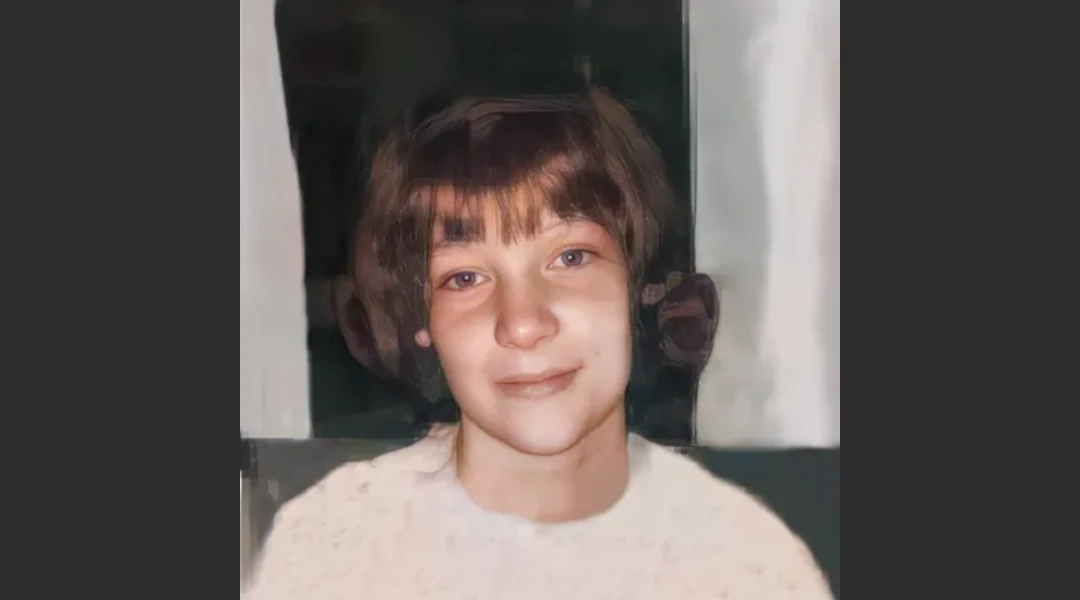
Gayle Sorensen Runs an Errand For Work and Found Dead Days Later in Hutchinson Kansas
Gayle Adele Sorensen left work on February 11, 1977, expecting to complete several ordinary errands in Hutchinson, Kansas. She worked as a secretary at Evergreen Manor, a local nursing home, and was trusted with responsibilities that included handling business deposits and completing tasks away from the office.
That morning, Sorensen was supposed to take approximately $1,800 to a bank. Most of the deposit reportedly consisted of checks, while about $300 was cash. She was also expected to stop at a store before returning to work.
Nothing about the assignment appeared unusual. Sorensen had no known reason to abandon her job, leave her family or suddenly disappear. Her coworkers expected her to return within a reasonable period, but the morning passed without any word from her.
As the delay continued, concern began to grow. Attempts to locate her were unsuccessful, and her husband was contacted. What began as a missing employee soon became one of the most disturbing unsolved murder cases in the history of Reno County.
Who Was Gayle Adele Sorensen
Gayle Adele Sorensen was a young married woman living and working in the Hutchinson area. She was generally reported to have been 23 years old at the time of her death, although some later accounts gave different ages.
Sorensen had reportedly been married to her husband, Larry Sorensen, for only a short time. She was building a life in Kansas and maintaining steady employment at Evergreen Manor.
Those who knew her had no indication that she planned to leave town or cut off contact. Her disappearance was immediately inconsistent with her responsibilities and expected routine.
The ordinary nature of her final morning made the case especially troubling. Sorensen was not traveling alone on a distant road, visiting an unfamiliar city or participating in a dangerous activity. She vanished while carrying out basic errands in the community where she lived and worked.
The Final Known Errands
Sorensen reportedly left Evergreen Manor at approximately 9:30 a.m. on February 11, 1977. Her first responsibilities included making the bank deposit and visiting a nearby business.
The deposit was never completed. Investigators later determined that Sorensen did not arrive at the bank with the money.
It remains unclear whether she went directly to the Dillon’s grocery store parking lot or stopped elsewhere before her vehicle was seen there. The missing period between her departure from work and the discovery of her car became a major focus of the investigation.
There was no confirmed public report that Sorensen called her employer, contacted her husband or explained that she had experienced a problem. She simply failed to return.
The lack of communication suggested that something unexpected had happened quickly. Whether she encountered someone she knew, was approached by a stranger or was forced into another vehicle has never been conclusively established.
Her Car Is Found at Dillon’s
Sorensen’s vehicle was found later that day in the parking lot of a Dillon’s grocery store at 734 East Fourth Avenue in Hutchinson.
The car was reportedly unlocked, and the keys were still inside the ignition. Sorensen was nowhere near the vehicle.
Her purse was missing, along with the money and checks she had been carrying for her employer. The scene raised the immediate possibility of robbery, but several details suggested that the situation may have been more complicated.
Leaving the keys in the ignition could indicate that Sorensen expected to be away from the car only briefly. She may have been interrupted while entering or exiting the vehicle. She could also have been persuaded to step away by someone who appeared familiar or harmless.
There were no widely reported signs of a violent struggle inside the parking lot. This led investigators to consider whether Sorensen initially entered a conversation voluntarily before the encounter became dangerous.
The Unknown Man Near the Vehicle
One of the most important pieces of information came from a witness who reported seeing a woman believed to be Sorensen sitting in the driver’s seat of the car.
An unidentified man was standing beside the open driver’s side door and speaking with her. The interaction did not immediately appear hostile. The witness believed the pair were laughing, which created the impression that they might have known each other.
The man was described as white and approximately 26 to 28 years old. He was believed to stand between 5 feet 8 inches and 6 feet tall, although some descriptions narrowed the range to approximately 5 feet 10 inches to 6 feet.
He had shaggy brown hair that extended to or below his collar. He reportedly wore a mustache and goatee, wire framed glasses with brown lenses and a red stocking cap.
Investigators created and released a composite sketch in an effort to identify him. Despite years of publicity, no one was ever publicly confirmed as the man in the drawing.
It also remained uncertain whether the woman observed in the car was definitely Sorensen. However, the location, vehicle and timing made the sighting highly significant.
The Search for Gayle Sorensen
After Sorensen was reported missing, law enforcement officers, relatives and community members searched for information about her movements.
Investigators examined the grocery store parking lot, questioned witnesses and attempted to trace the missing bank deposit. They also considered whether anyone had recently threatened Sorensen or had a reason to target her.
The missing money initially made robbery an obvious possibility. However, only a portion of the deposit was cash. The checks would have been difficult to use without attracting attention.
This suggested that money may not have been the killer’s only motive. The person responsible may have taken Sorensen’s purse and the deposit to conceal evidence, create a false robbery scenario or prevent her immediate identification.
The investigation became more urgent as time passed without a confirmed sighting.
The Discovery Near the Arkansas River
Sorensen’s body was eventually found southeast of Hutchinson near the Arkansas River levee.
Available accounts conflict on the exact date of the discovery. Some state that she was found on February 13, 1977, while others place the recovery several days later. The central fact is that her body was located shortly after her disappearance in an isolated area outside the main part of the city.
A hunter was reportedly the person who discovered her.
Sorensen had suffered severe violence. She had been beaten, sexually assaulted and killed by a deep cut across her throat.
The condition of her body established that her death was a homicide. Investigators were no longer searching for a missing woman. They were searching for a killer.
The brutality of the crime suggested that the offender was willing to use extreme force and may have planned to take Sorensen to a secluded location where he believed he would not be interrupted.
A Difficult Location to Reach
The area where Sorensen’s body was found created questions about how the killer gained access.
Reports indicated that a fence and locked gate restricted vehicle entry. Investigators reportedly had to break a padlock to reach the site.
This suggested several possibilities. The killer may have known an alternate route, possessed access to the property or transported Sorensen on foot after leaving a vehicle somewhere nearby.
Fresh motorcycle tracks were reportedly discovered on the opposite side of the river. Investigators considered whether those tracks were connected to the crime, although no direct link was publicly established.
The location may have been familiar to the offender. A person who knew the area would have understood where to avoid public view and how to enter or leave without being noticed.
The disposal site also suggested that the killer may have had time to select a location rather than acting entirely without preparation.
Questions About the Missing Deposit
The missing deposit remained an important part of the case.
Approximately $300 was reportedly cash, while the rest consisted of checks. The cash could have provided a financial motive, but the amount alone did not fully explain the violence committed against Sorensen.
The checks were never publicly reported as successfully cashed or deposited by another person. If the offender took them, he may have discarded them after realizing they could be traced.
Sorensen’s purse was also missing. It may have contained identification, personal items and other materials that could have connected the offender to the crime.
No confirmed public report has explained whether any part of the deposit, purse or personal property was later recovered.
The disappearance of these items left investigators uncertain whether robbery was the original motive or simply one element of a broader attack.
The Disturbing Cessna Graffiti
Several months after Sorensen’s murder, disturbing graffiti was reportedly discovered at a Cessna Fluid Products plant in the Hutchinson area.
The writing allegedly included the words, “I Killed Gayle.”
The message immediately attracted the attention of investigators. It appeared to be either a confession, a taunt or a cruel attempt to exploit the publicity surrounding the case.
The location of the graffiti raised the possibility that the writer worked at the plant or had access to the property. It also caused investigators to examine employees and individuals connected to the facility.
However, the message could not automatically be treated as genuine. High profile crimes often attract false confessions, attention seekers and people attempting to mislead law enforcement.
The person who wrote the message was never publicly identified as Sorensen’s killer.
The Long Call to a Radio Station
Another strange development involved a call to Hutchinson radio station KWBW.
An unidentified caller reportedly discussed Sorensen’s murder with the station for approximately 3 hours. The caller allegedly claimed to work at Cessna.
The length of the conversation and the claimed employment connection raised suspicions that the caller might also have been responsible for the graffiti.
Investigators wanted to know whether the person possessed information that had not been released to the public. Knowledge of hidden details could have indicated direct involvement in the crime.
Public reports have not revealed the full contents of the call. It remains unknown whether the caller confessed, threatened anyone or provided accurate information about the murder scene.
The caller was never publicly confirmed as the killer, and no arrest resulted from the incident.
Similar Attacks in Store Parking Lots
Investigators also studied earlier attacks on women in store parking lots.
In one incident, a man armed with a knife reportedly forced a woman to drive to an isolated rural location, where she was sexually assaulted.
In another case, a passing motorist interrupted an attempted attack or caused the assailant to flee.
The similarities were difficult to ignore. Sorensen disappeared from a grocery store parking lot and was later found in a secluded area. The killer used sexual violence and may have controlled her through threats or a weapon.
Investigators considered whether the same man could have committed all of the attacks.
No public evidence conclusively connected the crimes. However, the earlier incidents suggested that a predator may have been approaching women who were alone near their vehicles.
The unknown man seen beside Sorensen’s car became even more important in light of those attacks.
A Possible Connection to Mary Crupper
Some investigators and independent researchers compared Sorensen’s murder with the later killing of Mary Crupper in Wichita, Kansas.
Crupper disappeared after visiting a grocery store on September 8, 1979. Her body was found several days later.
A suspicious man with brown hair and glasses was reportedly connected to attempted abductions in the same general area where Crupper disappeared.
The descriptions contained similarities to the man seen near Sorensen’s vehicle. Both cases involved women completing routine errands at grocery stores before being found murdered.
The distance between Hutchinson and Wichita made a connection possible, but similarity alone did not prove that the same person committed both crimes.
No official announcement established that Sorensen and Crupper were victims of one killer. The theory remains one of several possible avenues considered over the years.
The BTK Theory
Because Sorensen was killed in Kansas during the period when Dennis Rader was committing the BTK murders, his name was eventually considered.
Rader stalked women, entered homes and committed sexually motivated killings. His crimes created fear throughout the Wichita region.
Sorensen’s murder involved sexual violence and occurred within the broader geographic area associated with Rader. Those facts naturally led to speculation.
Investigators later indicated that Rader had been ruled out. The precise basis for that conclusion was not widely explained, but authorities may have compared his movements, statements, known methods and available forensic evidence.
There is no credible public evidence identifying Rader as Sorensen’s killer.
The exclusion of such a well known offender returned attention to the unidentified man in the Dillon’s parking lot and other local suspects.
Investigative Challenges in a 1977 Case
The investigation began during a period when modern forensic technology did not exist.
DNA profiling was not available to detectives in 1977. Surveillance cameras were rare, cellphone records did not exist and many investigative databases were limited or completely unavailable.
Physical evidence collected from Sorensen’s body, clothing or vehicle may have been difficult to interpret using the methods of the time.
Witness memories also faded as the years passed. People moved, died or became difficult to locate. Records may have been lost, damaged or stored in formats that were difficult to review.
The case was further complicated by uncertain timelines and conflicting details in later summaries.
Despite those difficulties, improvements in forensic testing have created the possibility that preserved evidence could still reveal useful information.
The Importance of the Composite Sketch
The composite sketch of the unknown man remains one of the most recognizable elements of the investigation.
The red stocking cap, shaggy hair, facial hair and tinted glasses created a distinctive appearance.
It is possible that the man changed his appearance after learning that police were searching for him. He could have shaved, cut his hair, removed the glasses or left the area.
Someone who knew him in 1977 may have recognized the drawing but remained silent due to fear, loyalty or uncertainty.
The man may also have given Sorensen a false name or presented himself as someone connected to her workplace.
Until he is identified, investigators cannot determine whether he was an innocent acquaintance, a witness or the person responsible for her death.
An Unsolved Murder That Still Haunts Hutchinson
The murder of Gayle Adele Sorensen remains unsolved decades after she disappeared on February 11, 1977.
She left work to make a bank deposit and complete an ordinary shopping errand. Her car was found unlocked at a Dillon’s grocery store with the keys still in the ignition.
A witness may have seen her speaking with an unknown man beside the vehicle. Her body was later discovered near the Arkansas River, where investigators determined that she had been sexually assaulted, beaten and killed.
The missing purse, deposit, unexplained graffiti, radio station call and similar parking lot attacks created multiple investigative leads. None produced a public arrest or final resolution.
The case continues to raise difficult questions. Investigators still do not know whether Sorensen knew the man beside her car, how she was taken from the parking lot or how the killer reached the isolated river location.
They also do not know whether the crime was motivated by robbery, sexual violence or a combination of both.
Gayle Sorensen began February 11, 1977, carrying out a simple responsibility for her employer. By the end of the day, she had vanished into a mystery that would remain unresolved for generations.
Discover more from City Towner
Subscribe to get the latest posts sent to your email.