
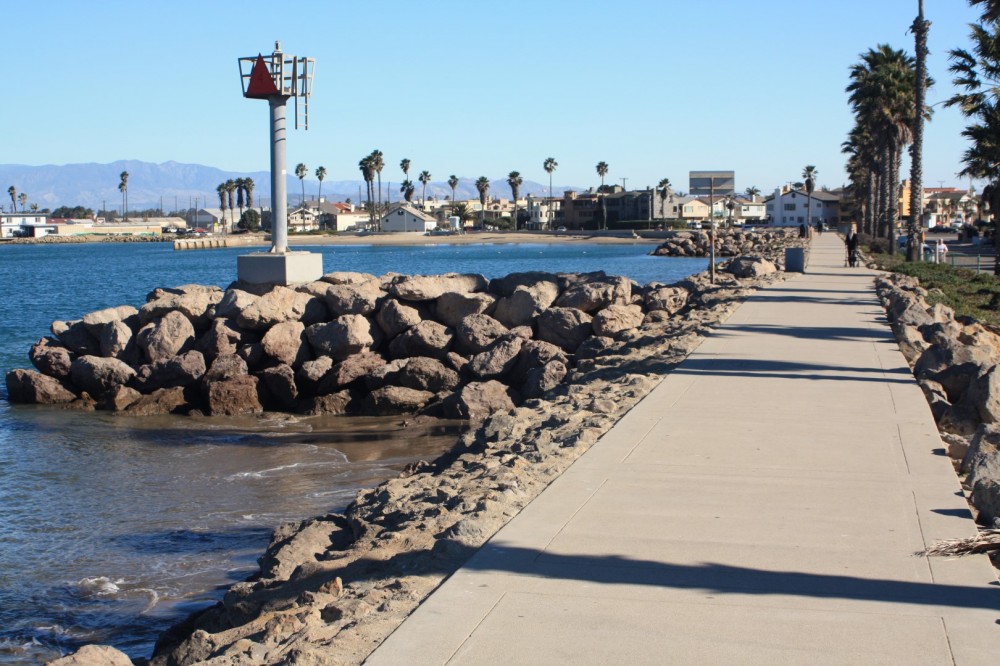
Silver Strand Beach in Oxnard California
Oxnard Historic Farm Park is one of the most important places in Oxnard, California, for understanding how agriculture helped shape the city and the surrounding Oxnard Plain. Located in a region now filled with neighborhoods, businesses, roads, and modern development, the park preserves a small but significant piece of the area’s farming past. Historic buildings, antique agricultural equipment, traditional crops, vineyards, gardens, and educational exhibits allow visitors to see how dramatically this part of Ventura County has changed over more than a century.
The property is associated with the historic Gottfried Maulhardt Farm and traces its origins to the late 1860s. Two of the oldest surviving buildings on the Oxnard Plain remain at the site, including an 1869 brick residence and winery and a farmhouse dating from the 1870s. Other historic features include a carriage house, agricultural equipment, old tractors, grapevines, and plants representing crops that once played major roles in the economy of the Oxnard Plain.
For visitors interested in local history, agriculture, historic preservation, or the development of Ventura County, Oxnard Historic Farm Park provides an experience that is very different from the city’s beaches and waterfront attractions. It tells the story of the land itself and of the families, farmers, workers, and communities that transformed the fertile coastal plain into one of California’s important agricultural regions.
The Agricultural Roots of Oxnard
Long before Oxnard became the modern city visitors recognize today, the surrounding plain was valued for its fertile soil and mild coastal climate. Agriculture eventually became one of the defining industries of the region, with generations of farmers cultivating crops that could thrive in the rich soil.
Barley, corn, lima beans, sugar beets, grapes, citrus, and other crops have all been important to the agricultural history of the area. In later years, strawberries became one of the crops most closely associated with Oxnard and Ventura County.
The success of agriculture was influenced by several natural advantages. The Oxnard Plain is relatively flat, making large scale cultivation practical. The nearby Pacific Ocean helps moderate temperatures, while fertile soils supported intensive farming.
As transportation systems improved, farmers gained better access to markets throughout Southern California and beyond. Railroads eventually became especially important because agricultural products could be transported quickly to growing cities.
The agricultural economy attracted people from many different backgrounds. European settlers established farms, while generations of Mexican, Mexican American, Japanese, Chinese, Filipino, and other workers contributed to agricultural production throughout Ventura County.
Oxnard Historic Farm Park helps preserve the physical environment associated with the early period of that transformation.
The Story of the Maulhardt Family
The history of the property is closely connected with the Maulhardt family, German immigrants who arrived in the region during the 19th century.
Members of the family came to California after leaving the Hanover region of what is now Germany. During the late 1860s and early 1870s, the family became involved in farming on land within the expansive agricultural area that would eventually become part of modern Oxnard.
Gottfried Maulhardt and his brothers were among the settlers who recognized the agricultural possibilities of the Oxnard Plain. Members of the family eventually purchased significant amounts of farmland and established agricultural operations.
The property preserved at Oxnard Historic Farm Park represents part of that early farming period.
Gottfried Maulhardt cultivated grapes, among other agricultural products. Wine production became one component of the farm’s history, which helps explain the surviving brick residence and winery structure dating from 1869.
The family’s agricultural activities took place before the modern city of Oxnard existed. At that time, the landscape would have looked dramatically different from the developed neighborhoods surrounding the site today.
Large areas of open farmland stretched across the plain, and agricultural families often lived relatively close to the fields they cultivated.
The Historic 1869 Brick Residence and Winery
One of the most significant structures preserved at Oxnard Historic Farm Park is the brick residence and winery dating from 1869.
The building is considered one of the oldest surviving structures on the Oxnard Plain. Its age alone makes it an important historical resource, but its connection to the agricultural development of the region gives it even greater significance.
Brick construction was notable during a period when many rural buildings were constructed primarily from wood. The building demonstrates both the practical needs and architectural traditions of agricultural settlers during the 19th century.
The winery portion of the structure also provides evidence of early grape cultivation in Ventura County.
Grapes were among the agricultural products grown on the Maulhardt property, and wine was produced as part of the farm’s operations.
Seeing the building today allows visitors to connect the modern agricultural reputation of Ventura County with farming traditions that stretch back more than 150 years.
The Historic Farmhouse
Another major feature of Oxnard Historic Farm Park is the farmhouse dating from the 1870s.
The farmhouse represents the domestic side of agricultural life. Farming families did not simply work the surrounding fields. Their homes were part of the agricultural landscape, often located close to barns, equipment, animals, gardens, and cultivated land.
The farmhouse helps visitors imagine daily life during a period when Oxnard had not yet developed into a city.
Families living on farms faced demanding schedules that revolved around planting, harvesting, maintaining equipment, caring for livestock, preparing food, and managing household responsibilities.
Modern conveniences were limited, and transportation between farms and nearby communities could require considerably more time than it does today.
The survival of the farmhouse provides an important physical connection to those experiences.
The Carriage House and Early Transportation
The park also contains a carriage house dating from the 1890s.
Before automobiles transformed transportation, horses, wagons, and carriages were essential tools of everyday life. Farmers relied on horse drawn transportation for moving people, crops, supplies, equipment, and other materials.
A carriage house provided protection and storage for vehicles and related equipment.
The park also preserves a spring wagon dating from the 1870s that was once owned by Johannes Borchard, another figure associated with early settlement and agriculture in the region.
These transportation artifacts help illustrate how farming operated before tractors, trucks, paved highways, and mechanized harvesting equipment became common.
Moving agricultural products required considerable effort. Wagons carried crops from fields to storage areas, processing locations, rail connections, or local markets.
Transportation improvements eventually helped turn Ventura County agriculture into a much larger commercial industry.
Historic Tractors and Farm Equipment
One of the most visually interesting aspects of Oxnard Historic Farm Park is its collection of historic agricultural machinery.
The park contains approximately ten historic tractors along with other pieces of vintage equipment.
For visitors accustomed to seeing modern agricultural machinery, these older tractors demonstrate how rapidly farming technology changed during the 20th century.
Early tractors reduced dependence on horses and other draft animals while allowing farmers to cultivate larger areas more efficiently.
Mechanization gradually transformed tasks such as plowing, planting, harvesting, and transporting crops.
The park also preserves two vintage lima bean threshers manufactured by the Ventura Manufacturing and Implement Company.
These machines are particularly significant because lima beans were once an important crop on the Oxnard Plain.
A thresher separates beans or grain from other plant material, reducing the amount of manual labor required during processing.
Seeing the machines up close provides visitors with a better understanding of the physical work involved in agricultural production before today’s highly automated equipment became available.
Lima Beans and the Oxnard Plain
Lima beans may not be the first crop modern visitors associate with Oxnard, but they played an important role in the region’s agricultural history.
Ventura County became known for producing large quantities of lima beans, and the flat, fertile Oxnard Plain provided favorable growing conditions.
Bean farming required planting, irrigation, harvesting, drying, threshing, and transportation. Each stage demanded labor and specialized knowledge.
Historic equipment preserved at the farm park demonstrates how farmers gradually introduced machinery to improve productivity.
The history of lima beans also shows how agricultural regions evolve. Crops that dominate a landscape during one generation may later be replaced by crops that offer better economic opportunities.
Today, strawberries are far more closely connected with Oxnard’s public identity, but older agricultural products such as lima beans remain an important part of the region’s story.
Sugar Beets and the Growth of Modern Oxnard
No discussion of Oxnard’s agricultural history would be complete without sugar beets.
The sugar beet industry played a major role in the creation and growth of the modern city.
During the late 19th century, the Oxnard brothers became involved in establishing a large sugar beet processing operation on the plain. The factory attracted workers, businesses, transportation infrastructure, and new residents.
A community developed around the expanding agricultural industry and eventually took the Oxnard name.
Sugar beets became one of the crops that helped transform the region from scattered agricultural settlements into a growing city.
Rail connections made it easier to transport products, while processing facilities created jobs beyond the fields themselves.
Oxnard Historic Farm Park helps place that transformation into context by preserving a portion of the farming landscape that existed when agriculture dominated the area’s economy.
Historic Crops Growing at the Park
The farm park does more than display agricultural artifacts. It also grows examples of crops historically associated with the Oxnard Plain.
Visitors may encounter barley, corn, sugar beets, lima beans, and other plants connected with the region’s farming traditions.
Growing these crops provides an educational experience that photographs and machinery alone cannot reproduce.
Visitors can actually see the plants that once covered enormous areas of surrounding farmland.
This is particularly valuable for younger visitors who may have little experience with agriculture and may only know food as something purchased from supermarkets.
Seeing crops growing in soil creates a direct connection between food, farming, labor, and the land.
Historic Grapevines and Wine Making
Grapes are another important element of the farm park.
The property includes vineyards containing Zinfandel Blanc grapes connected with vines originating from Santa Cruz Island and dating to agricultural traditions from the 1880s.
The vineyards help preserve an aspect of Ventura County history that can sometimes be overshadowed by strawberries, citrus, and vegetable farming.
Grape growing existed in the region long before the modern California wine industry became internationally famous.
Wine production was part of agricultural life for some early settlers, and vineyards could serve both commercial and religious purposes.
The surviving brick winery structure and modern preservation of historic grape varieties help tell that story.
The Historic Canary Island Date Palm
A towering Canary Island Date Palm dating to the 1800s is another distinctive feature of Oxnard Historic Farm Park.
Historic trees can serve as living landmarks because they remain in place while the landscape around them changes.
The palm has witnessed the transformation of the surrounding area from open agricultural land into a modern urban environment.
When the tree was young, there were no large residential neighborhoods surrounding the property. Automobiles had not yet become common, Oxnard had not yet incorporated as a city, and much of the plain was still dominated by farms and ranches.
Today, the palm provides a dramatic visual connection between that earlier landscape and modern Oxnard.
The Chumash Garden
The history of the Oxnard Plain did not begin with European or American farming families.
Chumash communities lived throughout the coastal region for thousands of years before European settlement.
Recognizing this deeper history, Oxnard Historic Farm Park established a Chumash Garden in 2016.
The garden features California native plants that were traditionally important to Chumash people.
These plants demonstrate how Indigenous communities understood and used the natural environment for food, medicine, tools, cultural practices, and other purposes.
The garden also demonstrates modern landscaping practices that can conserve water, reduce maintenance, support wildlife, and make use of plants naturally suited to Southern California.
Including the Chumash Garden expands the historical story of the property beyond conventional farming history.
It reminds visitors that people successfully lived with and managed the landscape long before commercial agriculture transformed the Oxnard Plain.
Preserving the Farm From Development
The survival of Oxnard Historic Farm Park is especially significant because much of the surrounding farmland has been transformed by urban development.
As Oxnard’s population expanded during the 20th century, residential neighborhoods, schools, roads, shopping areas, and businesses gradually replaced portions of the agricultural landscape.
Historic farm properties that once stood in open countryside became surrounded by development.
The Oxnard Historic Farm Park Foundation was created in the early 2000s with the goal of protecting the property and preserving important structures.
Without organized preservation efforts, buildings of this age can easily disappear because of neglect, redevelopment, fire, structural deterioration, or changing land values.
Preservation allows future generations to physically experience historical places rather than learning about them exclusively through photographs and books.
Recognition as a Historic Landmark
The Gottfried Maulhardt and Albert Pfeiler Farm Site received formal recognition as an important historical property.
The site became Ventura County Landmark No. 165 and was later listed on the National Register of Historic Places as the Gottfried Maulhardt Farm.
National Register recognition emphasizes the property’s historical significance and helps establish its importance beyond the immediate neighborhood.
The listing acknowledges the surviving buildings and agricultural landscape as valuable evidence of the settlement and farming history of the Oxnard Plain.
Historic designation does more than recognize the age of a building. It identifies places that help explain broader stories about communities, industries, migration, architecture, economics, and everyday life.
The Pfeiler Family Era
The site’s history also includes the Pfeiler family.
Albert Pfeiler acquired the farm property and moved there after his marriage in September 1904. Members of the Pfeiler family continued living on the property for generations.
Their long residence extended the site’s agricultural history well into the 20th century.
This continuity is important because historic farms rarely remain frozen in one period. They change as families introduce new crops, machinery, technologies, buildings, and farming practices.
The Pfeiler family’s long connection with the property means the site represents multiple generations of Ventura County agricultural history rather than a single moment.
Agriculture and Oxnard’s Cultural Diversity
Agriculture also contributed significantly to Oxnard’s cultural diversity.
Large farming and processing operations required substantial numbers of workers. Over generations, people from Mexico, Japan, China, the Philippines, Europe, and other parts of the world contributed to Ventura County’s agricultural economy.
Many workers and their families established permanent roots in the area.
Their cultures influenced neighborhoods, restaurants, churches, businesses, festivals, music, traditions, and community organizations.
Modern Oxnard’s multicultural identity is therefore closely connected with its agricultural past.
A historic farm park can help visitors think beyond equipment and crops by considering the people whose labor made agricultural success possible.
A Different Type of Oxnard Attraction
Many travelers visit Oxnard primarily for the Pacific Ocean.
Channel Islands Harbor, Hollywood Beach, Silver Strand Beach, and trips toward Channel Islands National Park naturally receive considerable attention.
Oxnard Historic Farm Park offers a completely different experience.
Instead of beaches and boats, visitors encounter historic buildings, farm equipment, agricultural crops, old grapevines, gardens, and stories of early settlers.
The contrast demonstrates the unusual diversity of Oxnard.
Within one city, travelers can explore both a major coastal environment and a landscape rooted in California farming history.
Someone could spend the morning walking beside the Pacific Ocean and the afternoon learning about sugar beets and lima bean threshers.
That combination helps distinguish Oxnard from many other Southern California coastal cities.
Educational Value for Families and Students
The farm park can be particularly valuable for children and students because agriculture becomes easier to understand when historical objects can be seen directly.
A child who has never visited a farm may not immediately understand how much labor and machinery are involved in producing food.
Historic tractors and threshers demonstrate that farming involves engineering, technology, transportation, economics, weather, biology, and human labor.
The gardens provide another educational dimension by showing what different crops and native plants actually look like.
Teachers and parents can use the park to discuss subjects ranging from local history and immigration to environmental conservation and technological change.
Community Events and Agricultural Celebrations
Oxnard Historic Farm Park also serves as a community gathering place.
Special events and agricultural celebrations help bring people onto the property and introduce new audiences to local history.
Ventura County Farm Day activities have been associated with the park, providing opportunities for residents and visitors to learn more about the region’s agricultural economy.
Events can include demonstrations, historical interpretation, exhibits, food, educational activities, and opportunities to explore the grounds.
Using a historic site for community events helps ensure that preservation remains active rather than simply maintaining buildings that few people ever visit.
Visiting Oxnard Historic Farm Park
The park is located at 1251 Gottfried Place in Oxnard.
Visitors should remember that this is a historic preservation and educational site rather than a large amusement style attraction.
Its appeal comes from slowing down, examining the structures and equipment, reading about agricultural history, exploring the gardens, and imagining what the surrounding landscape once looked like.
The park has historically offered public visiting hours on selected days, including Tuesdays and Saturdays, as well as special events and organized activities.
Because schedules and event calendars can change, visitors planning a specific trip should confirm current access information before arriving.
Photography enthusiasts may particularly enjoy the combination of weathered machinery, historic architecture, crops, gardens, grapevines, and the towering palm.
These elements create visual reminders of different periods in Ventura County history.
Understanding Modern Oxnard Through the Farm Park
Visiting Oxnard Historic Farm Park can change the way a traveler sees the rest of the city.
After learning about the region’s agricultural history, the fields surrounding Oxnard take on greater meaning.
Strawberry farms, vegetable fields, irrigation systems, farm equipment, and produce trucks become part of a much longer story stretching back generations.
Even modern neighborhoods can be understood differently when visitors realize that many were built on land that previously supported crops.
The city grew outward across an agricultural plain that had already supported families and businesses for decades.
Preserving even a relatively small historic farm therefore provides an important reference point for understanding how dramatically the landscape changed.
Why Oxnard Historic Farm Park Matters
Oxnard Historic Farm Park matters because cities can lose physical connections with their origins surprisingly quickly.
A growing population requires housing, schools, roads, businesses, and public services. Development can gradually erase the buildings and landscapes that explain how a community began.
The farm park protects part of that story.
Its historic farmhouse, brick residence and winery, carriage house, tractors, threshers, crops, gardens, grapevines, wagon, and palm collectively provide evidence of more than a century of agricultural history.
The site also demonstrates that Oxnard’s identity cannot be understood solely through its coastline.
Agriculture helped create the city economically, attracted generations of workers and families, influenced local culture, and continues to shape the surrounding landscape.
For travelers exploring Oxnard, the farm park provides an opportunity to move beyond beaches and restaurants and discover why the city developed where it did.
It is a place where visitors can stand beside some of the oldest surviving structures on the Oxnard Plain while looking at a modern city that grew around them.
That contrast is ultimately what makes Oxnard Historic Farm Park so meaningful. It preserves a small surviving fragment of the landscape that existed before modern Oxnard and allows future generations to understand the agricultural foundation beneath the city they see today.
Discover more from City Towner
Subscribe to get the latest posts sent to your email.