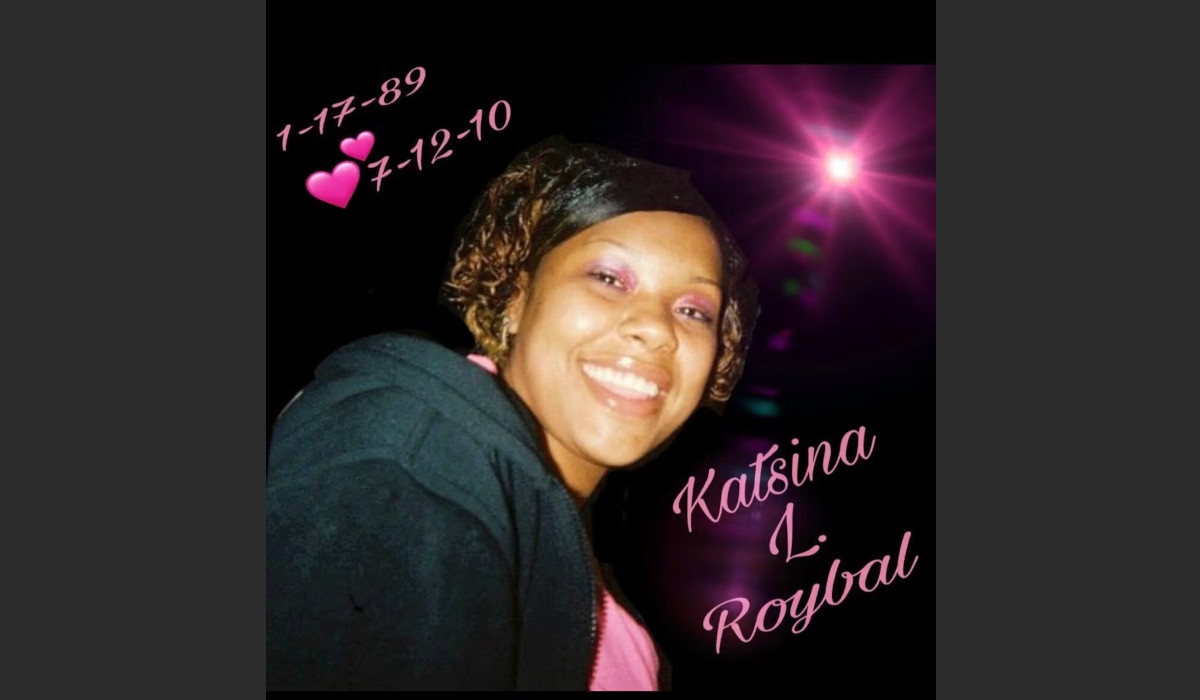
Katsina Roybal Shot & Killed On Her Front Porch in Denver Colorado
On the night of July 12, 2010, 21 year old Katsina Lynnea Roybal was outside her residence in Denver, Colorado, when an ordinary summer evening suddenly turned deadly. At approximately 10:00 p.m., Katsina and a man were on the front porch of the home at 1824 East 36th Avenue when two unidentified men approached the property.
Without warning, gunfire erupted near the porch. Katsina was struck in the head, while the man with her was wounded in the leg. The attackers fled the area before they could be identified or detained. Emergency responders arrived, but Katsina’s injuries were fatal. She was pronounced dead at the scene.
The surviving victim received medical treatment for his injury. His name has not been widely released, and there has been little public information about what he may have seen or told investigators. His presence made him an important potential witness, but the available public record has not revealed whether he recognized either attacker or knew why the shooting occurred.
The sudden violence left Katsina’s family mourning a young woman whose life ended before she had the chance to fulfill her plans for the future. It also left Denver homicide detectives with a complicated investigation involving multiple attackers, several firearms, an injured witness and no publicly confirmed motive.
The Attack on East 36th Avenue
The shooting occurred outside a residence in Denver’s Cole neighborhood, an area located northeast of downtown. The attackers reportedly approached Katsina and the man as they stood or sat near the porch. The circumstances suggested that the gunmen had moved close enough to the house to fire directly toward the victims.
Investigators determined that evidence from three separate firearms was present at the crime scene. This detail made the shooting especially difficult to reconstruct. Although witnesses reported seeing two men approach the porch, the presence of three weapons raised additional questions.
One attacker may have carried and fired more than one gun. Another person may have been nearby but unseen by witnesses. It was also possible that a firearm connected to someone at the residence contributed to the evidence recovered at the scene. Authorities have not publicly explained exactly how the three weapons were used or whether every weapon fired bullets that struck the victims.
The number of firearms indicated a substantial level of violence. This was not a case involving a single impulsive shot. Multiple rounds were discharged in a residential neighborhood at night, endangering the two victims and potentially anyone else inside nearby homes.
The attackers were able to escape quickly. No detailed public description of the men has emerged beyond the report that two males were involved. Police have not released their ages, clothing, vehicle information or any distinctive physical features that could help the public identify them.
Who Was Katsina Lynnea Roybal
Katsina Lynnea Roybal was born in January 1989 and grew up in the Denver area. She belonged to a large extended family and was remembered by loved ones as a daughter, sister, relative and friend whose death created a lasting absence.
Family accounts described her as someone who helped care for her younger sisters. At the time of her death, Katsina was reportedly attending Metropolitan State College of Denver. Her enrollment suggested that she was working toward building a future for herself when her life was abruptly taken.
She was only 21 years old when she died. At that age, she was still discovering the direction of her adult life, developing relationships and making decisions about education and employment. Instead of celebrating future accomplishments with her, Katsina’s relatives were forced to arrange her funeral and search for answers about who killed her.
Public discussion of homicide victims can sometimes become focused entirely on police files or events from their past. Katsina’s life, however, was larger than the circumstances of the shooting. She was a young woman with people who depended on her, cared about her and expected her to remain part of their lives.
Her relatives have had to live with the painful reality that the individuals responsible for her death have not been publicly identified. The passage of time has not eliminated the questions surrounding the case or the family’s need for accountability.
A Complicated History Before the Murder
Before her death, Katsina had been involved in a highly publicized criminal case connected to the destruction of the Holly Square Shopping Center in northeast Denver. The shopping center was damaged by a major fire in May 2008 following an incident reportedly connected to a dispute at a nightclub.
Katsina and several other people were accused of participating in a conspiracy to set the fire. She later pleaded guilty to first degree arson and possession of an incendiary device. In October 2009, she was sentenced to eight years of probation, 125 hours of public service and shared restitution obligations with other defendants.
Katsina was killed approximately nine months after receiving that sentence. The timing caused some observers to question whether her murder might have been connected to the arson case, neighborhood conflicts, personal disputes or alleged gang activity involving people associated with the earlier incident.
No official public statement has confirmed that the Holly Square fire or Katsina’s conviction caused her death. Although the earlier case formed part of her known history, it should not be presented as a proven motive for the shooting.
Investigators may have examined whether the arson case created enemies or exposed Katsina to retaliation. They may also have considered whether the surviving man was the intended target, whether both victims were targeted or whether the attack resulted from an unrelated conflict.
Without an arrest, confession or detailed public explanation from police, the relationship between Katsina’s past and her murder remains uncertain.
The Search for a Motive
One of the central unanswered questions is why the gunmen approached the residence and began shooting. The manner of the attack appeared deliberate because the men reportedly walked toward the porch before opening fire. However, a deliberate attack does not automatically reveal who the intended target was.
Katsina may have been specifically targeted. The injured man may have been the primary target. Both victims may have been targeted because of a shared dispute. It is also possible that one or both attackers believed someone else was present at the residence.
Police have not publicly announced a confirmed motive. They have not stated whether the shooting involved retaliation, drugs, gang activity, a personal disagreement, a robbery attempt or mistaken identity.
The surviving victim could have provided valuable insight into the events leading up to the attack. Investigators likely examined his relationships, recent conflicts and reason for being at the residence. Detectives would also have reviewed Katsina’s friends, associates, communications and recent movements.
Telephone records, witness interviews and neighborhood information may have helped investigators construct a timeline. However, the case remained unresolved, suggesting that the available evidence was not sufficient to establish the identity of the attackers beyond a reasonable doubt.
Evidence From Three Firearms
Ballistic evidence is one of the most significant details in Katsina’s case. Investigators found evidence associated with three firearms at the scene. Shell casings and bullet fragments can allow forensic examiners to determine how many guns were fired, what calibers were used and whether a weapon was connected to another crime.
If police recovered shell casings, those casings may have contained marks unique to the firearms that discharged them. Investigators could compare the evidence with material entered into national ballistic databases. A later shooting involving one of the same weapons might create a connection between Katsina’s murder and another criminal investigation.
The existence of three firearms may have broadened the investigation beyond the two men reportedly seen approaching the porch. Detectives would have needed to determine whether a third person participated, whether one gunman carried two weapons or whether another individual at the scene fired a gun.
Ballistic evidence can be powerful, but it does not always identify the person holding a weapon. Police must still link the firearm to a suspect through possession, fingerprints, DNA, witness testimony, surveillance footage or admissions.
No weapon has been publicly identified as the murder weapon, and authorities have not announced that any firearm connected to the case was recovered. The unexplained ballistic evidence remains one of the most intriguing and potentially important elements of the investigation.
Challenges Facing the Investigation
Homicide investigations are especially difficult when attackers flee within seconds and witnesses cannot provide detailed descriptions. The shooting occurred at night, which may have limited visibility and made it harder for neighbors to observe the gunmen.
The attackers may have concealed their faces or worn common clothing that made them difficult to identify. They may have escaped in a vehicle parked away from the residence or traveled through nearby streets before police arrived.
Fear can also prevent witnesses from cooperating. People who saw suspicious activity may have worried about retaliation or believed that speaking with police would place them in danger. Others may have assumed that their information was unimportant.
Even a small observation could have helped investigators. A neighbor may have seen an unfamiliar vehicle, heard an argument before the shooting or noticed people waiting near the residence. Someone may have known about a recent threat or dispute involving Katsina or the surviving victim.
Cold cases often remain unsolved not because police lack all evidence, but because one critical connection is missing. Investigators may know why the shooting happened but lack proof identifying the gunmen. They may have suspected individuals but lacked cooperative witnesses. They may also have possessed physical evidence that could not be connected to a specific person.
The Case Becomes a Cold Case
The Denver Police Department classified Katsina’s death as a homicide and assigned the investigation case number 2010-345541. As years passed without a publicly announced arrest, the murder became part of Denver’s collection of unsolved cold cases.
A cold case designation does not mean an investigation has ended. It generally means the case remains unsolved after the initial period of active investigation. Detectives can reopen leads when witnesses come forward, technology improves or evidence from another crime produces a connection.
Cold case investigators may review old interviews, examine inconsistencies in witness statements and search for individuals who were unwilling to cooperate in 2010 but may now be prepared to speak. Relationships and loyalties can change over time. People who once protected a suspect may later decide that the truth is more important.
Advances in forensic testing may also create new opportunities. DNA recovered from an object, firearm or item left near the scene might now be analyzed more effectively than it could have been in 2010. Ballistic database searches can produce matches years after a crime if a related weapon is recovered.
Despite these possibilities, no person has been publicly charged with killing Katsina. Her case remains open, and the identities of the men who approached the porch have not been officially revealed.
A Family Left Without Justice
For Katsina’s family, the murder was not simply an old police case. It represented the loss of a daughter and sister whose future was taken in a matter of seconds.
Families of unsolved homicide victims often struggle with two forms of grief. They must mourn the person they lost while also living with the knowledge that the killer has not been held responsible. Court proceedings can never restore a victim’s life, but an arrest can provide answers and a sense that the justice system has acknowledged the harm done.
Katsina’s loved ones have been denied that resolution. They do not publicly know who planned the attack, who fired the fatal shot or why the gunmen targeted the porch that night.
Each anniversary of July 12, 2010, marks another year without answers. The passage of time may change the investigation, but it does not diminish the seriousness of the crime or the family’s right to know the truth.
Katsina’s name remains connected to a violent event that has never been fully explained. Remembering her as a person rather than merely a case number is important because every cold case represents a life, a family and a community permanently changed by violence.
Questions That Remain Unanswered
More than a decade after the shooting, many fundamental questions remain unresolved. It is unknown whether Katsina knew the attackers or recognized them as they approached. It is also unclear whether the surviving victim was able to provide a description or identify a possible motive.
Authorities have not explained why evidence from three firearms was discovered when only two attackers were reportedly observed. The possibility of a third participant has not been publicly confirmed or dismissed.
The intended target remains uncertain. Katsina may have been the focus of the attack, but the wounded man’s presence creates the possibility that the gunmen were seeking him. The fact that Katsina was struck in the head could suggest deliberate targeting, but bullet trajectories and firing positions have not been publicly disclosed.
There is also no confirmed connection between the murder and Katsina’s earlier arson conviction. The timing may invite speculation, but speculation cannot replace evidence.
The identities of the gunmen, the reason for the attack and the location of the firearms remain unknown to the public. These unanswered questions continue to define the case.
The Continuing Need for Information
The passage of time can make witnesses believe that information is no longer useful. In reality, old information can become more valuable when investigators compare it with evidence collected over many years.
Someone may know who possessed the firearms used in the shooting. A person may have heard an admission, witnessed the attackers leaving the neighborhood or helped conceal a vehicle or weapon. Even secondhand information could provide detectives with a name or location to investigate.
People who were young at the time of the murder may now view the case differently. Former friends may no longer feel loyalty to the individuals involved. Relationships may have ended, and fears that once discouraged cooperation may have faded.
Solving the murder would require evidence strong enough to identify and prosecute those responsible. A single witness may not possess every answer, but several small pieces of information could combine to reveal what happened.
Katsina Lynnea Roybal was killed outside her Denver home on July 12, 2010. Two men reportedly approached the porch and opened fire, leaving her dead and another person wounded. Evidence connected to three firearms was recovered, yet no publicly identified suspect has been brought to justice.
Her murder remains an unresolved act of violence that continues to demand answers. Until the individuals responsible are identified and held accountable, Katsina’s family must continue living with the uncertainty of a case that has remained open for years.
Discover more from City Towner
Subscribe to get the latest posts sent to your email.