Tammy Mahoney Disappearance in Oneida New York
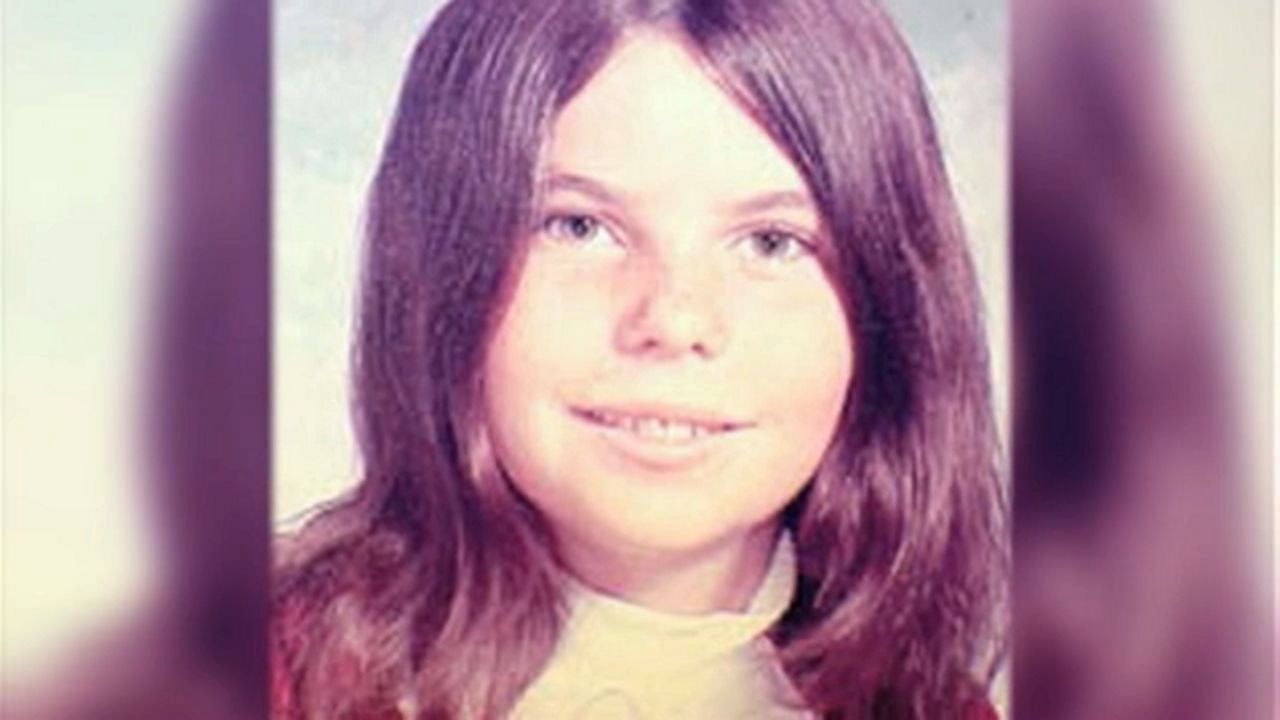
Tammy Mahoney was 19 years old when she disappeared from Oneida, New York, on May 8, 1981. She was a young woman with plans for her future, strong connections to her family and a life that appeared to be moving forward. Her sudden disappearance would eventually develop into one of central New York’s most troubling unsolved cases.
Tammy was born on August 29, 1961. She was originally from Long Island but had moved to central New York to attend the State University of New York at Morrisville. She studied animal husbandry and reportedly had an interest in becoming a veterinarian. Her education and work reflected her love of animals and her desire to build an independent future.
By May 1981, Tammy was living with her boyfriend in an apartment on Lenox Avenue in Oneida. She had worked as a groom at Vernon Downs, a harness racing track in Vernon, New York. The job required her to travel several miles from her home, and transportation was sometimes difficult. Tammy did not always have access to a vehicle and was known to hitchhike when she needed to travel.
Approximately one week before she disappeared, Tammy left her job at Vernon Downs. People close to her reportedly did not know that she had quit. She continued leaving home in the morning as though she were still going to work. Tammy had also applied for a newsroom job with the Oneida Daily Dispatch, suggesting that she was actively searching for another opportunity closer to home.
Nothing about Tammy’s life indicated that she intended to vanish permanently. Her belongings remained at her apartment, and she had been preparing to move with her boyfriend. Her personal possessions had reportedly been packed, but she left behind essential items, including her toothbrush. Her family later emphasized that she maintained contact with them and would not have abandoned them without an explanation.
The Morning Tammy Mahoney Disappeared
On the morning of May 8, 1981, Tammy left her apartment in Oneida. At approximately 7:45 a.m., she was seen hitchhiking near the Glenwood Shopping Center along Route 46. She was believed to be attempting to travel to Hamilton, New York, where she planned to visit friends.
Hamilton is approximately 20 miles south of Oneida. Since Tammy did not have reliable transportation, hitchhiking was not considered unusual behavior for her. However, the decision placed her in a vulnerable position and may have brought her into contact with the people responsible for her disappearance.
Investigators believe Tammy was picked up while hitchhiking and transported to a gathering at a residence on Territory Road East, off Route 46. The location was associated with Oneida Indian Nation territory and has frequently been described as a secluded trailer or residence where a party was taking place.
Several people were reportedly present at the gathering. Accounts of what happened after Tammy arrived have varied over the years. Some individuals claimed that she eventually left the party on foot. Investigators have not accepted that account as a complete or credible explanation for her disappearance.
Tammy was never reliably seen again after May 8, 1981.
The Failure to Return Home
When Tammy did not return home, concern began to grow among the people who knew her. Sources have offered different dates for when she was formally reported missing, with some records stating May 9, 1981, and others stating May 11, 1981. Her boyfriend was reportedly the person who contacted authorities.
Tammy had occasionally left home for short periods in the past, which may have influenced the initial response to her disappearance. However, her absence quickly became alarming because she had left all her possessions behind and failed to contact her family.
There was no evidence that Tammy had withdrawn money, arranged transportation or prepared to start a new life. She did not take clothing, identification or other personal items that would have been necessary for a planned departure. She also failed to communicate with relatives, something they considered completely out of character.
Investigators soon began considering the possibility that Tammy had been harmed. As information about the party emerged, the case increasingly shifted from a missing person investigation toward a suspected homicide.
A Gathering Surrounded by Questions
The party on Territory Road East became the central focus of the investigation. Authorities believed that many people may have been present and that several individuals knew more than they initially admitted.
Over the years, investigators received accounts suggesting that Tammy was assaulted after arriving at the gathering. Law enforcement eventually stated that they believed she had been sexually assaulted by multiple men and murdered shortly afterward.
These conclusions were based on witness accounts, investigative leads and information gathered over many years. However, no one has been convicted in connection with Tammy’s disappearance, and the precise sequence of events has never been proven in court.
Investigators have indicated that fear, silence and reluctance among witnesses have prevented the case from moving forward. Some people who allegedly had knowledge of the crime were reportedly unwilling to provide formal testimony. Others may have offered partial accounts while withholding details about the identities of those involved or the location of Tammy’s remains.
The number of people believed to have attended the gathering has made the continued silence especially frustrating for investigators and Tammy’s family. Authorities have repeatedly suggested that multiple people know what happened and that the case could be solved if even one person provided complete and truthful information.
The Belief That Tammy Was Murdered
Although Tammy remains officially classified as a missing person, investigators have long believed she was killed. By the early 2000s, authorities publicly described the case as a probable homicide and announced that they had identified several possible suspects.
The names of those individuals were not officially released, and criminal charges were not filed. Some investigators believed there was not enough admissible evidence to establish exactly who committed the assault, who caused Tammy’s death or who helped conceal her body.
The absence of Tammy’s remains has created a significant obstacle. A homicide case can sometimes be prosecuted without recovering a victim’s body, but prosecutors must still prove that the person is dead and connect a particular defendant to the crime beyond a reasonable doubt.
In Tammy’s case, the available information appears to have relied heavily on statements made by witnesses many years after the event. Without physical evidence, a body or witnesses willing to testify fully, prosecutors have been unable to bring the case into a courtroom.
Tammy’s family has continued to seek answers, believing that those responsible have avoided accountability because people with information chose to remain silent.
The Burned Building Tip
One early theory suggested that Tammy’s body may have been hidden inside a building on Lenox Avenue that burned on May 11, 1981. The timing of the fire, only a few days after Tammy disappeared, immediately raised suspicions.
Investigators examined the possibility that the fire had been connected to an effort to destroy evidence. However, no publicly known evidence established that Tammy’s remains had been inside the building. The tip did not produce a confirmed discovery and did not resolve the case.
The burned building became one of several locations associated with rumors and theories surrounding Tammy’s disappearance. As time passed, investigators received additional claims about vehicles, ponds and remote areas where her body may have been concealed.
None of those leads resulted in the recovery of Tammy’s remains.
The Mysterious Wallet
One of the most unusual pieces of evidence connected to the case was a man’s wallet found on Oneida Indian Nation territory shortly after Tammy disappeared.
An unidentified person reportedly discovered the wallet and delivered it to the Oneida Police Department. Investigators later concluded that the wallet might be connected to Tammy’s case. The identity of the person who found it became important because that individual could potentially explain exactly where it was located and whether anything unusual was observed nearby.
Authorities have repeatedly asked the person who turned in the wallet to come forward. Investigators have emphasized that the individual is not considered a suspect and may possess information that could help establish the wallet’s significance.
The appeal concerning the wallet continued decades after Tammy disappeared. Investigators believed that even a small detail about where it was found could help confirm the movements of a suspect, identify a crime scene or reveal where evidence had been discarded.
The wallet remains one of the case’s most intriguing unresolved elements.
The Vehicle and the Filled Pond
Investigators also received information suggesting that Tammy’s body may have been placed inside a vehicle after her death.
In June 2002, authorities searched an area near the Shako:wi Cultural Center. The site had reportedly contained a pond in 1981, but the pond was later filled and covered with gravel. Investigators considered the possibility that a vehicle connected to the crime had been concealed or buried in the area.
The search attracted significant attention because it represented a major attempt to locate physical evidence more than 20 years after Tammy vanished. Heavy equipment was reportedly used to examine the site, but the operation did not result in the recovery of Tammy’s body or evidence sufficient to support criminal charges.
Authorities also considered the possibility that Tammy’s remains had initially been placed inside a vehicle and later moved. If that occurred, the vehicle might still have contained forensic evidence even if her body was no longer inside it.
The filled pond theory did not solve the case, but it demonstrated that investigators continued to pursue old information and search locations connected to witness statements.
Jurisdiction and the Federal Investigation
The suspected crime occurred on or near Oneida Indian Nation territory, creating jurisdictional considerations for local, state, tribal and federal authorities.
The Federal Bureau of Investigation eventually became deeply involved in the case. The FBI’s Albany Field Office and Utica Resident Agency have continued to publicize Tammy’s disappearance and request information from the public.
Federal involvement allowed investigators to pursue leads across jurisdictional boundaries and coordinate with different law enforcement agencies. It also reflected the seriousness with which authorities viewed the allegations that Tammy had been assaulted and murdered on tribal territory.
Despite decades of investigation, jurisdiction does not appear to be the primary reason charges have not been filed. The larger problems have been the lack of Tammy’s remains, limited physical evidence and the unwillingness of important witnesses to provide testimony capable of supporting a prosecution.
Tammy Mahoney’s Physical Description
At the time of her disappearance, Tammy was approximately 5 feet 3 inches tall and weighed about 130 pounds. She had brown hair, green eyes, freckles and pierced ears.
Descriptions of her clothing have differed slightly. She may have been wearing a dark V neck sweater or sweatshirt with white embroidery, blue jeans or bib overalls and a dark or denim jacket. Reports have also mentioned clogs, sandals or white low top sneakers.
Tammy may have been wearing several pieces of jewelry, including a silver ring with a green stone, a turquoise cross necklace and a thin guardian angel medallion.
These details have remained important because investigators hope that someone may recognize clothing, jewelry or personal items that were found or seen after May 8, 1981.
Decades of Silence
One of the most painful aspects of Tammy’s case is the belief that many people know what happened.
Investigators have repeatedly stated that individuals who attended the party, heard discussions afterward or helped move evidence may still possess critical information. Some of those individuals may not have directly participated in the crime but may know who did.
Over time, relationships change, loyalties fade and fear may lessen. People who were young adults in 1981 are now much older. Investigators continue to hope that someone will decide that protecting those responsible is no longer more important than giving Tammy’s family the truth.
Even a person who heard a confession, saw a suspicious vehicle or helped clean a location could provide information capable of advancing the investigation. Small details that appeared unimportant decades ago may now be essential when compared with evidence already gathered by law enforcement.
The continued silence has allowed uncertainty to follow Tammy’s relatives for more than four decades.
A Family Left Without Answers
For Tammy’s family, the passage of time has not erased the need to know what happened. They have lived without a grave to visit, a complete account of Tammy’s final hours or a criminal trial that could hold anyone responsible.
An unresolved disappearance creates a unique form of grief. Families are forced to live between hope and acceptance, often knowing that their loved one is likely dead but lacking the physical and legal confirmation needed for closure.
Tammy’s relatives have had to endure rumors, conflicting accounts and repeated searches that ended without finding her. Every new lead may bring renewed hope, followed by disappointment when no remains or charges are produced.
The family’s request has remained consistent. They want Tammy found, they want the truth made public and they want anyone responsible for her death to be held accountable.
The Continuing Search for Tammy
The disappearance of Tammy Mahoney remains an active and unresolved investigation. Authorities believe she did not voluntarily leave Oneida and that she was killed shortly after being taken to the gathering on Territory Road East.
Her remains have never been recovered. No one has been publicly charged with her assault, murder or the concealment of her body.
The FBI has offered a reward of up to $20,000 for information leading to the recovery of Tammy’s body or the arrest and prosecution of those responsible for her disappearance or death.
Investigators continue to seek information from anyone who attended the gathering, witnessed Tammy being transported, heard statements about the crime, encountered the suspicious wallet or knows where her remains were placed.
More than 45 years have passed since Tammy disappeared, but the case has not been forgotten. The central facts remain deeply troubling. A 19-year-old woman was last seen hitchhiking in Oneida on May 8, 1981. She was reportedly taken to a gathering where investigators believe she was assaulted and killed. Numerous people may have known what happened, yet Tammy’s body has never been found.
Solving the case may depend on one person finally deciding to tell the entire truth.
Discover more from City Towner
Subscribe to get the latest posts sent to your email.