
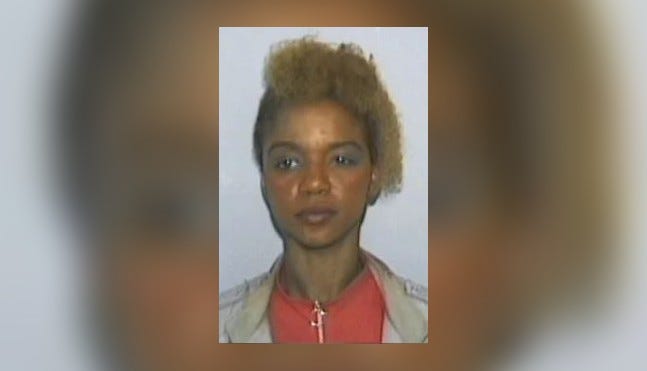
Robin Scott Goes Missing in Grand Rapids Michigan
Robin Sue Scott was 37 years old when she disappeared from Grand Rapids, Michigan, during the early morning hours of January 18, 1995. Her disappearance began with what appeared to be an ordinary departure from home. According to the limited public information available about the case, Robin left her residence at approximately 3:00 a.m. after telling her sister that she was going to work along the Division Avenue corridor.
Robin never returned home.
No confirmed sighting of her was reported after she left, and no publicly known communication from her was received by relatives or friends. Her sister later reported her missing, beginning a case that has remained unresolved for decades.
Robin was a mother, and her disappearance left behind a teenage son who had no explanation for why she had suddenly vanished. Her family was left with unanswered questions about where she went, who she may have encountered, and what happened after she entered the streets of Grand Rapids that morning.
The lack of clear evidence has made Robin’s disappearance especially difficult to understand. There was no publicly reported crime scene, no confirmed witness account describing her final movements, and no physical evidence released that established whether she left willingly, suffered an accident, or became the victim of violence.
Who Was Robin Sue Scott?
Robin Sue Scott was a Black woman who lived in Grand Rapids. She was described as approximately 5 feet 1 inch tall and weighing about 100 pounds. She had black or dark brown hair and brown eyes.
A dental detail included in missing person records states that one of her lower right molars had been removed years earlier. Information such as dental records can become important in long term missing person investigations, particularly when investigators are attempting to identify unidentified remains.
Only a limited amount of information about Robin’s personal history has been released publicly. There are few published details about her childhood, education, relationships, employment, or daily routines. Much of what is known focuses almost entirely on the circumstances surrounding her disappearance.
Reports indicate that Robin was involved in commercial sex work and planned to work in the Division Avenue area on the morning she vanished. That information became significant because Division Avenue was known during the 1990s as an area where women engaged in street level sex work.
Robin’s occupation and the location where she was last believed to be headed may have placed her in contact with strangers and exposed her to dangerous circumstances. At the same time, her involvement in sex work should not define her life or diminish the importance of her disappearance. She was a mother, sister, and member of the Grand Rapids community whose family deserved answers.
The Last Known Account
The final known account of Robin’s movements came from her sister. At approximately 3:00 a.m. on January 18, 1995, Robin reportedly left her home and said she was going to work along Division Avenue.
The exact address of the residence has not been consistently released in public records. It is also unclear whether Robin walked, drove, accepted a ride, or used another form of transportation to reach the area.
No description of the clothing she wore that morning has been widely published. There is also no clear public information about whether she carried identification, money, a purse, or other personal belongings.
Investigators have not publicly identified anyone Robin planned to meet. It remains unknown whether she had arranged to see a specific person or simply intended to travel to an area where she regularly worked.
Once she left the residence, the known timeline appears to end. No witness has been publicly identified as the last person to see her alive. There is no confirmed account of her arriving on Division Avenue, entering a vehicle, visiting a business, or speaking with another person.
The absence of a clear final sighting created an immediate challenge for investigators. Without knowing exactly where Robin went after leaving home, detectives had a large area and many possible scenarios to consider.
Division Avenue in the 1990s
Division Avenue became an important part of Robin’s case because it was the location where she reportedly intended to work. During the 1990s, portions of the corridor were associated with bars, inexpensive hotels, street activity, drug use, and commercial sex work.
Women working in the area often encountered customers they did not know and sometimes entered vehicles with strangers. Many transactions took place late at night or during early morning hours when fewer witnesses were present.
Those conditions created risks that were difficult for investigators to reconstruct after a disappearance. A woman could enter a vehicle and leave the area within minutes without anyone recording the license plate or identifying the driver.
Security cameras were also far less common in 1995 than they are today. Businesses did not routinely maintain the extensive digital surveillance systems now found throughout many cities. Mobile phones did not track locations in the way modern smartphones do, and electronic records were limited.
If Robin entered a vehicle or traveled to another location, investigators may have had little physical or digital evidence available to determine where she went.
The time of her disappearance also increased the uncertainty. At approximately 3:00 a.m., fewer businesses were open, fewer people were on the streets, and darkness reduced the possibility that someone would clearly observe an incident.
The Grand Rapids 17
Robin’s disappearance has often been discussed in connection with a group of cases sometimes called the Grand Rapids 17. Between the early and middle 1990s, numerous women disappeared or were found dead in and around Grand Rapids.
Many of the women had connections to commercial sex work, drug use, or the Division Avenue corridor. The similarities between the cases raised concerns that one person, or possibly more than one person, may have targeted vulnerable women.
Some victims were found dead in isolated locations. Other women vanished and were never located. The circumstances varied, and investigators were not able to conclusively prove that all of the cases were connected.
Robin’s disappearance fit several features associated with the wider group. She disappeared during the same general period, reportedly planned to work along Division Avenue, and was never seen again.
However, no official public finding has established that the same person responsible for any known homicide also caused Robin’s disappearance. The possibility of a connection remains a theory rather than a confirmed conclusion.
The Grand Rapids 17 label can help draw attention to a disturbing period in the city’s history, but it can also create the false impression that every case has been proven to involve one offender. Investigators have continued to treat the individual cases according to the evidence available in each one.
Challenges Faced by the Investigation
Robin’s case presented several major investigative difficulties from the beginning. The first was the lack of a confirmed crime scene.
When a person disappears without evidence of violence, investigators must consider many possibilities. The person may have left voluntarily, suffered a medical emergency, experienced an accident, entered a dangerous situation, or been harmed by someone else.
In Robin’s case, the circumstances raised serious concerns, but concern alone could not establish what happened.
Another challenge was the limited number of confirmed witnesses. Robin’s sister saw her leave, but there is no publicly known witness who saw her arrive at her destination. Without that information, investigators could not establish a precise route or final location.
Robin’s work may also have involved interactions with people who used false names, concealed their identities, or had no ongoing personal relationship with her. Locating every person she encountered would have been extremely difficult.
The stigma surrounding sex work may have created additional barriers. Witnesses may have feared arrest, exposure, retaliation, or public judgment. Some individuals who possessed valuable information may have refused to speak with police.
Investigators in the mid 1990s also lacked many tools now used in missing person cases. There were no smartphone location records, no social media accounts, and far fewer digital transactions. DNA databases were less developed, and genetic genealogy did not exist as an investigative method.
As time passed, memories faded, people moved away, witnesses died, and physical evidence became harder to locate.
The Possibility of Foul Play
Robin has remained missing for more than 30 years, and the length of time without contact strongly suggests that something serious occurred.
There is no public indication that she planned to abandon her son, family, or established life. She reportedly left home to work, suggesting that she expected to return.
Her disappearance during the early morning hours, combined with the risks associated with the area and her occupation, has led many observers to suspect foul play.
Even so, suspicion is not the same as proof. No publicly identified suspect has been charged in connection with Robin’s disappearance. No confession has been confirmed, and no physical evidence has been publicly released tying a specific person to her case.
It is possible that Robin encountered a customer who became violent. She may have accepted a ride from someone she knew or trusted. She could have been taken outside Grand Rapids, making the search for her far more difficult.
Another possibility is that her remains were left in a location that was never searched or were not recognized as connected to her. Unidentified remains found in Michigan or neighboring states may still hold answers, although no publicly announced identification has connected such remains to Robin.
Suspects and Unconfirmed Theories
Over the years, several men have been investigated or discussed in relation to murders involving women from the Grand Rapids area. The broader pattern has led to speculation about serial offenders.
One name that later received significant attention was Garry Artman, who was convicted in the killing of another Grand Rapids area woman from the 1990s. His conviction and reported statements caused renewed interest in other unsolved cases.
However, no authoritative public information has established that Artman was responsible for Robin’s disappearance. He should not be identified as her killer without evidence connecting him directly to her case.
Online discussions sometimes combine multiple missing person and homicide cases into a single theory. These theories may highlight useful similarities, but they can also spread unsupported claims.
Robin’s disappearance remains an open question. Investigators would need reliable evidence, such as a witness statement, physical evidence, a verified confession, or the discovery of her remains, before naming a responsible person.
A Family Left Without Answers
The disappearance of a loved one creates a form of grief that has no clear ending. Robin’s relatives were never able to hold a funeral based on confirmed facts, learn where she died, or understand the circumstances surrounding her final hours.
Her son had to grow up without knowing why his mother disappeared. Her sister was left with the memory of watching Robin leave home without realizing that it might be the final time she would see her.
Families of missing people often experience repeated cycles of hope and disappointment. A new tip, unidentified body, arrest, or media report can create hope that answers are finally coming. When the lead fails to resolve the case, the uncertainty returns.
The passage of time does not erase that uncertainty. Birthdays, holidays, anniversaries, and family milestones continue while the missing person remains absent.
Robin’s family has had to live with the possibility that someone knows what happened but has never told investigators.
Why Robin’s Case Still Matters
Robin’s disappearance remains important because unresolved cases can still be solved decades later. Advances in DNA testing, forensic science, database comparisons, and genetic genealogy have helped identify unknown victims and offenders in cases once considered impossible to solve.
Old witness statements can also take on new meaning when compared with information from other investigations. A vehicle description, location, name, or phone number that once appeared insignificant may become important after new evidence emerges.
Public attention can help generate tips from people who were afraid or unwilling to speak in 1995. Someone who knew Robin, worked along Division Avenue, visited the area, or heard another person discuss her disappearance may still possess critical information.
The case also reflects the need to give equal attention to every missing person, regardless of occupation or lifestyle. Women involved in sex work have historically received less media attention and fewer public resources than other victims.
Robin’s life had value, and her family deserved the same commitment to justice and answers as any other family.
The Continuing Search for Robin Scott
Robin Sue Scott remains missing from Grand Rapids, Michigan. Her case has not been publicly resolved, and no person has been charged with causing her disappearance.
Investigators continue to rely on information from the public. A person may remember seeing Robin along Division Avenue, entering a vehicle, speaking with someone, or traveling to another location during the early morning hours of January 18, 1995.
Even a detail that appears minor could help establish her final movements. Information about a vehicle, customer, residence, hotel, gathering place, or person she knew may provide a missing piece of the timeline.
Robin would now be an older woman, but the central questions remain unchanged. Where did she go after leaving home? Did she reach Division Avenue? Who was the last person to see her? Was she harmed, and if so, where were her remains taken?
Until evidence answers those questions, Robin’s disappearance remains one of the many unresolved cases connected to a painful period in Grand Rapids history.
Remembering Robin Beyond the Case
Robin Scott should be remembered as more than a name in a database or one member of a group of missing and murdered women.
She was a mother whose son lost her without warning. She was a sister whose final known moments were witnessed by someone who expected her to return. She was a woman whose disappearance left a permanent absence in the lives of those who cared about her.
The details released to the public are limited, but the lack of information does not make her story less meaningful. Instead, it demonstrates why continued attention is necessary.
Someone may still know what happened to Robin. Someone may remember a conversation, a confession, an unusual trip, or a person behaving suspiciously after January 18, 1995.
More than 30 years after she disappeared, Robin’s family and community still deserve the truth.
Discover more from City Towner
Subscribe to get the latest posts sent to your email.