
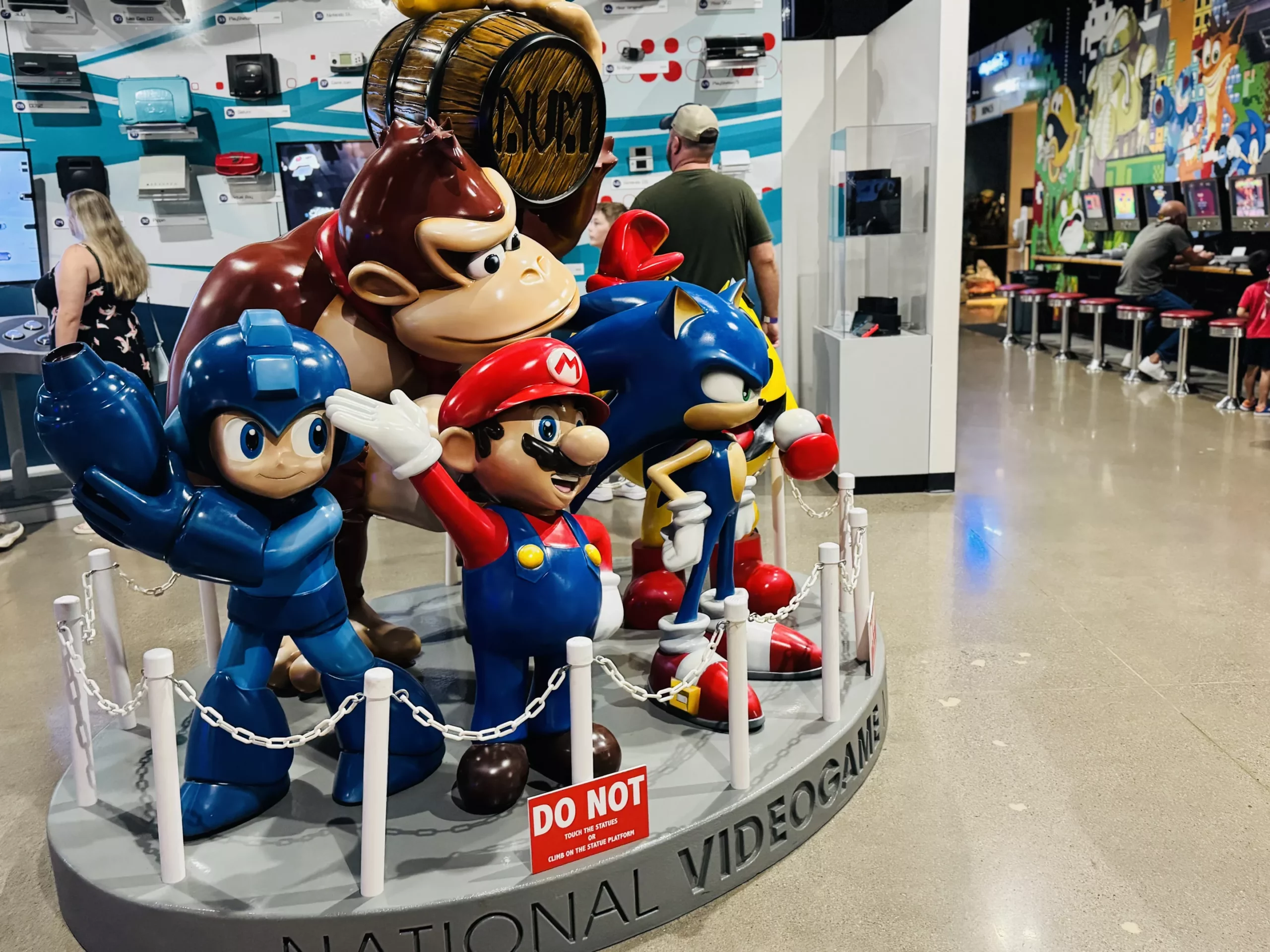
National Videogame Museum in Frisco Texas
The National Videogame Museum in Frisco, Texas is one of the most distinctive attractions in North Texas because it treats videogames as culture, history, art, and pure fun all at once. It is not a museum where you quietly shuffle past glass cases and read plaques for hours. It is a space designed to make you curious, spark memories, and pull you into the story of how videogames grew from simple experiments into a global industry that influences movies, music, design, and daily life.
Frisco is a fitting home for a museum like this. The city has a modern, energetic personality and a strong reputation for family friendly entertainment. The museum matches that vibe by offering an experience that works for multiple generations. Kids love the interactivity and the colorful atmosphere. Adults often walk in expecting a quick visit and end up staying longer because they recognize titles from their childhood, spot a console they once owned, or relive the feeling of spending a Saturday afternoon in an arcade.
What Makes This Museum Different
Many museums focus on keeping everything behind barriers. The National Videogame Museum takes a more engaging approach. It is built around the idea that videogame history is best understood when you can see, hear, and in many cases interact with the technology and the culture around it. The exhibits blend rare artifacts with hands on elements, which creates a rhythm that keeps the visit lively. You look at something, learn the story, then move into an experience that helps you feel what that era of gaming was like.
That approach matters because videogames are not just objects. They are experiences, and the museum does a good job of showing how those experiences changed over time. Early games were about simple mechanics and quick reactions. Later generations introduced deeper storytelling, more complex graphics, and new ways to play with friends. The museum brings those shifts to life through displays that highlight both the technology and the human creativity behind it.
A Walk Through Videogame History
One of the best parts of visiting is realizing how quickly gaming evolved. You might start by seeing early forms of play and older systems that look almost primitive compared to today’s devices. Then you move through decades of innovation, where each new era brings more power, new controller designs, fresh genres, and the kind of leaps that felt revolutionary at the time.
The museum helps connect those eras so the story feels continuous rather than scattered. It is not just a list of consoles or a wall of cartridges. It is a timeline of ideas. You see how designers experimented with what a game could be, how sound and visuals improved, and how players began to expect more depth and variety. For visitors who grew up gaming, this can feel like a personal time capsule. For visitors who are new to the history, it feels like discovering how a major part of modern culture was built step by step.
Iconic Consoles, Controllers, and Rare Finds
The artifacts are a major draw. The museum includes items that many people have only seen in old photos or heard about through gaming lore. Consoles, handheld systems, and accessories show how designers tried to solve problems like comfort, precision, and durability. Some of the most interesting moments come from seeing unusual controller designs and realizing that what feels standard today took years of trial and error to become normal.
You will also see displays that highlight how gaming spread into households. Early home systems turned living rooms into play spaces, and the museum captures that shift in a way that feels nostalgic. For many adults, the exhibits can trigger very specific memories, like sitting too close to the television, trading game tips at school, or saving up money for a new release.
Arcade Energy and the Social Side of Gaming
Arcades represent a special era where gaming was deeply social. The museum taps into that energy by exploring how arcades shaped gaming culture. It was not just about playing. It was about being seen, competing, and learning by watching other people. High scores mattered. Crowds formed around the best players. Sound effects and music spilled into the room and created a shared atmosphere that felt electric.
This part of the museum is often a favorite because it shows gaming as community. Before online play became common, arcades were one of the main places where you could feel the competitive and social heartbeat of videogames. Even visitors who never spent much time in arcades can appreciate how this environment helped games become a cultural phenomenon.
Behind the Scenes of Game Creation
A good videogame is a blend of design, engineering, storytelling, art, and sound. The museum highlights that creative mix by showcasing the kinds of tools, concepts, and production elements that go into game development. This is where visitors start to see games not just as entertainment but as crafted experiences.
You begin to appreciate the decisions behind level design, character movement, and difficulty balance. You also see how hardware limitations shaped creativity. Older systems could not do everything, so designers had to invent clever solutions. That pressure often produced iconic styles and memorable gameplay. The museum helps visitors understand that the history of gaming is also the history of creative problem solving.
The Nostalgia Factor for Adults
For many adults, the museum is emotional in a surprising way. It is not uncommon to hear people say, I had this system, or I remember playing this with my cousin, or I spent hours trying to beat this level. Videogames are tied to memory because they are interactive. You do not just watch them. You invest time, effort, and attention. That makes the nostalgia feel more vivid than it might with other forms of media.
The museum makes that nostalgia feel meaningful rather than cheesy. It frames gaming as part of modern life, something that has shaped how people relax, socialize, and even learn. For adults visiting with kids, it becomes a chance to share stories, explain why certain games mattered, and connect across generations through play.
Why Kids Love It
Kids often enter the museum with the mindset that gaming is normal and everywhere. What surprises them is how different older games look and feel. They learn that gaming did not always have realistic graphics or massive open worlds. They see how older games relied on simple visuals and tight mechanics, and they often discover that these games can still be fun.
That discovery is powerful because it helps kids understand that good design matters more than flashy visuals. It also gives them perspective on how technology changes. For many families, the museum becomes both entertainment and a learning experience, especially because it invites questions. Why does this controller look like that. How did people play without the internet. What was an arcade really like.
Planning Your Visit and Making It a Full Day
The National Videogame Museum fits nicely into a broader Frisco itinerary. Many visitors pair it with shopping, dining, or other nearby attractions. It works as a half day centerpiece that can be expanded depending on how much you want to explore and how interactive you want your visit to be. Families often enjoy grabbing a meal afterward, because the museum tends to spark conversation. People leave talking about what they saw, what they used to play, and what they want to try next.
To make the most of the visit, take your time. Do not rush from display to display. Let yourself linger where you feel curious. If you are visiting with someone from a different generation, treat it as a shared experience. Compare what gaming was like in different eras. Talk about how games changed friendships, competition, and family time. That is where the museum becomes more than a collection. It becomes a story.
A Museum That Celebrates Play and Progress
The National Videogame Museum stands out because it honors the idea that play is serious business. Videogames have influenced art, technology, education, and social connection, and the museum presents that influence in an approachable way. It is fun without being shallow, and informative without feeling like homework.
In a city known for modern entertainment and big experiences, the museum adds something special. It offers a bridge between past and present, between childhood memories and new discoveries, and between casual visitors and dedicated fans. Whether you grew up gaming, are raising kids who love games, or simply want to understand why videogames became such a powerful cultural force, the National Videogame Museum in Frisco gives you a place to explore that story with curiosity and joy.
Discover more from City Towner
Subscribe to get the latest posts sent to your email.