
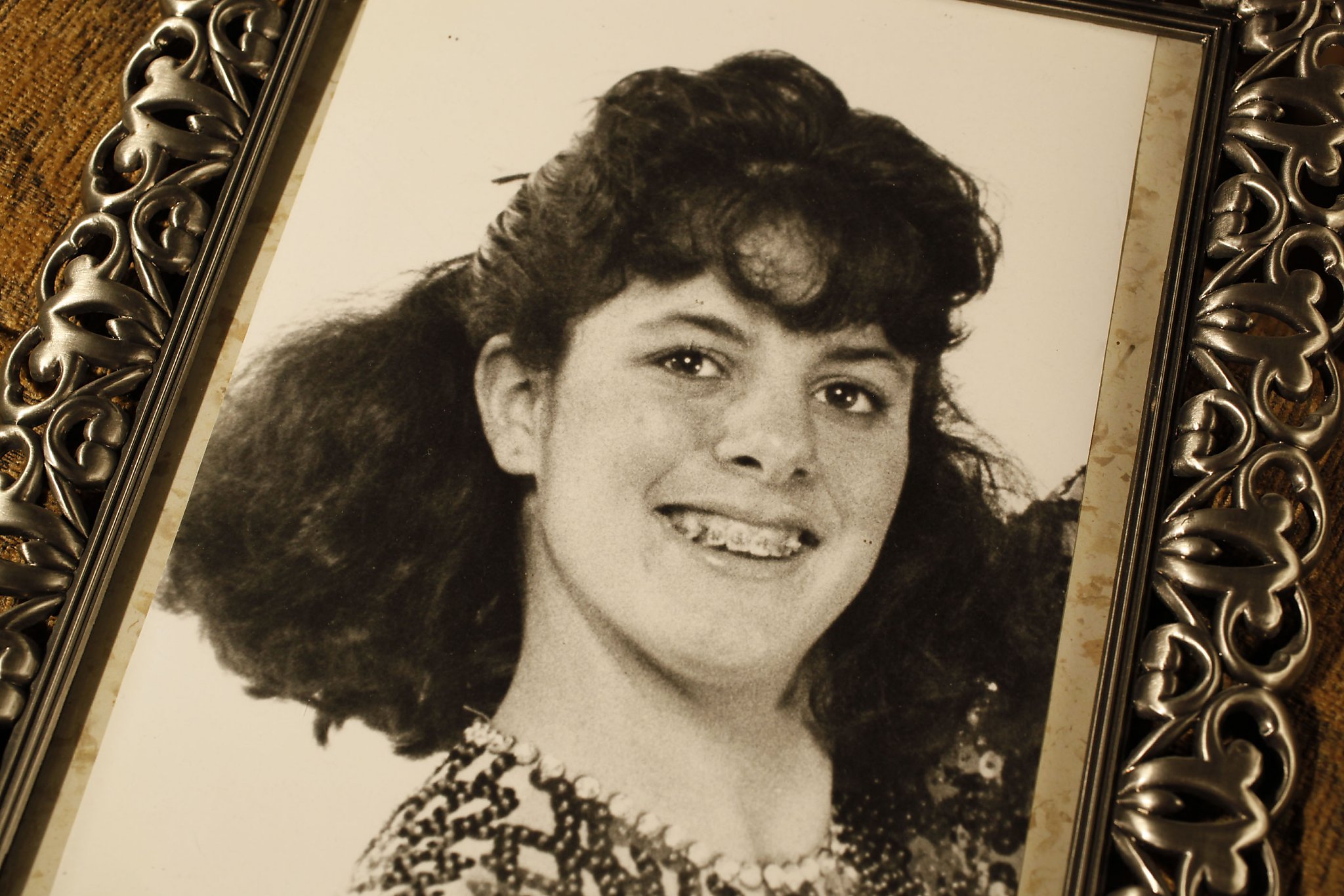
Ilene Misheloff Disappears While Walking Home From School in Dublin California
The disappearance of Ilene Beth Misheloff remains one of the most haunting unsolved cases in Northern California. On January 30, 1989, the 13 year old Dublin girl left school and began what should have been an ordinary walk home. Instead, somewhere along that familiar route, she vanished. More than three decades later, her name still carries the weight of unanswered questions, painful memory, and a mystery that has never been fully resolved.
Cases involving children often stay with the public in a unique way because they cut directly into the sense of safety people expect around school, neighborhoods, and daily routine. Ilene’s disappearance struck at all of those things. She was not last seen in a remote wilderness area or during a major storm or after some dramatic public event. She disappeared in the middle of an everyday afternoon while making a trip she had likely taken before. That is part of what makes her case so unsettling. Ordinary life did not slowly become dangerous. It appears to have turned frightening in a moment.
The passage of time has only deepened the sadness around the case. With every passing year, the image of Ilene as a young teenager remains fixed in the public imagination, while the world around her story has continued to change. Streets have changed, neighborhoods have grown, and generations have come of age in Dublin, California, yet the central fact has remained the same. A young girl walked home from school on January 30, 1989, and never made it home.
Who Ilene Beth Misheloff Was
Before she became known as a missing child, Ilene Beth Misheloff was a daughter, a student, and a young girl with a life still unfolding. At 13, she was in that in between stage of childhood and adolescence, old enough to have routines and interests of her own but still very much under the care and protection of family. That is part of what makes her disappearance so difficult to process. She was at an age when life should have been centered on school, friends, and future plans, not fear and mystery.
Cases like this can sometimes reduce a person to the circumstances of their disappearance. Photographs, descriptions, and timelines become the public’s way of remembering someone. But Ilene was more than a timeline. She was a real child with a personality, a family life, and hopes that never had the chance to fully develop. The emotional force of the case comes not only from the unanswered questions, but from the reality that an entire future appears to have been stolen in the span of a single afternoon.
Her disappearance also became part of the shared memory of Dublin. For people who followed the case from the beginning, Ilene represents more than one missing child. She represents the kind of tragedy that changes how a community thinks about safety. Once a child vanishes on a routine walk home, the confidence people once had in familiar streets is shaken in a lasting way.
The Day She Disappeared
On January 30, 1989, Ilene Beth Misheloff attended school in Dublin, California. That afternoon, at about 3:00 p.m., she was last seen walking home from Wells Middle School. Reports placed her on Amador Valley Boulevard near Village Parkway, which was part of the route she would normally take to return home. It was a weekday afternoon, the kind of time when children are heading home, traffic is moving through neighborhoods, and nothing seems unusual on the surface.
There is something especially chilling about disappearances that happen during such ordinary conditions. There was no major public disturbance to explain confusion. There was no obvious natural threat. The basic facts suggest that Ilene simply started walking home and then disappeared somewhere along the way. That kind of vanishing creates a special kind of fear because it makes danger seem both invisible and immediate.
One of the small but important details in the case is the discovery of her key fob near the entrance to John Mape Park. A simple object like that can become enormously significant in an investigation because it may mark a point along the victim’s path, a moment of interruption, or the edge of where the known trail begins to disappear. In Ilene’s case, that detail has remained one of the enduring pieces of the story because it suggests that something happened before she could finish the short journey home.
A Familiar Route Turned Into a Mystery
One reason Ilene Beth Misheloff’s disappearance continues to resonate is because it unfolded along a familiar route in a regular suburban setting. People often think of serious crimes as happening in isolated places or under unusual circumstances. But Ilene vanished while walking through a normal community environment. That fact has always made the case feel deeply personal to parents and families because it challenges the belief that routine equals safety.
The walk home from school is one of the most ordinary experiences in childhood. It represents independence, structure, and the rhythm of daily life. When a disappearance interrupts something so common, it leaves behind a fear that reaches far beyond one family. It causes parents to think differently about streets they once trusted. It changes how children are taught to move through their neighborhoods. And it leaves a community forever aware that a moment of normalcy can suddenly become something tragic.
That ordinary setting also makes the lack of answers more frustrating. In theory, a daytime disappearance in a suburban area should leave witnesses, clues, or a clear sequence of events. Yet in many cases, the opposite happens. A person can disappear in a narrow window of time, and despite nearby traffic, homes, and public movement, the exact truth can vanish with them. That appears to be part of what happened in Ilene’s case. She disappeared in a place where answers should have existed, but certainty never came.
The Immediate Fear of Abduction
From early in the public discussion, Ilene’s case was viewed with deep concern as a possible abduction. That interpretation was shaped by both her age and the circumstances. A 13 year old girl vanishing in the middle of the afternoon while walking home naturally raises fears that someone intercepted her against her will. The idea that a child could disappear so suddenly in daylight has always made this case especially disturbing.
When a child goes missing under these conditions, the clock becomes painfully important. The first hours matter, the first witness reports matter, and every detail about timing and location takes on enormous weight. Investigators and families often have to build a picture from fragments. A last known location. A route home. Clothing. Possessions. A sighting. A missing item. None of those pieces is enough by itself, but together they form the fragile outline of a life interrupted.
In Ilene’s case, the fear of abduction has remained central because the known facts do not easily support an innocent explanation. She was young, she was on foot, and she vanished before reaching home. There has never been a publicly confirmed resolution that erased those fears. Because of that, the case has remained suspended in a space between suspicion and proof, with the darkest possibilities always hovering in the background.
The Pain of an Unsolved Case
Unsolved disappearances carry a kind of emotional burden that is difficult to describe. In a confirmed death, grief is devastating but direct. In a missing person case, grief becomes tangled with uncertainty. Families are forced to live with possibilities instead of answers. They do not simply mourn. They wait, search, revisit, and wonder. For the family of Ilene Beth Misheloff, that burden has stretched across decades.
There is a cruelty in not knowing. Not knowing what happened. Not knowing whether there was suffering. Not knowing whether there was a chance to intervene. Not knowing whether hope is reasonable or impossible. Those unanswered questions can shape an entire family’s life. Birthdays, holidays, and anniversaries become reminders of absence as much as celebrations of time passing.
The public often speaks about cold cases in terms of evidence and leads, but for loved ones the experience is far more personal. It is about a seat left empty, a voice no longer heard, and a future that never arrived. The disappearance of Ilene is not only a mystery on paper. It is a lasting wound for the people who loved her and for a community that never got the truth it needed.
How Time Changed the Case but Not the Loss
As years turned into decades, Ilene’s case became one of those names that remained present in Northern California memory. New generations learned about her through missing person pages, television features, anniversary coverage, and conversations about long unsolved crimes. With time, the case shifted from immediate emergency to historical mystery, but that change in public framing did not lessen the sorrow behind it.
Time can preserve a case in strange ways. It can fade witnesses, age evidence, and weaken public memory, but it can also sharpen symbolism. Ilene’s disappearance came to represent more than one event from January 1989. It became a symbol of vulnerability, of the limits of investigation, and of the heartbreak caused by unresolved violence against children. The longer a case remains unsolved, the more it becomes part of the identity of the community that remembers it.
At the same time, time changes the emotional meaning of the photographs connected to a missing child. The school age face in the picture remains frozen, while the family continues to age in the real world. Parents grow older. Siblings grow older. Friends build lives. Yet the missing person remains forever the age they were when they vanished. That contrast is one of the most painful realities in long term disappearance cases.
A Community Marked by the Case
Dublin, California, is not defined solely by tragedy, but the disappearance of Ilene Beth Misheloff became one of the cases that left a permanent mark on the city’s memory. Cases involving children do that to communities. They force a shared reckoning with fear and responsibility. They create the sense that even if daily life continues, something important was broken and never fully repaired.
The effect of a disappearance often stretches far beyond the household of the missing person. Schools feel it. Parents feel it. Neighbors feel it. Police departments carry it. A community begins telling itself new stories about caution, awareness, and risk. In the years after Ilene vanished, the case remained part of local conversation because it was not just about what happened to one child. It was about the fragility of trust in the spaces people thought they understood.
That community memory also matters because it keeps cases from disappearing completely into the past. Public remembrance is one of the few ways unsolved cases continue to generate attention. As long as people remember Ilene’s name, there remains at least the possibility that the truth of what happened on January 30, 1989, might someday come into clearer focus.
Why Her Story Still Matters
The disappearance of Ilene Beth Misheloff still matters because it speaks to several painful truths all at once. It is a story about childhood interrupted, about a family left without answers, and about the way ordinary places can become the setting for extraordinary tragedy. It also reflects the harsh reality that some cases resist closure no matter how much time passes.
Her story matters because unresolved disappearances demand memory. They challenge people not to look away simply because the years have gone by. In a fast moving world, there is a tendency for public attention to fade. But cases like Ilene’s show why remembrance has value. The missing are not only part of the past. They remain part of the emotional present for the families and communities still living with the unanswered loss.
There is also an important human lesson in how people respond to such cases. Behind every headline and case summary is a child whose life was real and whose absence changed the people around her forever. Remembering that truth keeps the story grounded in humanity rather than mystery alone.
Remembering Ilene Beth Misheloff
Ilene Beth Misheloff disappeared on January 30, 1989, in Dublin, California, while walking home from school. That single sentence carries the core facts of the case, but it cannot fully contain its emotional weight. What happened that afternoon took away not only a child, but also a sense of peace for everyone who cared about her.
Her disappearance remains haunting because it has never been explained in a way that brings certainty. The location is known. The date is known. The route is known. But the truth of what interrupted that walk home has remained hidden. That gap between known and unknown is what has kept the case alive for so many years.
To remember Ilene is to do more than repeat the facts. It is to acknowledge the girl at the center of them. It is to understand that behind every unsolved disappearance is a person whose life mattered deeply. And it is to recognize that even after all these years, the search for understanding has never really ended.
Discover more from City Towner
Subscribe to get the latest posts sent to your email.



Yes, I remember this very clearly. I was kidnapped the day before in Dublin, right next to the skating rink. My description matches Ilene’s kidnapper, and it also matches the person connected to Michaela’s kidnapping in Hayward. I also clearly remember the description of the car. This has stayed with me, and I think about it all the time. My prayers are with Ilenes and Mikayla’s families.
—Tia