Lane Bryant Shooting in Tinley Park Illinois
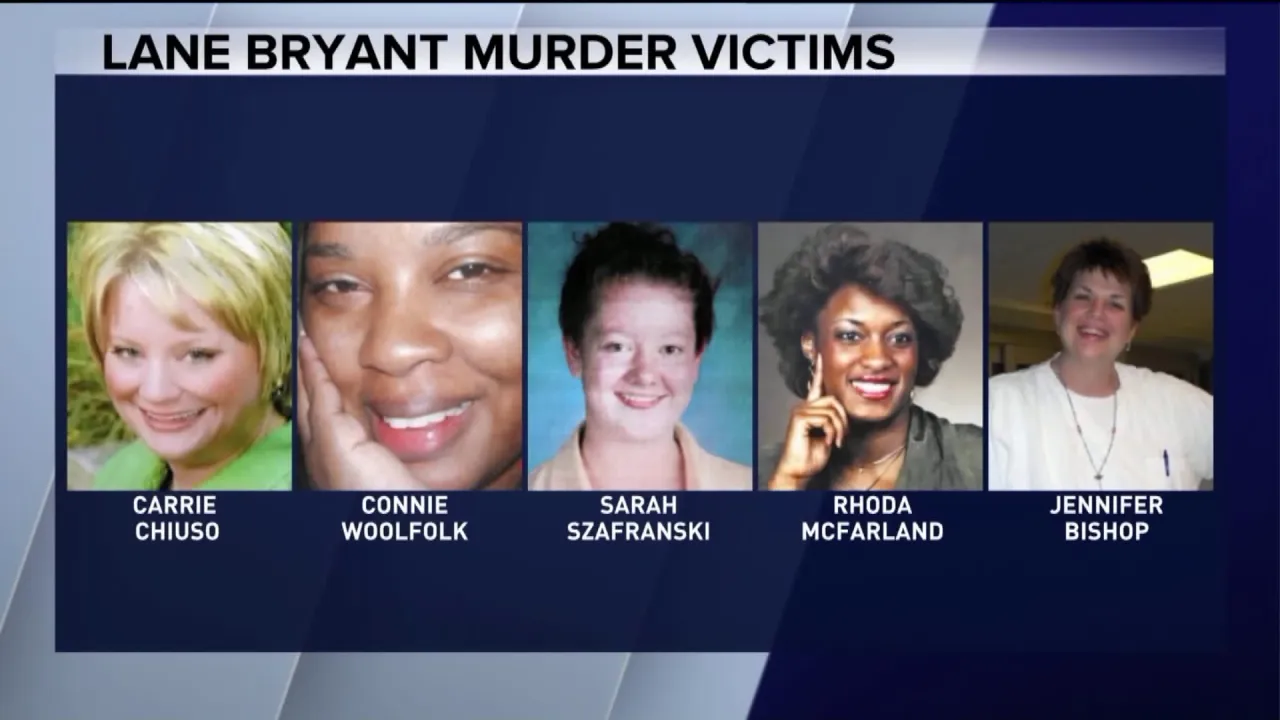
The Lane Bryant shooting remain one of the most disturbing unsolved mass killings in Illinois history. On February 02, 2008, violence shattered an ordinary Saturday morning inside a Lane Bryant store in Tinley Park, Illinois, leaving five women dead and one woman alive to carry the memory of what happened. The victims were Rhoda McFarland, Connie Woolfolk, Jennifer Bishop, Carrie Chiuso, and Sarah Szafranski. Their deaths turned a familiar retail setting into the scene of a crime that would haunt families, investigators, and the broader public for years.
There is something especially unsettling about violence that erupts in places associated with everyday life. Retail stores are spaces where people work, shop, talk, and move through routines without expecting extreme danger. That sense of normalcy is one reason the Lane Bryant shooting have remained so vivid in public memory. The crime happened in a suburban shopping center during the daytime, in a place meant to feel predictable and safe. Instead, it became the setting for terror, grief, and a mystery that has still not fully let go of the public imagination.
The case continues to resonate because it was not only shocking in scale, but deeply personal in impact. Five women lost their lives. One survived. Families were forced into sudden grief. A community was left trying to understand how such brutality could happen in such an ordinary place. And because the case has long been remembered as unresolved, the pain connected to it has carried an additional layer of frustration and unfinished sorrow.
The Victims at the Heart of the Case
At the center of the Lane Bryant shooting were five women whose lives were taken in a moment of extraordinary violence. Rhoda McFarland, Connie Woolfolk, Jennifer Bishop, Carrie Chiuso, and Sarah Szafranski were not just names attached to a notorious crime. They were individuals with families, relationships, routines, and futures that should have continued far beyond that winter morning.
One of the most important things in writing about a mass killing is to resist letting the victims disappear into the scale of the event. Public memory often holds onto the crime itself, the setting, the suspect description, the timeline, and the mystery. But those things should never overshadow the people whose lives were taken. Each of the women murdered at the Lane Bryant store had a world of her own, made up of loved ones, responsibilities, hopes, and personal history.
The surviving woman also remains part of the human story of this case. Although she lived through the attack, survival in such a circumstance does not mean escape from tragedy. It means carrying trauma, memory, and the burden of having witnessed something unspeakable. Her survival became a crucial part of the investigation, but it also stands as a reminder that mass violence leaves damage that extends beyond the names listed among the dead.
The Events of February 02, 2008
On the morning of February 02, 2008, the Lane Bryant store in Tinley Park became the site of a mass killing. The attack happened inside the Brookside Marketplace shopping center, transforming what should have been a routine workday into a scene of terror and loss. The women inside the store were gathered in the back, and gunfire ended the lives of five of them while one woman survived.
The broad outline of the event is horrifying in its simplicity. A gunman entered the store, took control of the women inside, and carried out a brutal attack. The violence was not random in the sense of chaos spilling into a public crowd. It was focused, deliberate, and deeply cruel. That sense of control is one reason the case has remained so haunting. The victims were placed in a position of complete vulnerability inside a business where they had every reason to expect an ordinary day.
The timing of the crime added another layer of shock. This was not a late night attack in an empty district or an isolated act in a remote area. It happened in the morning, in a suburban shopping environment, during the kind of hours when people expect errands, work shifts, and normal human activity. The setting made the crime feel even more invasive because it struck directly at the kind of safety people assume in daily life.
A Retail Store Became a Crime Scene
The Lane Bryant store itself became one of the most unforgettable aspects of the case. A retail clothing store is not a place that people naturally associate with mass murder. It is a place connected to customer service, sales floors, employees opening the day, and the quiet routine of commerce. That contrast between the purpose of the space and the violence that occurred inside it made the crime all the more disturbing.
Ordinary spaces carry emotional meaning because people see themselves in them. Many women had worked in stores like that. Many customers had walked into similar suburban shopping centers without fear. When violence enters such a setting, it does more than harm those directly involved. It shakes the public belief that familiar places offer a basic layer of security. That is part of why the Lane Bryant shooting stayed so present in the public mind. They did not feel distant. They felt imaginable in the worst possible way.
Even years later, the setting remains inseparable from the crime. The words Lane Bryant and Tinley Park immediately call the murders to mind for many people who remember the case. The store became more than a business location. It became the fixed point around which grief, investigation, and unanswered questions would continue to turn.
The Shock to Tinley Park
Tinley Park is a suburban community where people expect family life, work, schools, and businesses to operate within a familiar rhythm. Crimes do happen everywhere, but a mass murder inside a store during the day carries a kind of disruptive force that changes how a community sees itself. The Lane Bryant shooting did that. They broke the ordinary rhythm of Tinley Park and replaced it with shock, fear, and public mourning.
When something this violent happens in a suburban commercial area, the damage is not limited to the crime scene. It spreads through neighborhoods, families, and workplaces. People begin to look differently at spaces they once trusted. Shopping centers no longer feel neutral. Opening shifts no longer seem purely routine. The sense of safety attached to regular life becomes harder to take for granted.
The community response reflected that deep rupture. The murders were not absorbed as just another headline. They were felt as a shared wound. That is one reason the case has remained part of the identity of Tinley Park long after the initial news cycle ended. The violence left behind a memory that the community could not simply step around or forget.
The Human Weight of a Mass Killing
Mass killings are often discussed in broad terms because their scale overwhelms ordinary language. People talk about numbers, victims, suspects, timelines, and investigations. But beneath all of that is the personal devastation that follows every loss. In the case of the Lane Bryant shooting, five separate lives were ended, and many more lives were permanently altered.
Families of the victims had to absorb the reality that a loved one left for work or for an ordinary day and never returned. There is a unique cruelty in that kind of loss. It interrupts daily life so suddenly that grief arrives almost unreal at first. Then it settles in and reshapes everything. Birthdays, holidays, family gatherings, and memories of ordinary routines take on a new meaning when someone is missing from them forever.
For the wider public, the human weight of the crime also came through in the identities of the victims. These were women with real lives, not abstract names. That recognition is what keeps the case from becoming only a true crime story. It remains a story of stolen futures, broken families, and pain that continued long after the crime scene was closed.
The Survivor and the Lasting Trauma
The survival of a sixth woman is one of the most significant and painful aspects of the Lane Bryant shooting. In many ways, survival becomes a second kind of burden in a crime this severe. To live through a mass killing is to carry both the memory of the event and the emotional aftermath of being the one who remained. It means continuing life while knowing exactly how close death came and how much was lost around you.
The survivor became important to the public understanding of the case because her account helped shape the suspect description and kept key elements of the investigation alive. But beyond the investigative role, there is the human reality of what survival meant. Trauma after a violent attack does not end when the police leave or when the news coverage fades. It remains in memory, in fear, in grief, and in the long process of trying to live with something that should never have happened.
Her survival also changed the emotional shape of the case. It meant that the story was not told only through evidence and aftermath. There was a human witness to the horror, someone whose life became tied forever to that moment. In that sense, the Lane Bryant shooting were both a mass killing and a long continuing trauma that extended into the life of the woman who lived through it.
Why the Case Stayed in Public Memory
Some crimes stay in public memory because of celebrity, politics, or unusual spectacle. The Lane Bryant shooting remained in memory for different reasons. The victims were ordinary people. The location was ordinary. The date was ordinary. Yet what happened was so violent and so unsettling that it broke through the normal way people process crime. It felt like a nightmare entering a familiar suburban morning.
The case also stayed alive because it came to be remembered as unsolved. Unresolved violence has a way of staying present because the story never fully closes. People continue to ask who did it, why it happened, and how someone could commit such a crime and remain beyond full public accountability. That lack of finality gives a case a lingering force that solved crimes often do not carry in the same way.
There was also a broader cultural effect. The murders touched fears about workplace safety, public vulnerability, and the fragility of routine. If something like this could happen in a clothing store in the middle of a shopping center, then the boundary between ordinary life and sudden horror felt thinner than many people wanted to believe.
The Pain of an Unfinished Story
One of the hardest things about a case like the Lane Bryant shooting is the sense of incompleteness that surrounds it. Families suffered devastating loss, yet the public story did not arrive at the kind of ending people instinctively hope for in murder cases. There was grief, outrage, investigation, and public attention, but there was also the frustrating absence of a fully satisfying resolution.
Unfinished stories are often the most painful because they deny people closure. They leave behind questions that continue to echo through anniversaries and media retrospectives. For the families of Rhoda McFarland, Connie Woolfolk, Jennifer Bishop, Carrie Chiuso, and Sarah Szafranski, the absence of final answers would have made mourning even harder. A solved crime does not erase loss, but it at least gives shape to it. An unresolved one leaves people suspended between memory and unanswered questions.
That unfinished quality also keeps the case emotionally active in the minds of those who followed it. It is not simply remembered as something terrible that happened in 2008. It is remembered as something terrible that still feels open, still feels unfinished, and still carries the sense that justice has not fully caught up to the harm that was done.
Remembering the Victims as Individuals
Mass murder cases can flatten identity if people are not careful. The public remembers the event, the suspect, the shopping center, and the number of dead. But genuine remembrance asks for something more specific and more human. Rhoda McFarland, Connie Woolfolk, Jennifer Bishop, Carrie Chiuso, and Sarah Szafranski each deserve to be remembered as individuals, not only as part of a notorious crime.
To remember them properly means understanding that each death left a distinct absence. Each woman had her own family circle, her own voice, her own habits, and her own place in the lives of other people. Their names should not only be recited together because they died together. They should also be considered one by one as lives that mattered deeply before tragedy linked them in public memory.
The same is true of the surviving woman, whose life was not ended but forever altered. Her presence in the story reminds us that violence leaves survivors who must live with the emotional wreckage. The case is therefore not only about death. It is also about endurance, memory, and the difficult reality of carrying trauma forward.
Why the Lane Bryant Murders Still Matter
The Lane Bryant shooting still matter because they represent more than one violent event from the past. They reveal how quickly ordinary life can be overturned by cruelty. They show how mass violence tears through families and communities. And they remind people that some crimes continue to wound long after the first headlines disappear.
The case matters because the women who died mattered. It matters because the survivor’s life was permanently changed. It matters because communities carry these memories in quiet ways, through anniversaries, conversations, and the permanent reshaping of how people think about safety. And it matters because any act of remembrance is also an act of resistance against letting victims become anonymous.
There is also a moral importance to remembering cases like this. Public memory can fade quickly, especially when years pass and no dramatic new development arrives. But the passage of time should not reduce the significance of what happened. February 02, 2008, remains a date of deep loss because the lives taken that day were real, important, and irreplaceable.
A Case That Still Stands as a Warning and a Wound
The Lane Bryant shooting in Tinley Park, Illinois, remain one of those cases that function both as a warning and as a wound. They warn that violence can erupt in places people wrongly assume are beyond its reach. They wound because the losses remain emotionally present for those who knew the victims and for those who still remember the crime.
For many people, the details of the case are unforgettable precisely because they are so stark. Five women murdered. One survivor. A suburban clothing store. A winter morning. These details are simple, but together they form a story that still feels heavy years later. Simplicity in a crime’s outline can sometimes make it even harder to process because the human mind wants complexity to explain brutality. In this case, the brutality itself is what dominates the memory.
The names Rhoda McFarland, Connie Woolfolk, Jennifer Bishop, Carrie Chiuso, and Sarah Szafranski remain central to that memory. They are the reason the case should be discussed with care and dignity. They are the reason the story is not just about an unsolved crime, but about real women whose lives were taken in a moment of terror.
Remembering February 02, 2008
On February 02, 2008, in Tinley Park, Illinois, five women were murdered inside a Lane Bryant store and a sixth woman survived. That single sentence contains the basic facts, but it does not capture the full emotional force of what happened. The true impact lies in the human loss, the shattered assumptions of safety, and the lingering pain of a story that never fully settled into closure.
The Lane Bryant shooting continue to live in public memory because they combined everyday setting with extraordinary violence, individual loss with collective trauma, and grief with unanswered questions. They remain a reminder that behind every notorious case are people whose lives mattered before the headlines and whose absence continues long after the attention moves on.
Remembering the victims with care is the most important way to speak about the case. Rhoda McFarland, Connie Woolfolk, Jennifer Bishop, Carrie Chiuso, and Sarah Szafranski were not defined by the manner of their deaths alone. They were women with lives, identities, and loved ones. Their names deserve to be spoken not only as part of a tragedy, but as part of an ongoing effort to honor their humanity.
Discover more from City Towner
Subscribe to get the latest posts sent to your email.