
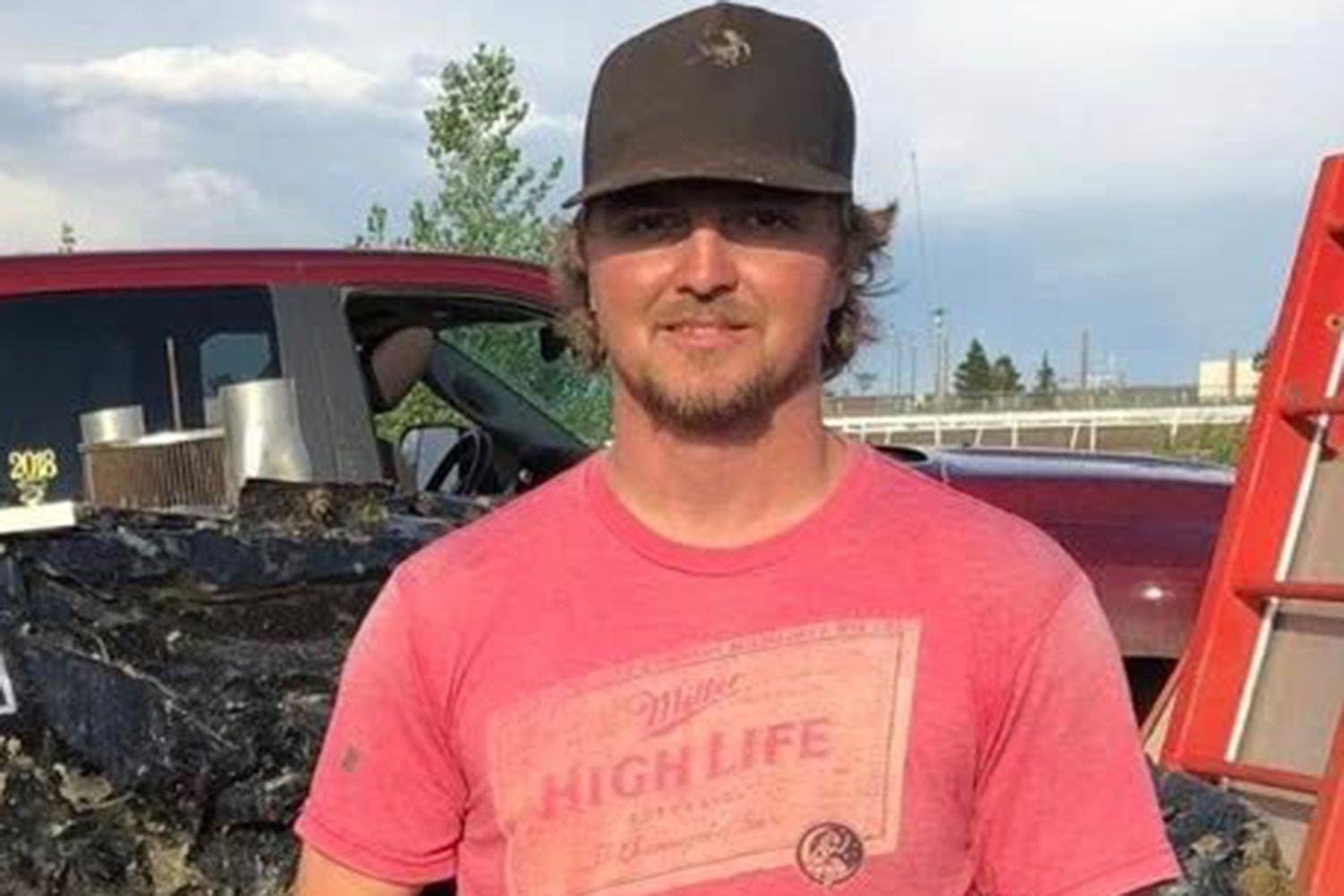
The Disappearance of Chance Englebert in Gering Nebraska
On July 06, 2019, Gering, Nebraska was moving through a typical midsummer weekend. The town sits in the wide open landscape of the Nebraska Panhandle, where distances feel bigger, horizons stretch longer, and the terrain can change quickly from neighborhoods and main streets to bluffs, draws, and rugged ground. Visitors often come through to see the dramatic rock formations nearby, while local families gather for cookouts, casual get togethers, and time spent outside.
That weekend, Chance Englebert was in the area visiting family. He was a young husband and father from Wyoming, and like many people traveling to see relatives, the trip was supposed to be a short pause from normal routines. The setting seemed familiar, the people around him were family, and the day was expected to end like countless others, with everyone going home and returning to everyday life.
Instead, the day became the beginning of a disappearance that would echo for years. What happened in a narrow span of time on July 06, 2019 created a puzzle made more difficult by the landscape, the speed at which a person can vanish when moving on foot, and the painful reality that missing person cases often hinge on small details that are easy to miss until it is too late.
Chance Englebert And The Life He Was Building
Chance Englebert was not simply a name in a missing person bulletin. He was a real person with responsibilities and relationships that shaped his daily life. He was a husband, a father, and part of a wider circle of family and friends who knew his habits, his personality, and the way he normally handled stress. Those details matter because disappearances are often measured against what is normal for the person.
In many missing person cases, investigators and loved ones start with the same question. What would this person typically do next. Would they cool off and return. Would they call someone. Would they seek a ride. Would they head toward a familiar location. The answers guide search decisions in the first hours, when time is most valuable.
For Chance’s family, the disappearance quickly became a split between ordinary memories and urgent uncertainty. After July 06, 2019, each remembered moment could feel like a clue. A glance, a sentence, a tone of voice, a decision to walk away. The mind tries to replay everything, searching for the point where a different choice might have changed the outcome.
The Evening That Turned Into A Crisis
The circumstances most often described around Chance’s disappearance involve a family visit and an argument. In a family setting, arguments can happen for many reasons, and most of the time they end with people calming down, stepping outside, and returning when emotions settle. That expectation is part of what makes this case so unsettling. A common human moment, tension followed by someone leaving to get space, became a pathway to something far worse.
On July 06, 2019, Chance left on foot in Gering. Leaving on foot can seem harmless, especially if the person intends to cool off and return. But walking changes everything in a matter of minutes. A person can take a wrong turn, move farther than expected, or cross into terrain that becomes difficult to search. If the person is upset, they may walk faster, pay less attention to surroundings, and make decisions that are not carefully planned.
In the early stages, families often assume the person will reappear quickly. They may wait, call, and check obvious places. As time stretches, the tone shifts from irritation or concern into fear. When calls go unanswered and the person cannot be located, the situation turns into an emergency.
The Geography Around Gering That Shapes The Search
To understand why a person can disappear quickly in this part of Nebraska, it helps to picture the area. Gering sits near striking natural features and mixed terrain. Roads and neighborhoods can lead directly into open spaces, uneven ground, steep slopes, and areas where visibility drops sharply once someone moves behind a ridge or into a draw.
When someone is on foot, the search radius expands faster than people expect. Even a steady walking pace can carry a person miles away in a relatively short time. If the person continues walking after dark, disorientation becomes more likely. A wrong step can lead to injury. A steep edge can become dangerous. Loose rock, uneven trails, and sudden drop offs can turn a simple walk into a situation where a person cannot easily climb back or call for help.
This environment also complicates visibility. From one angle, the land can look open and easy to scan. From another, it is full of blind spots. A person can be hidden by a small rise in the ground, a cluster of brush, or a change in elevation. That is why search efforts in this kind of terrain often involve repeated sweeps, specialized teams, and careful attention to the places that are easiest to overlook.
The First Hours And The Race Against Time
When Chance did not return, concern escalated. The first hours of a disappearance often determine the direction of the entire investigation. Families and law enforcement try to establish a timeline, identify last known sightings, confirm clothing and footwear, and determine whether the person had access to transportation. They also try to answer a critical question. Was there intent to vanish, or does the situation suggest an emergency.
A person leaving after an argument does not automatically mean they intend to disappear. Often it means the opposite. They are still connected to the people nearby, still in the same town, and still within a short distance. But if contact is lost, the possibilities widen quickly. Injury, exposure, accidental harm, or an encounter with another person become factors to consider.
Searchers typically begin with the most logical routes. Nearby streets, common walking paths, and places where someone might go to clear their head. Then the search spreads outward. Open areas, fields, drainage routes, and any terrain where a person could have gone out of sight. The search may shift strategies depending on reports from witnesses, any information about phone activity, or anything found that suggests direction.
Community Attention And The Weight On A Family
Disappearances do not stay private for long, especially in smaller communities. Once word spreads, the case becomes a shared concern. People talk about sightings, check security footage when possible, and share information in hopes of narrowing down what happened. Community involvement can create leads, but it can also generate noise. Tips can be sincere yet inaccurate, and rumors can grow as people try to make sense of a frightening situation.
For the family, the experience is relentless. Every day without an answer becomes a cycle of hope and dread. A ring of a phone can feel like a breakthrough. A knock at the door can feel like news. The mind stays on alert, never fully resting, because closure is absent.
The emotional burden is compounded by the physical realities of searching. If the terrain is rugged, searches can be exhausting. If the weather shifts, conditions can change quickly. Even in summer, a person without supplies can become vulnerable, especially if they are injured or unable to find their way back.
Investigation Questions That Define The Case
Cases like this often revolve around a core set of investigative questions. Where was the person last confirmed. Who saw them, and when. What direction were they walking. Did they enter a vehicle. Was there any contact afterward. Did their phone indicate movement, or did it go silent quickly. Were there any signs of an accident. Was there any evidence suggesting involvement by another person.
In the absence of a clear witness account that shows exactly what happened, investigators must build the case through fragments. A reported sighting here, a possibility there, and the slow process of eliminating what is unlikely. That process can take a long time because uncertainty is not a single problem. It is many small unknowns that stack on top of each other.
The presence of natural features in the area also creates a specific concern. If someone moved toward steep terrain or rocky overlooks, a fall becomes a possibility. Falls can happen quickly, silently, and out of view. A person can land in a space that is difficult to spot from above or from a distance. If injuries are severe, they may not be able to climb out or call for help. That is one reason searchers often return to areas multiple times with different methods, angles, and conditions.
The Long Years Of Uncertainty And The Search For Answers
As weeks turn into months and years, missing person cases change shape. Early on, the focus is on immediate rescue and quick location. Over time, the case becomes about persistence. Reviewing old tips, rechecking assumptions, and using new tools that were not available or not practical in the earliest days.
For families, time does not soften the loss. It reshapes it. The absence becomes part of daily life, and every milestone becomes painful. Birthdays, holidays, and ordinary family moments highlight the person who is not there. Public attention can rise and fall, but the family’s need for answers remains constant.
Long term cases also create a specific type of community memory. People in the area remember where they were when they first heard the news. They remember the searches, the posters, and the talk of possible sightings. Even when the story stops trending, it remains present in quiet ways, through conversations and shared concern.
Body Found and Cause of Death Revealed
When hikers spotted what appeared to be human remains near the north side of Scotts Bluff National Monument on October 10, 2025, they alerted authorities and set in motion the first real break in a case that had stretched on for years.
Law enforcement secured the area and began the careful, methodical work that follows a discovery like that, documenting the scene, recovering evidence, and preserving every detail that might explain how someone could vanish so close to a place visited by locals and tourists alike.
In the weeks that followed, specialists used forensic analysis, including dental comparison and DNA testing, to confirm what Chance Englebert’s family had feared and prayed against since his disappearance on July 06, 2019: the remains were his. Investigators ultimately concluded the evidence pointed to an accidental death, consistent with a fall from a significant height in the steep, rocky terrain of the monument, where the distance involved was described as ranging roughly from 130 feet to 290 feet.
The announcement brought an answer to the biggest question, where Chance was, but it also carried the kind of finality that leaves families with new grief and lingering unanswered details about the last moments of a life that ended far from the people searching for him.
Why Disappearances Like This Stay With People
The disappearance of Chance Englebert matters because it began in an ordinary human moment. A family visit, tension, someone stepping away to cool off. Those details are familiar to many people, which makes the outcome deeply unsettling. It challenges the assumption that walking away for a short time is safe, especially in places where the terrain can turn dangerous quickly.
It also highlights how quickly uncertainty spreads. A person can be present, known, and visible, then suddenly absent with no clear path to follow. The space between those two realities can be only minutes, yet it can take years to understand what happened.
When a community holds onto a case, it is often because the story feels unresolved not only in facts but in meaning. People want the answer that restores order. They want to know where the person went, what happened on that route, and whether anything could have changed the outcome. They also want to give the family the one thing that time cannot provide on its own, clarity.
Discover more from City Towner
Subscribe to get the latest posts sent to your email.