
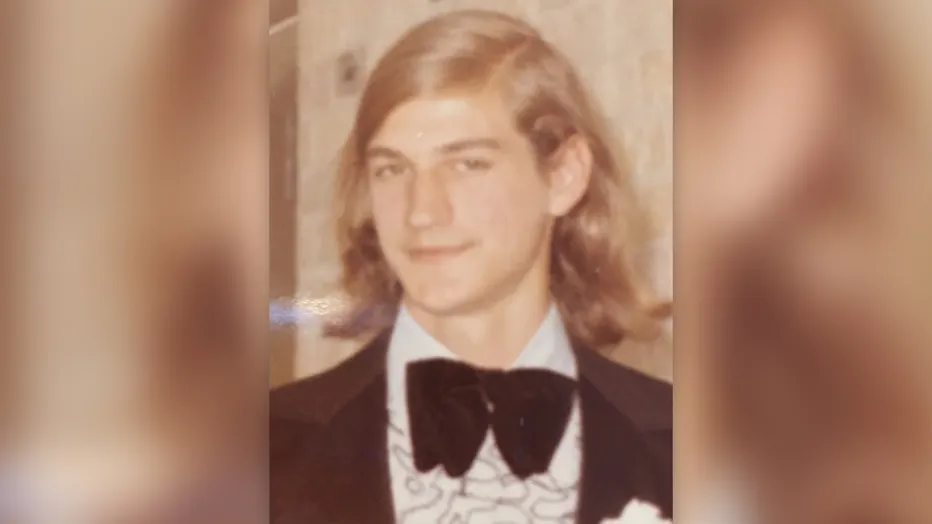
Brian Vargo Dropped Off at Bus Station and Disappears in Austin Texas
The disappearance of Brian Vargo remains one of those cases that continues to trouble people because it sits in a space between ordinary life and total mystery. On March 9, 1976, in Austin, Texas, a young college student stepped out of the everyday routine of school and family expectations and then seemed to vanish into a silence that has never been fully explained. Decades later, the case still carries emotional weight because it does not offer the kind of ending that brings peace. Instead, it leaves a family with unanswered questions and the public with a story that feels both simple and deeply unsettling.
Missing person cases often become haunting when the known facts are clear enough to create a timeline but incomplete enough to leave the most important question unanswered. That is exactly what happened here. Brian Vargo was not an unknown drifter with no ties to anyone. He was a student at the University of Texas at Austin, a young man with a future, and someone whose disappearance created a painful absence for the people who cared about him. The years have passed, but the mystery has not gone away.
What makes the case so striking is that it did not begin with a dramatic public event. There was no headline making confrontation, no immediate criminal charge, and no obvious scene that explained why he was gone. Instead, the disappearance unfolded through small but important details. He withdrew from school. He had plans connected to travel. He had contact with people around him. Then, at some point, the trail simply ended.
That kind of vanishing is often the hardest to process. It leaves just enough information to suggest a story, but not enough to complete it. For those who knew Brian Vargo, that gap has never been just a matter of public curiosity. It has been a source of grief, uncertainty, and a long search for answers.
A Young Student With a Future Ahead of Him
Brian Vargo was a young University of Texas at Austin student studying architectural engineering. At an age when many people are still deciding what shape they want their future to take, he appeared to be moving through the ordinary pressures and possibilities of college life. He had academic responsibilities, social connections, and a path that should have led into adult life.
There is something especially sad about the disappearance of a college student because it interrupts a chapter that is supposed to be about becoming. College is often a time filled with experimentation, ambition, uncertainty, and growth. A student may be pulled in different directions, trying to figure out what kind of life feels right. That is part of what makes disappearances from this stage of life so emotionally complicated. People understand that young adults can make spontaneous decisions, but they also know that those decisions do not usually lead to a total and permanent absence.
Brian’s situation reflected some of that complexity. He was young enough to be restless, independent enough to make his own choices, and at a point in life where a sudden change in plans might not immediately raise the same alarms as it would for someone with a highly fixed routine. That may be one reason the case unfolded the way it did. What looked at first like a young man making unexpected decisions would later become something far more troubling.
His disappearance mattered not only because he was missing, but because he was at the beginning of a life that should have continued. He was not supposed to become a mystery. He was supposed to become whatever came next.
March 9, 1976 and the Last Known Turning Point
March 9, 1976, has become the date most closely tied to Brian Vargo’s disappearance. It marks the point at which his known life began to slip out of public view. That date is central because it connects to his withdrawal from the University of Texas at Austin and to the last confirmed contact associated with the case. It serves as the dividing line between what people can place on a timeline and what has remained unknown ever since.
The most unsettling part of many disappearances is not always the final sighting itself, but the ordinary nature of the last known day. There is no clear signal announcing that something irreversible is happening. To everyone else, it may look like a routine decision, a shift in plans, or a temporary break from expectations. Only later does that day become charged with meaning.
In Brian’s case, March 9, 1976, became that kind of date. It was not simply another day on the calendar. It became the last firm marker in a story that then opened into uncertainty. He left school behind, and whatever he intended to do next has never been fully resolved in the public record.
The fact that the known timeline includes a formal withdrawal from school adds a layer of complexity. It suggests some degree of decision making and intention. He was not simply reported missing from a dorm room without context. There was movement, a change, and a step away from the routine of university life. That makes the case harder to interpret. It invites questions about whether he was starting over, chasing a short term plan, or stepping into something more dangerous than anyone around him realized.
The Pull of Travel and Reinvention
Part of what has long stood out in the Brian Vargo case is the suggestion that he had plans involving travel and a different kind of life than the one he was living in Austin. Reports tied to the case have indicated that he was interested in going to Colorado and may have spoken about working at a dude ranch or taking a self guided trip. Those details matter because they offer a glimpse of possibility rather than panic. They make it seem, at least on the surface, that he was looking outward toward adventure or reinvention.
That kind of plan would not have been unusual for a young person in the mid 1970s. The era itself carried a cultural sense of movement, freedom, and experimentation. People traveled, dropped out of routines, and chased new experiences. In that sense, his plans do not automatically sound alarming. They sound like the kind of thing a restless young person might genuinely want.
But there is a crucial difference between choosing a new direction and disappearing without explanation. Travel plans can explain movement, but they do not explain total silence. Even people who change their lives usually leave some trace of that choice. They contact someone. They build a new pattern. They surface somewhere. In Brian’s case, the story does not appear to develop into a new life. It simply stops.
That is what makes the travel angle so compelling and so frustrating. It may explain part of why he left Austin, but it does not explain why his trail goes cold. Instead of resolving the case, it widens the field of possibility. It suggests that he may have been headed somewhere, but it does not tell anyone where he actually ended up or what prevented him from returning.
The Problem of a Disappearance Without a Clear Ending
Every unsolved disappearance carries its own emotional logic. Some cases are defined by violence. Some are defined by suspicious circumstances from the start. Others, like Brian Vargo’s, are defined by the absence of a clear ending. The known facts do not neatly point in one direction. There is no final message that explains his state of mind. There is no publicly established crime scene that locks the case into a criminal framework. There is only a growing silence.
Silence can be harder to bear than certainty. Families can survive terrible truths, but uncertainty asks them to live with many possible truths at once. Did he leave on purpose and then encounter trouble later. Did he intend to return and fail. Did someone harm him. Did he vanish into circumstances no one could reconstruct. Those kinds of questions do not fade just because time passes. In some ways, they become heavier.
For the public, a case like this becomes haunting because it resists narrative closure. People are naturally drawn to stories that make sense from beginning to end. Brian Vargo’s disappearance offers the beginning and part of the middle, but not the conclusion. That missing conclusion becomes the defining feature of the case.
It is also what allows the disappearance to remain emotionally alive across decades. People do not just remember the facts. They remember the feeling of incompleteness. They remember that a young man left school, entered a period of transition, and then was gone. That kind of unresolved story lingers because the mind keeps trying to complete it.
Family Loss Measured Across Decades
One of the saddest dimensions of older missing person cases is that they reveal how grief can stretch across generations. When someone disappears and is never accounted for, the pain does not stay locked in the year the disappearance happened. It keeps moving forward. Parents grow older without answers. Siblings continue to wonder. Nieces, nephews, and relatives who may not even have been old enough to understand the loss at the time inherit the mystery as part of their family history.
That long arc of grief is part of what has kept Brian Vargo’s name from disappearing completely. Cases that remain unresolved for decades often survive because a family member chooses to keep searching, asking, and speaking. That effort is not only about investigation. It is also about memory. It is about resisting the idea that time should erase a person simply because the world moved on.
When a family continues to search after so many years, it shows the difference between public attention and private loss. The public may remember a case in occasional waves, but the family lives with it continuously. The absence becomes part of birthdays, holidays, conversations, and silences. A missing loved one is present in a strange way, not physically there, but never truly gone from the emotional life of the family.
That is what makes cases like Brian’s so powerful. They are not only mysteries. They are also stories about endurance. They show how the search for truth can become part of a family’s identity, especially when official answers remain out of reach.
Austin as the Starting Point of the Mystery
Austin, Texas, was not just the city where Brian Vargo attended school. It was the place where the public timeline of the mystery begins. College towns often represent possibility. They are places of movement, ideas, and people stepping into adulthood. In a case like this, that setting adds a layer of poignancy because it frames the disappearance against a background of promise.
Austin in the mid 1970s would have felt like a city alive with youth, ambition, and shifting identities. A university environment often gives people room to reinvent themselves, explore, and make abrupt changes. That context can make a sudden departure seem less alarming at first. A student withdrawing from classes might be read as a personal choice rather than an immediate crisis. Only later does that choice take on a darker meaning.
The city also matters because it anchors the official understanding of the case. Even though later movements may have involved Houston and plans tied to Colorado, Austin remains the point where the known story begins to break apart. It is the last stable setting before the trail becomes uncertain.
That gives Austin a permanent place in the case narrative. It is not simply where Brian lived as a student. It is the city connected to the moment his life moved from documented routine into unresolved mystery. For anyone trying to understand the case, Austin is the starting line of the unknown.
Why the Case Still Resonates
Not every decades old missing person case continues to attract attention, but Brian Vargo’s disappearance still resonates for a reason. It combines youth, possibility, family pain, and a timeline that feels close to being understandable without ever fully arriving there. That combination creates a powerful sense of unfinished story.
The case also continues to matter because it reflects a broader truth about disappearances. They are not only about the moment someone goes missing. They are about everything that follows. They are about the people who keep asking questions. They are about the years that pass without answers. They are about the emotional burden of not knowing whether a loved one made a choice, met with misfortune, or encountered something far worse.
There is also something distinctly haunting about cases in which the missing person seems to stand at a crossroads. Brian was a student, but he may have been moving away from that identity. He was connected to family, but he may have been trying to shape a different future. Those transitional moments are often where people are most difficult to read. That makes the disappearance feel human and understandable in one sense, and deeply disturbing in another.
The case resonates because it embodies a kind of suspended life. Brian Vargo remains forever in that moment of transition, forever young in the public imagination, forever just beyond the edge of explanation.
Remembering Brian Vargo
It is important to remember that behind every unsolved disappearance is a real person whose life was more than the mystery that followed. Brian Vargo was not just a missing student from 1976. He was a son, a relative, a young man with interests, decisions, hopes, and plans. The fact that his disappearance remains unresolved should not erase the fact that he lived a full human life before becoming the center of a case.
Remembering him means pushing back against the flattening effect that time can have on unresolved stories. Older cases are often reduced to timelines and brief summaries. But a person is more than a date of last contact or a missing poster description. A person is a collection of relationships, habits, memories, and unrealized possibilities.
That is why remembrance matters. It keeps the story from becoming only an abstract puzzle. It restores dignity to the life at the center of the mystery. It reminds people that the search for answers is not just about curiosity. It is about honoring someone whose absence has never been fully explained.
Brian Vargo’s disappearance on March 9, 1976, in Austin, Texas, remains painful because it represents a life interrupted without resolution. It is the story of a young man who stepped away from school and into uncertainty, leaving behind a case that has never stopped asking for an answer. Until that answer comes, the case will remain a quiet but enduring reminder of how deeply a single unexplained absence can echo across time.
Discover more from City Towner
Subscribe to get the latest posts sent to your email.