
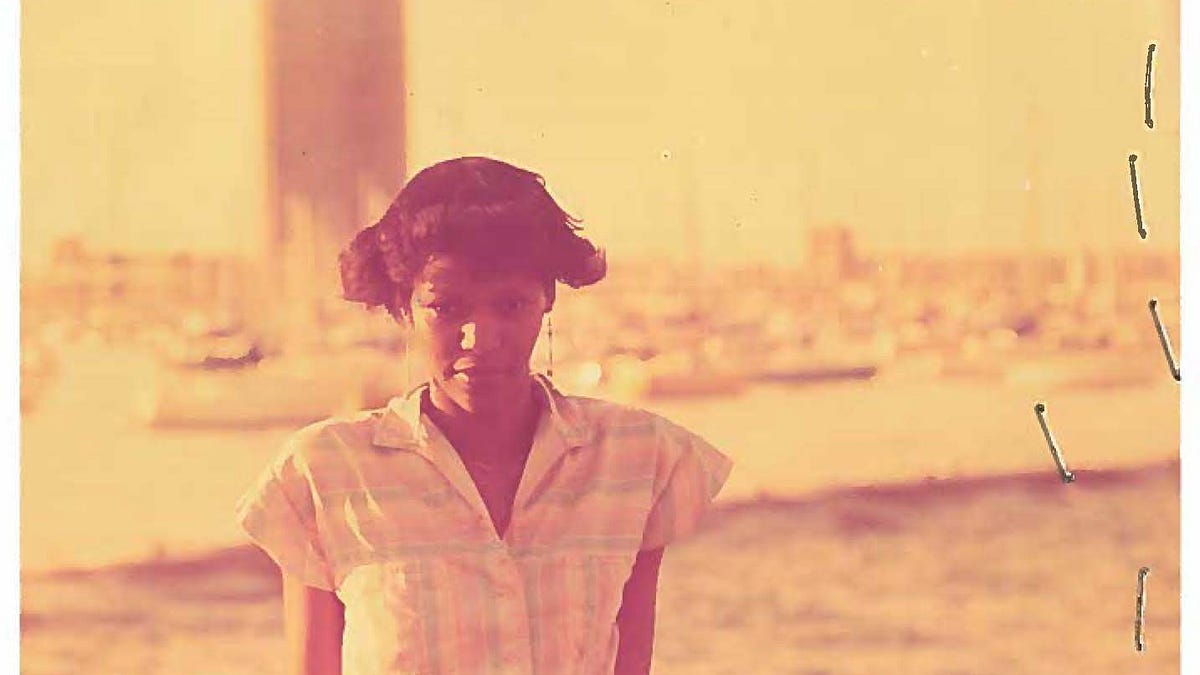
Jannette Johnson Found Dead in Kankakee Illinois
The story of Jannette Johnson is one of those tragic cases that stayed suspended between uncertainty and heartbreak for decades before the fuller truth began to come into focus. For years, she was remembered as a missing woman from Kankakee, Illinois, a young mother who seemed to vanish after a night out. But over time, the case shifted from a disappearance to a homicide investigation, forcing the people who loved her to face an even heavier reality. What began as fear and confusion grew into the long, painful understanding that Jannette did not simply go missing. She was taken from the world in an act of violence that has never been fully solved.
Jannette, often remembered by the nickname Jette, was 29 years old and a mother of two. She was part of a family and a community that expected to see her walk through the door and continue on with the ordinary rhythm of life. Instead, her story became one of the most haunting unsolved cases tied to Kankakee. The passage of time did not soften the case. In many ways, it deepened it. Every year without answers added more grief, more frustration, and more weight to the silence around what happened to her.
Although the public record has long centered on her disappearance being discovered on August 3, 1985, the broader tragedy is now understood as a murder case connected to that same period. That distinction matters. It changes the entire emotional shape of the story. A missing person case leaves room for hope, however painful and fragile. A homicide case replaces that hope with the hard truth that a life was stolen and justice has still not arrived.
The Night Everything Changed
In the summer of 1985, Jannette Johnson went out for the evening in Kankakee. Accounts tied to the case have long pointed to her having attended a birthday gathering at the Party House Bar. It was the sort of social outing that would not have stood out at the time as dangerous or unusual. She had family nearby, children in the care of relatives, and every reason to believe she would return home and continue with normal life.
That is part of what makes the case so haunting. The night did not begin as something extraordinary. It began in the familiar space of local nightlife and family routine. The ordinary nature of those hours stands in painful contrast to what followed. At some point, Jannette returned home. Reports over the years have indicated that family members saw or heard signs of her arrival. Her car was there. The sense was that she had made it back. Yet she never truly made it inside to safety in the way everyone assumed she had.
That moment has become one of the most unsettling parts of the entire case. Few details are more haunting than the idea of a person arriving home, coming within reach of the place where they should have been safe, and then disappearing into violence. It creates a sharp emotional contrast between closeness and catastrophe. Home is supposed to mark the end of danger, not the beginning of a mystery that lasts for decades.
By August 3, 1985, concern had replaced expectation. Jannette was gone, and what may first have seemed confusing soon became alarming. A woman with children and family ties does not simply vanish from the threshold of her own life without leaving behind anguish and questions. That realization marked the beginning of a case that would linger in uncertainty for years.
The Woman Behind the Case
Before Jannette Johnson became part of an investigation, she was a woman living a real and active life. She was not a headline or a mystery to the people who knew her. She was a mother, a relative, a presence in the routines of those closest to her. That human reality can sometimes get lost when a case is reduced to timelines and fragments of evidence, but it is the most important part of the story.
A murder does not only take a body. It takes a future. In Jannette’s case, it took away years she should have had with her children, her family, and her community. It ended ordinary moments that would never make the news but matter most in a real life. Birthdays, conversations, daily routines, family gatherings, worries, laughter, and the simple act of being present were all stolen along with her life. That is what makes homicide cases so devastating even beyond the legal questions. The loss is not abstract. It is deeply personal and deeply permanent.
Because she was a mother, the case also carries a generational sadness. The impact did not stop with the moment she vanished. It continued through the lives of the children and relatives left behind, who had to grow older with uncertainty instead of answers. In that way, an unsolved murder reaches far beyond the victim. It reshapes the emotional history of everyone connected to that person.
A Disappearance That Hid a Darker Truth
For a long time, Jannette’s case sat in the public mind as a disappearance. That is understandable, because the immediate facts seemed to point in that direction. She had been there, then she was gone. Without a body identified at the time, the case remained open in the most uncertain way possible. Families in missing person cases are forced to live in a brutal space between hope and dread. They cannot fully mourn, but they cannot rest either.
That cruel uncertainty lasted for decades in Jannette Johnson’s case. The remains that would eventually be connected to her had reportedly been found later in 1985 in eastern Kankakee County, but they were not identified at the time. That left a terrible gap between what had happened in reality and what the family was able to know. The truth existed somewhere in the evidence, but it was not yet available to the people who needed it most.
When DNA finally linked those remains to Jannette many years later, the emotional meaning of the case changed forever. The disappearance was no longer just an absence. It became an identified loss. That does not bring peace. It does not solve the murder. But it does change the shape of grief. It turns uncertainty into a harsher kind of certainty. For many families, that moment is bittersweet. It ends one kind of torment while beginning another.
The reclassification of the case as a homicide made public what the family had likely feared in some form all along. Jannette had not simply vanished into mystery. Someone had ended her life. That truth gave the case more definition, but it also made the lack of justice feel even more painful.
Kankakee and the Weight of Place
Place matters in murder cases because it shapes how a community carries the memory. Kankakee is not just the location attached to a file. It is the lived backdrop of Jannette’s life and the place where her disappearance first tore through her family. The city and the broader county landscape became part of the mystery itself. Her home, the local bar, the neighborhood, and the area where remains were later found all became pieces of a map defined by grief and unanswered questions.
There is something especially disturbing about violence that seems to unfold at the edge of home. Crimes that begin in familiar spaces often feel more intimate and more unsettling than those tied to distant unknown settings. They remind people that danger does not always announce itself from far away. Sometimes it appears in the places that feel most ordinary, which makes the emotional aftershock even harder to process.
The connection to eastern Kankakee County adds another layer to the case. It suggests distance between where the family feared something had gone wrong and where part of the truth was later found. That geographic separation has a tragic symbolic force. It reflects how murder can pull a life out of its normal place and leave loved ones chasing fragments across time and space.
The Long Delay in Identification
One of the most heartbreaking aspects of Jannette Johnson’s case is the enormous gap between her disappearance and the identification of her remains. Decades passed before DNA gave the family confirmation. That kind of delay changes the emotional and historical character of a case. It means that for years, the family was living alongside a question that had technically already been answered by reality, but not by the system.
When human remains are discovered but remain unidentified, a family somewhere continues to live in suspension. They keep asking where their loved one is, not knowing that the answer lies locked inside evidence that cannot yet speak clearly enough. Advances in DNA technology have changed many cold cases in recent years, and Jannette’s case is one example of how science can bring truth out of silence. But even when that truth arrives, it does so after years that can never be returned.
The identification in 2020 was a major turning point, but it was not the end of the story. It did not name the killer. It did not explain the full sequence of events. It did not erase the decades of loss. It simply lifted one veil while leaving the central injustice in place. For loved ones, that can be both a relief and a fresh wound. The question of where she is may finally be answered, but the question of who killed her remains.
The Family’s Burden Across the Years
Cases like this are often described in procedural terms, but the true center of the story is the family. A mother disappears. Time passes. Children grow older. Relatives try to hold onto memory while also surviving the pain of not knowing. Then, years later, the worst fear is confirmed. That is not one wound. It is several wounds spread across decades.
The loved ones of homicide victims often become the keepers of both memory and pressure. They remember the victim as a whole person while also carrying the responsibility of demanding attention for a case that the public may only think about occasionally. That burden can be exhausting. It means turning private pain into public insistence, not because a family wants to live inside tragedy, but because silence feels even worse.
For Jannette Johnson’s family, the years between 1985 and the eventual identification of her remains must have felt impossibly long. And even after that moment of confirmation, the case remained incomplete. She could be laid to rest, but she still had not received justice. That difference matters. Burial is not the same as closure. Knowing is not the same as accountability.
Why the Case Still Hurts
The murder of Jannette Johnson still hurts because it contains several of the most painful elements an unsolved case can hold. She was young. She was a mother. She disappeared after what should have been a normal evening. Her remains were found but not identified for decades. And even after the truth of her death became clearer, the person responsible still was not publicly brought to justice.
That combination creates a case that feels unfinished at every level. It is unfinished legally because there has been no final resolution in court. It is unfinished emotionally because the people who loved her have had to live with repeated cycles of uncertainty and loss. And it is unfinished morally because a woman’s life was taken and the full truth still has not been delivered.
The case also resonates because it reveals how murder can split time into before and after. Before August 3, 1985, Jannette was part of daily life. After that point, everything was shaped by her absence. The years since have not removed that dividing line. They have only made it longer.
An Unsolved Murder That Refuses to Fade
Some cases fade from public memory because they lack a clear narrative or because time washes over them. Jannette Johnson’s case has not faded in the same way because the core story remains so stark and painful. A woman comes home from a night out and then disappears from the edge of her own life. Years later, science confirms what the family feared. She was dead all along, and the case becomes an acknowledged homicide. Yet the killer remains unnamed in any final public sense.
That kind of story does not leave people easily. It carries the ache of missed time, delayed truth, and unfinished justice. It also reflects the broader importance of cold case work. Without continued effort, advances in forensic science, and family persistence, Jannette might have remained a missing person in public memory forever. Instead, at least part of the truth emerged. That matters, even though it is not enough.
Cold homicide cases force communities to confront a painful reality. Time can clarify some things, but it does not automatically deliver justice. That requires investigation, evidence, determination, and sometimes luck. In Jannette’s case, time gave her family an identification, but not the full answer they still deserve.
Remembering Jannette Johnson
To remember Jannette Johnson properly is to remember more than the violence attached to her case. It is to remember that she was a woman whose life had value long before it became a mystery. She was a mother whose absence reshaped the lives around her. She was part of Kankakee’s living history, not just its criminal history.
Her story remains one of loss, but also one of endurance. Endurance in the family that kept going. Endurance in the case itself, which refused to disappear completely despite the years. And endurance in the truth, which eventually surfaced in part through DNA after decades of silence.
Still, the story is not complete. The murder of Jannette Johnson remains unresolved in the most important way. Her life was taken, and the public still does not have a final answer about who did it and whether justice will ever be served. Until that day comes, her case remains one of the most painful unfinished chapters tied to Kankakee, Illinois.
Discover more from City Towner
Subscribe to get the latest posts sent to your email.