History of McKinney Texas
Long before it became a thriving city, McKinney grew out of the wide, gently rolling landscape of North Texas, where tall grasses, hardwood stands, and creek bottoms created a patchwork of fertile ground and natural travel routes. The area’s geography mattered from the start. Seasonal water sources supported settlement, while the open prairie made movement possible for people, livestock, and later wagons carrying supplies between scattered homesteads.
When Anglo American settlement accelerated in the early and mid nineteenth century, the region was still defined by distance and grit. Farms were carved from prairie, small trading points formed at crossroads, and communities relied on the nearest reliable market town for tools, mail, and basic goods. In that environment, the emergence of a county seat could turn a rural neighborhood into a hub of government, commerce, and social life almost overnight.
Early Peoples, Pathways, and the First Waves of Settlement
The story of this area begins with Indigenous peoples who lived, traveled, and traded across what is now Collin County Collin County, guided by seasonal cycles and the availability of game, edible plants, and water. Their knowledge of the land shaped the earliest pathways and gathering places, even as later settlers introduced new boundaries and property lines that transformed the region.
As newcomers arrived, they brought the familiar patterns of frontier development: land claims, small clustered neighborhoods, and a steady push to create institutions that signaled permanence. Those institutions were practical first. People needed roads, mills, and places to resolve disputes. They needed an organized government that could record deeds, set local rules, and provide a measure of stability in a place where stability was never guaranteed.
Collin County and the Decision That Changed Everything
A pivotal moment came with the creation of Collin County in the mid nineteenth century, when leaders needed to choose a county seat. The county seat was not just a dot on a map. It was where legal business would happen, where records would be kept, and where people would gather for elections, trials, and trade. Once that decision was made, the chosen place gained daily traffic and long term importance.
McKinney’s rise is closely tied to this role. In 1848, the settlement was selected as the county seat, giving it a structural advantage that many nearby communities never matched. It attracted lawyers, merchants, surveyors, and craftspeople, along with farmers who needed services and supplies. With county government came a steady reason to visit town, and with steady visits came demand for stores, lodging, stables, and a more formal town plan.
From Frontier Town to Organized City
A county seat still had to prove itself. Early McKinney would have felt like many growing towns of the era: dusty streets in dry months, muddy ruts after rain, wooden storefronts and simple homes, and a rhythm shaped by courthouse days and seasonal farm work. Yet even in those early years, the foundation was being laid for a community that expected to endure.
In 1853, McKinney incorporated, a major step toward structured civic life. Incorporation meant local authority to manage streets, establish ordinances, and create basic public services. It also signaled confidence. People do not incorporate a place they expect to abandon. They incorporate the place they believe will still matter to their children.
The Courthouse Square as a Social and Economic Engine
In many Texas towns, the courthouse square became the heart of everything. McKinney followed that model. The square was more than a government center. It served as a marketplace, a meeting point, and a social stage. Farmers came to sell produce and livestock, merchants displayed goods, and residents gathered for news, debates, and celebrations. Over time, as buildings shifted from wood to brick and as businesses grew more specialized, the square reflected the town’s increasing prosperity and ambition.
Courthouse communities also developed a distinct civic identity. People began to speak of “going to town” not just as an errand but as an experience. The square anchored local memory, and generations measured time by what changed around it: new storefronts, improved roads, and a growing sense that the town was becoming something more than a frontier outpost.
Cotton, Corn, and the Agricultural Backbone
For decades, McKinney’s economy was built on agriculture. The surrounding countryside produced the crops and livestock that kept money moving through town. Cotton became especially significant across much of North Texas, and with it came related businesses: gins, warehouses, traders, and lenders. Corn and other staple crops supported households and feed needs, while cattle and other livestock broadened the rural economy.
This agricultural base shaped the city’s character. Families depended on weather and commodity prices, and the town’s fortunes rose and fell with the harvest. Community life followed the agricultural calendar, from planting and cultivation to harvest and market cycles. Even as McKinney added more commercial activity, it remained closely connected to the land and to the network of farms that surrounded it.
Rail Connections and the Expansion of Opportunity
As the nineteenth century moved forward, railroads transformed the practical meaning of distance. For a farming region, rail access could redefine prosperity. It meant faster shipping, access to larger markets, and a stronger reason for merchants to stock a wider range of goods.
When rail service reached the area in the late nineteenth century, it strengthened McKinney’s position as a regional center. Farmers could move crops more efficiently, and local businesses gained new supply channels. Rail connections also encouraged population growth, bringing in workers, entrepreneurs, and families looking for opportunity in a community that now had stronger ties to the broader Texas economy.
Railroads did not erase the hardships of rural life, but they changed the ceiling of what a town could become. McKinney was no longer limited to the pace of wagons and the reach of nearby markets. It became part of a larger commercial web that stretched toward cities like Dallas Dallas and beyond.
Schools, Churches, and the Making of Community Life
As McKinney grew, its institutions grew with it. Churches provided spiritual grounding and social networks. Schools signaled investment in the future and helped attract families who wanted their children educated close to home. Fraternal organizations, civic clubs, and local newspapers helped shape public opinion and community priorities.
These institutions mattered because they created continuity. They helped residents interpret change, respond to crises, and celebrate shared milestones. They also helped unify people whose lives could otherwise remain separate: farmers and merchants, longtime families and newcomers, older residents and young households seeking a start.
The Early Twentieth Century and Modernizing Pressures
The early twentieth century brought new expectations. Improvements in roads, utilities, and public services became markers of a “modern” town. Electricity and telephones gradually reshaped business and home life, while better streets and transportation links made travel more common and commerce more fluid.
Like many communities, McKinney had to balance tradition with modernization. Older patterns of town life persisted around the square, but newer development extended outward. Residential neighborhoods expanded, schools grew, and local government faced the practical demands of a larger population: sanitation, public safety, and infrastructure planning.
This period also brought national disruptions that reached every town, including economic volatility and changing labor patterns. Even when specific industries struggled, communities learned to adapt, diversify, and lean on local networks to get through difficult years.
Postwar Growth and the Suburban Horizon
After World War Two, the long arc of growth across the Dallas region began to reshape nearby communities in a dramatic way. Improved highways, broader car ownership, and expanding job centers changed where people could live. Towns that once felt distant from large urban areas became increasingly connected, and that connection brought both opportunity and pressure.
McKinney’s identity began to evolve in this context. It remained proud of its historic core, yet it also confronted the realities of new housing demand, commercial expansion, and the need for expanded services. New subdivisions and shopping corridors reflected the era’s patterns, while local leaders worked to ensure that growth did not erase the character that made the city distinctive.
Preserving the Past While Building the Future
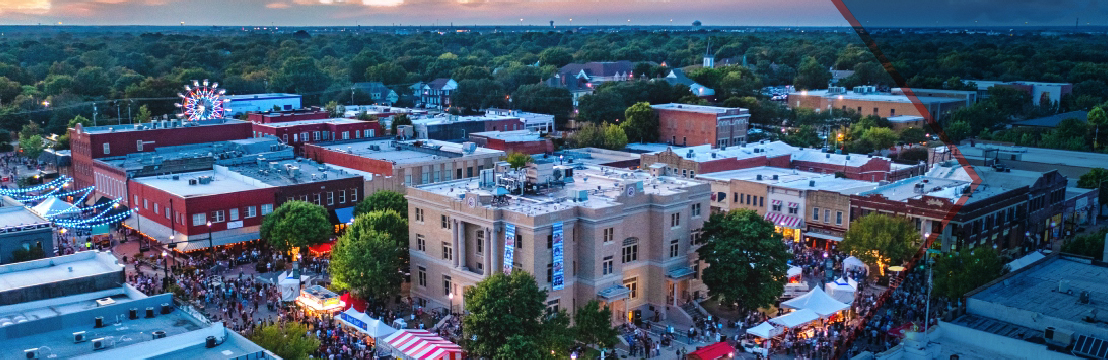
One of the most defining features of modern McKinney is the way it has treated its history as an asset rather than an obstacle. Historic preservation and downtown revitalization have helped keep the city’s older architecture and public spaces relevant, even as growth continued around them. The courthouse square and nearby streets became a bridge between eras: a place where the past remains visible while the present keeps moving.
This kind of preservation is not automatic. It requires deliberate choices, investment, and community buy in. It also reflects a belief that identity matters, that a city should not become interchangeable with every other fast growing suburb. By maintaining a recognizable historic core, McKinney has been able to offer both a sense of continuity and a platform for new business and cultural activity.
McKinney in the Twenty First Century
In the twenty first century, McKinney has been shaped by the broader forces that define North Texas: population growth, business expansion, and a regional economy that keeps attracting new residents. Growth has brought new schools, parks, and commercial development, along with the ongoing challenge of managing traffic, infrastructure, and housing affordability.
At the same time, the city’s history continues to matter. The story of a county seat founded in the nineteenth century still influences how residents imagine civic life, what they expect from public spaces, and why the downtown core remains a focal point. Modern McKinney is not just the product of recent development. It is the result of decisions made over generations: to build institutions, to connect to markets, to invest in neighborhoods, and to protect the visible reminders of where the city began.
A City Built on Role, Resilience, and Reinvention
The history of McKinney is a story of function and identity working together. Its early rise was powered by the practical importance of being a county seat. Its endurance came from agriculture, commerce, and the institutions that knit people together. Its expansion was shaped by transportation, regional growth, and the ability to modernize without abandoning its core.
Like many Texas communities, it has had to reinvent itself more than once, responding to economic shifts and demographic change. Yet the through line remains clear: a city that began with a strategic civic role and grew into a place where the past is still part of daily life, not just a chapter in a book.
Discover more from City Towner
Subscribe to get the latest posts sent to your email.