
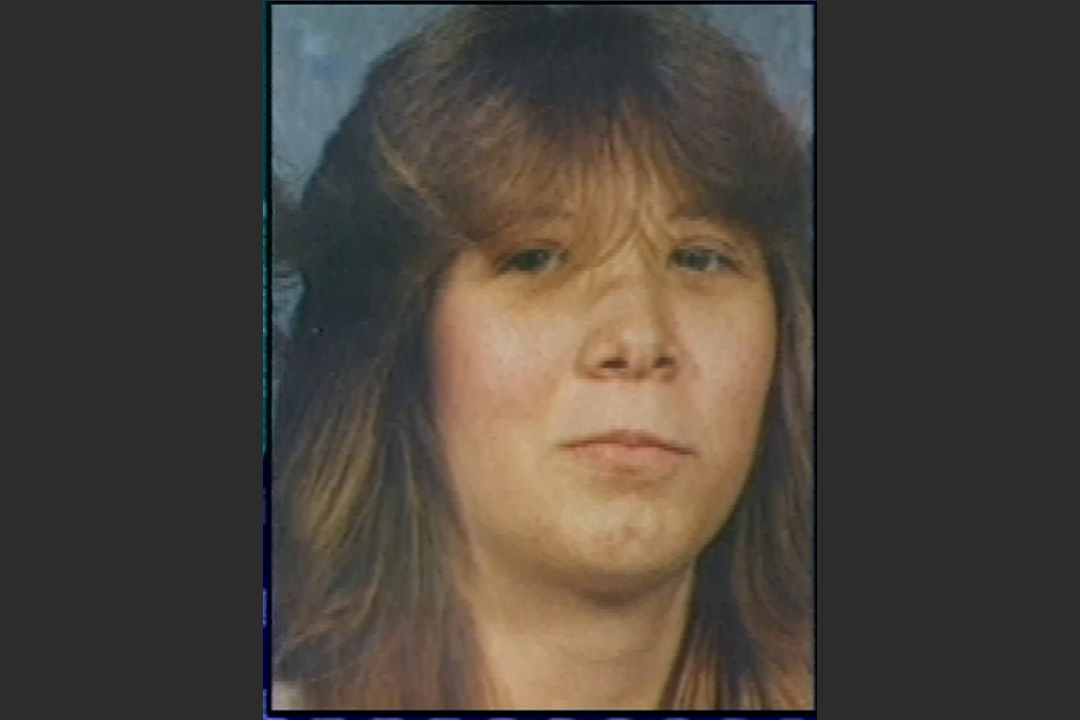
Dawn Shaver Murdered in Grand Rapids Michigan
Dawn Marie Shaver was 25 years old when her body was discovered in Grand Rapids, Michigan, on November 17, 1995. Her death became one of several disturbing unsolved cases involving women in the Grand Rapids area during the 1990s.
Dawn was found fully clothed in a creek near railroad tracks in the area of Ann Street and Elizabeth Avenue. Her body showed signs of severe violence. Reports stated that she had been beaten and strangled, with injuries to her head, chest, and abdomen.
The discovery immediately raised serious questions. Investigators needed to determine where Dawn had last been seen alive, who she had encountered, and whether she had been killed at the creek or taken there after her death.
Those questions have remained unanswered for decades.
No person has been publicly charged with killing Dawn, and no known prosecution has brought justice to her family. Her homicide remains a haunting example of how a young woman could vanish from public view and later be found dead without a clear explanation of what happened in her final hours.
Who Was Dawn Marie Shaver?
Dawn Marie Shaver was born on June 8, 1970. She was 25 years old at the time of her death and was described as a White woman with blonde hair.
Public information about her personal life is extremely limited. Few details have been widely released about her childhood, education, family relationships, friendships, residence, employment, or daily routines.
This lack of information has caused Dawn to be remembered primarily through the circumstances of her death rather than through the life she lived before November 17, 1995.
Some accounts have placed Dawn among women connected to commercial sex work or the Division Avenue corridor in Grand Rapids. That area was known during the 1990s for nightlife, street activity, drug use, inexpensive lodging, and commercial sex work.
However, the exact nature of Dawn’s connection to the area has not been fully explained in publicly available case information.
Regardless of her circumstances, Dawn was a young woman whose life had value. Her murder deserved a complete investigation, public attention, and a determined effort to identify the person responsible.
The Discovery Near Ann Street and Elizabeth Avenue
Dawn’s body was discovered in a creek near railroad tracks close to Ann Street and Elizabeth Avenue in Grand Rapids.
The area surrounding railroad tracks and waterways can be difficult to search and monitor. Such locations may contain overgrown vegetation, uneven ground, industrial property, drainage channels, and isolated spaces that receive little foot traffic.
The discovery of Dawn’s body in the creek raised the possibility that the location had been selected to conceal her or delay identification.
It has not been publicly established whether Dawn was killed at the creek. She may have been attacked elsewhere and transported to the location. If that occurred, the primary crime scene may never have been identified.
A secondary disposal site can create major challenges for detectives. Evidence left where the attack occurred may not be present where the body is found. Blood, fibers, fingerprints, weapons, vehicle tracks, and signs of a struggle may remain at another unknown location.
The creek itself may also have damaged or carried away physical evidence. Water can alter the condition of clothing, remove trace materials, and complicate the preservation of forensic evidence.
The railroad environment could have introduced additional contamination from debris, soil, machinery, workers, passing trains, and weather.
The Violence Inflicted on Dawn
Reports stated that Dawn had been beaten and strangled. She suffered injuries to her head, chest, and abdomen.
The combination of strangulation and blunt force injuries indicated a violent and sustained assault. Strangulation often requires close physical contact, making it a deeply personal form of violence even when the victim and offender are strangers.
The injuries to multiple areas of Dawn’s body suggest that she was struck repeatedly. Investigators would have examined the nature of those injuries to determine whether they were caused by fists, feet, a blunt object, or a combination of methods.
The pattern of injuries may also have helped detectives assess whether the attack appeared controlled, impulsive, sexually motivated, or driven by anger.
However, no detailed autopsy findings have been widely released to the public. It is unknown whether investigators recovered biological evidence, defensive wounds, fibers, hair, fingerprints, or material from beneath Dawn’s fingernails.
It is also unclear whether there was evidence that she fought her attacker.
These missing details make it difficult for the public to understand the full sequence of events, but the known facts establish that Dawn suffered a brutal death.
The Missing Final Timeline
One of the greatest mysteries in Dawn’s case is the absence of a clear public timeline describing her final known movements.
There is little widely available information about when she was last seen alive, who saw her, where she had been, or how long she may have been missing before her body was found.
Investigators would have likely attempted to reconstruct her movements through interviews with relatives, friends, acquaintances, neighbors, employers, customers, and anyone who regularly spent time in the areas she frequented.
They may have examined whether Dawn had been seen at a bar, residence, hotel, street corner, restaurant, vehicle, or gathering place.
Any person who was with her in the hours before her death would have been important to the investigation.
Without a confirmed last sighting, detectives faced a broad range of possible locations and suspects. Dawn may have known her killer, accepted a ride from a stranger, entered a vehicle voluntarily, or been approached unexpectedly.
The lack of a detailed timeline also made it more difficult to determine when she was killed and how long her body had been in the creek.
Grand Rapids During the Mid 1990s
Dawn’s murder occurred during a particularly troubling period in Grand Rapids.
Between the early and middle 1990s, several women disappeared or were found dead in and around the city. Many had connections to commercial sex work, substance use, unstable housing, or the Division Avenue corridor.
Some victims were found in creeks, wooded areas, fields, ditches, and other isolated locations.
The number of cases created fear that one person may have been targeting vulnerable women. Residents, advocates, journalists, and relatives began questioning whether a serial killer was operating in Grand Rapids.
Police investigated similarities among the victims, including where they were last seen, how they died, and where their bodies were located.
However, similarities alone could not prove that one offender was responsible for every case. Different killers can target victims from similar environments, particularly when those victims face the same dangers and lack of protection.
The period became associated with the group of cases commonly called the Grand Rapids 17.
Dawn Shaver and the Grand Rapids 17
Dawn is frequently included among the women known as the Grand Rapids 17.
The name refers to a group of women who disappeared or were murdered in the Grand Rapids area during the 1990s. The group was not based on a single official determination that all 17 cases were connected.
Instead, the label emerged because of similarities in timing, victim circumstances, locations, and methods of violence.
Dawn’s case fit several aspects of the broader pattern. She was a young woman, she was beaten and strangled, and her body was left in a creek near railroad tracks.
Other victims connected to the group were also strangled, beaten, or found in water and secluded locations.
These similarities fueled the belief that a serial offender may have been responsible for at least some of the murders.
Investigators had to compare evidence from each case, including autopsy results, DNA, fingerprints, witness statements, vehicle descriptions, known associates, and geographic patterns.
No publicly released evidence has conclusively shown that the same person killed Dawn and every other woman associated with the Grand Rapids 17.
The Possibility of a Serial Offender
The theory of a serial offender remains one of the most discussed possibilities surrounding Dawn’s murder.
A killer may have targeted women who were socially vulnerable and less likely to receive immediate attention if they disappeared. Women involved in commercial sex work often interacted with strangers in private or isolated places, making them easier targets for violent offenders.
An offender could have used a vehicle to approach victims, gain their trust, and transport them away from busy areas.
The use of creeks, railroad areas, wooded property, and other isolated locations may have reflected familiarity with the geography of Grand Rapids.
A local offender may have known which roads were quiet, which areas were poorly lit, and which locations were unlikely to be searched quickly.
At the same time, Dawn may have been killed by someone acting alone in a crime unrelated to the other cases.
She could have been harmed by an acquaintance, customer, partner, drug associate, or person she encountered shortly before her death.
Without direct physical evidence connecting the crimes, investigators could not responsibly declare that one person committed them all.
Investigative Challenges in 1995
The investigation into Dawn’s murder began at a time when forensic technology was far more limited than it is today.
DNA analysis existed in 1995, but testing was slower, more expensive, and less sensitive. Small or degraded samples that can now produce profiles may not have been usable at the time.
National databases were also less developed. Even if investigators recovered a DNA profile, there may not have been a matching offender profile available for comparison.
Genetic genealogy, which now allows investigators to identify suspects through distant relatives, did not exist.
Digital evidence was nearly nonexistent compared with modern investigations. Dawn did not carry a smartphone that recorded her location. There were no social media messages, mobile applications, cloud accounts, or detailed electronic travel records.
Security cameras were less common, and many businesses that used surveillance recorded over footage quickly.
Investigators relied heavily on interviews, physical evidence, telephone records, vehicle sightings, and witness memory.
If witnesses feared police, worried about exposure, or distrusted authorities, they may have withheld information.
Stigma and Unequal Attention
The women associated with the Grand Rapids cases often lived under circumstances that caused them to be judged rather than protected.
Commercial sex work, substance dependence, poverty, homelessness, and unstable relationships can make victims more vulnerable to violence. Those same circumstances can also influence how seriously their disappearances are treated.
Families and advocates have long argued that women connected to sex work do not always receive equal media coverage or public sympathy.
A victim’s occupation should never determine the value of her life or the urgency of the investigation into her death.
Dawn was not responsible for the violence committed against her. Whatever difficulties she may have faced, someone chose to attack and kill her.
The focus should remain on the person who committed the crime.
When victims are reduced to labels, important details about their personalities, relationships, and lives can disappear. This can make it harder for the public to recognize them as complete human beings whose families continue to grieve.
The Search for Evidence
Investigators examining Dawn’s case would have focused on the scene, her clothing, her body, and the people in her life.
Her clothing may have contained fibers, hairs, soil, bodily fluids, or other materials transferred during the attack.
Detectives may have searched the surrounding creek and railroad area for a weapon, personal property, footprints, tire impressions, or signs that a vehicle had stopped nearby.
They would also have compared Dawn’s injuries with those suffered by other victims.
If the same uncommon method, weapon, binding material, or disposal pattern appeared in multiple cases, it could suggest a shared offender.
Investigators may have identified persons of interest who knew Dawn or had histories of violence against women.
However, a person of interest is not the same as a suspect supported by enough evidence for an arrest.
The passage of time may allow old evidence to be retested with newer technology. Items that produced no useful results in 1995 could potentially reveal DNA today.
The survival and condition of that evidence may be critical to whether the case can still be solved through forensic methods.
No Publicly Identified Killer
No person has been publicly convicted of Dawn’s murder.
Over the years, names of violent offenders have been discussed in relation to the Grand Rapids cases. Some men were investigated because of criminal histories, geographic connections, or links to other victims.
Later developments in other Grand Rapids murders also renewed interest in whether previously identified killers might have been responsible for additional crimes.
However, no reliable public evidence has established that any named person killed Dawn.
It is important to distinguish between confirmed facts and theories. A suspect should not be identified as Dawn’s killer without physical evidence, credible witness testimony, a verified confession, or a legal finding.
Unproven accusations can damage innocent people and distract from the actual investigation.
Dawn’s case remains unresolved because the available evidence has not publicly produced a charge or conviction.
A Family Denied Justice
Behind every unsolved homicide is a family forced to live with unanswered questions.
Dawn’s relatives lost a 25-year-old woman in a sudden and violent way. They were left to wonder who killed her, why she was targeted, and whether the person responsible harmed anyone else.
A homicide investigation may continue for decades, but family grief does not pause while detectives wait for new evidence.
Anniversaries, birthdays, holidays, and family milestones continue to arrive. The absence of a conviction can make each one more painful.
Families may also feel that the public remembers the crime but forgets the victim.
Dawn’s name is often included in lists of the Grand Rapids 17, but her life was larger than a place on a timeline.
She had relationships, memories, hopes, difficulties, and experiences that are not fully represented in public records.
Justice would mean identifying the person who killed her and holding that person accountable. It would also mean restoring attention to Dawn as a person rather than only as an unsolved case.
Why the Case Can Still Be Solved
Cold cases can be solved many years after a crime occurs.
A witness may finally decide to speak. Someone may reveal a confession heard decades earlier. A suspect may be linked to the crime through DNA, fingerprints, or evidence from another investigation.
Old evidence can be examined using modern forensic techniques that were unavailable in 1995.
Investigators may also compare Dawn’s case with national records involving unidentified offenders, violent crimes, missing women, and similar methods of body disposal.
Geographic analysis can help determine whether a suspect lived, worked, traveled, or committed other crimes near the creek where Dawn was found.
A small detail may become important when combined with information from another case.
Someone may remember a vehicle near Ann Street and Elizabeth Avenue, a person returning home with unusual injuries, clothing that was suddenly discarded, or suspicious behavior around November 17, 1995.
Time can weaken memories, but it can also change loyalties. A witness who once protected someone may no longer feel obligated to remain silent.
Remembering Dawn Marie Shaver
Dawn Marie Shaver was murdered at only 25 years old.
Her body was found in a creek near railroad tracks in Grand Rapids on November 17, 1995. She had been beaten and strangled, and the person responsible was never publicly brought to justice.
Her death became connected to a larger period of fear and violence involving women in Grand Rapids, but Dawn’s case must also be understood individually.
She was not simply one of 17 women. She was one person whose life ended in a brutal and unexplained crime.
More than 30 years later, the central questions remain.
Who was with Dawn before she died? Where was she attacked? How was she transported to the creek? Did her killer know her, or was the attack committed by a stranger? Was her murder connected to other women killed in Grand Rapids?
The answers may still exist in preserved evidence, an old police file, or the memory of someone who has never spoken publicly.
Until those answers are found, Dawn’s murder remains an open wound in the history of Grand Rapids.
Discover more from City Towner
Subscribe to get the latest posts sent to your email.