
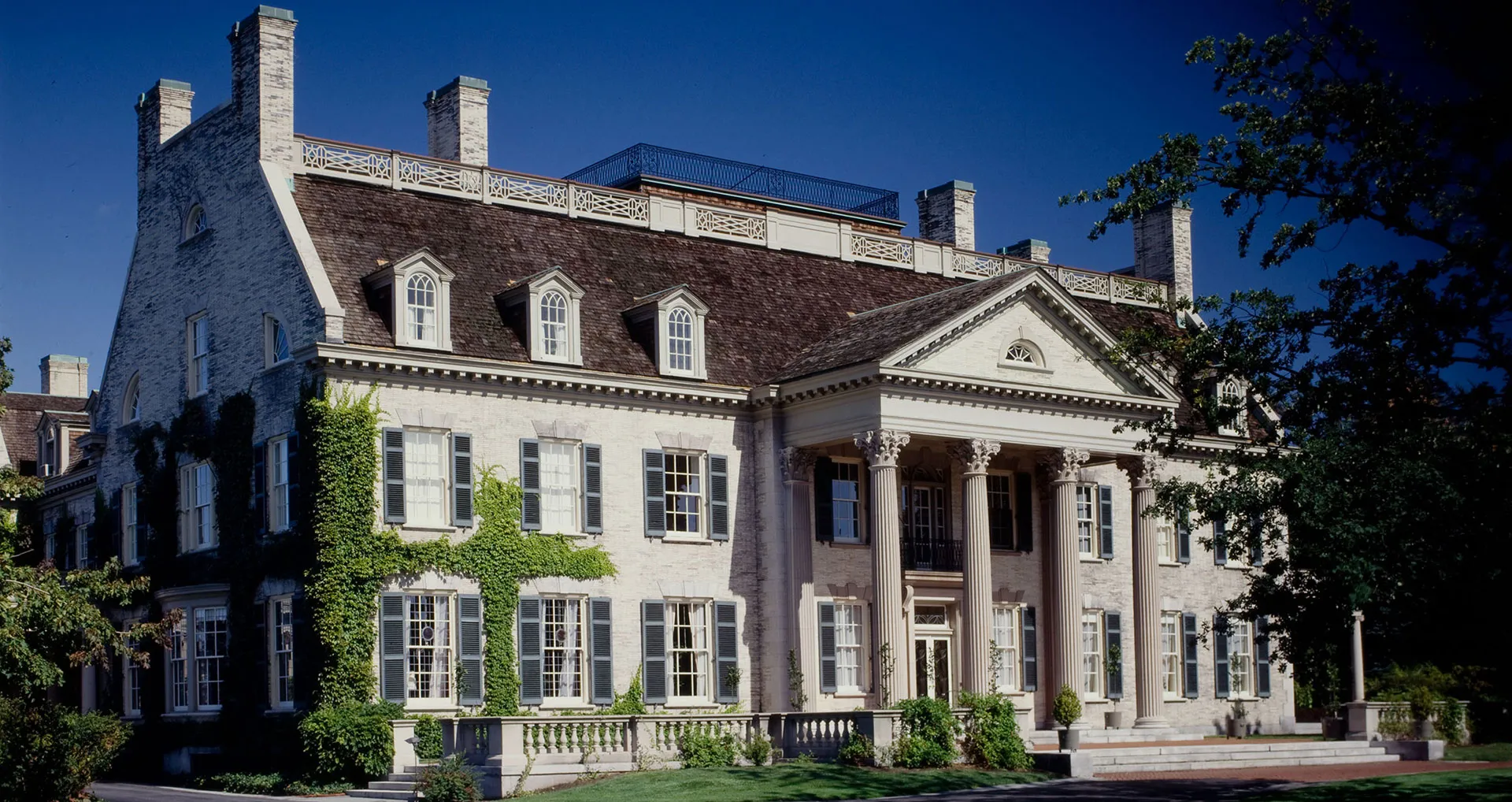
The George Eastman (Kodak Photography & Film) Museum in Rochester New York
The George Eastman Museum in Rochester, New York, is one of the city’s most important cultural landmarks and one of the most significant photography and film museums in the world. Located on the historic estate of George Eastman, the founder of Eastman Kodak, the museum preserves the legacy of a man who helped transform photography from a specialized process into an everyday part of modern life. It is a place where art, technology, history, architecture, gardens, and personal biography come together in a way that feels uniquely Rochester.
The museum is more than a house museum and more than a photography gallery. It is a major institution dedicated to the preservation, study, and celebration of photography, cinema, and visual culture. Visitors can explore Eastman’s former home, walk through beautiful gardens, view rotating exhibitions, learn about the history of cameras and film, and understand how Rochester became one of the world’s most important centers for imaging technology. For anyone interested in photography, art, design, history, business, or American innovation, the George Eastman Museum offers a deep and memorable experience.
Rochester’s identity is closely tied to George Eastman and Kodak. For much of the 20th century, Kodak was one of the most recognizable companies in the world, and Rochester was known internationally as the home of photography. The museum protects that story while also reaching beyond Kodak’s corporate history. It explores photography as an art form, a scientific achievement, a documentary tool, a family tradition, a commercial product, and a powerful way of shaping memory.
The Life and Legacy of George Eastman
George Eastman was one of the most influential business figures in American history because he changed how people captured and shared their lives. Before photography became simple and portable, taking a photograph required specialized knowledge, bulky equipment, and complicated chemical processes. Eastman recognized that photography could become a mass-market experience if it was made easier, more reliable, and more affordable.
His work helped bring cameras into the hands of ordinary people. Instead of photography being reserved mainly for professionals and serious hobbyists, Eastman’s innovations made it possible for families, travelers, journalists, artists, students, and everyday users to document their lives. This changed culture in a lasting way. Family albums, vacation photos, personal portraits, news images, and casual snapshots all became part of modern life because photography became more accessible.
Eastman’s legacy also includes his philanthropy. He gave generously to education, health care, music, dental care, and civic institutions. In Rochester, his impact can be seen far beyond the museum itself. His support helped shape the University of Rochester, the Eastman School of Music, medical institutions, and other parts of the city’s civic life. He believed that wealth should serve a broader public purpose, and his giving left a lasting mark on Rochester’s cultural and educational landscape.
The museum allows visitors to see Eastman not only as an inventor and businessman, but also as a person with refined tastes, strong opinions, global interests, and a deep connection to his home city. His former residence reveals how he lived, entertained, collected, worked, and thought about the world around him.
A Historic Estate With Character
One of the most memorable parts of the George Eastman Museum is the mansion itself. The historic home gives visitors a direct connection to Eastman’s private world. The estate reflects the elegance, ambition, and lifestyle of a wealthy industrialist from the early 20th century. Its architecture, rooms, furnishings, decorative details, and gardens all help tell the story of Eastman’s life and the era in which he lived.
Walking through the mansion feels different from walking through a standard museum gallery. The house has personality. It was a place where Eastman entertained guests, hosted musical performances, displayed collections, and enjoyed the comfort of a carefully designed home. The rooms reveal his interest in beauty, order, technology, travel, and social life. Visitors can imagine the house filled with conversation, music, business discussions, and the quiet routines of a man whose company was changing the world.
The estate also helps visitors understand the relationship between private wealth and public legacy. Eastman’s home was built as a personal residence, but it eventually became a public institution. That transformation gives the museum a special character. It allows people to experience both the intimacy of a historic home and the broader mission of a world-class museum.
The Gardens and Grounds
The gardens at the George Eastman Museum are an important part of the visitor experience. Rochester has long been known as the “Flower City,” and the museum’s gardens fit beautifully into that tradition. The grounds offer a peaceful contrast to the galleries and historic rooms, giving visitors a chance to slow down and appreciate the estate as Eastman would have experienced it.
The gardens are carefully maintained and change with the seasons. Spring and summer bring color, fragrance, and life to the property, while fall adds warmth and texture. The outdoor spaces are ideal for walking, photography, reflection, and quiet enjoyment. They also help connect the museum to Rochester’s broader identity as a city of parks, flowers, and green spaces.
For visitors interested in photography, the gardens are especially appealing. They provide natural subjects, changing light, architectural views, and beautiful compositions. In a museum devoted to photography, it feels fitting that the grounds themselves invite people to look carefully, frame a scene, and notice details.
The gardens also remind visitors that Eastman’s world was not limited to business and technology. He valued beauty, design, and atmosphere. The estate was meant to be experienced as a complete environment, with interior rooms and outdoor spaces working together.
Photography as Art, Memory, and Technology
The George Eastman Museum is deeply important because it treats photography as more than a technical invention. It presents photography as art, memory, history, science, communication, and cultural power. This broad approach makes the museum valuable for many different visitors, even those who may not consider themselves photography experts.
Photography changed the way people remember their own lives. It allowed families to preserve images of loved ones, milestones, travels, homes, and communities. It changed journalism by making events visible to people who were not there. It changed science by allowing researchers to record details that the human eye might miss. It changed art by creating new ways to compose, experiment, and express emotion. It changed advertising, fashion, politics, education, and entertainment.
The museum’s photography collections and exhibitions help visitors understand this wide influence. A photograph can be beautiful, but it can also be evidence. It can be personal, but it can also be public. It can show truth, but it can also be staged, edited, framed, or interpreted. The museum encourages visitors to think about how images shape what people believe, remember, and feel.
That makes the George Eastman Museum especially relevant in the modern world. In an age of smartphones, social media, digital cameras, and constant image sharing, photography is everywhere. The museum gives visitors a deeper appreciation for how that visual world began and how it evolved.
The Importance of Film and Cinema
The George Eastman Museum is also important for its connection to film and cinema. Photography and motion pictures share a common history, and Rochester’s imaging legacy naturally extends into the world of film. The museum preserves and presents cinema as both an art form and a technological achievement.
Film changed entertainment, storytelling, journalism, education, and popular culture. It allowed moving images to capture performances, historical moments, fictional worlds, and emotional experiences. The museum’s work in film preservation helps protect this history for future generations. Old films are fragile, and without careful preservation, many important works could be lost.
The museum’s film-related collections and screenings give visitors a chance to experience cinema in a thoughtful way. Instead of treating movies only as entertainment, the museum helps people understand them as cultural artifacts. A film can reveal the values, fears, humor, fashion, politics, and technology of the time in which it was made.
This commitment to cinema makes the museum broader and richer. It is not only about still images. It is about visual storytelling in many forms, from early photographic experiments to motion pictures and modern image culture.
Rochester’s Kodak Connection
The George Eastman Museum cannot be separated from Rochester’s Kodak story. Eastman Kodak helped define the city for generations. The company provided jobs, supported families, funded civic life, advanced research, and made Rochester known around the world. Kodak’s influence reached into neighborhoods, schools, factories, laboratories, offices, and family homes.
For many Rochester residents, Kodak was not just a company. It was part of daily life. Parents, grandparents, neighbors, and friends worked there. The company shaped the rhythm of the city and helped create a strong middle class. Its products also shaped the way people around the world captured birthdays, weddings, vacations, graduations, holidays, and ordinary moments.
The museum preserves the deeper meaning of that legacy. It shows how one company’s innovations changed culture while also reminding visitors that industrial history is made by people: inventors, factory workers, chemists, engineers, photographers, designers, marketers, and customers. Rochester’s Kodak connection is a story of invention, ambition, success, change, and adaptation.
Even after digital photography transformed the industry, Kodak’s impact remains enormous. The museum helps explain why Rochester became such an important city in the history of imaging and why that legacy still matters.
Exhibitions and Collections
The museum’s exhibitions give visitors reasons to return because the experience can change over time. Rotating displays allow the museum to highlight different photographers, movements, themes, techniques, and periods. One visit might focus on historic photographic processes, while another might explore portraiture, documentary images, landscape photography, experimental work, fashion, social issues, or contemporary visual culture.
The collections are central to the museum’s reputation. They include photographs, cameras, motion picture materials, technology, archives, and objects related to the history of image-making. These materials help tell the story of how photography and film developed over time. They also allow researchers, students, artists, and visitors to study the evolution of visual media.
The museum’s value comes from both preservation and interpretation. It does not simply store old photographs and equipment. It presents them in ways that help people understand why they matter. A camera can show how technology changed. A photograph can reveal a person, a place, a mood, a social issue, or an artistic idea. A film can preserve a performance, a moment, or a way of seeing the world.
A Place for Learning
The George Eastman Museum is an educational institution as much as a cultural destination. It helps visitors learn about photography, film, preservation, history, art, and technology. Students can gain insight into how images are made and why they matter. Adults can explore subjects they may have taken for granted, such as the camera, the family photo album, the movie theater, or the visual record of history.
The museum also teaches visual literacy. In a world full of images, people need to understand how pictures communicate. A photograph is not only something to look at. It is something to question. Who made it? Why was it made? What does it show? What does it leave out? How does it make the viewer feel? How does technology influence the final image?
These questions make the museum valuable beyond its historic setting. It helps people become more thoughtful viewers. That is especially important today, when images travel quickly and influence public opinion, personal identity, memory, and culture.
The Museum as a Rochester Landmark
The George Eastman Museum is one of Rochester’s most important landmarks because it connects the city’s past to its present. It represents Rochester’s history as an innovation center, its identity as a cultural city, and its continuing role in the study of images. For visitors, the museum is often one of the clearest ways to understand why Rochester mattered on a national and global scale.
The museum also fits into Rochester’s larger travel experience. It can be paired with other local attractions such as the Memorial Art Gallery, the Rochester Museum & Science Center, the Strong National Museum of Play, the National Susan B. Anthony Museum & House, Highland Park, the Rochester Public Market, and the Genesee River. Together, these places show a city with surprising depth.
For locals, the museum is a source of pride. It protects a legacy that belongs not only to George Eastman, but also to Rochester itself. The city’s reputation for photography, optics, research, and creativity is strengthened by the museum’s presence.
Why Visitors Should Take Their Time
The George Eastman Museum is best experienced slowly. Some visitors may arrive expecting only a historic house tour or a photography exhibit, but the museum offers much more. The mansion, galleries, gardens, collections, film programs, and educational materials all deserve attention. Rushing through the museum can cause visitors to miss the details that make it special.
The house invites close observation. The galleries invite reflection. The gardens invite quiet movement. The photography exhibits invite viewers to study composition, light, subject, context, and meaning. The film history encourages visitors to think about moving images as part of cultural memory.
Taking time also allows visitors to feel the connection between Eastman’s personal life and the broader history of photography. The museum is powerful because it blends the intimate and the global. A person can stand in the home of one man while learning about technologies that changed the entire world.
The Lasting Power of Images
One of the strongest messages of the George Eastman Museum is that images matter. Photographs and films shape how people remember their families, understand history, imagine places, follow news, experience art, and connect with one another. George Eastman’s work helped make image-making part of everyday life, and the museum helps explain the consequences of that transformation.
Today, almost everyone carries a camera in their pocket through a smartphone. People take photos of meals, trips, children, pets, work, celebrations, outfits, protests, disasters, and ordinary moments. This constant image-making can feel modern, but it is connected to a much longer history. The George Eastman Museum helps visitors see that history clearly.
The museum reminds people that every image has a story. Some images document public events. Others preserve private memories. Some are carefully composed works of art. Others are quick snapshots. Some become famous. Others remain personal. All of them are part of the larger human desire to see, remember, share, and understand.
A Museum With Global Meaning
Although the George Eastman Museum is located in Rochester, its meaning extends far beyond New York. The history it preserves is global. Photography and film changed life across continents, cultures, and generations. Eastman’s innovations helped make cameras and images part of everyday life around the world, and the museum continues to study and preserve that impact.
Visitors do not need to be experts to appreciate the museum. Anyone who has ever taken a picture, looked through a family album, watched a movie, saved a memory, or felt moved by an image can connect with its mission. That accessibility is part of what makes the museum so powerful.
The museum also shows how one city can influence the world. Rochester may not be the largest city in New York, but through Eastman, Kodak, and the imaging industry, it helped change how people everywhere record their lives. The George Eastman Museum keeps that achievement alive.
Final Thoughts on the George Eastman Museum
The George Eastman Museum in Rochester, New York, is a remarkable destination because it combines beauty, history, technology, art, and memory. It tells the story of George Eastman, but it also tells a much larger story about how photography and film changed the world. Through the mansion, gardens, exhibitions, collections, and educational programs, the museum gives visitors a deeper understanding of visual culture and Rochester’s role in shaping it.
It is a place where visitors can admire historic architecture, enjoy peaceful gardens, study powerful photographs, learn about cinema, and reflect on the role of images in everyday life. It honors Eastman’s achievements while also encouraging people to think critically about the pictures and films that shape human experience.
For anyone visiting Rochester, the George Eastman Museum is one of the city’s essential stops. It represents the best of Rochester’s legacy: innovation, creativity, learning, philanthropy, and cultural pride. More than a museum about one man or one company, it is a museum about how people see the world and how images preserve what time would otherwise take away.
Discover more from City Towner
Subscribe to get the latest posts sent to your email.