25 Fun Facts About Peoria Arizona
Peoria, Arizona, is a dynamic city where Sonoran Desert scenery, professional baseball, outdoor recreation, cultural attractions, and modern suburban living come together. Located northwest of Phoenix, Peoria stretches from established neighborhoods in the southern part of the city to open desert landscapes, mountain foothills, and Lake Pleasant in the north.
The city began as a small agricultural settlement and gradually developed into one of the most prominent communities in the Phoenix metropolitan area. Today, Peoria is recognized for its extensive park system, spring training baseball, family attractions, expanding entertainment districts, and access to some of central Arizona’s most beautiful outdoor spaces.
The following 25 fun facts highlight the history, geography, attractions, sports culture, and distinctive character that make Peoria an interesting place to live or visit.
1. Peoria Was Founded by Families from Illinois
Peoria was established in 1886 by four farming families who had moved west from Illinois. The settlers named their new Arizona community after Peoria, Illinois, the place they had previously called home.
The early settlement developed around agriculture because the surrounding desert land became productive when irrigation water was made available. The ability to grow crops in an otherwise dry environment helped create the foundation for a permanent community.
2. The City Began as an Agricultural Community
Long before Peoria became known for baseball stadiums, shopping districts, and suburban neighborhoods, it was primarily a farming community. Early residents cultivated crops and raised livestock on land supported by irrigation canals.
Cotton, citrus, vegetables, and other agricultural products contributed to the local economy. Farming influenced the city’s identity for decades and helped attract additional residents, businesses, and transportation services.
Although much of the agricultural land has since been developed, Peoria’s farming heritage remains an important part of its history.
3. Peoria Was Incorporated in 1954
Peoria officially became an incorporated municipality on June 07, 1954. Incorporation gave residents greater control over local government, public services, planning, infrastructure, and future development.
At the time, Peoria was significantly smaller than it is today. The city later experienced rapid growth as the Phoenix metropolitan area expanded westward and new housing communities appeared throughout the region.
4. Peoria Is Part of the Phoenix Metropolitan Area
Peoria is located in the northwestern section of the Phoenix metropolitan area. Its location provides convenient access to the employment, entertainment, professional sports, airports, universities, and cultural attractions found throughout the Valley.
Residents can enjoy a suburban lifestyle while remaining within driving distance of downtown Phoenix and other major cities such as Glendale, Scottsdale, Surprise, and Goodyear.
Peoria’s position also places it close to both developed urban areas and relatively undeveloped desert landscapes.
5. Most of Peoria Is in Maricopa County
The majority of Peoria is located in Maricopa County, which includes Phoenix and many of Arizona’s largest communities. However, a small northern portion of Peoria extends into Yavapai County.
This unusual geographic arrangement means that the city crosses a county boundary as it stretches north toward Lake Pleasant and the surrounding desert.
The long shape of Peoria contributes to the variety found within the city, from older neighborhoods in the south to newer communities and open desert in the north.
6. Peoria Has Grown Into a Major Arizona City
Peoria has changed dramatically from its beginnings as a small farming settlement. The city recorded a population of 190,985 during the April 01, 2020, census, making it one of Arizona’s largest cities.
Population growth has encouraged the development of new neighborhoods, roads, schools, parks, restaurants, medical facilities, and shopping centers.
The city continues to balance residential expansion with the preservation of parks, trails, desert scenery, and outdoor recreation.
7. Lake Pleasant Is One of Peoria’s Biggest Attractions
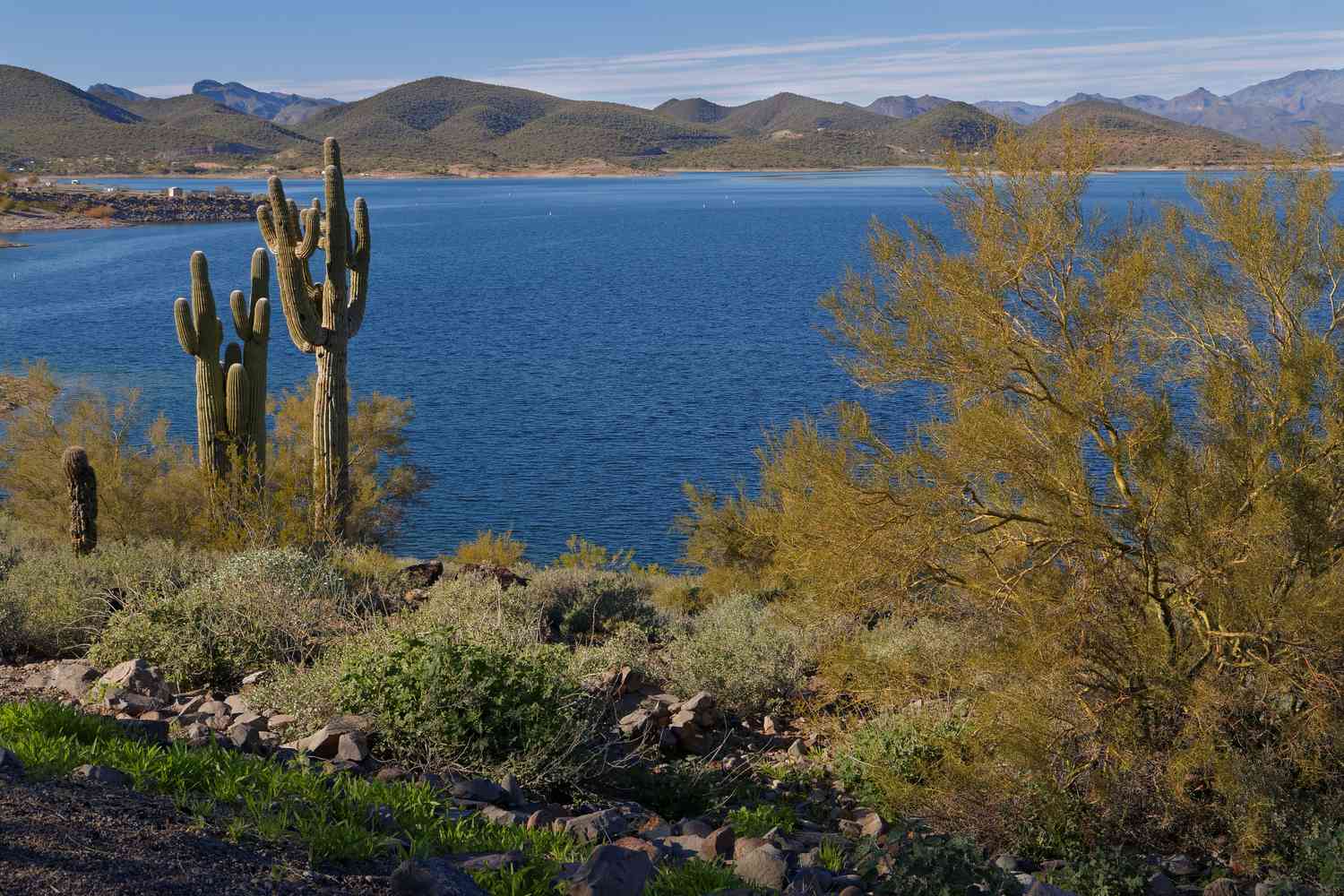
Lake Pleasant is one of the most recognizable recreational destinations associated with Peoria. The large reservoir sits in a rugged desert landscape surrounded by hills, mountains, cactus plants, and wide stretches of open terrain.
Visitors travel to the lake for boating, fishing, kayaking, camping, paddleboarding, picnicking, swimming, and wildlife observation. The contrast between the blue water and the surrounding Sonoran Desert creates some of the most memorable scenery in the region.
Lake Pleasant is especially popular during warmer months, although visitors enjoy the park throughout the year.
8. Lake Pleasant Is One of Arizona’s Largest Lakes
Lake Pleasant is commonly described as the second largest lake in Arizona, behind Roosevelt Lake. Its size and location make it a major destination for water recreation in a state that is better known for deserts than lakes.
Water levels can change considerably depending on the season, rainfall, water demand, and operations connected to the Central Arizona Project. When the reservoir is full, the water extends into numerous coves and desert inlets.
The lake also plays an important role in regional water storage and management.
9. Lake Pleasant Is Part of the Central Arizona Project
Lake Pleasant is more than a recreational attraction. It is also an important component of the Central Arizona Project, the extensive canal system that transports Colorado River water across central and southern Arizona.
The New Waddell Dam expanded the reservoir and increased its water storage capacity. Water stored at Lake Pleasant helps support communities, agriculture, and water management efforts throughout the region.
This combination of recreation and infrastructure makes the lake one of Peoria’s most important natural and engineered resources.
10. Visitors May See Wild Burros Near Lake Pleasant
Wild burros live in parts of the desert surrounding Lake Pleasant. Visitors occasionally spot them walking along roads, standing near hillsides, or moving across open desert terrain.
The animals are descendants of burros once used by miners, prospectors, and other workers in the American West. Over time, free roaming populations became established in several parts of Arizona.
People should admire wild burros from a safe distance and avoid feeding, approaching, or attempting to touch them.
11. Bald Eagles Can Be Seen Around the Lake
Lake Pleasant provides habitat for a variety of birds, including bald eagles. The combination of water, cliffs, fish, and relatively open surroundings makes the area suitable for these impressive birds of prey.
Visitors may also observe hawks, herons, waterfowl, vultures, and other desert or aquatic bird species. Wildlife viewing is particularly rewarding during the quieter morning and evening hours.
Binoculars can help visitors enjoy the birds without disturbing them.
12. Peoria Is Home to Two Major League Baseball Teams During Spring Training
Every spring, Peoria becomes a temporary baseball home for the Seattle Mariners and San Diego Padres. Both teams prepare for the regular season at Peoria Sports Complex.
Fans can attend games, watch players practice, collect autographs, and experience professional baseball in a smaller and more relaxed setting than a typical regular season stadium.
Spring training brings thousands of visitors to Peoria and supports hotels, restaurants, stores, and entertainment businesses throughout the surrounding area.
13. Peoria Sports Complex Opened in 1994
Peoria Sports Complex made its debut in 1994. The facility includes a stadium, practice fields, clubhouses, training areas, batting facilities, fan spaces, and other baseball related amenities.
The complex was designed for more than spring training games. It supports player development, practices, tournaments, community programs, special events, and private gatherings throughout the year.
Its presence helped establish Peoria as an important destination within Arizona’s Cactus League.
14. The Complex Introduced a New Spring Training Model
When Peoria Sports Complex opened, it was the first Major League Baseball spring training and player development facility designed to be shared by two teams.
The partnership between the Mariners, Padres, and the City of Peoria created a model that other Arizona spring training facilities later followed. Shared facilities are now common in the Cactus League, but Peoria was a pioneer in developing the concept.
The arrangement allows both organizations to maintain separate training operations while sharing the main stadium and selected resources.
15. The Sports Complex Covers About 145 Acres
Peoria Sports Complex sits on approximately 145 acres. The expansive property contains the main stadium, multiple practice fields, team buildings, training spaces, parking areas, landscaped walkways, and entertainment features.
The size of the complex allows Major League and Minor League players to practice simultaneously. Fans attending morning workouts can often move between practice fields before entering the stadium for an afternoon game.
This accessible layout is one reason baseball enthusiasts enjoy visiting during spring training.
16. The Stadium Has a Massive Digital Scoreboard
Peoria Sports Complex is known for its large high definition digital scoreboard. The display measures approximately 35 feet high and 61 feet wide.
Its size allows fans throughout the stadium to view statistics, video replays, graphics, promotions, and entertainment content. The scoreboard was introduced as part of improvements designed to modernize the fan experience.
The bright display is especially useful during sunny afternoon games when visibility can be challenging for smaller screens.
17. P83 Is Peoria’s Entertainment District
The area surrounding Peoria Sports Complex is commonly called the P83 Entertainment District. The name refers to Peoria and nearby 83rd Avenue.
P83 contains restaurants, hotels, shopping opportunities, entertainment venues, and gathering places. The district becomes particularly active during spring training, when baseball fans fill nearby businesses before and after games.
Its location makes it convenient for visitors who want to combine sports, dining, shopping, and entertainment without traveling far between activities.
18. Arizona Broadway Theatre Is Located in Peoria
Arizona Broadway Theatre is one of Peoria’s major cultural attractions. The professional theater presents musicals and other stage productions in a setting that combines live entertainment with dining.
Guests can attend performances inspired by Broadway classics, family favorites, seasonal shows, and contemporary productions. The venue adds an important performing arts component to a city widely known for outdoor recreation and baseball.
The theater also attracts visitors from other communities throughout the Phoenix metropolitan area.
19. The Peoria Center for the Performing Arts Supports Local Theater
The Peoria Center for the Performing Arts is located in the city’s historic downtown area. It serves as a home for theatrical performances, educational programs, community events, and artistic productions.
The facility helps connect Peoria’s past with its modern cultural identity. Visitors can experience live performances while spending time near some of the city’s older streets and historic properties.
The center demonstrates that Peoria’s entertainment scene extends beyond sports and outdoor activities.
20. Paloma Community Park Opened in 2020
Paloma Community Park opened in 2020 and became Peoria’s third major community park. Located in northern Peoria, the park offers a large recreational space surrounded by desert scenery.
Its amenities include sports fields, fishing areas, playgrounds, walking paths, picnic spaces, open lawns, and areas designed for community activities. The park’s size allows families, athletes, walkers, and visitors to enjoy different activities at the same time.
Paloma Community Park also reflects Peoria’s residential growth toward the north.
21. Peoria Has Dozens of Parks
Peoria maintains an extensive collection of neighborhood and community parks. These public spaces include playgrounds, sports courts, athletic fields, picnic shelters, walking paths, swimming facilities, open lawns, and recreation areas.
Neighborhood parks give residents convenient places to exercise, relax, walk dogs, play sports, or spend time with family. Larger community parks can host tournaments, festivals, classes, and major public events.
The park system contributes significantly to Peoria’s reputation as a family oriented city.
22. The City Has Miles of Public Trails
Peoria offers approximately 27 miles of public trails that allow residents and visitors to walk, run, hike, and ride bicycles through different parts of the city.
Some routes pass through developed neighborhoods and parks, while others provide access to desert terrain and scenic viewpoints. Trails give people an opportunity to experience Arizona’s natural environment while remaining relatively close to urban services.
Because desert temperatures can become dangerous, trail users should carry water, wear sun protection, and avoid strenuous activity during the hottest part of the day.
23. Sunrise Mountain Is a Popular Local Landmark
Sunrise Mountain is a familiar natural landmark in northern Peoria. Trails around the mountain attract hikers, runners, and residents looking for outdoor exercise and elevated views.
From higher points, visitors can see neighborhoods, desert terrain, distant mountains, and portions of the surrounding Valley. Sunrise and sunset often create dramatic colors across the sky and landscape.
The area represents Peoria’s connection to the Sonoran Desert and provides outdoor recreation within reach of residential communities.
24. Peoria Has Both Historic and Modern Neighborhoods
Southern Peoria contains some of the city’s oldest neighborhoods, historic buildings, and long established commercial areas. Northern Peoria features newer residential communities, planned developments, desert views, and modern shopping destinations.
This geographic variety gives the city several distinct personalities. A person can explore historic downtown Peoria, attend a baseball game near P83, visit a modern community park, and spend time at Lake Pleasant during the same trip.
The mixture of old and new reflects more than a century of growth and transformation.
25. Peoria Combines Desert, Water, Sports, and Culture
One of the most interesting facts about Peoria is the number of different experiences available within the city. Visitors can hike through the Sonoran Desert, boat on Lake Pleasant, watch Major League Baseball, attend a theatrical production, explore community parks, and dine in a busy entertainment district.
Few Arizona cities combine a major lake, professional spring training facilities, mountain trails, performing arts venues, and expanding suburban communities in quite the same way.
Peoria’s ability to offer outdoor adventure and urban convenience has helped it develop from a small farming settlement into a significant Arizona destination.
Peoria’s Distinctive Arizona Character
Peoria is sometimes viewed simply as a suburb of Phoenix, but its history and attractions give it an identity of its own. The city’s agricultural origins, dramatic population growth, investment in public recreation, connection to professional baseball, and proximity to Lake Pleasant have shaped a diverse community.
Historic downtown Peoria preserves part of the city’s early story, while P83 represents its emergence as an entertainment destination. Northern communities provide access to parks, trails, mountain views, and open desert. Lake Pleasant adds a waterfront environment that is unusual within the Phoenix metropolitan area.
These different sections of the city allow residents to choose from a wide variety of lifestyles. Some people prefer established neighborhoods near central Peoria, while others are attracted to newer communities farther north. Baseball fans may value easy access to the sports complex, while outdoor enthusiasts may prefer living closer to Lake Pleasant and desert trailheads.
A City Built Around Recreation
Recreation is central to Peoria’s appeal. The city has invested in neighborhood parks, large community parks, trails, swimming facilities, athletic fields, cultural venues, and public gathering spaces.
During spring training, baseball becomes one of the city’s biggest attractions. At other times of the year, residents can attend community festivals, youth sporting events, concerts, theatrical performances, and recreational programs.
Lake Pleasant expands those opportunities by providing boating, fishing, camping, paddling, and wildlife viewing. The surrounding desert offers hiking, photography, sightseeing, and opportunities to observe native plants and animals.
Why Peoria Continues to Attract Attention
Peoria continues to attract residents and visitors because it offers space, scenery, recreation, entertainment, and access to the larger Phoenix metropolitan area. Its neighborhoods range from historic areas to modern planned communities, creating options for people at different stages of life.
The city’s growth has brought increased development, but Peoria continues to promote parks, trails, cultural programming, and outdoor experiences. Its most recognizable attractions, including Lake Pleasant and Peoria Sports Complex, help distinguish it from neighboring cities.
For travelers, Peoria can serve as a destination for a baseball vacation, an outdoor weekend, a family trip, or a broader exploration of central Arizona. For residents, it offers the services of a large city while maintaining direct access to desert landscapes and recreational spaces.
From its beginnings in 1886 to its modern position within one of the country’s largest metropolitan regions, Peoria has experienced a remarkable transformation. Its 25 fun facts reveal a city shaped by farming, water, baseball, nature, community planning, and steady growth.
Discover more from City Towner
Subscribe to get the latest posts sent to your email.