25 Fun Facts About Vancouver Washington
Vancouver, Washington, is one of the most historically significant and increasingly dynamic cities in the Pacific Northwest. Located along the north bank of the Columbia River directly across from Portland, Oregon, Vancouver combines deep regional history, waterfront scenery, outdoor recreation, military heritage, aviation history, and modern urban growth.
Although Vancouver is sometimes confused with Vancouver, British Columbia, the Washington city has its own identity and a history that stretches back centuries. It played an important role in the fur trade, westward expansion, military operations, aviation, shipbuilding, and the development of the Pacific Northwest.
Today, Vancouver blends historic attractions with newer restaurants, breweries, parks, neighborhoods, and waterfront developments. Its location provides easy access to both urban amenities and outdoor destinations such as the Columbia River Gorge, Mount St. Helens, forests, lakes, and hiking areas.
These 25 fun facts highlight some of the most interesting things about Vancouver, Washington.
1. Vancouver Is Older Than the State of Washington
Vancouver was established long before Washington became a state.
The settlement grew around Fort Vancouver and the nearby military post during the nineteenth century. Vancouver was incorporated as a city in 1857, while Washington did not become a state until November 11, 1889.
That means Vancouver had already been functioning as an incorporated city for more than 30 years before Washington officially joined the United States.
Its early development makes Vancouver one of the oldest established communities in the Pacific Northwest.
2. Vancouver Was Named After George Vancouver
The city takes its name from Captain George Vancouver, a British naval officer and explorer.
George Vancouver explored portions of the Pacific Northwest coast during the late eighteenth century.
His name appears throughout the region, including Vancouver Island in Canada and the much larger city of Vancouver, British Columbia.
Because of this shared history, Vancouver, Washington, is frequently confused with its Canadian namesake.
Residents and businesses sometimes emphasize Vancouver, Washington, or Vancouver, USA, to make the distinction clear.
3. Fort Vancouver Was Once a Major Fur Trading Center
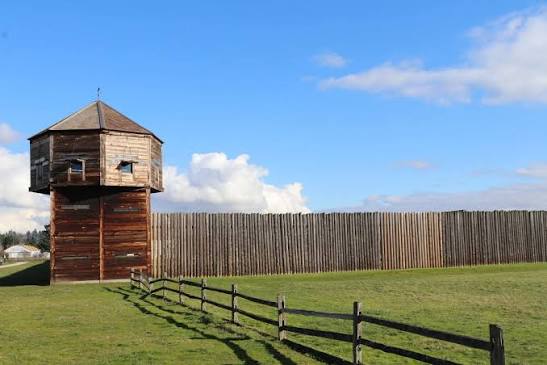
Fort Vancouver was established in 1825 by the Hudson’s Bay Company.
It became the administrative headquarters for the company’s enormous Columbia Department and one of the most important fur trading centers in western North America.
The fort controlled a commercial network stretching across large portions of the Pacific Northwest.
Furs collected throughout the region were brought to Fort Vancouver for processing, storage, and shipment.
The complex also included farms, workshops, warehouses, homes, and administrative buildings.
4. Fort Vancouver Was an International Community
The population around Fort Vancouver was remarkably diverse for its era.
British officers, French Canadian workers, Indigenous people, Hawaiians, Métis families, and workers from other backgrounds lived and worked in and around the settlement.
Multiple languages and cultural traditions were represented.
The fort therefore became much more than a remote trading post. It functioned as a multicultural community that connected the Pacific Northwest with international trading networks.
This diversity is an important part of Vancouver’s early history.
5. The Columbia River Has Always Defined Vancouver
Vancouver sits directly along the Columbia River, one of the most important rivers in North America.
Long before modern settlement, Indigenous communities depended on the river for fishing, transportation, trade, and cultural life.
Later generations used the Columbia for steamboat transportation, commercial shipping, logging, shipbuilding, fishing, and recreation.
Even today, the river remains one of Vancouver’s defining geographic features.
Modern waterfront parks, walking trails, restaurants, and residential developments have renewed the city’s relationship with the Columbia.
6. Vancouver Is Directly Across the River From Portland
Vancouver and Portland sit on opposite sides of the Columbia River.
The cities are connected by bridges and are part of the same larger metropolitan region.
Thousands of people travel between Washington and Oregon for work, shopping, entertainment, healthcare, education, and recreation.
Despite that close connection, Vancouver maintains its own local government, neighborhoods, downtown, businesses, schools, parks, and cultural identity.
The relationship between the two cities is one of the most important influences on modern Vancouver.
7. Ulysses S. Grant Once Served in Vancouver
Before becoming one of the most famous generals in American history and later President of the United States, Ulysses S. Grant spent time stationed at Vancouver Barracks.
Grant served in the Pacific Northwest during the 1850s as a young Army officer.
His time in Vancouver occurred years before the Civil War transformed his career.
The connection gives Vancouver a fascinating link to one of the most important military and political figures in American history.
Several other notable military officers also passed through Vancouver during the nineteenth century.
8. Vancouver Barracks Has a Long Military History
Vancouver Barracks was established in 1849.
It became one of the most important military posts in the Pacific Northwest.
Soldiers stationed there participated in military operations, protected transportation routes, supported settlements, and traveled to other posts throughout the western territories.
The military presence significantly influenced Vancouver’s development.
Businesses, residences, and civilian services grew around the post as soldiers and their families became part of the local community.
Historic buildings associated with the barracks remain visible today.
9. Pearson Field Is Connected to Early Aviation History
Pearson Field is one of Vancouver’s most interesting historic locations.
The airfield developed near Vancouver Barracks and became associated with military and civilian aviation during the early twentieth century.
Pilots used the field for training, demonstrations, transportation, and experimental flights.
Its location near the Columbia River made it an important aviation site during an era when airplanes were rapidly changing transportation and military strategy.
Today, Pearson Field helps preserve Vancouver’s connection to early flight.
10. A Historic Soviet Flight Ended in Vancouver
Vancouver became internationally famous in 1937 when Soviet aviator Valery Chkalov and his crew completed a historic nonstop flight from Moscow.
The aircraft traveled across the Arctic and eventually landed at Pearson Field.
The transpolar journey demonstrated the possibilities of long distance aviation and became a major international event.
The landing created an unusual connection between Vancouver and Soviet aviation history.
It remains one of the most famous aviation events associated with the city.
11. Vancouver Became a Major Shipbuilding Center During World War II
World War II completely transformed Vancouver’s economy and population.
Large Kaiser Shipyards operated along the Columbia River, producing ships needed for the American war effort.
Thousands of workers arrived in the city seeking industrial jobs.
The shipyards operated on a massive scale and required an enormous workforce.
Ships were constructed rapidly using modern production techniques.
The wartime shipbuilding boom helped turn Vancouver from a relatively small regional city into a much larger industrial community.
12. Women Played a Major Role in Vancouver’s Wartime Industry
During World War II, women entered Vancouver’s shipyards in large numbers.
With many men serving in the military, women were recruited for jobs traditionally dominated by male workers.
They worked as welders, electricians, machinists, painters, and in many other industrial positions.
This workforce became part of the broader Rosie the Riveter movement across the United States.
Women’s contributions to Vancouver’s wartime production helped challenge traditional employment expectations and permanently changed the American workforce.
13. Vancouver Experienced Rapid Population Growth During World War II
The Kaiser Shipyards created such enormous demand for workers that Vancouver’s population increased dramatically.
People moved to the area from states across the country.
Housing developments had to be constructed quickly to accommodate workers and their families.
The sudden growth changed local schools, businesses, transportation systems, and neighborhoods.
Many wartime workers remained in the region after the war ended, contributing to Vancouver’s long term expansion.
The city’s modern growth can partly be traced back to this period.
14. Vancouver Has a National Historic Site
Fort Vancouver National Historic Site preserves some of the most important locations associated with Vancouver’s past.
Visitors can explore reconstructed areas of Fort Vancouver, historic military grounds, aviation related sites, and archaeological resources.
The site helps explain the fur trade, Indigenous history, military development, settlement, and early aviation.
Historic interpretation allows visitors to understand how different periods of Vancouver’s history overlap within a relatively small geographic area.
It is one of the city’s most important educational and cultural attractions.
15. Vancouver Has a Modern Waterfront Built on Historic Land
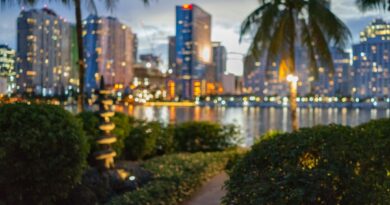
The Vancouver Waterfront has become one of the city’s most recognizable modern destinations.
The riverfront now includes restaurants, public spaces, walking paths, residential buildings, offices, and gathering areas.
For much of Vancouver’s history, sections of the waterfront were devoted primarily to industrial and transportation activities.
Modern redevelopment has returned large portions of the riverfront to public use.
Visitors can now walk beside the Columbia River while enjoying views, dining, public art, and landscaped spaces.
The project represents one of the most dramatic urban transformations in Vancouver’s recent history.
16. The Grant Street Pier Is a Waterfront Landmark
One of the most recognizable features of the Vancouver Waterfront is the Grant Street Pier.
The pier extends over the Columbia River and has a distinctive cable supported design.
It serves as a public viewpoint where visitors can enjoy panoramic river scenery.
People frequently use the pier for photography, sightseeing, and watching boats travel along the Columbia.
Its unusual design has helped make it a visual symbol of Vancouver’s waterfront redevelopment.
The pier is especially attractive around sunset when changing light reflects across the river.
17. Vancouver Has a Strong Craft Beer Culture
Like much of the Pacific Northwest, Vancouver has developed a strong appreciation for craft beer.
Local breweries produce India pale ales, lagers, stouts, porters, seasonal varieties, and experimental brews.
Many breweries operate taprooms with food menus or nearby food carts.
The city’s brewery scene provides a more relaxed alternative to the larger beer culture across the river in Portland.
Local breweries have become popular gathering places for residents and visitors.
Beer festivals and tasting events also contribute to Vancouver’s growing food and beverage culture.
18. The City Has a Popular Farmers Market
The Vancouver Farmers Market is a major seasonal attraction.
Farmers, bakers, artisans, and food producers gather to sell vegetables, fruit, flowers, baked goods, prepared foods, honey, crafts, and specialty products.
Southwest Washington’s agricultural landscape allows residents to access a wide range of locally grown produce.
The market also helps connect downtown Vancouver with surrounding rural communities.
For visitors, it provides an opportunity to sample regional flavors while supporting local farmers and small businesses.
The market has become an important social gathering place as well as a shopping destination.
19. Vancouver Is Close to the Columbia River Gorge
Vancouver provides easy access to the Columbia River Gorge, one of the most spectacular natural areas in the Pacific Northwest.
The gorge stretches eastward along the Columbia River and features cliffs, forests, hiking trails, scenic viewpoints, and waterfalls.
Visitors staying in Vancouver can reach many outdoor attractions without traveling far from the metropolitan area.
The gorge is especially famous for waterfalls such as Multnomah Falls on the Oregon side.
Washington also offers numerous hiking areas and viewpoints overlooking the river.
This proximity gives Vancouver residents access to world class outdoor recreation.
20. Mount St. Helens Is Within Reach of Vancouver
Vancouver is also conveniently located for trips toward Mount St. Helens.
The volcano became internationally famous after its catastrophic eruption on May 18, 1980.
The eruption dramatically reshaped the surrounding landscape and became one of the most significant geological events in modern United States history.
Today, the Mount St. Helens region offers hiking, scenic drives, viewpoints, and educational opportunities.
Vancouver can serve as a convenient starting point for travelers exploring southwest Washington and the volcanic landscapes of the Cascade Range.
21. Vancouver Has Mild but Rainy Winters
Vancouver experiences the temperate climate typical of much of western Washington and Oregon.
Winters are generally mild compared with many northern American cities, but the season can be wet and cloudy.
Snow occasionally falls, although significant accumulation is less common than in colder inland regions.
Summers are typically warmer, sunnier, and considerably drier.
The combination of winter rainfall and moderate temperatures supports the lush vegetation associated with the Pacific Northwest.
Trees, gardens, parks, and surrounding forests remain important parts of Vancouver’s visual character.
22. Vancouver Has No Washington State Personal Income Tax
One unusual feature of living in Vancouver is Washington’s tax structure.
Washington does not impose a traditional state personal income tax on wages.
This can make Vancouver attractive to some residents, especially compared with neighboring Oregon, which has a state personal income tax.
At the same time, Washington has a sales tax, while Oregon generally does not have a statewide sales tax.
Because Vancouver and Portland sit so close together, residents often discuss the differences between the two states when considering where to live, work, or shop.
The tax differences have become part of the larger relationship between the two cities.
23. Vancouver Has Been Growing Rapidly
Vancouver has experienced substantial population growth during recent decades.
People have moved to the city from other parts of Washington, Oregon, California, and elsewhere in the United States.
Some are attracted by employment opportunities, while others appreciate Vancouver’s proximity to Portland combined with access to Washington’s lifestyle and tax environment.
Residential development has expanded throughout east and north Vancouver.
Downtown has also gained new apartments, businesses, restaurants, and entertainment options.
Continued growth has transformed Vancouver from a smaller regional city into an increasingly important metropolitan center.
24. Downtown Vancouver Mixes Old and New
Downtown Vancouver offers an interesting combination of historic architecture and modern development.
Older commercial buildings, traditional neighborhoods, restaurants, breweries, offices, and newer residential projects exist within a relatively compact area.
The historic character gives downtown a different atmosphere from many newer suburban districts.
Visitors can walk between shops, cafes, restaurants, parks, historic sites, and the waterfront.
Continued investment has brought additional residents and businesses into the downtown area.
The combination of historic preservation and new construction reflects Vancouver’s effort to grow without completely losing its original character.
25. Vancouver Has Developed an Identity Separate From Portland
Perhaps one of the most interesting facts about Vancouver is how much its identity has changed.
For many years, outsiders often described Vancouver primarily in relation to Portland.
Its location directly across the Columbia River made comparisons unavoidable.
Modern Vancouver, however, has increasingly developed attractions and neighborhoods that encourage people to visit without crossing into Oregon.
The revitalized waterfront, growing restaurant scene, breweries, historic sites, outdoor recreation, farmers market, residential growth, and expanding downtown have strengthened the city’s independent identity.
Vancouver still benefits enormously from being part of the Portland metropolitan area, but it also offers qualities that make it distinctly Washington.
Why Vancouver Is an Interesting Pacific Northwest City
Vancouver combines history, geography, culture, and modern development in ways that distinguish it from many other cities in the Pacific Northwest.
Few communities can claim direct connections to the Hudson’s Bay Company, Fort Vancouver, Ulysses S. Grant, early military aviation, a historic Soviet transpolar flight, and massive World War II shipbuilding.
At the same time, Vancouver is not simply a historic destination.
Its modern waterfront, restaurants, breweries, neighborhoods, parks, and growing downtown demonstrate how quickly the city continues to evolve.
Outdoor recreation adds another dimension. The Columbia River, Columbia River Gorge, Cascade Mountains, Mount St. Helens, forests, trails, and lakes provide countless opportunities for exploration.
Visitors can spend the morning learning about nineteenth century fur traders, have lunch downtown, walk along the Columbia River during the afternoon, enjoy dinner overlooking the water, and plan a mountain or waterfall adventure for the following day.
Vancouver’s location has always been its greatest advantage.
The Columbia River originally attracted Indigenous communities, traders, soldiers, farmers, transportation companies, and industrial operations. Today, that same location connects Vancouver with Portland while providing access to some of the most beautiful landscapes in Washington and Oregon.
The city’s 25 fun facts reveal a place that has repeatedly reinvented itself while maintaining strong connections to its past. Vancouver is simultaneously a historic river city, a military and aviation landmark, a modern metropolitan community, and a convenient gateway to the natural beauty of the Pacific Northwest.
Discover more from City Towner
Subscribe to get the latest posts sent to your email.