
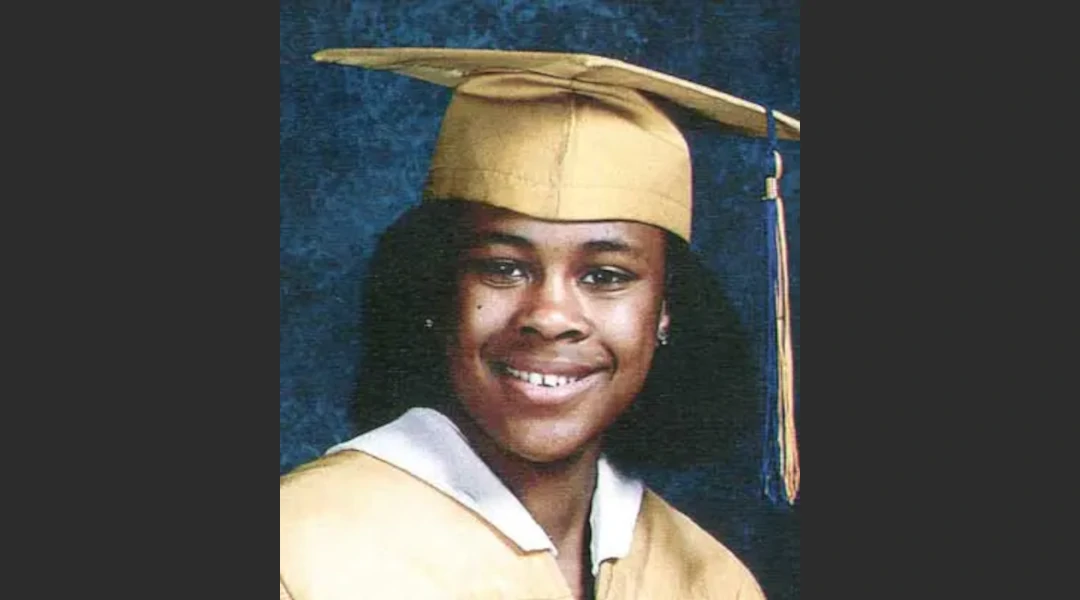
Yasmin Acree Goes Missing in Chicago Illinois
Yasmin Rayon Acree was a 15-year-old high school student living on the West Side of Chicago, Illinois, when she disappeared on January 15, 2008. Her case quickly became one of the city’s most troubling missing-person investigations because she vanished from her own home under circumstances that appeared suspicious from the beginning.
Yasmin was described as approximately 5 feet, 1 inch tall and weighing about 125 pounds. She had brown eyes, sandy brown hair, and normally wore eyeglasses because she had difficulty seeing clearly without them. Those glasses were left behind after she disappeared, along with the other belongings she would likely have needed if she had planned to leave home for an extended period.
She was a freshman at Austin Polytechnical Academy and was described as intelligent, active, and involved in activities at the North Lawndale YMCA. Members of her family said she did not have an established pattern of running away. They believed something had happened to her inside or near the residence where she lived.
The discovery of damaged locks near the basement made the family even more certain that Yasmin had not simply walked away.
Yasmin’s Life Before Her Disappearance
Yasmin’s childhood had included periods of instability and hardship. She and her older brother spent time in the foster care system before they were adopted by Rose Mae Starnes, an aunt by marriage, in 2006.
By January 2008, Yasmin was living with Rose and other family members in a residence in the 4800 block of West Congress Parkway. The street was later renamed Ida B. Wells Drive.
Yasmin attended school, spent time at the YMCA, and was reportedly preparing to begin a new job. Her family described her as an honor student, although some accounts indicated that her grades had begun to decline after she entered high school.
Like many teenagers, Yasmin experienced conflicts and emotional challenges. However, none of those circumstances proved that she intended to disappear. Her relatives remained firm in their belief that she would not have abandoned her glasses, clothing, school responsibilities, and family without making contact.
Her past difficulties later became part of the public discussion surrounding the case, but her family argued that investigators placed too much emphasis on the possibility that she had run away and not enough on the evidence suggesting someone had entered the house.
The Final Day Yasmin Was Seen
Yasmin was last known to be at home on January 15, 2008.
She had reportedly gone to the North Lawndale YMCA earlier that day and then returned to the family residence. After coming home, she spent time in the basement doing laundry.
Her bedroom was also located in the basement. At some point that evening, Yasmin was believed to have gone to bed.
There were no publicly reported arguments, emergency calls, or confirmed sightings showing that she left the home voluntarily. No witness has been publicly identified as seeing her walk away from the building, enter a vehicle, or meet someone outside.
By the following morning, Yasmin was gone.
The discovery that she was missing was alarming because her room and possessions did not suggest that she had prepared for a trip. Her eyeglasses remained inside the home, despite the fact that she reportedly needed them to see properly.
Even more disturbing was the condition of the locks near the basement.
Signs of a Possible Break-In
Family members reported that locks protecting the basement area had been cut or damaged.
Two locks on an exterior fence and a lock connected to the basement entrance were reportedly broken. Because Yasmin slept in the basement, her relatives believed the damage indicated that someone had forced their way into the property and reached the area near her bedroom.
This evidence became the central reason the family rejected the idea that Yasmin had simply run away.
A teenager planning to leave home would not ordinarily need to cut locks from the outside. The damaged locks suggested the possible presence of another person, although investigators never publicly established exactly when the damage occurred or who caused it.
Yasmin’s bedroom reportedly did not appear to have been searched or heavily disturbed. There was no publicly announced discovery of blood, signs of a struggle, or a message explaining where she had gone.
The absence of obvious violence did not eliminate the possibility of an abduction. A person familiar with Yasmin or the building might have approached her without immediately causing a struggle. Someone could also have threatened, deceived, or forced her to leave quietly.
The damaged locks should have made the residence a potential crime scene. Instead, the early response became one of the most controversial aspects of the case.
The Initial Runaway Classification
Chicago police initially treated Yasmin’s disappearance as a possible runaway case.
That classification had serious consequences. When an adult or teenager is believed to have left voluntarily, the initial police response may be less intensive than the response to a suspected kidnapping or home invasion.
Yasmin’s family immediately disagreed with the runaway theory. They repeatedly pointed to the damaged locks, the glasses left inside, and the lack of preparation for leaving.
Relatives said officers did not immediately secure and thoroughly process the basement as a possible crime scene. The broken lock was reportedly not collected until several days later.
That delay may have reduced the value of any fingerprints, trace evidence, tool marks, or other material that could have been present. Family members, neighbors, police officers, or others may have entered the area before it was properly examined.
The first hours after a disappearance are often the most important. Witnesses may still remember what they saw, surveillance recordings may still exist, and physical evidence may remain undisturbed.
In Yasmin’s case, her family believed the early assumption that she had run away caused investigators to lose valuable time.
Evidence That Was Not Immediately Collected
According to later reports, the damaged lock was left at the residence rather than being immediately taken into evidence.
The basement entrance was also not promptly processed for fingerprints in the way the family expected after reporting signs of forced entry.
This failure became a major point of criticism. A broken lock could potentially contain fingerprints, skin cells, fibers, tool marks, or other evidence connecting someone to the property.
Even if no useful evidence had ultimately been found, collecting and preserving the lock immediately would have protected the integrity of the investigation.
Instead, the delay raised questions that could never be fully answered. It became impossible to know whether evidence had been contaminated, removed, or destroyed during the first several days.
Yasmin’s family later filed a formal complaint concerning the police response.
Police Acknowledge Mistakes
The Chicago Police Department’s Internal Affairs Division later reviewed the handling of Yasmin’s case.
In 2009, the department acknowledged that misconduct had occurred during the initial investigation. Police officials admitted that important evidence was not handled properly and that the response did not meet expected standards.
This admission confirmed that the family’s concerns were not simply based on grief or frustration. Serious investigative errors had occurred during the most critical stage of the case.
The acknowledgment did not solve the disappearance. It could not restore lost time or recreate the original condition of the basement.
However, it changed how the case was publicly understood. Yasmin was no longer viewed merely as a teenager who might have chosen to leave. Her disappearance became associated with a possible forced entry and a police investigation that had failed to fully examine that possibility at the beginning.
The family continued demanding that the case receive greater attention and resources.
A Family Fighting for Yasmin
Rose Mae Starnes became one of the strongest voices advocating for Yasmin.
She insisted that Yasmin had been taken and repeatedly challenged the police department’s early conclusions. She participated in news interviews, community events, vigils, and public appeals for information.
Other relatives, including Reverend Ira Acree, also worked to keep Yasmin’s name before the public. They distributed posters, organized gatherings, and called for investigators to reconsider the evidence.
The family offered and promoted rewards for information. The amount increased as the years passed, reflecting their determination to find someone who knew what happened.
They believed a person in the neighborhood, school community, apartment building, or Yasmin’s social circle might have seen or heard something important.
Even a detail that seemed minor could have mattered. A suspicious vehicle, an unfamiliar person near the home, a conversation Yasmin had with someone, or an unusual sound during the night might have helped investigators reconstruct her final hours.
Despite repeated appeals, no public tip produced a confirmed explanation.
Questions About the Apartment Building
Yasmin did not live in complete isolation. Other people lived in or had access to the building.
One person who later received significant public attention was Jimmie Terrell Smith. He reportedly lived with his father in an upstairs apartment in the same building.
Smith had a criminal history and had previously served time in prison for attempted murder. He was later accused of sexually assaulting several females, including teenagers.
Yasmin had reportedly written about Smith in her diary. The meaning of those entries remains unclear, but they suggested that she knew who he was or had at least paid attention to him.
The fact that Smith lived in the same building made him important to public discussions of the case. He may have had knowledge of the layout, the basement, the family’s routines, or Yasmin’s movements.
However, proximity and criminal history alone do not prove involvement.
Statements Attributed to Jimmie Terrell Smith
While incarcerated on unrelated charges, Smith reportedly made statements suggesting that he knew what happened to Yasmin.
Some accounts described his comments as a confession, but the publicly available information does not establish that he provided a verified account supported by physical evidence.
He also reportedly made broad claims about involvement in other crimes. Such statements can be difficult to evaluate, particularly when a person is speaking from jail, seeking attention, attempting to manipulate investigators, or exaggerating criminal conduct.
Authorities did not charge Smith in connection with Yasmin’s disappearance.
No publicly disclosed DNA, fingerprint, surveillance recording, eyewitness account, or recovered property has conclusively tied him to the case.
Nevertheless, his statements, criminal history, and presence in the building made him one of the most discussed individuals associated with Yasmin’s disappearance.
Whether he possessed genuine knowledge or made false claims remains unresolved.
Questions About Yasmin’s Diary
The references to Smith in Yasmin’s diary raised additional questions about her personal relationships.
A teenager’s diary can include private thoughts, crushes, fears, arguments, hopes, and observations that may not reflect actual events. The fact that Yasmin wrote about someone does not necessarily mean she had a close or secret relationship with that person.
Investigators would have needed to examine the context of the entries, including when they were written, how Smith was described, and whether Yasmin appeared afraid, interested, angry, or concerned.
Public reports have not released the full contents of the diary.
As a result, the significance of the entries remains uncertain. They may have been important, or they may have reflected ordinary teenage attention toward someone living nearby.
The diary did not provide a confirmed answer about who entered the basement or what happened after Yasmin went to bed.
The Possibility of an Abduction
The evidence reported by the family strongly supported consideration of an abduction.
Yasmin disappeared from a basement bedroom. Locks near the area were damaged. Her glasses remained inside. She did not take the belongings expected for a planned departure.
If she was abducted, the person responsible may have known the building or understood how to enter without attracting attention. The individual may have been someone Yasmin recognized and trusted.
A stranger could also have entered, but such a person would have faced the risk of being seen by residents or neighbors.
An abductor might have forced Yasmin through the basement entrance and into a waiting vehicle. Another possibility is that she left the building with someone she knew and was harmed afterward.
There is no publicly confirmed evidence proving which route she took or whether a vehicle was involved.
No reliable witness has publicly reported seeing Yasmin after she vanished from the house.
The Possibility That Yasmin Left Voluntarily
Investigators initially considered the possibility that Yasmin had run away.
Teenagers sometimes leave home because of family conflict, school pressure, relationships, fear, or a desire for independence. Some leave without money or adequate planning.
Yasmin had experienced difficulties in her childhood and may have faced challenges at home. Those facts gave police a possible reason to consider voluntary departure.
However, several details weakened that theory.
Her family said she had no known history of running away. Her glasses were left behind. There was no confirmed plan, packed bag, transportation arrangement, or message to a friend.
The damaged locks were also difficult to explain under a runaway theory. If Yasmin left through the basement herself, it remains unclear why exterior locks would have been cut.
No financial, employment, school, identification, or medical records have publicly demonstrated that she began a new life elsewhere.
The longer she remained missing without contact, the less likely an ordinary runaway explanation appeared.
The Lack of Verified Sightings
No confirmed sighting of Yasmin has been publicly reported after January 15, 2008.
Missing-person cases often generate tips from people who believe they saw the missing individual. These reports can come from other cities, states, transportation centers, shelters, stores, or public events.
Most sightings are difficult to confirm. People may resemble one another, memories may be inaccurate, and surveillance footage may no longer be available by the time police receive a report.
In Yasmin’s case, no later sighting provided proof that she survived beyond the night she disappeared.
She did not contact friends, relatives, teachers, or authorities. There was no publicly reported use of her identity, school records, bank information, or official documents.
The complete silence added to the fear that she had been harmed shortly after vanishing.
Community Vigils and Public Pressure
Yasmin’s relatives and community leaders organized vigils to mark the anniversaries of her disappearance.
These events served several purposes. They honored Yasmin, supported her family, renewed public attention, and reminded anyone with information that the case remained open.
Clergy members and neighborhood advocates joined the family in demanding a stronger investigation. They argued that the disappearance of a Black teenage girl from Chicago’s West Side had not received the urgency or media attention it deserved.
The case became part of a broader discussion about how missing children are classified and how assumptions about race, neighborhood, family history, or teenage behavior can influence police responses.
When a missing child is quickly labeled a runaway, investigators may fail to recognize evidence of trafficking, abuse, abduction, or homicide.
Yasmin’s family believed that such assumptions shaped the early response to her case.
The Death of Yasmin’s Adoptive Mother
Rose Mae Starnes died in 2014 without learning what happened to Yasmin.
Her death added another layer of sorrow to the case. For years, Rose had publicly pleaded for help, challenged investigators, and maintained that Yasmin had not left voluntarily.
The stress of uncertainty affected the entire family. Each anniversary passed without a confirmed answer, arrest, recovery, or reunion.
After Rose’s death, other relatives continued the search. They remained determined to prevent Yasmin’s case from fading from public memory.
Her siblings, cousins, and community supporters carried forward the same central demand: a complete investigation and an honest explanation of what happened inside the home.
The Importance of Age Progression
As Yasmin remained missing, the National Center for Missing and Exploited Children created age-progressed images showing how she might appear as an adult.
Age progression can help the public recognize someone whose appearance may have changed significantly over time. A missing teenager may gain or lose weight, change hairstyles, use a different name, or look very different decades later.
These images are particularly useful when there is a possibility that a person survived and is living under another identity.
However, no age progression can perfectly predict how someone will look. The images are estimates based on family photographs, facial structure, and the normal aging process.
For Yasmin’s family, the images also represented the years that had been taken from them. They could only imagine how she might look as an adult because they had not watched her grow older.
Evidence That May Still Exist
Even though the initial investigation was mishandled, some evidence may still be available for review.
Police records, witness statements, photographs, dispatch reports, interviews, and evidence logs could contain overlooked details. Improved technology may allow investigators to reexamine physical evidence that was collected.
DNA testing has advanced significantly since 2008. Small amounts of biological material that once produced no useful result may now be suitable for analysis.
Investigators could also review telephone records, past addresses, prison communications, criminal files, and connections among people who lived near Yasmin.
A renewed investigation might identify contradictions in earlier statements or locate witnesses who were unwilling to speak at the time.
Someone who feared retaliation in 2008 may feel safer now. Relationships change, loyalties weaken, and people sometimes reveal information years later.
No Arrest and No Resolution
No one has been charged with abducting or killing Yasmin Acree.
No remains have been publicly identified as hers. No physical evidence has established that she died inside the home or elsewhere.
Smith remains associated with the case in public reporting, but authorities have not proven his involvement.
The family’s abduction theory is supported by suspicious circumstances, especially the damaged locks and abandoned glasses. However, investigators have not publicly reconstructed the disappearance with certainty.
The case therefore remains open to several possibilities, including abduction, homicide, trafficking, voluntary departure followed by harm, or another event not yet understood.
The lack of a body or confirmed crime scene has made prosecution impossible.
A Case Defined by Lost Time
The disappearance of Yasmin Rayon Acree is remembered not only because a child vanished, but because the early investigation failed to protect crucial opportunities.
The damaged lock should have been collected immediately. The basement should have been treated as a possible crime scene. Witnesses should have been questioned with the urgency of a potential abduction.
Instead, Yasmin was initially classified as a runaway.
By the time the seriousness of the situation was more fully recognized, evidence may have been lost and memories may have changed.
Police later admitted that mistakes were made, but an admission could not undo them.
The family has spent years wondering whether a proper response on January 16, 2008, might have revealed where Yasmin went and who was responsible.
Yasmin Has Not Been Forgotten
Yasmin would now be an adult, but her family continues to remember her as the 15-year-old girl who disappeared from a basement bedroom.
Her case remains listed by missing-person organizations, and age-progressed images continue to circulate.
She is remembered by relatives, community activists, clergy members, journalists, and people who study unresolved disappearances.
Her story has also become a warning about the dangers of prematurely labeling missing teenagers as runaways. Every missing child deserves a careful investigation based on evidence rather than assumptions.
The damaged locks, the abandoned eyeglasses, and the absence of any confirmed contact make Yasmin’s disappearance difficult to dismiss as a voluntary decision.
Someone may still know what happened inside or near the Chicago residence on January 15, 2008.
Until that person speaks or new evidence is discovered, the disappearance of Yasmin Rayon Acree will remain an unresolved mystery and a painful reminder of how investigative mistakes can shape a case for generations.
The Search for the Truth Continues
The central facts of the case remain deeply troubling.
Yasmin returned home, completed ordinary activities, and went to the basement where she slept. By the next morning, she had vanished. Locks near the basement had been damaged, yet the home was not immediately treated as the scene of a possible abduction.
Her belongings remained behind. Her glasses remained behind. No confirmed witness saw her leave.
Police later acknowledged failures in the original investigation, but no one was charged and Yasmin was never found.
Her family continued searching through years of disappointment, public appeals, vigils, and unanswered questions.
The truth may depend on a surviving witness, a person who heard a confession, an overlooked record, or evidence that can now be tested with newer technology.
For Yasmin’s relatives, any answer would end years of uncertainty. Until then, they continue waiting to learn what happened to the 15-year-old girl who disappeared from her Chicago home on January 15, 2008.
Discover more from City Towner
Subscribe to get the latest posts sent to your email.