Earl Ray Williams Stabbed to Death in Holdenville Oklahoma
The murder of Earl Ray Williams remains one of the most disturbing unresolved homicide cases connected to Holdenville and Hughes County, Oklahoma. Williams was a 44 year old rancher whose body was discovered on July 9, 2004, beneath a sheet in Gene Adams Park. Investigators found evidence suggesting that the violence began at or near his home before his body ended up in the nearby park.
Although the case is frequently listed as occurring in Holdenville, some reports identify the more specific community of Stuart, Oklahoma. Both locations are in Hughes County, and the investigation has long been associated with authorities in the Holdenville area. Regardless of the exact municipal boundary used in later case listings, the central facts remain the same. Williams suffered a fatal stab wound, blood was found around his residence, and someone covered his body before leaving him in the park.
No suspect has been publicly charged, no confirmed motive has been announced, and the weapon used to kill Williams has not been publicly identified. Years after the homicide, investigators continued asking for information from anyone who knew what happened during his final hours.
Earl Ray Williams and His Life in Oklahoma
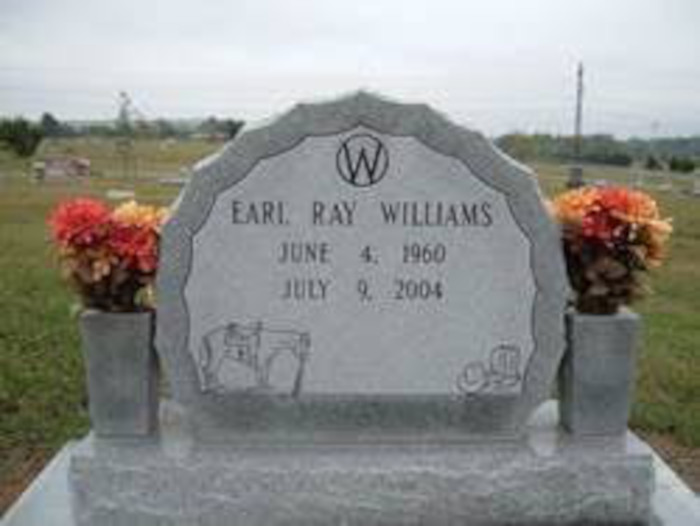
Earl Ray Williams was born on June 4, 1960. He lived in Hughes County and worked as a rancher. Public information about his personal life is limited, which has made it difficult to construct a detailed picture of his daily routine, relationships, or possible conflicts before his death.
Williams lived close to Gene Adams Park. Some descriptions indicate that his residence was directly across the street or only a short distance from the location where his body was discovered. This proximity became an important part of the investigation because blood evidence appeared to connect his home to the park.
At 44 years old, Williams was still relatively young and actively involved in his work. There was no public indication that he had been missing for an extended period before his body was found. The discovery appears to have occurred soon after the fatal confrontation.
Because investigators did not release extensive personal information, it remains unclear whether Williams had recently experienced financial problems, family disputes, business disagreements, threats, or conflicts related to ranching. Any of those possibilities could have been considered during the investigation, but no verified motive was publicly established.
The Discovery in Gene Adams Park
At approximately 10:00 a.m. on July 9, 2004, a woman walking through Gene Adams Park noticed what appeared to be a person lying beneath a sheet. She contacted authorities, and responding officers confirmed that the man was dead.
The victim was identified as Earl Ray Williams.
The fact that the body had been covered immediately suggested that another person had been present after Williams was wounded or killed. A sheet does not accidentally place itself over a body. Someone had apparently taken the time to conceal him, shield him from view, or cover him for another reason.
The location was especially notable because Williams lived nearby. His body had not been transported to an isolated rural road, abandoned building, remote field, or distant county. Instead, it was left close to his home in a public park where discovery was likely.
The choice of location may have been made quickly. The person responsible might have wanted to move Williams away from the residence without traveling far. It is also possible that Williams reached the park after being injured and that another person later covered him.
Investigators were left to determine whether Williams walked, staggered, crawled, was dragged, or was carried to the place where he was found.
Early Confusion About the Cause of Death
Initial reports did not immediately establish exactly how Williams had died. Early information suggested that the injury might have been caused by either a gunshot or a knife.
A later medical examination determined that Williams died from a stab wound. His death was officially classified as a homicide.
The uncertainty during the first hours of the investigation was understandable. A body covered by a sheet in an outdoor location can present challenges, particularly before the medical examiner conducts a full examination.
Once the fatal stab wound was confirmed, investigators knew they were dealing with a violent confrontation involving close physical contact. Unlike many shootings, a stabbing generally requires the attacker to be within arm’s reach of the victim.
That fact raised questions about the relationship between Williams and his killer. The attacker may have been someone he knew, someone he allowed into his home, or someone who approached him closely enough to engage in a struggle.
However, a close range attack does not automatically prove a personal relationship. A stranger committing a robbery or entering the home for another purpose could also have used a knife.
Evidence of a Struggle at the Residence
The most important publicly reported evidence was found at Williams’s home.
Investigators reportedly discovered blood inside the residence, on the front porch, and across the grass leading away from the property. This pattern suggested that a violent struggle began inside or immediately around the house.
The blood outside indicated movement after Williams was injured. He may have attempted to escape, seek help, or pursue the attacker. Another possibility is that the killer moved him after the stabbing.
If Williams remained alive while traveling from the house toward the park, he may have collapsed from blood loss before reaching help. If he died inside the residence, someone would have needed to move his body outside.
The publicly available evidence does not resolve which of these possibilities occurred.
The reported blood trail may have allowed investigators to reconstruct part of the route between the residence and the park. However, no complete reconstruction was publicly released.
It is also unclear whether all of the blood belonged to Williams. During a physical struggle involving a knife, the attacker could have suffered cuts to the hands or arms. If investigators recovered blood from an unknown person, modern DNA analysis could potentially identify or eliminate suspects.
No public report confirms whether unidentified DNA was recovered.
The Significance of the Sheet
The sheet placed over Williams’s body is one of the case’s most unusual and potentially revealing details.
Covering a body can have several meanings. An offender may use a covering to prevent people from immediately recognizing that a body is present. The killer may also want to avoid looking directly at the victim.
In some homicide cases, covering the face or body is interpreted as a possible sign that the offender knew the victim and felt shame, grief, guilt, or discomfort. That interpretation is not always correct, and it cannot be assumed in Williams’s case without additional evidence.
The sheet could also have been used during the movement of the body. Someone might have wrapped Williams in it before dragging or carrying him from the residence. If so, the sheet may have contained fingerprints, hair, fibers, blood, skin cells, or other evidence.
One of the most important unanswered questions is where the sheet came from.
If it belonged to Williams, the killer may have taken it from inside his house. That would further support the conclusion that the offender spent time in the residence after the attack.
If the sheet came from another home, vehicle, or business, it could have provided investigators with a direct connection to the person responsible.
Authorities have never publicly explained whether the sheet was traced to a particular source.
Did Williams Reach the Park on His Own
The trail of blood raises the possibility that Williams remained conscious after he was stabbed.
He may have left his home in an attempt to escape the attacker. The park could have been the closest open area, or he may have been trying to reach a neighboring house, street, or public place where someone could see him.
A severe stab wound can produce rapid blood loss, weakness, confusion, and collapse. Williams may have traveled only a short distance before becoming physically unable to continue.
If he reached the park alive, the attacker may have followed him and covered him after he died. The killer may also have returned later to conceal the body.
Another possibility is that Williams was already dead or unconscious when he was moved. The blood on the porch and grass could have resulted from the body being dragged or carried across the property.
The condition of Williams’s clothing, the pattern of blood on the ground, and any drag marks would have helped investigators distinguish between these possibilities. Those details have not been publicly released.
The Possibility of a Personal Dispute
A personal dispute is one possible explanation for the murder.
Williams may have argued with a friend, relative, neighbor, employee, business associate, or romantic partner. The confrontation could have escalated unexpectedly, resulting in the use of a knife.
A person familiar with Williams might have known that he lived near the park and might have felt comfortable moving through the area without attracting attention. Someone who knew the layout of his house could also have entered without forcing a door or window.
The sheet covering the body could potentially support a personal connection, but it is not proof.
No public record identifies anyone who had recently threatened Williams. There is also no publicly confirmed evidence of a domestic dispute, longstanding feud, or confrontation related to money.
Without a disclosed suspect or motive, the personal dispute theory remains only one of several possibilities.
The Possibility of Robbery
Robbery may also have been considered by investigators.
Williams was a rancher, and people may have believed that he kept money, equipment, firearms, livestock records, or valuable property at his residence. Someone could have entered the home intending to steal and encountered Williams inside.
A struggle may have followed, leading to the fatal stabbing.
However, no public information confirms that anything was taken. Reports do not state whether drawers were opened, property was disturbed, a vehicle was missing, or valuable items disappeared.
There is also no confirmed report of forced entry.
If the attacker entered without breaking in, Williams may have known the person. It is equally possible that a door was unlocked or that the offender gained access through deception.
The absence of publicly reported theft makes robbery possible but unproven.
The Possibility of a Ranching or Business Conflict
Williams’s occupation as a rancher may have led investigators to examine business related disputes.
Ranching can involve land boundaries, livestock sales, equipment, debts, leases, employment disagreements, and financial arrangements. Conflicts connected to any of these matters could become serious.
Someone might have visited Williams to discuss money, property, cattle, or work. An argument could then have escalated.
There is no publicly available evidence establishing that his murder was connected to ranching. No business associate has been publicly named as a suspect, and no specific financial dispute has been disclosed.
The occupation remains relevant because it formed part of Williams’s daily life, but it should not be treated as the confirmed reason for his death.
What Neighbors May Have Seen or Heard
Because Williams lived near a public park and other residences, investigators likely questioned people in the surrounding area.
A violent struggle inside a home may create noise. Neighbors might have heard shouting, furniture moving, glass breaking, a door slamming, or a vehicle leaving.
Someone may have noticed a person walking away from the property, carrying something, cleaning blood, or behaving unusually near the park.
The time of the attack is not clearly established in public reports. It may have occurred during the night or early morning when fewer people were outside.
The body was discovered at approximately 10:00 a.m., but Williams could have been killed hours earlier.
Even a minor observation could have been important. A vehicle parked in an unusual location, a porch light turning on, a barking dog, or a person crossing the street could have helped investigators narrow the timeline.
No decisive eyewitness account has been made public.
The Search for the Murder Weapon
Authorities have never publicly identified the knife or sharp object used to kill Williams.
The weapon may have come from inside his house, which could indicate that the killing was unplanned. During an argument, the offender may have grabbed a kitchen knife or another available object.
If the attacker brought the weapon, the confrontation may have involved preparation or an expectation of violence.
The killer could have taken the weapon from the scene, discarded it nearby, hidden it in the park, or thrown it from a vehicle.
Searches of the residence, yard, park, dumpsters, roads, and drainage areas may have been conducted, but no detailed account has been released.
Finding the weapon could have provided fingerprints, blood, DNA, or information about where it was purchased or normally kept.
The absence of a publicly identified murder weapon remains a major obstacle in the case.
The OSBI Investigation
The Oklahoma State Bureau of Investigation assisted local authorities with the homicide investigation.
OSBI agents have experience handling major crimes, processing scenes, interviewing witnesses, and coordinating forensic testing. Their involvement showed that the case was treated as a serious and complex murder investigation.
Investigators examined Williams’s residence and the area where his body was found. They also worked to determine his recent activities, contacts, and possible conflicts.
Despite those efforts, no arrest was announced.
Several years later, authorities offered a $2,000 reward for information leading to the arrest and conviction of the person responsible. The reward suggested that investigators believed someone in the community might have knowledge that had never been shared.
In a small community, rumors and private conversations can contain valuable details. People may know who visited a victim, who argued with him, or who behaved strangely after the crime.
Fear, loyalty, family relationships, or concern about becoming involved may prevent witnesses from speaking.
Why the Case May Have Been Difficult to Solve
Several factors may have made the Williams investigation especially challenging.
There was no publicly identified eyewitness to the stabbing. The body was found outside, creating the possibility that weather, foot traffic, and environmental exposure damaged evidence.
The attack may have involved someone Williams knew, which can make the case difficult if the person had a legitimate reason to be near the house.
If the killer cleaned the residence or removed the weapon, investigators may have been left with limited physical evidence.
The movement of Williams from the home toward the park also created more than one scene. Evidence could have been scattered inside the house, across the porch, through the yard, and in the park.
Authorities also had to determine whether the park was the location of death or only the location where the body was left.
The case received less national attention than many other unsolved murders. Limited publicity can reduce the number of tips and make it easier for witnesses to remain silent.
Questions That Remain Unanswered
Many important questions remain unresolved.
Who was the last person known to visit Earl Ray Williams?
Was there evidence of forced entry at his residence?
Did he know his attacker?
What caused the confrontation?
Did Williams walk from the house to the park, or was he moved?
Who placed the sheet over his body?
Where did the sheet come from?
Was anything stolen?
Was the murder weapon recovered?
Did investigators find fingerprints, footwear impressions, DNA, or blood belonging to another person?
Did neighbors see a suspicious vehicle?
Did Williams tell anyone that he was afraid, threatened, or involved in a dispute?
The confidential investigative file may contain partial answers, but the public has never received a complete account.
The Holdenville and Stuart Location Question
The case is often described as the murder of Earl Ray Williams in Holdenville, Oklahoma. Other accounts place the crime more specifically in Stuart, Oklahoma, near Gene Adams Park.
Holdenville and Stuart are separate communities within Hughes County. Holdenville is the county seat and the better known location, which may explain why some databases and later summaries use it as the case location.
The most accurate broad description is that Williams was murdered in the Holdenville area of Hughes County, with the body discovered in Gene Adams Park near his residence.
The location difference does not change the central facts of the homicide. Williams was stabbed at or near his home and found under a sheet in a nearby park on July 9, 2004.
The Continuing Search for Justice
Earl Ray Williams’s murder remains unresolved because the available evidence has not publicly identified the person responsible.
The blood found inside and outside his home indicates that there was a violent confrontation. The stab wound proves that his death was not natural or accidental. The sheet over his body shows that someone took action after he was wounded or killed.
Those facts create a clear outline of the crime, but they do not reveal the killer’s name.
The answer may depend on someone who heard a confession, noticed unexplained injuries, saw blood on clothing, observed a suspicious vehicle, or knew about a dispute involving Williams.
Advances in DNA testing may also create new opportunities if investigators preserved the sheet, clothing, blood samples, or other physical evidence. Material that could not produce a usable profile in 2004 may be more valuable today.
Even after many years, unsolved homicide cases can be resolved when new technology is applied or when a witness finally decides to speak.
Remembering Earl Ray Williams
The passage of time can reduce a murder victim to a name, date, and brief summary. Earl Ray Williams was more than the subject of an unsolved case.
He was a 44 year old man with family, work, responsibilities, and a life connected to the communities of Hughes County. His violent death left relatives and friends without a complete explanation.
On July 9, 2004, his body was discovered covered by a sheet in Gene Adams Park. Evidence suggested that he had struggled with someone at his home and suffered a fatal stab wound.
Someone knew why the confrontation occurred. Someone knew how Williams reached the park. Someone placed the sheet over his body.
Until that person is identified and held accountable, the murder of Earl Ray Williams will remain one of the unresolved homicide cases associated with Holdenville, Stuart, and Hughes County, Oklahoma.
Discover more from City Towner
Subscribe to get the latest posts sent to your email.