Baton Rouge Food Scene
Baton Rouge, Louisiana has a food scene that feels deeply rooted, proudly local, and constantly alive. It is a city where food is more than a casual pleasure. It is part of family life, community identity, weekend plans, and the way people celebrate everything from football games to holidays to ordinary Sunday afternoons. The city sits in a part of the state where culinary traditions run deep, so eating in Baton Rouge is not only about finding something tasty. It is about stepping into a culture that values bold flavor, generosity, and dishes that carry history in every bite.
One of the most interesting things about Baton Rouge is how naturally it balances tradition and variety. It has the Louisiana classics people expect, but it also has a wider food personality that reflects the capital city’s size, its college presence, and its position as a place where different communities overlap. You can feel the strong influence of Creole and Cajun cooking, but you can also find Southern comfort food, smokehouse barbecue, soul food, seafood houses, steak spots, po boy counters, bakeries, and newer restaurants that bring modern energy to older flavors. The result is a city that respects its food traditions without feeling frozen in them.
Baton Rouge also benefits from having a dining culture that is not overly formal in spirit, even when the food is outstanding. In many parts of the city, great meals are served in settings that still feel warm, relaxed, and personal. A lot of the best Baton Rouge food carries a sense of welcome. Portions can be generous, seasoning is taken seriously, and meals often feel designed to satisfy both appetite and emotion. The city understands that food should comfort people, excite them, and remind them where they are.
That local identity matters because Baton Rouge is not trying to imitate another Southern city. It has its own style. New Orleans may be the better known food destination in Louisiana, but Baton Rouge has built a strong culinary character of its own. Its food scene often feels a little more grounded, a little more everyday, and in some ways more intimate. It is a city where locals know what they like, where neighborhood favorites matter, and where certain dishes are loved not because they are trendy but because they have been delivering real flavor for generations.
The Influence of Louisiana Tradition
To understand Baton Rouge food, you first have to understand the larger Louisiana influence that runs through it. This is a city shaped by a long history of French, Spanish, African, Caribbean, and Southern influences. That combination helps explain why Baton Rouge food can feel rich, layered, and deeply seasoned. It also explains why local cooking places so much emphasis on the kind of dishes that take time, technique, and attention.
Louisiana food culture is built around depth of flavor. It values gravies, sauces, roux based dishes, smoked meats, seafood, rice, slow cooked vegetables, spicy sausage, and bold seasoning. Baton Rouge takes all of that and gives it its own rhythm. The city is close enough to Cajun influence to embrace hearty, rustic dishes, but it also reflects the polished, soulful side of Creole cooking. Then you add the influence of home kitchens, Black Southern food traditions, and the energy of a modern state capital, and you get a scene that feels both traditional and lively.
That is part of what makes Baton Rouge such an enjoyable food city. The local cuisine is not built around one note. It has heat, richness, smokiness, acidity, sweetness, crunch, tenderness, and comfort all working together. The food often feels like it was designed to be remembered. Meals are not supposed to be bland or forgettable. They are supposed to have personality.
People in Baton Rouge also take pride in ingredients that are strongly tied to the region. Crawfish, shrimp, crab, oysters, catfish, and sausage all play major roles. Rice is central. So are peppers, onions, celery, garlic, butter, hot sauce, and seasoning blends that give dishes depth without flattening them. These ingredients are not used randomly. They reflect a local understanding that good food should taste like a place.
The Soul of the Baton Rouge Food Scene
The food scene in Baton Rouge has a strong emotional core. This is not a city that treats food only as performance or presentation. People care deeply about whether food tastes right, whether the seasoning is balanced, whether the seafood is fresh, whether the gumbo has body, and whether the plate leaves you satisfied. That practicality gives Baton Rouge dining a lot of authenticity.
One of the city’s biggest strengths is that it supports both classic institutions and casual everyday spots. Baton Rouge has the kind of restaurants that locals grow up with, bring family to, and recommend without hesitation. Those places matter because they help define the city’s palate. At the same time, Baton Rouge has newer chefs and newer concepts that understand how to work within Louisiana tradition while still creating fresh experiences.
The college presence also adds something important. Louisiana State University brings a large student population, game day energy, and a demand for food that is craveable, social, and satisfying. That influence helps keep the dining scene vibrant. It adds burger spots, late night eats, brunch culture, wings, bars with serious food programs, and fast casual places that still understand local flavor. So while Baton Rouge absolutely respects its culinary heritage, it also knows how to feed a younger crowd that wants convenience without losing taste.
That mix of old and new is part of what keeps the food scene balanced. The city can serve a perfect bowl of gumbo in one part of town and a modern Southern brunch in another. It can deliver white tablecloth seafood dining one night and a quick plate lunch the next day that tastes just as memorable in a different way. Baton Rouge food culture is broad enough to handle both.
Popular Foods That Define Baton Rouge
When people think about popular foods from Baton Rouge, certain dishes rise to the top immediately. Gumbo is one of the clearest examples. In Baton Rouge, gumbo is not just a menu item. It is part of the region’s identity. Whether it leans more seafood heavy, chicken and sausage driven, or darker and richer in the Cajun style, gumbo represents the kind of depth and patience that defines Louisiana cooking. A good gumbo feels complete. It has body, flavor, warmth, and the kind of complexity that makes every spoonful matter.
Jambalaya is another major staple. This dish captures the city’s love of rice based cooking that carries smoke, spice, and savory richness all at once. In Baton Rouge, jambalaya can be a centerpiece dish at gatherings, catered events, family functions, and everyday meals. It is filling, flavorful, and built to satisfy a crowd. That practicality is part of its power. It tastes great, but it also feels like food made for people to share.
Etouffee holds a special place too. Crawfish etouffee in particular is one of those dishes that feels deeply tied to southern Louisiana. Rich, silky, and full of seasoned seafood flavor, it reflects Baton Rouge’s closeness to both river and Gulf traditions. It is comforting food, but it is also elegant in the way good sauce based Louisiana dishes can be elegant without losing heart.
Red beans and rice remains another essential favorite. Simple on the surface but deeply satisfying when done well, it reflects the kind of food culture that values flavor over flash. Baton Rouge loves dishes that can feed families, hold tradition, and still taste incredible. Red beans and rice does all of that. The same goes for dirty rice, which gives the city another classic rice dish with bold seasoning and old school appeal.
Po boys are also central to the Baton Rouge food identity. Whether filled with fried shrimp, roast beef, oysters, catfish, or sausage, a good po boy speaks directly to Louisiana’s love of sandwiches that do not hold back. The bread matters, the filling matters, and the texture matters. A great po boy should be messy in the right way, overstuffed in the right way, and worth every bite.
The Importance of Seafood
Seafood is at the heart of Baton Rouge dining. Even though Baton Rouge is inland compared with some coastal Louisiana communities, seafood still defines a huge part of the city’s menu culture. Shrimp, crawfish, oysters, crab, catfish, and alligator show up in many forms and across many price points. You can find seafood folded into elegant dishes, fried into baskets, stuffed into po boys, smothered in sauces, or served in boils that bring people together.
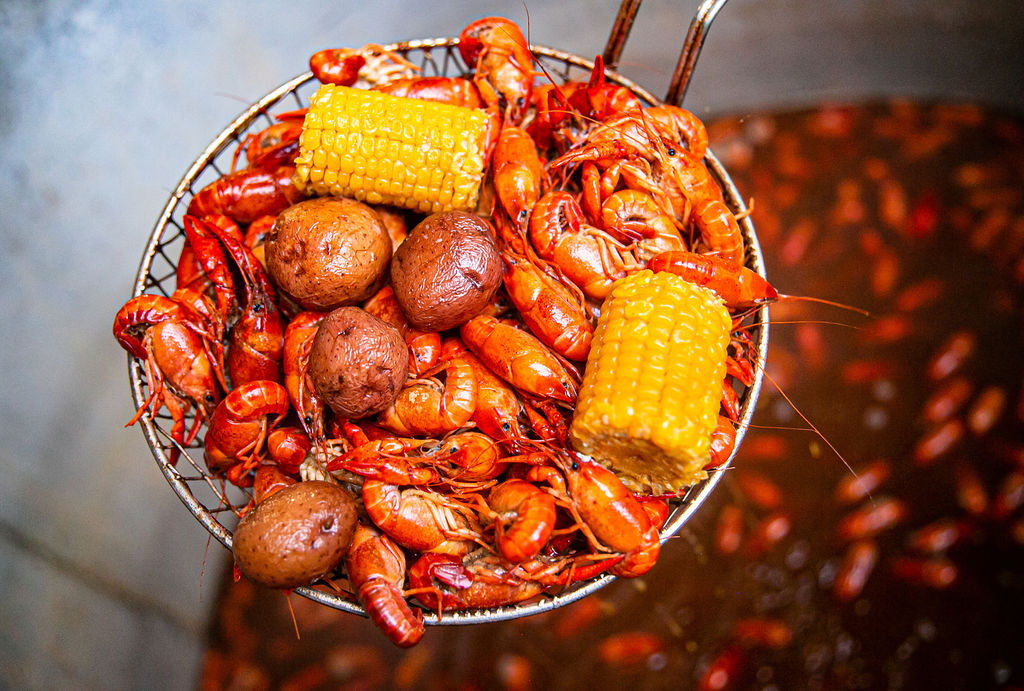
Crawfish is especially important. During crawfish season, the city comes alive with crawfish culture. Boiled crawfish becomes more than a meal. It becomes an event. People gather around tables covered in newspaper, peel tails, suck heads, laugh, talk, and turn the meal into a social ritual. Baton Rouge loves this style of eating because it is interactive, messy, flavorful, and rooted in community.
Fried catfish also remains a major local favorite. It represents the Southern side of Baton Rouge food as much as the Louisiana side. Crispy on the outside, tender inside, and often served with hush puppies, fries, coleslaw, or white bread, catfish is one of those dishes that feels familiar and satisfying in a timeless way.
Oysters matter too, especially charbroiled oysters and fried oyster dishes. Baton Rouge understands how to turn oysters into something deeply savory and rich. Shrimp and grits, shrimp po boys, seafood platters, crab cakes, and stuffed seafood dishes all help round out the city’s strong relationship with the water.
Cajun and Creole Favorites
Baton Rouge sits in a food region where the line between Cajun and Creole influence can feel fluid in everyday dining. The city embraces both, and many local meals reflect elements of each. This gives the food scene a lot of range.
Cajun dishes tend to bring rustic energy, darker roux, smoky sausage, hearty portions, and bolder spice. Baton Rouge clearly loves that side of Louisiana cooking. Boudin, smoked sausage, cracklins, and heavily seasoned stews all fit naturally into the city’s palate. Dishes that taste like they belong at a family gathering or outdoor cookout do especially well here.
Creole influence adds another layer, especially through sauces, seafood preparation, and more polished forms of Louisiana comfort food. Shrimp Creole, seafood pasta, stuffed fish, and rich tomato based dishes all speak to that side of the city’s food personality. Baton Rouge is strong when it lets those two traditions meet. That is when the food feels most complete.
This dual influence also gives the city a strong brunch and lunch culture. Dishes like shrimp and grits, crab omelets, biscuits with sausage gravy, chicken and waffles with a Louisiana twist, and grits loaded with seafood all fit naturally into Baton Rouge’s flavor profile. The city does not separate everyday comfort from regional identity. It blends them.
Soul Food and Southern Comfort
Another major part of Baton Rouge’s food scene is its soul food and Southern comfort tradition. This side of the city’s dining culture is essential because it reflects the Black culinary influence that helped shape Louisiana food at every level. You cannot tell the story of Baton Rouge food honestly without talking about fried chicken, collard greens, candied yams, cornbread, smothered pork chops, mac and cheese, oxtails, gravy, and slow cooked vegetables.
These dishes matter because they represent more than flavor. They represent memory, family, care, and resilience. In Baton Rouge, good soul food often feels deeply personal. It tastes like home cooking even when served in a restaurant. That is part of the emotional strength of the city’s food culture. A lot of local meals do not only feed hunger. They feed memory.
Plate lunches are a great example of this practical comfort. Baton Rouge, like much of Louisiana, loves the plate lunch tradition. Rice, gravy, beans, fried meat, stewed meat, seasoned sides, and a filling portion all come together in a format that is affordable, satisfying, and rooted in everyday life. These meals may not always get written up as luxury dining, but they are essential to understanding what the city actually eats and loves.
Baton Rouge and the Power of the Plate Lunch
If there is one food tradition that says a lot about Baton Rouge as a city, it is the plate lunch. The plate lunch reflects the city’s values in food form. It is practical, generous, flavorful, and rooted in working life. Baton Rouge is a state capital and university city, but it also has a deep connection to regular people who want real food that satisfies.
A great plate lunch can include smothered chicken, red beans and sausage, fried pork chops, baked chicken, hamburger steak, or a daily special that changes with the day. It often comes with rice and gravy, vegetables, bread, and maybe an extra side if you are really hungry. That type of meal is beloved because it feels complete. It has protein, seasoning, comfort, and a sense of routine.
The plate lunch also shows how Baton Rouge food is often about balance. It is not always fancy, but it is rarely careless. The city wants food that tastes like somebody cared about it. Even a humble lunch should feel cooked, seasoned, and portioned with intention.
Sweet Treats and Local Indulgences
Baton Rouge does not stop at savory food. The city also knows how to satisfy a sweet tooth. Bread pudding, pralines, pecan pie, beignets, king cake during carnival season, and rich bakery desserts all play a role in the local food landscape. The sweet side of Baton Rouge reflects the same general philosophy as the savory side. Flavor should be generous. Texture should matter. Desserts should feel worth it.
King cake in particular becomes part of the seasonal rhythm. Though closely associated with Louisiana as a whole, it remains a beloved feature of Baton Rouge food culture. During carnival season, bakeries and restaurants embrace the tradition with classic and creative versions alike. That spirit of celebration through food is a big part of the city’s identity.
Bread pudding with whiskey sauce is another classic that fits Baton Rouge perfectly. It is rich, old fashioned, and deeply Southern. It feels like dessert with memory attached to it. Baton Rouge does well with those kinds of sweets, the kind that feel both indulgent and familiar.
Modern Dining and New Energy
Even with all its deep tradition, Baton Rouge is not trapped in the past. The city has modern restaurants, chef driven concepts, creative brunch menus, stylish cocktail spots, and fusion minded kitchens that still know how to respect local flavor. This matters because it keeps the food scene moving.
A younger generation of diners in Baton Rouge still wants Louisiana flavor, but often in spaces that feel updated, social, and visually polished. The city has responded by creating places where oysters can be served in trendier settings, where Southern ingredients can appear in more modern dishes, and where cocktails, ambiance, and presentation matter a little more without sacrificing flavor.
That new energy works best when it stays connected to Baton Rouge’s roots. The city’s strongest modern restaurants are often the ones that know tradition is not a burden. It is an advantage. They use local ingredients, local dishes, and local memories as the foundation, then build something fresh on top of them.
Why Baton Rouge Food Stands Out
What makes Baton Rouge stand out as a food city is not that it tries to be the flashiest destination in the South. It stands out because it feels real. The food has depth, the traditions have staying power, and the local favorites matter to the people who live there. That kind of authenticity is hard to fake.
Baton Rouge also stands out because it offers range without losing identity. It can give you gumbo, jambalaya, and crawfish etouffee, but it can also give you barbecue, soul food, steak, brunch, burgers, and contemporary Southern dining. All of those things can exist together because the city’s food personality is broad enough to hold them.
Most of all, Baton Rouge stands out because its food feels tied to life. Meals are social here. They are tied to church, football, campus life, holidays, family gatherings, and everyday routines. Food is not just consumed. It is lived with. That is what gives Baton Rouge its strength as a food city.
Popular Foods From Baton Rouge
If someone asked what foods best represent Baton Rouge, Louisiana, a strong list would include gumbo, jambalaya, crawfish, etouffee, red beans and rice, po boys, fried catfish, boudin, oysters, shrimp and grits, dirty rice, plate lunches, soul food sides, king cake, and bread pudding. These foods capture the city’s personality because they show its blend of Louisiana tradition, Southern comfort, seafood culture, and community centered eating.
They are popular because they satisfy more than one craving at a time. They are flavorful, filling, and connected to a larger sense of place. When people eat these dishes in Baton Rouge, they are not only eating something local. They are eating something that reflects the city’s cultural memory.
That is the beauty of Baton Rouge food. It does not feel disconnected from where it comes from. The city’s best dishes still taste like Baton Rouge itself.
Discover more from City Towner
Subscribe to get the latest posts sent to your email.