
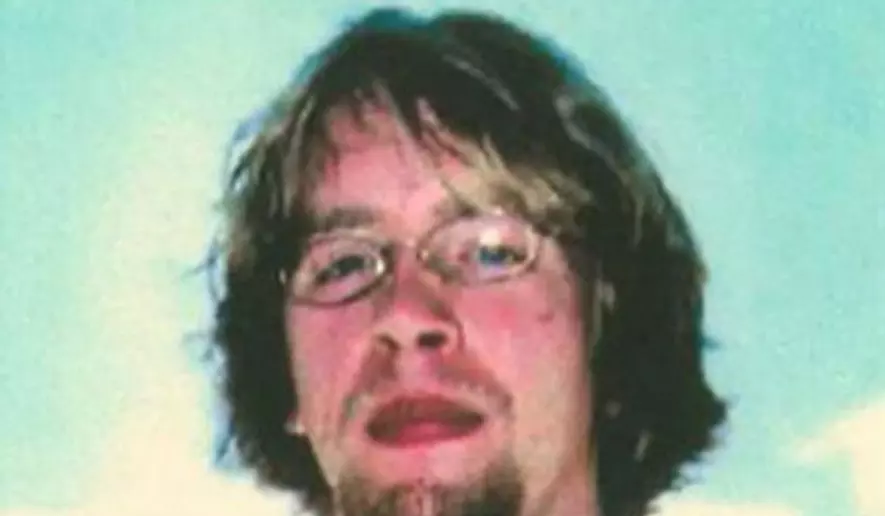
Clinton Devon Nelson Goes Missing in Princeton Louisiana
The disappearance of Clinton Devon Nelson remains one of those cases that lingers because it feels as if the truth is just out of reach. On September 1, 2006, in Princeton, Louisiana, a 21 year old man vanished after what should have been an ordinary night. There was no clear ending, no public explanation that tied every detail together, and no moment that gave his family the peace that comes from understanding what happened. Instead, there was silence, confusion, and a trail that seemed to end far too quickly.
Cases like this are especially haunting because they begin with everyday circumstances. A young man spends time with other people, moves through a familiar area, and then somehow disappears. There is no easy way to process that kind of event because it forces loved ones to live in a place between hope and dread. At first, people may believe the missing person will show up soon, call home, or explain that there has been some misunderstanding. But when the hours turn into days and the days stretch into years, the absence takes on a different shape. It becomes a permanent wound.
For Clinton Devon Nelson’s family, the disappearance was not a mystery in the abstract. It was personal and immediate. A son was gone. A voice went quiet. A normal line of communication stopped without warning. Everything that came after was shaped by the fact that there was no answer strong enough to explain why a young man at the beginning of adulthood could disappear and leave so little behind.
A Young Man Starting a New Chapter
Before his name became associated with an unsolved case, Clinton Devon Nelson was a young man building a life. He had moved from Spearfish, South Dakota, to Louisiana, where he was living with his father. That move suggested a new beginning and a chance to establish himself in a different environment. He was still young enough to be shaping his future, but old enough to be taking on adult responsibilities and making decisions about where he wanted his life to go.
That context matters because disappearances are often shaped by the kind of life a person was living before they vanished. In Clinton’s case, the public picture that emerged was not one of someone cutting ties or preparing to vanish on purpose. Instead, it appeared he was engaged with family, adjusting to a new place, and focused on moving forward. That made the circumstances of his disappearance feel even more unsettling.
There were also concerns about his health. Reports connected to the case noted that he had a heart condition and needed medication. That detail raised the level of urgency from the very beginning. Whenever a missing person may have a medical issue, every passing hour becomes more serious. For family members, that reality can turn fear into panic very quickly. It adds another layer of helplessness to an already painful situation.
The Events of September 1, 2006
Clinton was last seen on September 1, 2006, in Princeton, Louisiana. He had been at a party or gathering near Ward Lane and Highway 80. At some point during the evening, he left the gathering, and that moment became the final confirmed point in his known timeline. After that, the trail went cold.
There is something deeply unsettling about a disappearance that begins in such a common setting. A party, a road, a late evening, a few conversations, and then nothing. The contrast between the ordinary nature of the night and the extraordinary nature of what followed is part of what gives the case its lasting power. Nothing about the setting suggests a story that should end in mystery, yet that is exactly what happened.
One of the details that has continued to stand out over the years is the reported phone contact that night. According to accounts that circulated in connection with the case, Clinton spoke to his father and said he saw police lights and believed the police were chasing him. That statement has drawn attention because it sounds urgent and alarming, but it has never produced a clear public answer. It suggests fear, confusion, or some kind of rapidly changing situation, yet it does not explain what happened in the minutes that followed.
That final reported comment hangs over the case because it feels important without being complete. It offers a glimpse into Clinton’s state of mind in his final known moments, but it does not provide the full picture. It leaves open far too many possibilities, and those possibilities have kept the case emotionally charged for years.
The Long Silence After He Vanished
After September 1, 2006, Clinton Devon Nelson was never heard from again. His phone activity reportedly stopped. He did not return home. He did not collect the life he had been living. The ordinary rhythm of his world simply stopped, and that kind of silence is often one of the most devastating parts of a disappearance.
Silence creates its own torment. Families wait for a call that never comes. They replay the last known details again and again, hoping some small fact will suddenly reveal a larger truth. They wonder whether a loved one is hurt, hiding, lost, or already gone. In the earliest stages of a disappearance, every possibility still exists, and that uncertainty can be crushing.
For Clinton’s family, the silence would have been especially painful because it did not match the image they had of him. When someone disappears in a way that feels completely out of character, the lack of contact becomes a warning sign rather than an ambiguous absence. It suggests that something happened to interrupt the person’s life in a sudden and serious way.
As time passed, the silence became evidence of its own kind. Not evidence that clearly solved the case, but evidence that whatever happened on September 1, 2006, was not a small misunderstanding or a temporary decision to stay away. The longer he remained missing, the more the disappearance took on a darker weight.
Princeton, Louisiana and the Geography of Mystery
The setting of the case is an important part of its story. Princeton, Louisiana, is not the kind of place people imagine when they think about large scale mysteries that capture wide attention. It is a smaller community, and that can shape both the way a disappearance unfolds and the way it is remembered. In a smaller place, distances may feel manageable, familiar faces are often expected, and it can seem unbelievable that someone could vanish so completely.
Yet sometimes a quieter setting makes a case even more unnerving. A disappearance in a place that feels navigable and known raises difficult questions. How could someone leave a gathering and simply be gone? Who might have seen something? What part of the route home might hold the missing answer? A smaller setting can intensify the feeling that the truth should be close, even when it stays hidden.
Princeton became permanently linked to the last known chapter of Clinton’s life. The roads, the gathering place, and the surrounding area all became part of a map of uncertainty. For investigators and loved ones, the geography of that night mattered because it represented the final known space in which the answer might still have been found. But as time passed, that landscape offered no simple resolution.
Family Grief and the Search for Answers
Every disappearance affects a family differently, but there are certain emotional patterns that appear again and again. Shock comes first. Then fear. Then a painful form of endurance that develops when the missing person does not come home. The family must move from immediate reaction into a longer struggle that includes searching, speaking publicly, keeping attention on the case, and trying to maintain hope without being consumed by despair.
For Clinton Devon Nelson’s loved ones, that burden has stretched across years. The passage of time does not erase the pain of a disappearance. In many ways, it can deepen it. When no clear answer emerges, the family is left in a suspended state. They cannot move through grief in the normal way because there is no full conclusion to grieve. Instead, they live with questions.
That kind of emotional reality is often hard for outsiders to fully understand. The world may move on, but the family does not. Anniversaries come and go. Birthdays pass. The person remains missing not only in the legal sense, but in the emotional sense. They are absent from family gatherings, absent from future milestones, and absent from all the ordinary moments that make up a life.
The search for answers is not just about evidence or investigation. It is also about dignity. Families want the missing person remembered as a human being, not reduced to a file or a rumor. They want the public to understand that someone mattered, someone was loved, and someone deserves to be found or fully accounted for. In that sense, the search becomes a way of protecting the person’s humanity.
The Trouble With Unfinished Timelines
One of the hardest things about the disappearance of Clinton Devon Nelson is that the timeline feels both specific and incomplete. There is a date. There is a location. There are reported final movements. There is even a final statement that sounds dramatic and urgent. Yet for all those details, the story still does not fully connect. The known pieces do not close the gap.
That is what makes unfinished timelines so difficult in missing person cases. The public can identify the last known moment, but not what came next. That narrow space between the final sighting and total disappearance becomes the most important part of the story, and often the least understood. It is the place where explanation should exist, but instead there is only speculation.
In Clinton’s case, the unfinished nature of the timeline has allowed the case to remain open in the minds of those who hear about it. It does not feel solved because it is not solved. It does not feel settled because the central question has never been answered. What happened after he left that gathering in Princeton remains the missing piece that defines the entire case.
The lack of closure also affects how the case is remembered publicly. It is not remembered as a tragedy with a clear narrative arc. It is remembered as a disappearance suspended in uncertainty. That uncertainty is part of why it continues to resonate. People are naturally drawn to unanswered questions, especially when those questions involve a young life interrupted without explanation.
Why Cases Like This Continue to Matter
The disappearance of Clinton Devon Nelson continues to matter because unsolved cases do not lose their human weight with time. Even if public attention fades, the impact remains. Families still wake up without answers. Communities still carry the memory of the disappearance. The original fear does not vanish just because years have passed.
There is also a broader reason these cases matter. They remind people that disappearances are not only dramatic stories from movies or headlines from major cities. They happen in ordinary communities, to ordinary families, under circumstances that often begin in completely normal ways. That reality can be frightening, but it is also important. It forces attention onto the fragility of daily life and the limits of certainty.
Cases like Clinton’s also matter because they challenge institutions and communities to keep looking, keep asking, and keep refusing to let silence become the final answer. Even when a case grows older, the need for truth does not expire. The passage of time may complicate an investigation, but it does not reduce the value of the person who was lost.
Remembering Clinton Devon Nelson
At the heart of this story is not simply a disappearance, but a person. Clinton Devon Nelson was more than the mystery that followed his name. He was a son, a young man, and a person whose life was still unfolding. That is the most important thing to remember when discussing any unsolved case. The human being comes first.
When a disappearance remains unresolved, memory becomes a form of resistance against forgetting. To remember Clinton is to refuse the idea that his story should fade into the background. It is to acknowledge that the unanswered questions still matter because the life at the center of those questions mattered.
His disappearance on September 1, 2006, in Princeton, Louisiana, remains painful precisely because it has never been fully explained. That absence of explanation has shaped every year since. It has left a family waiting, a community wondering, and a case suspended between fact and mystery.
Until there is a clearer answer, the story of Clinton Devon Nelson will remain an open wound in the lives of those who knew and loved him. It is a story of a young man who went missing in the course of an ordinary night and never came back. It is a story of silence that arrived too suddenly and stayed too long. And it is a reminder that some of the most haunting tragedies are not the ones with too many details, but the ones with too few.
Discover more from City Towner
Subscribe to get the latest posts sent to your email.