
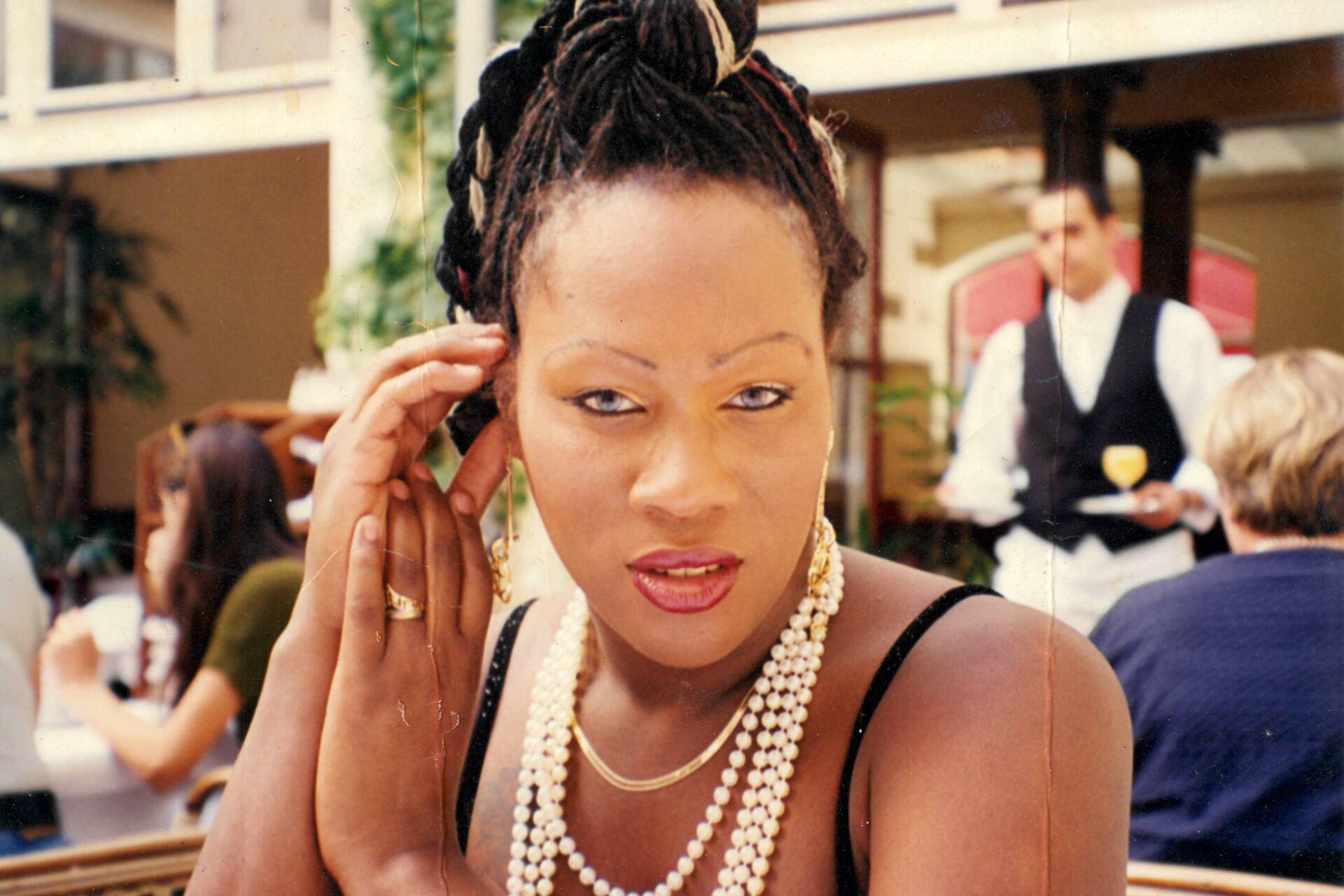
Rita Hester Murder Inspired Transgender Day in Boston Massachusetts
The murder of Rita Hester on November 28, 1998, in Boston, Massachusetts, remains one of the most painful and historically significant unsolved killings connected to transgender history in the United States. Rita was a Black transgender woman who was found murdered inside her apartment in the Allston neighborhood of Boston. She was only days away from her 35th birthday when her life was violently taken.
Rita’s death was devastating to her family, friends, and community. She was remembered as vibrant, social, stylish, and full of personality. She was not a distant figure or a name on a cold case list. She was a real woman with loved ones, memories, friendships, and a place in Boston’s nightlife and music scene. Her murder left people grieving not only because she was killed, but because of how little respect and urgency many felt she received afterward.
Her death later became a turning point in transgender advocacy. The grief and anger surrounding Rita’s murder helped inspire what became known as Transgender Day of Remembrance, an annual observance honoring transgender and gender-nonconforming people killed by violence. Because of that legacy, Rita’s name continues to be spoken decades after her death. Her case remains both a personal tragedy and a symbol of the violence faced by transgender people, especially Black transgender women.
Who Was Rita Hester?
Rita Hester was a Black transgender woman who lived in Boston, Massachusetts. She was born in Hartford, Connecticut, and later made her life in Boston, where she became known in social circles around Allston and the city’s nightlife scene. Friends remembered her as someone who enjoyed being around people, dressing with style, and bringing energy into a room.
Rita was described as glamorous, outgoing, and loved. She had a presence that people remembered. She was the kind of person who made an impression, not because of tragedy, but because of her personality. She was part of a community that included friends, musicians, nightlife regulars, and people who knew her as a woman with confidence and warmth.
Too often, victims of violence are remembered mostly through the details of their deaths. Rita deserves to be remembered through the fullness of her life. She had dreams, humor, friendships, family ties, and ordinary routines. She laughed, went out, connected with people, and lived as herself in a world that often treated transgender women with disrespect, danger, or dismissal.
Her identity mattered, but it was not the only thing that defined her. Rita was not just a transgender woman who was killed. She was Rita Hester. She was someone’s daughter, someone’s friend, and someone whose absence created a wound that has never fully closed.
The Night of November 28, 1998
On November 28, 1998, Rita Hester was found murdered inside her apartment in Allston, Boston, Massachusetts. Reports have said she was stabbed around 20 times. The violence of the attack suggested a deeply personal and brutal crime. She was attacked inside the place where she should have been safe.
An apartment is supposed to be private shelter. It is where people rest, prepare for the next day, and live their daily lives away from the outside world. For Rita, that space became the scene of her death. The fact that she was killed inside her own home made the crime especially disturbing.
Rita was just two days away from her 35th birthday. That detail gives the case an added sadness. Birthdays are supposed to mark life, memory, and possibility. Instead, Rita’s loved ones were forced to face grief at a moment when they should have been celebrating her. November 28, 1998, became a date of loss, shock, and unanswered questions.
The person who killed Rita has never been convicted. That lack of justice has left her case unresolved for more than two decades. For those who loved her, the silence around who did it and why remains a source of pain.
The Crime Scene in Allston
Rita’s murder happened in Allston, a Boston neighborhood known for its mix of students, renters, artists, musicians, nightlife, and working people. It is a neighborhood with movement, noise, and social energy. Rita was part of that world, and her presence in it mattered to the people who knew her.
Her apartment became the center of the investigation after she was found dead. A violent stabbing inside a residence often raises urgent questions. Did the killer know the victim? Was there forced entry? Was the attack motivated by hate, anger, robbery, a personal conflict, or something else? These questions are often central to homicide investigations, but in Rita’s case, the answers have never been made fully clear to the public.
Because the case remains unsolved, the apartment stands in memory as the place where Rita’s life was taken, but not as the place where justice was completed. That is one of the most painful realities of unsolved murders. A crime scene is processed, evidence is collected, reports are written, and the public may move on. But the family and community are left waiting for accountability that may never come.
A Brutal Killing With No Conviction
Rita’s murder was brutal. Reports that she was stabbed repeatedly speak to the violence of the attack. A stabbing is often close-range violence. It requires physical proximity and force. That makes the crime feel especially personal and terrifying.
Yet despite the severity of the killing, no one has been convicted. The case remains open and unresolved. The absence of a conviction does not mean Rita’s life mattered less. It means the legal system has not delivered the answer her loved ones deserve.
Unsolved murders create a unique kind of suffering. Families and friends are forced to live with grief and uncertainty at the same time. They know their loved one was killed, but they do not know who will be held responsible. They may wonder whether the killer is still alive, still nearby, or still hiding behind years of silence. They may wonder what evidence exists and what was missed in the early days of the investigation.
For Rita’s community, the lack of justice also carried a larger meaning. Many transgender people already felt ignored by institutions that were supposed to protect them. When a transgender woman was murdered and the case remained unsolved, it reinforced fears that violence against transgender people was not treated with enough urgency.
Media Coverage and the Fight for Respect
One of the most painful parts of Rita’s case was the way she was treated in some coverage after her death. Friends and advocates were angered by disrespectful language, misgendering, and the failure to honor Rita as the woman she was. That mattered deeply because language is not a small issue when someone has died. The way a victim is named and described shapes how the public understands their life.
Misgendering a transgender murder victim can feel like a second harm. It strips dignity from someone who already lost everything. It tells the community that even in death, transgender people may not be respected. For Rita’s friends and supporters, that was unacceptable.
The response to the coverage became part of the activism that followed her murder. People were not only demanding justice for Rita. They were demanding respect. They wanted the public, the media, and institutions to recognize her identity, humanity, and dignity.
That fight continues today in many cases involving transgender victims. Families, friends, and advocates still have to correct names, pronouns, and narratives when transgender people are harmed. Rita’s case helped expose how damaging careless or biased reporting could be.
The Vigil for Rita Hester
After Rita’s murder, hundreds of people gathered for a candlelight vigil. That gathering was a powerful expression of grief, anger, and solidarity. People came together because Rita mattered. They came together because they wanted the city to see that her death would not be ignored.
A vigil is more than a memorial. It is also a public statement. It says that the victim had a community. It says that the person killed was loved. It says that violence will not be hidden in silence. For Rita, the vigil became one of the most important moments after her death because it showed how deeply people cared and how strongly they wanted accountability.
The gathering also helped connect Rita’s murder to a broader pattern of violence against transgender people. Her death was not viewed by advocates as an isolated tragedy. It was seen as part of a larger crisis in which transgender people, especially transgender women of color, were being harmed, killed, and forgotten.
That public grief became the foundation for something larger. Rita’s name would become tied to a movement of remembrance that reached far beyond Boston.
The Birth of Transgender Day of Remembrance
Rita Hester’s murder helped inspire Transgender Day of Remembrance, first observed in 1999. The observance was created to honor transgender people killed by violence and to make sure their names were not forgotten. Rita’s death became one of the central sparks for the movement because people were outraged that her murder had not received the attention, dignity, and justice it deserved.
Transgender Day of Remembrance is now observed every year on November 20. Around the world, people gather to read names, hold candles, share stories, and remember transgender and gender-nonconforming people whose lives were taken. Many of those names belong to Black transgender women and other transgender women of color, who continue to face high levels of violence.
The day is both a memorial and a call to action. It asks people not only to mourn, but to recognize the conditions that make transgender people vulnerable. Discrimination, poverty, housing instability, employment barriers, racism, anti-trans hate, and lack of institutional support all contribute to danger. Rita’s case became part of that larger conversation.
Her murder did not create the violence transgender people faced, but the response to her death helped create a public space to name that violence. Because of Rita, countless people around the world have learned about the lives of transgender victims who might otherwise have been ignored.
Why Rita’s Case Still Matters
Rita’s case still matters because her murder remains unsolved. Justice has not been completed. Someone took her life, and no conviction has answered for that act. Time does not erase the need for accountability. A case from November 28, 1998, still matters because Rita still matters.
Her case also matters because it shows the intersection of racism, transphobia, gender-based violence, and media bias. Rita was a Black transgender woman at a time when transgender people received far less public understanding and protection than they do now. Even today, transgender women of color face disproportionate violence and often struggle to receive fair attention when they are harmed.
Rita’s story is also a reminder that visibility alone is not enough. Being seen does not guarantee safety. Being remembered does not replace justice. Transgender Day of Remembrance helps honor victims, but the deeper goal is a world where fewer names have to be added each year.
Her unsolved murder challenges society to ask hard questions. Were enough resources used? Were witnesses protected and encouraged to speak? Was her case treated with the seriousness it deserved? Were biases allowed to shape how people responded? These questions matter because they apply not only to Rita, but to many other victims whose cases remain unresolved.
The Human Cost of Violence Against Transgender Women
Violence against transgender women is not only a statistic. It is a collection of individual lives cut short. Rita’s murder shows the human cost behind those numbers. She had people who loved her. She had a birthday approaching. She had a home, friends, memories, and a future that was stolen.
When a transgender woman is murdered, the loss ripples through communities that are already carrying fear. Friends may wonder if they are next. Families may question whether the world saw their loved one clearly. Advocates may feel the exhaustion of having to fight for dignity again and again.
For Black transgender women, the danger is especially serious. They often face overlapping forms of discrimination that can limit access to safe housing, stable employment, respectful health care, and police protection. When violence happens, their stories may not receive the same sustained attention as other victims. Rita’s death exposed that reality and helped push people to confront it.
Her life and death remind us that transgender people deserve not only remembrance after tragedy, but safety, respect, and support while they are alive.
Remembering Rita as More Than a Symbol
Because Rita’s murder helped inspire Transgender Day of Remembrance, she is often discussed as a symbol. But it is important not to let symbolism erase the person. Rita was not born to become a memorial. She was a woman who lived, laughed, dressed up, went out, made friends, and occupied space in the world with her own personality.
She should be remembered as a full human being. Her legacy is important, but her humanity came first. She had a life before November 28, 1998. She had people who knew her in ways the public never will. She had ordinary days and special nights. She had joy, struggle, confidence, and vulnerability.
When we remember Rita, we should remember both the woman and the movement her death helped inspire. The movement matters because it keeps names alive. But Rita’s name matters because she was a person, not because she became historically significant after being killed.
A Family and Community Still Waiting
Rita’s family and friends have waited for answers for decades. They deserve to know who killed her. They deserve to know why. They deserve to see her case treated with dignity and seriousness. The passing of time does not reduce that need.
Cold cases can still be solved. People who were once afraid may eventually come forward. Evidence can be reexamined. Investigators can revisit old interviews. New attention can bring new information. Even after many years, one tip can change the direction of a case.
For Rita, any person who knows something still has the power to help. Silence protects the killer. Truth honors the victim. If someone saw something, heard something, or knows who was involved, that information still matters.
The Lasting Legacy of Rita Hester
The murder of Rita Hester on November 28, 1998, in Boston, Massachusetts, remains a tragedy with a lasting legacy. Her life was violently taken, her case remains unsolved, and the pain of her loss continues. But her name also became part of a global act of remembrance that has helped honor thousands of transgender people lost to violence.
Rita’s story is painful because it reflects both personal loss and public injustice. She was killed inside her own apartment. She was disrespected in parts of the public conversation after her death. Her loved ones had to grieve while also fighting for her identity to be recognized. Yet from that grief came a movement that still calls people together every year.
Her murder should never be remembered only as history. It is an open call for justice. It is a reminder that transgender lives must be protected, respected, and valued. It is a reminder that Black transgender women deserve attention not only after death, but throughout life.
Rita Hester’s name continues to be spoken because she mattered. Her life mattered before she was killed, and her memory still matters now. Until her murder is solved, her story remains unfinished, but it has not been forgotten.
Discover more from City Towner
Subscribe to get the latest posts sent to your email.