James Chambers Shot and Killed While Sitting in Car in Lee County Florida
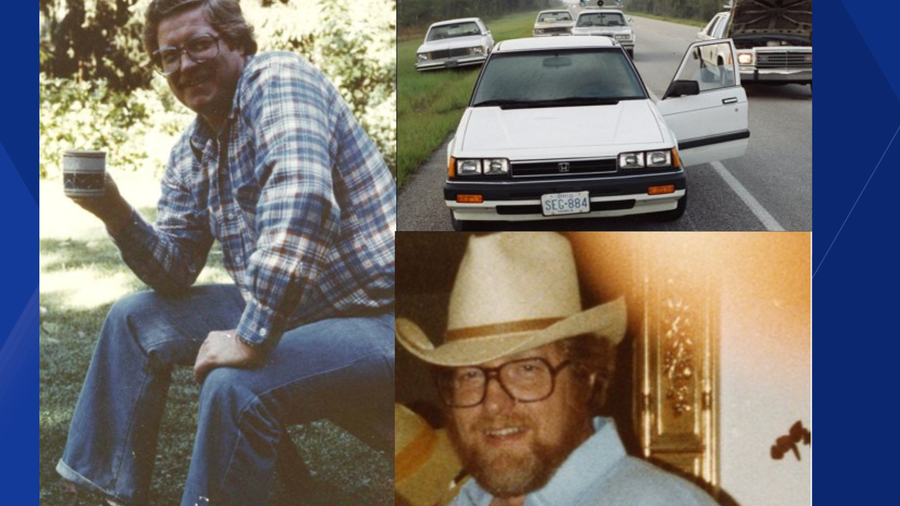
On August 11, 1984, the body of James Weston Chambers was discovered inside a white Honda Accord along northbound I-75 near Corkscrew Road in Lee County, Florida. Chambers was 49 years old, originally from Ohio, and had reportedly traveled to Southwest Florida while trying to begin a new chapter in his life. Instead, his trip ended in violence on the side of a highway, leaving investigators with a troubling murder case that has remained unsolved for decades.
The case stands out because of its location, the details surrounding the crime scene, and the unanswered questions about who would have wanted Chambers dead. He was not found inside a home, business, or secluded wooded area. He was found in his vehicle along a major interstate, a place where countless drivers passed through, yet no one has been publicly identified as the person responsible for taking his life.
Who Was James Weston Chambers?
James Weston Chambers was described as a former minister and a man who had recently come to Florida from Ohio. At 49 years old, he was old enough to have lived through several major chapters of life but still young enough to be starting over. Reports connected to the case have described him as someone looking for a fresh start, which makes the circumstances of his murder even more unsettling.
Chambers was not a long-time Lee County resident with deep local ties. He was someone passing through or newly arrived in the area, which may have complicated the investigation from the beginning. When a victim has only recently entered a community, detectives must work harder to reconstruct where they went, who they spoke to, and whether they crossed paths with someone dangerous by chance.
His background as a former minister adds another layer to the story. It suggests a man who had once been connected to faith, service, and community. Whether his past had anything to do with his death has never been publicly established, but it remains part of the human picture behind the cold case. Chambers was not just a name in a police file. He was a person with a past, a family, and a life that was violently cut short.
The Night Before the Murder
Before his body was found, Chambers was reportedly last seen on the night of August 10, 1984, at the Witch’s Brew, a lounge in North Naples. That detail has remained important because it gives investigators one of the last known places he visited while alive.
A lounge can create a complicated investigation. People come and go. Conversations happen quickly. Strangers may meet casually and never exchange full names. Someone could have noticed Chambers, followed him, or interacted with him without realizing they would later become part of a murder investigation.
After leaving North Naples, Chambers is believed to have traveled north on I-75. At some point before his body was discovered, his vehicle ended up stopped on the shoulder near Corkscrew Road in Lee County. Whether he pulled over voluntarily, was forced to stop, or believed he was being stopped by someone with authority remains one of the key mysteries of the case.
The Discovery on I-75
Around 5:30 a.m. on August 11, 1984, Chambers was found dead inside his white Honda Accord. The vehicle was parked on the shoulder of northbound I-75 near Corkscrew Road. The early morning discovery immediately raised questions because the location suggested the murder may have happened while Chambers was traveling alone at night.
Highway murders are especially difficult because the scene is not controlled. Vehicles move through constantly. Evidence can be disturbed by weather, passing traffic, and time. Witnesses may not realize what they saw until later, and even then, they may only remember fragments, such as a vehicle on the side of the road or another car nearby.
The placement of Chambers’ car on the shoulder suggested that he had stopped for some reason. A driver might stop because of car trouble, fatigue, confusion, or because another person signals them to pull over. In this case, investigators have considered the possibility that someone may have approached him after the car was stopped or may have caused him to stop in the first place.
How James Weston Chambers Was Killed
James Weston Chambers was shot multiple times at close range. The nature of the shooting suggested that the killer was near the vehicle when the attack happened. Reports have indicated that a large-caliber firearm, possibly a .38 or .357 Magnum, may have been used.
The close-range aspect of the killing is important. It points to an attack that was direct and personal in the physical sense, even if the motive was not personal. The shooter was close enough to fire into or near the vehicle, giving Chambers little chance to escape or defend himself.
One notable detail is that the driver’s window was reportedly partly rolled down. That fact has fueled speculation that Chambers may have lowered the window to speak with someone. If true, it raises several possibilities. He may have believed the person was harmless. He may have thought he was speaking with another motorist. He may have believed he had been pulled over by a law enforcement officer or someone pretending to be one.
The partial window detail remains haunting because it suggests a moment of trust or confusion right before the violence. Chambers may have been sitting in his car, trying to understand why he had been stopped or why someone had approached him, only to be met with gunfire.
The Missing Wallet and Possible Motive
Another major detail in the case involves Chambers’ wallet. It was reportedly removed from his pocket after the shooting and later found along I-75 within a few miles of the crime scene. That discovery has led to robbery being considered as a possible motive.
However, the wallet being discarded complicates the picture. If the killer wanted money, they may have taken what they wanted and thrown the wallet away while fleeing. But if robbery was staged, the missing wallet may have been used to make the crime look like a random theft. Without a known suspect, investigators have had to keep multiple possibilities open.
A robbery motive would suggest Chambers was targeted by someone looking for a quick opportunity. He may have been alone, unfamiliar with the area, and vulnerable on the side of the road. But the way he was shot multiple times at close range could also suggest panic, anger, or a desire to make sure he did not survive.
The Theory of a Fake Traffic Stop
One of the most disturbing theories in the murder of James Weston Chambers is that he may have been stopped by someone posing as law enforcement. This possibility comes partly from the highway location and the partially lowered driver’s window.
In 1984, a driver traveling late at night on I-75 might have pulled over if they saw flashing lights behind them. If Chambers believed he was being stopped by police, he may have complied without hesitation. Once on the shoulder, he may have rolled down his window expecting to speak to an officer.
If the killer impersonated law enforcement, the crime would have required planning or at least the ability to create that impression. It could have involved a vehicle with lights, a badge, a uniform, or simply enough authority in the moment to make Chambers stop. That theory is difficult to prove without witnesses, but it remains one of the more chilling possibilities in the case.
A fake traffic stop would also explain why Chambers might have stopped on the interstate rather than continuing to a safer, more populated location. It would mean he may have followed what he believed was a lawful command, only to be ambushed.
Why the Case Was Difficult To Solve
The murder of James Weston Chambers presented several challenges. The crime happened along a major highway, likely during late-night or early-morning hours. Chambers was from out of state and may not have had a large local network of friends or acquaintances who could help investigators trace his final movements.
The case also lacked an immediately obvious suspect. When a victim is killed by a spouse, business partner, neighbor, or known enemy, detectives can begin by examining close relationships. In Chambers’ case, the circumstances suggested he may have encountered a stranger or someone he had only recently met.
Time also worked against the investigation. In 1984, forensic technology was far more limited than it is today. DNA testing was not used in the same way it is now, surveillance cameras were not common, cell phone records did not exist, and license plate readers were not part of everyday law enforcement tools. Investigators had to rely heavily on witness statements, physical evidence, ballistics, timelines, and tips from the public.
As years passed, memories faded, witnesses moved away, and people who may have known something became harder to locate. Cold cases often depend on one person finally coming forward, a piece of evidence being retested, or a new lead connecting old information to a modern database.
A Case That Still Calls for Answers
The murder of James Weston Chambers remains a painful reminder that some families wait decades for justice. His death was not just a tragic incident from the past. It was a violent act that left behind unanswered questions about his final hours, the person who approached his car, and the reason his life was taken.
Someone may have seen something on I-75 near Corkscrew Road that morning. Someone may have noticed a suspicious vehicle, heard gunshots, saw Chambers at the Witch’s Brew, or later heard someone talk about the crime. Even a detail that seemed small at the time could matter years later.
Cold cases survive because investigators, families, and communities refuse to let them disappear. The passage of time can make a case harder, but it can also change circumstances. People who were once afraid to speak may no longer feel the same fear. Relationships change. Loyalties fade. Advances in forensic science can turn old evidence into new leads.
The Legacy of an Unsolved Murder
James Weston Chambers arrived in Florida looking ahead, but his life ended violently on August 11, 1984, in Lee County. His white Honda Accord on the shoulder of I-75 became the center of a homicide investigation that has lasted for decades.
His case remains one of those mysteries where the basic facts are known, but the most important answers are still missing. Who pulled up near him? Why did he stop? Did he know the killer? Was he targeted, robbed, or tricked into believing he was dealing with someone in authority? Those questions continue to define the case.
The murder of James Weston Chambers is not only a story about a man found dead on a Florida highway. It is a story about vulnerability, trust, and the danger of a brief encounter with the wrong person. Until the killer is identified, the case remains open, and Chambers’ name remains tied to one of Lee County’s unresolved homicides.
Discover more from City Towner
Subscribe to get the latest posts sent to your email.