
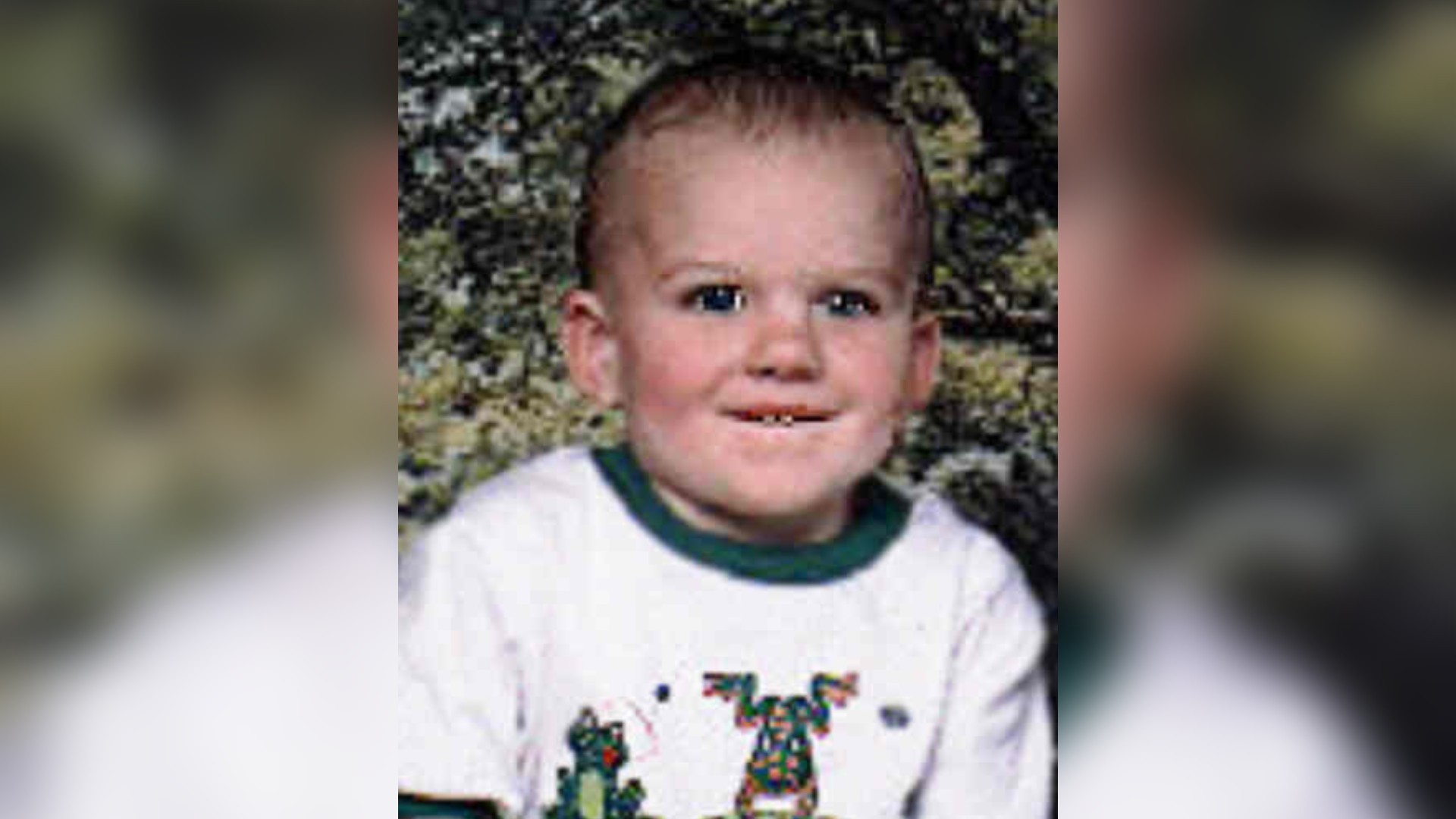
The Disappearance of Wesley Morgan in Clinton Louisiana
The disappearance of Wesley Dale Morgan remains one of the most haunting missing child cases in Louisiana. On May 15, 2001, what should have been a normal morning in Clinton, Louisiana, became the start of a mystery that would endure for years and leave a deep scar on a family and community. Wesley was only 2 years old when he vanished, an age so young that he was still in the earliest stage of childhood, still depending completely on the adults around him, and still living in a world that should have been defined by safety, innocence, and routine.
Cases involving very young children often carry a special emotional weight because of how fragile and defenseless the victims are. Wesley was not old enough to protect himself, explain where he was going, or understand danger in the way an older child might. That fact alone makes his disappearance especially painful to consider. When a toddler disappears, the fear hits with an intensity that is different from almost any other case. There is no assumption that the child may have deliberately left. There is no realistic hope that the child simply wandered off to start a new life or stayed away by choice. There is only urgency, confusion, and the overwhelming realization that something is very wrong.
The story of Wesley Dale Morgan has remained in public memory because it carries all the elements that make a case impossible to forget. A 2 year old child vanishes from a familiar home setting. There is no quick resolution. There is no clear ending. There is only the painful passage of time, a family left with unanswered questions, and a mystery that continues to stir heartbreak every time the case is remembered. Even after years have passed, the disappearance still feels immediate because the basic facts are so troubling and so difficult to accept.
Wesley Dale Morgan and the Short Life He Had Begun
Before his name became known through missing child posters and case summaries, Wesley Dale Morgan was a little boy at the beginning of life. He was a child with a home, a family, and the ordinary routines that shape the earliest years of childhood. At 2 years old, a child’s world is small in the best possible way. It is made up of caregivers, familiar rooms, a yard, toys, simple joys, and the sense that adults are always there to keep danger away. That is the world Wesley should have remained in.
The fact that he disappeared at such a young age is a big part of why the case continues to resonate so deeply. People can imagine what it means for a teenager or adult to go missing, but a toddler represents something even more vulnerable. Wesley had barely begun building memories. He had barely begun learning how to move through the world. Every future milestone that should have come after that day was placed in question in an instant. Birthdays, school years, friendships, growing independence, and the many small changes that mark a life all became frozen in uncertainty.
For his family, Wesley was never simply a missing child case. He was their little boy. That distinction matters because it is easy for public attention to focus only on the mystery and forget the very human loss at the center. Long before strangers read about his disappearance, his absence would have been felt as a crushing personal crisis. His family was not looking at a headline. They were looking at an empty space where a child should have been. They were dealing with fear in its most intimate form.
A missing toddler leaves behind a different kind of silence than almost any other tragedy. There are no explanations from the child, no independent trail to follow, and no confident understanding of what happened in those final moments before everything changed. The child is simply there one moment and gone the next. That sudden rupture is one of the most painful features of Wesley’s story.
The Morning of May 15, 2001
On May 15, 2001, Wesley disappeared from Clinton, Louisiana, a town in East Feliciana Parish. According to the case details that have remained central to the investigation, he was last seen in the morning hours near his home. It was not the setting of some dramatic public event or a dangerous journey far from familiar ground. It was the kind of ordinary home environment where a small child should have been safest. That is part of what makes the case so disturbing. The place where Wesley vanished was not supposed to be threatening. It was supposed to be the center of protection.
Disappearance cases often become more frightening when they begin in a location that feels normal and routine. A family home, a porch, a yard, or a quiet road can seem harmless until an event like this shatters that sense of comfort. In Wesley’s case, the normalcy of the setting gave way almost instantly to panic. The fact that such a young child could vanish from such a familiar place forced everyone around the case to confront a terrifying question. How can a toddler disappear so completely in what should have been one of the safest spaces in his life?
The early hours after a child goes missing are often the most important, and they are also the most emotionally chaotic. Adults search frantically. They call out the child’s name. They look in nearby spaces again and again, hoping the child somehow wandered only a short distance away. Law enforcement begins trying to reconstruct exactly when the child was last seen and who may have been nearby. Every minute carries enormous weight because the longer the child remains missing, the more dangerous the situation becomes.
For Wesley’s loved ones, that morning must have turned from ordinary to unbearable in an instant. There is no gentle transition in a case like this. One moment you are living normal life. The next you are facing a nightmare that changes your understanding of safety forever.
A Rural Setting and the Fear It Created
Clinton, Louisiana, is not a place that most people would immediately associate with a major missing child mystery, and that made Wesley’s disappearance even more unsettling. Rural and small town areas often carry an image of closeness, familiarity, and a slower pace of life. People may believe that everyone knows one another or that danger is somehow more distant there than in a larger city. But cases like Wesley’s expose the limits of that assumption. Harm, mystery, and fear are not limited to urban settings. They can erupt anywhere, including in places where people feel secure.
The rural nature of the area also likely contributed to the intensity of the search and the fear surrounding the case. Open land, wooded areas, fields, roads, and scattered properties can make an investigation especially difficult. A missing toddler in such a setting creates immediate concern because of how many hazards may exist. There is the fear of exposure, the possibility of an accident, the chance that the child wandered farther than expected, and the darker possibility that someone took the child.
That range of possibilities can be agonizing because each one suggests a different kind of danger. Families want clear answers, but in the earliest stage of an investigation, almost everything can feel uncertain. In a case involving a very young child, uncertainty becomes especially cruel because the imagination fills in terrifying gaps. Was he nearby and unable to call for help? Was he taken quickly? Did someone see something and remain silent? Those questions become part of the emotional burden carried by everyone close to the case.
A town like Clinton would not easily forget an event like this. When a very young child disappears from a community setting, the loss of innocence extends beyond the family. Neighbors feel it. Parents feel it. The local atmosphere changes because people suddenly realize that something unthinkable can happen in a place they once considered ordinary and safe.
The Search for a Child Who Never Came Home
The search for Wesley Dale Morgan became the most important and painful reality surrounding the case. Whenever a toddler goes missing, the response is fueled by urgency because every hour matters so much. Search efforts in such cases often involve law enforcement, community volunteers, family members, and public awareness efforts that attempt to gather any detail, no matter how small. The hope in those early stages is always that the child will be found quickly, safe, and alive.
But as hours become days and days become longer stretches of uncertainty, hope begins to change. It does not vanish, but it becomes more fragile and more painful. Families of missing children often describe life during that period as a state of emotional suspension. They cannot fully grieve because there is no confirmation of death. They cannot relax because the child has not returned. They are trapped between desperate hope and constant dread.
In Wesley’s case, that tension became part of the long term story. His disappearance did not resolve quickly. Instead, it remained open and unresolved, leaving his loved ones and the public with the kind of uncertainty that is often harder to endure than even the most painful confirmed truth. An unresolved disappearance creates a wound that never settles. Every possibility remains alive. Every rumor matters. Every passing year becomes another reminder of what is still unknown.
The image of a 2 year old child vanishing and never being found is the kind of fact that lodges in the public mind and stays there. People can understand a tragedy with an ending, even when it is horrifying. But an open ended disappearance, especially one involving a toddler, creates a different kind of emotional impact. It feels unfinished. It feels suspended in time. It feels like a question that the world has a duty to answer but has not yet managed to solve.
Why Toddler Disappearances Hit So Deeply
The disappearance of Wesley Dale Morgan remains especially heartbreaking because of his age. A 2 year old child symbolizes total innocence in the public imagination. At that age, a child is barely beginning to speak in full sentences, barely beginning to understand routine, and still utterly reliant on adults for every form of safety and care. When that kind of child goes missing, the emotional response is immediate and profound because there is no way to emotionally distance the case.
People do not hear about a missing toddler and think in abstract terms. They picture a small child. They picture vulnerability. They picture fear. They picture a family living through terror that most people cannot even bear to imagine. That is why cases like Wesley’s linger so powerfully in memory. The missing person is not only young. He is at an age that emphasizes helplessness.
There is also another layer to cases involving children that young. The public does not only think about what happened on the day of disappearance. It also thinks about all the life that was supposed to follow. Wesley should have had childhood memories, school days, teenage years, and adulthood ahead of him. A missing toddler case interrupts not just a present moment but an entire imagined future. That creates a grief shaped not only by absence but by the loss of possibility itself.
For the family, those lost possibilities become even more painful over time. Every year that passes is not just another anniversary of disappearance. It is another birthday that should have been celebrated. Another school year that should have happened. Another chapter of life that should have unfolded. In that way, the disappearance of a toddler keeps renewing itself as a loss again and again.
A Family Left With Questions Instead of Closure
One of the cruelest aspects of any unresolved disappearance is the absence of closure. Families of missing children live in a condition that is emotionally unlike most other grief. When someone dies and the facts are known, there is at least an endpoint to the uncertainty, even if the pain remains enormous. But when someone disappears, especially a young child, the uncertainty becomes part of daily life. Questions never stop. Possibilities never fully go away.
For Wesley Dale Morgan’s family, the years after May 15, 2001, would have been filled with that kind of ongoing torment. They would have had to live with the not knowing. That is a special kind of suffering because the mind continually returns to the same questions. What happened? Where is he? Did someone take him? Could anything have been done differently? Will the truth ever come out?
Those questions do not stay in the background. They become woven into the fabric of everyday existence. Holidays, birthdays, family gatherings, and ordinary quiet moments can all bring the absence rushing back. Families in such cases often live with a strange mix of grief and hope, pain and endurance. They may continue waiting even while fearing what the truth might be. That emotional contradiction can last for years, and it leaves a deep mark on everyone involved.
The case of Wesley Dale Morgan continues to matter because of that unfinished pain. Missing child cases are not only mysteries for public discussion. They are open wounds in private lives. The public may focus on clues and speculation, but the family must live with the far heavier reality of absence.
A Mystery That Endured Through the Years
As time passed, Wesley’s disappearance did not fade into irrelevance. Instead, it became one of those cases that remains alive in public records, law enforcement databases, and the memories of people who have followed it. That endurance says something important about the emotional power of the story. A missing toddler from a small Louisiana town should have been found. That expectation is what makes the lack of resolution feel so haunting.
Some cases disappear from public awareness because the details are complicated or because there is little immediate emotional connection. Wesley’s case was different. The image of a 2 year old child vanishing from home surroundings is simple, stark, and unforgettable. It does not require elaborate explanation to understand why it is devastating. That is one reason the case has remained in circulation through awareness efforts and ongoing interest.
An enduring mystery changes over time. Early on, people focus on immediate search efforts. Later, attention turns to what investigators know, what has not been proven, and whether any new leads might emerge. As the years go on, the case becomes part of a larger conversation about justice, memory, and the responsibility to keep missing children from being forgotten. Wesley’s disappearance became part of that larger moral space. His name came to represent not only one child’s absence but the larger tragedy of children who vanish and are never accounted for.
Cases like this also force communities to think about memory itself. What does it mean to remember a missing child year after year? It means refusing to let the unresolved nature of the case turn the child into a statistic. It means insisting that the unanswered questions still matter. It means treating the passage of time not as a reason to forget but as a reason to continue caring.
The Lasting Impact on Clinton, Louisiana
The disappearance of Wesley Dale Morgan left a mark on Clinton, Louisiana, that goes beyond the formal details of the case. Small communities often feel tragedies like this in a concentrated way because the sense of familiarity is so strong. People know the roads, the homes, the families, and the routines. When something as frightening as a toddler disappearance happens in that environment, it changes how people see the place around them.
A community touched by a missing child case often carries a lasting sense of interrupted innocence. Parents become more watchful. Stories are retold. Certain dates remain sensitive. The case becomes part of local identity, not because anyone wants it there, but because a tragedy of that magnitude cannot simply disappear from memory. It becomes one of the events that people mention when speaking about the town’s history, a sorrow attached to place.
For Clinton, Wesley’s disappearance became one of those defining painful memories. Even people who never knew him personally could feel the weight of what happened because the facts are so deeply disturbing. A child so young, gone without answers, from a place that should have been safe. That kind of story does not leave a town easily.
The local impact also stretches beyond fear. It includes the persistence of compassion. Communities touched by missing child cases often continue to remember because remembering is one of the few acts left when resolution does not come. Memory becomes a form of loyalty. It becomes a refusal to allow the child’s name to vanish even if the child himself remains missing.
Remembering Wesley Dale Morgan
To write about the disappearance of Wesley Dale Morgan is to write about innocence interrupted in one of the most painful ways imaginable. On May 15, 2001, in Clinton, Louisiana, a 2 year old child disappeared from the world he knew, and the answers that should have followed never fully came. That alone is enough to make the case heartbreaking. But what gives it lasting emotional force is everything tied to that fact. The age of the child. The ordinary home setting. The years of uncertainty. The family left behind. The community that never forgot.
Wesley’s story remains powerful because it is not only about mystery. It is about loss, vulnerability, and the unbearable reality of a child who never got the chance to grow up in the way he should have. The case reminds people how fragile safety can be and how deeply a missing child can affect everyone around them. It also reminds us that some stories must keep being told precisely because they still have no ending.
There is a tendency in long running cases for public attention to shift toward the puzzle and away from the person. But Wesley Dale Morgan deserves to be remembered first as a little boy, not just as an unsolved case. He was a child with a life unfolding, a family who loved him, and a future that should have been full of ordinary joys and milestones. The tragedy is not only that he disappeared. The tragedy is that everything that should have followed was taken into uncertainty with him.
That is why his disappearance still matters. It is not just an old case from May 15, 2001. It is a lasting wound, a lingering mystery, and a reminder that behind every missing child report is a real child whose life had meaning long before the case ever reached the public eye.
Discover more from City Towner
Subscribe to get the latest posts sent to your email.