
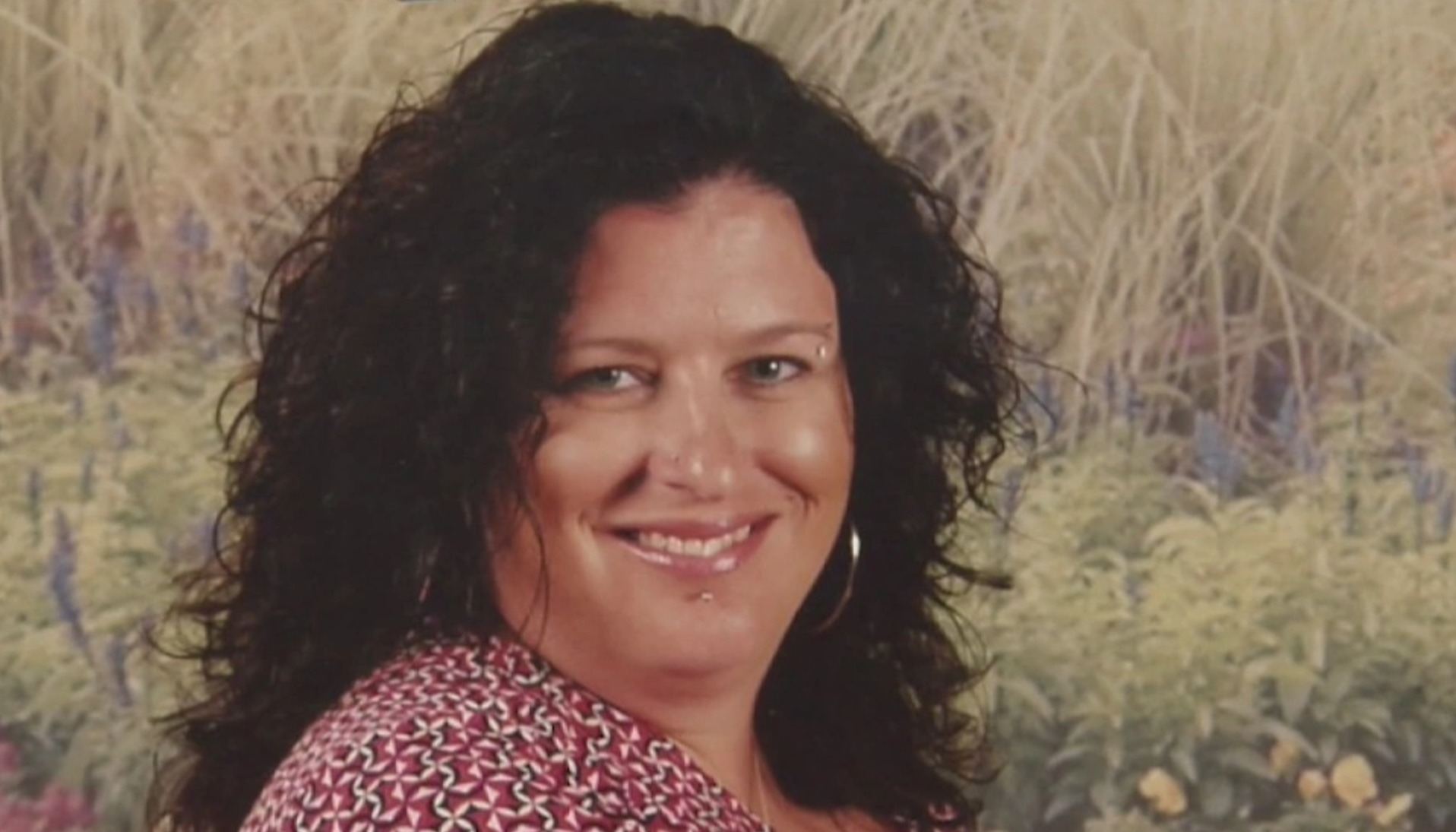
Margaret Sweet Killed at Her Family Home on Christmas Eve in Colorado Springs Colorado
The murder of Margaret “Mae” Sweet remains one of the painful unsolved cases connected to Colorado Springs, Colorado. Her death was especially devastating because it happened during the Christmas holiday, a time usually associated with family, warmth and togetherness. Instead, Margaret’s loved ones were left with shock, grief and questions that have lasted for years.
Margaret Sweet was 38 years old when she was killed. She was known to family and friends as Mae, and she was remembered as a woman with a strong personality, a caring spirit and a complicated life that investigators later had to examine in detail. Her death unfolded in the quiet hours between Christmas Eve and Christmas morning, turning a family home on Fosdick Circle into the center of a homicide investigation.
The case has remained troubling because of the circumstances surrounding the shooting. Reports connected to the investigation suggest that Margaret may have known the person who killed her, or at least may have been familiar enough with the person to be near them at close range. Over time, investigators and family members have looked at different parts of her life, including personal relationships, possible threats, online activity and events that may have happened shortly before her death.
Even with those details, no final answer has publicly closed the case. The murder of Margaret Sweet remains a story about a woman whose life was taken violently, a family that lost someone on one of the most emotional days of the year, and a community still left with unanswered questions.
Who Margaret Sweet Was
Margaret Sweet was born on April 22, 1970. By the time of her death, she was living in Colorado Springs and had close ties to her family. She was described as someone who could be independent, strong willed and loving. People who cared about her remembered her as a person with warmth and energy, someone whose absence left a permanent wound.
Margaret was also known by the name Mae. Some reports connected to the case mention that she used the alias Shelby Jamison, especially in connection with parts of her online life. That detail became important after her death because investigators reportedly looked into whether her online contacts, personal communications or alternate name could have been connected to what happened.
Like many people, Margaret had parts of her life that were known closely by family and friends, and other parts that were more private. After her murder, those private areas became part of the investigation. Her phone, computer, relationships and recent movements all became possible sources of information.
What remains clear is that Margaret was not simply a name in a cold case file. She was a daughter, sister, friend and loved one. Her murder did not only end her life. It changed the lives of the people who had expected to spend many more years with her.
The Night Before Christmas
The events surrounding Margaret Sweet’s death took place around December 24, 2008, and December 25, 2008. The timing made the case especially heartbreaking. While many families in Colorado Springs were preparing for Christmas morning, Margaret’s family was facing an unimaginable tragedy.
On Christmas Eve, Margaret had reportedly been involved in helping care for a family member who was recovering from surgery. Her father, Jim Egger, and Margaret were said to have been taking turns with caregiving responsibilities. That detail places Margaret in a family centered routine shortly before she was killed.
At some point that night, Margaret went toward her family’s home on the 1300 block of Fosdick Circle in Colorado Springs. Reports have stated that she stopped at a drug store before heading to the residence. The hours that followed remain central to the mystery.
Neighbors reportedly heard signs of trouble late that night. There were accounts of an argument and gunfire in the area before Margaret was found. Those sounds would later become part of the known timeline, but they did not lead to an immediate rescue or arrest. By the time her body was discovered, the person responsible had already left.
The Discovery on Fosdick Circle
Margaret Sweet was found on December 25, 2008, on the front porch of her family’s home in Colorado Springs. Her father returned to the residence early Christmas morning and made the terrible discovery. What should have been a holiday morning became the moment he found his daughter fatally wounded.
Margaret had suffered a gunshot wound. The front porch became the scene of a homicide investigation. The location suggested that whatever happened occurred close to the home, not in some distant or hidden place. She was not found in a remote area. She was found at a family residence in a neighborhood setting.
The fact that her body was found on the porch raises haunting questions. Was she arriving at the house when confronted? Was she speaking with someone she knew? Did she feel safe enough to approach the person? Did the argument heard by a neighbor involve Margaret and her killer? These questions have surrounded the case for years.
Investigators had to study the scene carefully, but the most important witness, Margaret herself, could no longer explain what happened. That left police to rely on physical evidence, neighborhood accounts, family information and any clues found in Margaret’s communications or recent activities.
A Killing That Did Not Appear Random
One of the most important parts of the case is the belief that Margaret’s killing may not have been random. Reports connected to law enforcement comments have suggested that investigators believed she may have known her killer or may have been familiar with the person. That possibility changes the emotional weight of the case.
A random attack is terrifying because of its unpredictability. A killing by someone known to the victim is terrifying in a different way because it means danger may have been close, personal and hidden within ordinary life. If Margaret did know the person who shot her, then the answer may lie in her relationships, conversations and conflicts before her death.
The close range nature of the shooting has also been discussed in reports about the case. A close range shooting often suggests some kind of direct encounter. It may indicate a confrontation, an argument or a moment where the victim and killer were near each other before the fatal shot was fired.
That does not prove a specific suspect, but it does guide the way people think about the case. Margaret may not have been targeted by a stranger passing through. She may have been killed by someone who had a reason to approach her and someone she had reason to recognize.
The Question of Personal Relationships
Margaret’s personal relationships have been one of the areas discussed in connection with the case. Friends and reports have mentioned that she had been dealing with fear, stress and a difficult relationship before her death. One account described her as trying to get away from an ex-boyfriend and having concerns about threats.
There was also mention of a restraining order involving a former boyfriend. That detail became part of the larger public discussion because it suggested that Margaret may have felt threatened before she was killed. However, public reporting does not show that anyone was convicted or formally held responsible for her murder.
In cases involving possible domestic conflict, investigators often look closely at patterns before the death. They may examine whether the victim had been threatened, whether there were prior police reports, whether friends were told about fear or abuse, and whether any person had a motive to harm the victim.
Margaret’s case remains unresolved, so it is important not to treat suspicion as proof. Still, the history of fear and relationship conflict is part of why the case has stayed so troubling. If Margaret had warned others that she felt in danger, then her death feels even more painful because it may have followed signs that something was wrong.
The Alias Shelby Jamison
Another unusual part of the case is Margaret’s reported use of the name Shelby Jamison. After her death, investigators reportedly learned that she had used this alias in certain parts of her life, including online activity. That discovery raised questions for both police and family.
An alias can mean many things. Some people use different names online for privacy. Others use them to separate parts of their social life. In an investigation, however, an alias can open a new path. It may lead to contacts the family did not know about, conversations hidden from everyday life or meetings that were not immediately obvious.
The name Shelby Jamison became important because investigators had to ask whether someone knew Margaret by that name and whether that connection played a role in the murder. Did she meet someone online who later confronted her? Was the alias connected to a relationship, a dispute or a secret part of her social circle? Those questions remain part of the larger mystery.
The discovery of the alias also showed how complex homicide investigations can become. Detectives are not only looking at the victim’s last known movements. They are also trying to understand every identity, contact and hidden connection that might explain why someone would commit murder.
The Reported Ballistic Connection
One of the more striking details reported in connection with Margaret Sweet’s case involves a possible ballistic link to an earlier shooting. Public reports have stated that the bullet recovered in Margaret’s case was connected through testing to the same gun used in a 2007 shooting tied to a drug related incident.
That detail makes the case even more complicated. If the same gun was used in both shootings, investigators would have to consider whether the same person was involved, whether the gun changed hands, or whether the weapon was circulating among people connected to criminal activity.
At the same time, reports also indicated that Margaret was not believed to be involved in illegal drug activity. That creates a confusing contrast. If the weapon had appeared in another violent incident, but Margaret herself was not tied to that world, then the gun connection may say more about the killer or the weapon’s history than about Margaret.
Ballistic evidence can be valuable, but it does not always identify the shooter by itself. A gun can be used by more than one person, sold, stolen, borrowed or passed around. Still, this reported connection remains one of the most notable clues because it suggests Margaret’s murder may be tied to a wider chain of violence.
The Convenience Store Lead
Another lead mentioned in reports involves a possible encounter at a convenience store shortly before Margaret was killed. Investigators reportedly wanted to identify people connected to a verbal argument or confrontation involving Margaret in the days before her death.
This kind of lead matters because even a brief public argument can become important in a murder investigation. A person who argued with the victim may be a suspect, a witness or someone who knows more about the events leading up to the crime. Police may want to determine whether the confrontation was meaningless, personal or connected to a larger dispute.
The convenience store detail also shows that investigators were not only focused on one theory. They appeared to be looking at multiple areas of Margaret’s life and recent movements. Her relationships, alias, online communications, possible threats and public encounters were all potential pieces of the puzzle.
In an unsolved case, even a small lead can matter years later. Someone who witnessed an argument may not have understood its importance at the time. Someone who knew the people involved may have stayed silent out of fear or loyalty. As years pass, circumstances change, and investigators often hope that people who once stayed quiet may eventually come forward.
A Family Forever Changed by Christmas Morning
The murder of Margaret Sweet left her family with grief made even heavier by the timing. Losing a loved one to violence is devastating on any day. Losing someone on Christmas morning adds another layer of pain because the holiday returns every year as a reminder of the loss.
For Margaret’s family, Christmas was no longer just a celebration. It became tied to the memory of discovering her body, the shock of her death and the long wait for justice. Reports about the family have described how deeply the case affected them and how difficult the holiday became after Margaret was killed.
Families of homicide victims often live in two timelines. There is the life before the murder and the life after it. Before, there are ordinary memories, family routines and expectations for the future. After, there are court hopes, police updates, anniversaries, unanswered calls and the constant ache of not knowing exactly why the person was taken.
Margaret’s family has had to carry that pain for years. Their grief is not only about her absence. It is also about the uncertainty. Without an arrest or conviction, there is no full public accounting of what happened, who did it and why.
Why the Case Remains Unsolved
Unsolved homicides often remain open because one or more critical pieces are missing. In Margaret Sweet’s case, there appear to be several possible paths, but no publicly known conclusion. Investigators had evidence, witness reports, relationship history and leads, yet the case has not been publicly resolved.
One challenge may be the timing. The shooting happened late at night, around a holiday, when people may have been indoors, distracted or reluctant to get involved. A neighbor reportedly heard an argument and gunfire, but that did not immediately lead to an arrest. By the time police were fully involved, the killer had time to disappear.
Another challenge may be the number of possible angles. Margaret’s personal life, reported alias, possible online contacts, relationship concerns, convenience store encounter and ballistic connection all point in different directions. Each could matter, or some could be unrelated. Investigators have to separate meaningful clues from coincidences.
Fear may also play a role. In many cold cases, someone knows more than they have said. They may be afraid of the person responsible, worried about implicating themselves or reluctant to revisit old events. Over time, loyalties change and fear can fade, which is why cold case detectives often continue asking for information years later.
The Lasting Need for Justice
Justice in Margaret Sweet’s case would mean more than naming a suspect. It would mean giving her family a fuller answer about what happened on December 24, 2008, and why she was left dead on a porch by Christmas morning. It would mean confirming the truth after years of uncertainty.
For the community, solving the case would also matter because an unsolved murder leaves a shadow. It means someone took a life and avoided public accountability. It means witnesses or people with knowledge may still be carrying information that could help bring closure.
Cold cases can be solved years or even decades later. Advances in forensic science, renewed detective work, fresh witness statements and changes in personal relationships can all move a case forward. Sometimes one person finally deciding to speak can change everything.
Margaret’s case deserves that kind of breakthrough. She deserves to be remembered not only for how she died, but also for the life she lived and the people who loved her. Her family deserves answers. The city of Colorado Springs deserves the truth. Most importantly, the person responsible for her death deserves to be held accountable.
Remembering Margaret Sweet
The murder of Margaret Sweet is a story of violence, mystery and lasting grief, but it is also a reminder that every cold case represents a real person. Margaret was not just a case number or a headline from December 2008. She was a woman with family, friendships, struggles, hopes and a life that should have continued.
Her death on Christmas Eve in Colorado Springs remains painful because so many questions are still unanswered. Who came to the house that night? Why did the confrontation happen? Was the killer someone she trusted? Did the alias Shelby Jamison matter? Was the earlier ballistic connection a major clue or only a trace of the weapon’s past? Did someone hear or see more than they have admitted?
Until those questions are answered, Margaret’s story remains unfinished. Her name continues to stand for a life cut short and a family still waiting for justice. The passage of time does not erase the need for truth. It only makes the call for answers stronger.
Discover more from City Towner
Subscribe to get the latest posts sent to your email.