
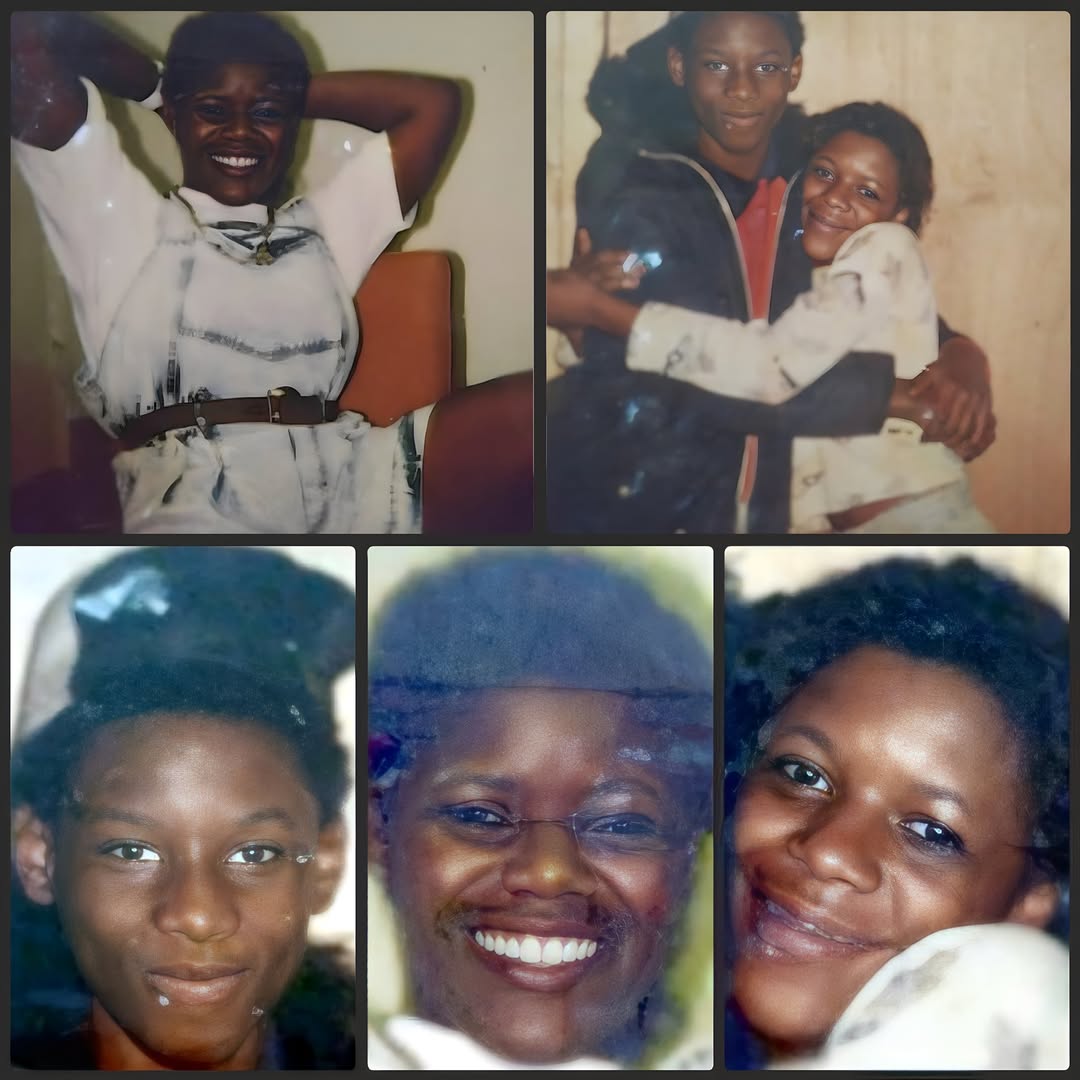
Phillips Siblings Goes Missing in Tulsa Oklahoma
The disappearance of the Phillips siblings from Tulsa, Oklahoma, remains one of the most unsettling family mysteries connected to the city’s cold case history. The case involves multiple relatives whose names have been tied to a disturbing series of disappearances across different years: Tomarion Denice “Cookie” Momodou, Paula Phillips, Donald Ray Phillips, Londa Renee Phillips, and Wanda Phillips. Most of the disappearances connected to the family occurred during the early 1990s, while Wanda Phillips is associated with a later disappearance in 2009.
The story is difficult to tell because the public record is incomplete. Some of the siblings have specific dates and clearer last known circumstances. Others are mentioned in connection with the family mystery but have fewer details available. That uneven record has made the case harder to understand, harder to investigate from the outside, and harder to explain with certainty. Still, the pattern is troubling. Several people connected to the same family circle vanished from Tulsa, and decades later, the central questions remain unanswered.
At the heart of the case is a family that appears to have suffered repeated losses without public resolution. These were not distant strangers whose names happened to appear near each other in missing person discussions. They were tied by family, community, and geography. Their disappearances have been discussed as part of a broader mystery involving possible connections, unanswered leads, and a painful lack of closure.
The known names deserve to be remembered individually: Tomarion Denice “Cookie” Momodou, Paula Phillips, Donald Ray Phillips, Londa Renee Phillips, and Wanda Phillips. Each was more than a missing person entry. Each had a life before the mystery. Each left behind questions that still matter.
A Family Mystery in Tulsa, Oklahoma
Tulsa, Oklahoma, is the center of the Phillips siblings case. The city is where the disappearances are tied, where the family connections appear to have been rooted, and where many of the unanswered questions remain. In the early 1990s, Tulsa was a growing city with strong neighborhood connections, but like many cities, it also had areas affected by crime, poverty, drugs, and mistrust of law enforcement. Missing person cases during that period did not always receive the widespread media coverage or digital documentation that might be expected today.
That matters because the Phillips siblings case depends heavily on scattered public information. The disappearances happened before social media, before online missing person databases became common, and before public records were as easily searchable as they are now. When someone vanished in that era, the case often depended on local reporting, police files, family persistence, and word of mouth. If media attention was limited at the time, the case could fade quickly from public view.
The Phillips family disappearances are especially haunting because they appear to involve more than one person from the same family. When one person disappears, investigators ask what happened to that individual. When multiple relatives disappear, the questions become much larger. Was there a shared threat? Was someone targeting the family? Did one disappearance lead to another? Did fear keep people from speaking openly? Were the missing relatives connected to the same people, places, or conflicts?
The public record does not provide definitive answers. What it does provide is a troubling sequence of losses that stretched from the early 1990s into later years, with Wanda Phillips connected to a disappearance in 2009.
Tomarion Denice “Cookie” Momodou
Tomarion Denice Momodou, also known as “Cookie,” is one of the names tied to the Phillips family disappearances. She is generally described as having disappeared sometime in 1991 from Tulsa, Oklahoma. At the time she vanished, she was 25 years old.
Tomarion’s case is one of the more difficult parts of the larger family mystery because very few details have been publicly shared about the exact circumstances of her disappearance. Some records use January 1, 1991 as a date of last contact, but that date may be approximate rather than a confirmed final sighting. Other summaries describe her disappearance more generally as having happened sometime in 1991.
She has been described as a Black woman with black hair and brown eyes. She stood about 5 feet 4 inches tall and weighed approximately 175 pounds. Her nickname, Cookie, is important because nicknames often carry the memory of how a person was known by family, friends, and neighbors. In cases with limited information, a nickname may help someone recognize the person even when the legal name does not immediately stand out.
The silence around Tomarion’s disappearance is troubling. There is no widely known public account explaining where she was last seen, who last saw her, what she was doing, or whether she was expected somewhere. There is no detailed timeline describing the final days or weeks before she disappeared. That lack of information makes it difficult to understand whether she vanished suddenly, whether warning signs existed, or whether her disappearance was immediately recognized as suspicious.
Even with those gaps, Tomarion’s case remains a key part of the Phillips family story. Her disappearance in 1991 came during the same general period when other members of the family vanished. Whether her case was directly connected to the others remains one of the most important unanswered questions.
Paula Phillips
Paula Phillips is one of the more clearly documented names in the Phillips siblings case. She disappeared from Tulsa on October 3, 1991. She was 26 years old at the time.
Public accounts state that Paula was last seen at about 7:00 p.m. in the 6300 block of West 11th Place in Tulsa. She reportedly left her apartment and said she was going to the store. She never returned. After that, she was not heard from again.
The details of Paula’s disappearance are chilling because they begin with something ordinary. A person leaving home to go to the store is a normal part of everyday life. It is not usually the kind of action that suggests danger. But in Paula’s case, that simple errand became the beginning of a mystery that has lasted for decades.
Several questions remain. Did Paula ever reach the store? Did she leave alone? Did she meet someone she knew? Did someone intercept her before she reached her destination? Was she planning to go somewhere else and only said she was going to the store? Did something happen inside or near her apartment complex before she left?
Paula’s disappearance became even more alarming because her brother, Donald Ray Phillips, reported her missing just days later and then disappeared himself. That sequence is one of the most troubling elements of the entire case. It suggests that Paula’s disappearance may have set off a chain of events that affected others in the family.
Donald Ray Phillips
Donald Ray Phillips was 20 years old when he disappeared from Tulsa in October 1991. His case is directly connected to Paula’s because he reportedly reported her missing on October 7, 1991, four days after she was last seen.
After Donald made the missing person report, investigators attempted to speak with him again. When they tried to locate him around October 10, 1991, he could not be found. Donald had disappeared. Like Paula, he has not been heard from since.
Donald’s disappearance raises some of the most serious questions in the Phillips siblings case. Why did he vanish shortly after reporting his sister missing? Did he know something about what happened to Paula? Was he afraid of someone? Did someone believe he had information that could lead investigators closer to the truth? Was his disappearance connected to his decision to involve police?
The timing is difficult to ignore. Donald was not simply another relative who disappeared years later. He vanished within days of reporting Paula missing. That makes his case deeply important to understanding the larger mystery.
It is possible that Donald had information about Paula’s final known movements, her relationships, or any threats she may have faced. If he disappeared before investigators could fully question him, then information that could have helped explain Paula’s case may have vanished with him.
Londa Renee Phillips
Londa Renee Phillips disappeared from Tulsa on November 22, 1992, a little more than a year after Paula and Donald vanished. She was 21 years old at the time.
Public accounts say Londa was reportedly going to a relative’s home but never arrived. Her boyfriend reported her missing. She has not been heard from since.
Londa’s disappearance extended the Phillips family mystery beyond the events of 1991. By the time she vanished in November 1992, the family had already been touched by multiple disappearances. Tomarion had disappeared sometime in 1991. Paula had vanished in October 1991. Donald had disappeared shortly afterward. Then Londa disappeared in 1992 while reportedly heading to visit a relative.
Her case shares a troubling similarity with Paula’s. Both women were believed to be going somewhere familiar or routine. Paula reportedly left for the store. Londa was reportedly headed to a relative’s home. Neither returned. Neither has been publicly accounted for.
That raises painful questions. Was Londa aware of danger surrounding her family? Did she believe she was safe because she was going to someone she knew? Did she encounter someone connected to the earlier disappearances? Was she targeted because of what she knew, who she was related to, or where she was going?
Londa’s disappearance added another layer of fear to an already disturbing pattern. It showed that the family’s losses were not limited to one brief period in October 1991. Whatever forces or circumstances were surrounding the family, the mystery continued into 1992.
Wanda Phillips And The 2009 Disappearance
Wanda Phillips is also associated with the broader Phillips family disappearance story, though her case is different in one major way. Unlike Tomarion, Paula, Donald, and Londa, whose disappearances are tied to the early 1990s, Wanda Phillips is connected to a disappearance in 2009.
The public details surrounding Wanda’s case appear more limited and less consistently documented than the cases of Paula, Donald, and Londa. Because of that, her disappearance should be discussed carefully. Her name is often included in the broader family mystery, but the available information does not provide the same clear public timeline as some of the other siblings.
The fact that Wanda’s disappearance is tied to 2009 makes the larger story even more unsettling. If her case is connected to the earlier disappearances, it would suggest that the family’s unresolved tragedy stretched across many years. If her case is separate, it remains another painful disappearance connected to a family already marked by loss.
Either way, Wanda’s name belongs in the conversation because she represents another missing piece of a family story that has never been fully explained in public. Her case also highlights one of the central problems in the Phillips siblings mystery: the available record is incomplete. Some names have dates, locations, and clearer last known circumstances. Others are surrounded by uncertainty.
That uncertainty does not make Wanda less important. It means her case deserves more attention, more clarity, and more careful documentation.
A Timeline Marked by Loss
The Phillips siblings case is best understood through the timeline of known and reported disappearances.
Tomarion Denice “Cookie” Momodou disappeared sometime in 1991 from Tulsa. Paula Phillips disappeared on October 3, 1991, after reportedly leaving her apartment in the 6300 block of West 11th Place to go to the store. Donald Ray Phillips reported Paula missing on October 7, 1991, then disappeared himself around October 1991 when investigators tried to follow up with him. Londa Renee Phillips disappeared on November 22, 1992, after reportedly heading to a relative’s home and never arriving. Wanda Phillips is connected to a later disappearance in 2009.
That timeline is devastating. It shows a family repeatedly touched by the unknown. It also raises the question of whether the disappearances were part of a connected chain or whether separate tragedies struck the same family across time.
Coincidence is possible in almost any investigation, but multiple disappearances within the same family are difficult to dismiss. The timing of Paula and Donald’s disappearances is especially suspicious because Donald vanished so soon after reporting Paula missing. Londa’s disappearance about a year later deepened the concern. Tomarion’s disappearance in 1991 added another unresolved name to the same family circle. Wanda’s later disappearance in 2009 extended the family’s pain into another era.
Why The Case Remains So Difficult
The Phillips siblings case remains difficult for several reasons. The first is the lack of complete public information. Paula’s case has a specific last known date, time, and location. Donald’s case has a strong link to Paula’s missing person report. Londa’s case includes a date and general circumstance. Tomarion’s case is much more vague. Wanda’s case is even less clearly documented in public discussions.
The second difficulty is the passage of time. The earliest disappearances happened more than 30 years ago. Witnesses may have moved away, died, or forgotten details. Records may be incomplete or hard to access. Original investigators may have retired. People who knew the family may be difficult to locate.
The third difficulty is fear. In cases where multiple family members disappear, people may be afraid to speak. They may suspect dangerous individuals were involved. They may worry about retaliation. They may have heard rumors but never felt safe enough to repeat them to authorities.
The fourth difficulty is public attention. The Phillips siblings case did not become a nationally recognized missing family case in the way some other cases have. Without sustained media attention, it is harder to generate tips, pressure, and renewed investigative energy.
Despite those challenges, cold cases can still move forward. A single old statement, a new witness, a recovered file, or a modern forensic comparison can change everything.
The Pain of Not Knowing
The emotional cost of the Phillips siblings case is almost impossible to measure. A family losing one loved one to disappearance is devastating. Losing several relatives to the unknown creates a deeper and more complicated grief.
For surviving family members, there may have been no clear place to put the pain. There may have been no funerals, no confirmed explanations, no final answers, and no public justice. Instead, there were names, dates, rumors, and unanswered questions.
Every year that passed likely made the silence heavier. Birthdays came and went. Holidays came and went. Children grew older. Family members aged. Yet the missing remained suspended in time.
The pain of disappearance is different from other forms of loss because it is unresolved. Families may feel grief, but also hope. They may fear the worst, but still wonder if their loved one could somehow be alive. They may want closure, but dread what closure might mean. That kind of emotional limbo can last for decades.
The Phillips family’s story is not just a mystery. It is a story of prolonged suffering, uncertainty, and unanswered loss.
Missing Black Families And Unequal Attention
The Phillips siblings case also raises broader issues about missing Black families and unequal media attention. Historically, missing Black people have often received less public coverage than missing white victims. Missing Black women, in particular, have frequently been overlooked or underreported.
This matters because attention can influence outcomes. Media coverage can bring tips. Tips can create leads. Leads can lead to searches, interviews, and evidence. When a case receives little attention, it can grow cold more quickly.
The Phillips siblings deserved visibility. Tomarion, Paula, Donald, Londa, and Wanda were not less important because they came from a family whose story did not dominate national headlines. Their disappearances should have sparked lasting concern, especially because multiple relatives were involved.
Keeping their names visible now is one way to challenge that silence. Their story deserves to be treated with seriousness, compassion, and urgency.
Questions That Still Need Answers
The unanswered questions in the Phillips siblings case remain heavy.
What happened to Tomarion Denice “Cookie” Momodou sometime in 1991? What was her exact last known date of contact? Who saw her last? Was her disappearance connected to the other family disappearances?
What happened to Paula Phillips after she reportedly left her apartment on October 3, 1991? Did she make it to the store? Did she meet someone? Was she taken? Did she leave willingly with someone she knew?
Why did Donald Ray Phillips disappear after reporting Paula missing? Did he know something important? Did someone silence him? Was he afraid after making the report?
What happened to Londa Renee Phillips on November 22, 1992? Did she leave for a relative’s home alone? Did she get into a vehicle? Did she encounter someone connected to the earlier disappearances?
What are the full circumstances of Wanda Phillips’s disappearance in 2009? Is her case connected to the earlier disappearances, or is it a separate tragedy within the same family?
Those questions remain unanswered, but unanswered does not mean unanswerable. Someone may still know what happened. Someone may still have information that has never been shared.
Remembering The Phillips Siblings
The Phillips siblings should be remembered by name. Tomarion Denice “Cookie” Momodou. Paula Phillips. Donald Ray Phillips. Londa Renee Phillips. Wanda Phillips.
Each name represents a person, a life, and a missing chapter. Their disappearances should not be reduced to a strange pattern or a cold case footnote. They were people with families, relationships, histories, and futures that were interrupted.
Remembering them matters because silence can erase missing people from public memory. When cases are not discussed, names fade. When names fade, tips become less likely. When tips stop, cases become harder to solve.
The Phillips siblings still deserve answers. Their family still deserves truth. Tulsa still carries the shadow of what happened, whether the story is widely known or not.
A Tulsa Cold Case Still Waiting For Truth
The disappearance of the Phillips siblings remains a haunting chapter in Tulsa, Oklahoma’s cold case history. Most of the disappearances occurred in the early 1990s, with Tomarion Denice “Cookie” Momodou, Paula Phillips, Donald Ray Phillips, and Londa Renee Phillips all vanishing during that period. Wanda Phillips is connected to a later disappearance in 2009, adding another painful layer to the family’s story.
The timeline is disturbing. The lack of public answers is painful. The possibility that some or all of the disappearances may be connected makes the case even more urgent.
Decades have passed, but time does not erase the need for truth. It does not erase the value of the missing. It does not erase the grief of those left behind.
The Phillips siblings vanished from Tulsa across different years, but their names should not vanish from memory. Until their cases are fully answered, their story remains unfinished, and the search for truth should continue.
Discover more from City Towner
Subscribe to get the latest posts sent to your email.



Why aren’t their parents or any other relatives mentioned? Has there been any DNA samples kept or tested? Back then people could take a hairbrush or something else into evidence that could be tested now.