Clarissa Castro Body Found in Garbage Bag in Chula Vista California
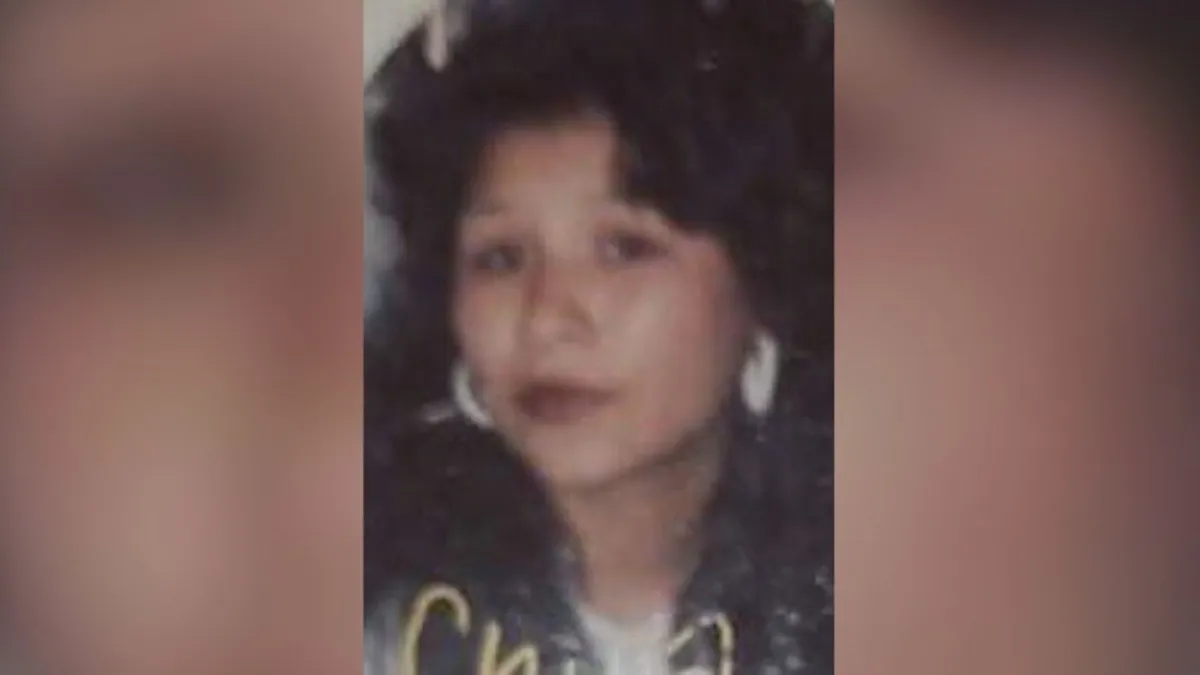
The disappearance and murder of Clarissa C. Castro is a heartbreaking cold case from Southern California that still carries the weight of unanswered questions. Clarissa was only 14 years old when she vanished on October 13, 1991, after a night that began around friends, family, and a gathering at home. What should have been an ordinary teenage weekend became the beginning of a painful mystery that stretched across years, leaving her loved ones searching for answers and investigators trying to piece together what happened to a young girl whose life was taken far too soon.
Clarissa’s case is often connected to Chula Vista, California, because her body was later discovered in the Otay Valley area of Chula Vista. The circumstances surrounding her disappearance began in the San Diego area, with accounts placing her last known moments around the Lomita or Spring Valley area. Her body was found nearly two months later, on December 08, 1991, but the identification process took years. That delay added another layer of pain to the case, because for a long time, Clarissa’s family did not have the full truth about where she had been found or what had happened after she disappeared.
Even decades later, the case remains unsolved. Clarissa’s killer has not been publicly identified, and investigators have continued to ask anyone with information to come forward. Her story is not just a cold case. It is the story of a teenage girl, a family left with grief, and a community still waiting for justice.
Who Was Clarissa C. Castro?
Clarissa C. Castro was 14 years old when she disappeared. She was a young teenager with her whole life ahead of her, living in the San Diego County area during the early 1990s. At that age, life is usually centered around family, school, friends, music, socializing, and figuring out who you are becoming. Clarissa should have had the chance to grow up, make plans, build dreams, and experience adulthood. Instead, her name became tied to a homicide investigation that has remained open for more than 30 years.
Family accounts describe a young girl who was last seen during a night involving a party or gathering. Like many teenagers, Clarissa was surrounded by other young people, movement in and out of the home, and the kind of social scene that can make it difficult to know exactly who was present, who left, and when events changed from normal to dangerous.
The sadness of her case is sharpened by her age. Clarissa was not an adult who had the full ability to judge every risk or control every situation around her. She was a child, even if she was at an age where teenagers often seek more independence. Whoever harmed her took advantage of vulnerability, confusion, access, or opportunity. That reality is one reason her case remains so troubling.
Clarissa’s family was left not only with the loss of a daughter, sister, and loved one, but also with the burden of uncertainty. For years, pieces of the case did not come together clearly. Her disappearance, the discovery of her body, and the later identification created a long path of grief instead of immediate closure.
The Night of October 13, 1991
The central date in Clarissa Castro’s case is October 13, 1991. On or around that date, Clarissa was last seen after a gathering at the home where she lived. Some accounts describe the location as the Lomita area of San Diego, while others connect the family’s home to the Spring Valley area. The case is also closely associated with Chula Vista because that is where her body was eventually found.
That night reportedly involved a party or social gathering. Clarissa was seen by family during the evening, and at some point she was believed to have left or been taken from the area. One of the most important details is that a sibling reportedly saw Clarissa getting into a vehicle. However, the exact meaning of that moment remains unclear. It has never been fully established, at least publicly, whether she entered the vehicle willingly, whether she felt pressured, whether she trusted the person inside, or whether she was being abducted.
That uncertainty sits at the center of the case. A vehicle can represent many possibilities. It may have been someone she knew. It may have been someone connected to the gathering. It may have been someone who saw an opportunity. It may have been a person who seemed harmless in the moment but became dangerous once Clarissa was away from the home.
The night ended without Clarissa returning safely. What began as a teenage gathering turned into a disappearance. For her family, the confusion must have been overwhelming. One moment she was present, part of the household and the activity around it. Then she was gone, and nobody could immediately explain where she had went or who had taken her.
The Search For Clarissa
When Clarissa disappeared, her family was left with fear and unanswered questions. In missing person cases involving teenagers, especially cases from past decades, early assumptions can sometimes affect how quickly a case is treated with urgency. Teenagers are sometimes wrongly assumed to have run away, especially if they disappeared after a party or after leaving a home voluntarily. That kind of assumption can cost valuable time.
Clarissa’s case appears to have suffered from confusion and delay. Her body was later found, but it was not immediately connected to her missing person report. That means there were two unresolved realities happening at the same time. A family was missing a teenage girl, and investigators had an unidentified body. For a period of time, those two parts of the same tragedy did not meet.
That delay is one of the most painful parts of the case. If the identification had been made earlier, investigators might have been able to focus more quickly on Clarissa’s final hours, who she was with, who attended the gathering, who owned or drove vehicles seen that night, and who may have had access to the place where she was later found. Time is critical in homicide cases. Memories are freshest early. Witnesses are easier to locate. Rumors and statements can be checked before they fade or change.
By the time Clarissa was identified, years had passed. That did not make justice impossible, but it made the road harder. Every year that passes in a homicide investigation can create more distance between the crime and the truth.
The Discovery in Otay Valley
On December 08, 1991, about two months after Clarissa disappeared, a body was discovered in the Otay Valley area of Chula Vista, California. The remains were badly decomposed, which complicated the investigation and made immediate identification difficult. The body was found near a chain link fence, a detail that has remained part of public summaries of the case.
The location of the discovery is important. Otay Valley is a large area with open land, roads, brush, and places where someone could attempt to hide a body. Dumping a victim in such an area suggests the person responsible may have wanted distance, concealment, or time. It also raises questions about whether the killer was familiar with Chula Vista or the Otay Valley area. People who dispose of bodies often choose places they know, places they believe are isolated, or places where they think discovery will be delayed.
Clarissa’s body being found in Chula Vista created a geographic separation between where she was last known to be and where she was later discovered. That separation matters because it suggests movement after she disappeared. Someone likely transported her, either alive or deceased, from the area where she was last seen to the Otay Valley area. That movement would have required time, access to a vehicle, and some level of confidence that the person would not be immediately caught.
The condition of the remains also left investigators with unanswered questions. In some cases, decomposition makes it harder to determine exactly how a person died. That appears to have been an issue in Clarissa’s case. Without a clear cause of death publicly established, investigators and the public are left with a broad understanding that she was murdered, but not a full explanation of the exact violence used against her.
The Delay in Identification
One of the most difficult parts of Clarissa Castro’s case is that her remains were not identified right away. Although her body was found on December 08, 1991, she was not immediately recognized as the missing 14-year-old girl who had vanished weeks earlier. It took years before the unidentified remains were connected to Clarissa through later investigative work and dental records.
That delay is devastating from a family perspective. Families of missing people live with constant uncertainty. They wonder whether their loved one is alive, whether they are hurt, whether they are being held somewhere, or whether the worst has happened. In Clarissa’s case, the answer existed, but it was not known right away. Her family endured a longer period of uncertainty than they should have had to carry.
From an investigative perspective, the delay also created challenges. When a body is unidentified, investigators may not know the victim’s social circle, recent movements, family conflicts, acquaintances, or last known location. Without a name, they are often investigating in the dark. Once Clarissa was identified, investigators could connect the remains to her life, her last night, and the people who may have seen her before she disappeared.
The identification helped answer one question. Clarissa had been found. But it opened other questions that remain unresolved. Who took her? Who killed her? Why was she left in Otay Valley? Was the person responsible someone she knew? Was there more than one person involved? Did someone at the party know what happened?
The Unanswered Questions
Clarissa Castro’s case is filled with unanswered questions. The first major question is who she left with on October 13, 1991. If she was seen getting into a vehicle, then someone may have known the driver, recognized the car, or heard information afterward. Even a small detail, such as the color of the vehicle, the direction it traveled, or a nickname connected to the driver, could matter.
Another question is whether Clarissa was targeted or whether she became a victim because of opportunity. If someone came to the party specifically looking for her or watching her, that would suggest planning. If someone offered her a ride and then harmed her, the crime may have developed after she entered the vehicle. Either version points investigators toward a different kind of suspect.
There is also the question of where she was killed. Was she harmed shortly after leaving the home? Was she taken somewhere else first? Was she alive when she reached Chula Vista? Did the killer use Otay Valley only as a dumping location, or was the murder committed there? These questions matter because each location would have created different evidence and different possible witnesses.
The time gap between October 13, 1991, and December 08, 1991, also creates uncertainty. It is not clear from public information exactly when Clarissa died. If she died soon after disappearing, then her body may have remained hidden for weeks before being found. If she survived for any period after leaving the home, that would raise even more questions about where she was kept and who had contact with her.
The greatest unanswered question is who has been keeping the truth. In many cold cases, someone knows more than they have said. They may have been afraid, loyal to the wrong person, involved in the crime, or unsure whether what they knew mattered. But after decades, silence becomes its own burden. Clarissa’s family deserves answers, and anyone with information still has the chance to help bring the truth forward.
Why the Case Remains Unsolved
Clarissa Castro’s murder remains unsolved for several reasons. The delay in identifying her body likely affected the early direction of the investigation. When investigators do not know who a victim is, they cannot immediately build a victimology profile, interview the right people, or reconstruct the final hours with precision. By the time Clarissa was connected to the remains, valuable time had already passed.
The case also came from an era before modern digital tools. In 1991, there were no smartphones tracking movements, no social media posts, no text messages, and far fewer surveillance cameras. Investigators had to rely heavily on witness statements, physical evidence, dental records, paper files, and traditional police work. If witnesses were reluctant or evidence was limited, the case could stall.
The social nature of the night may have also complicated things. A party can involve multiple people, shifting accounts, alcohol or other substances, noise, movement, and confusion. People may not remember exact times. Teenagers may avoid telling police everything they saw. Some may fear getting in trouble. Others may protect friends. If Clarissa left in a vehicle, the details may have been seen by someone who did not realize the importance of the moment until much later.
The condition of her body also limited what investigators could determine. When remains are badly decomposed, forensic details can be harder to recover. Cause of death, time of death, and certain forms of evidence may be difficult or impossible to establish. That can weaken a case, especially if prosecutors eventually need to prove what happened beyond a reasonable doubt.
Still, old cases can be solved. Advances in forensic science, renewed witness interviews, genealogy, DNA testing, improved database comparisons, and public attention have helped solve many cases once thought impossible. Clarissa’s case may still have evidence that can be reviewed with newer methods. It may still have witnesses who are alive and able to speak. It may still have a suspect whose name has been mentioned before but never proven.
The Pain Carried by Her Family
The murder of a child leaves a wound that never fully closes. Clarissa’s family lost her when she was only 14 years old, and they had to live through not only the disappearance but also the delayed identification and the lack of justice. That kind of grief is layered. First comes fear. Then comes confusion. Then comes loss. Then comes anger. And when no one is held accountable, all of those feelings remain unresolved.
For a sibling who last saw Clarissa alive, the memories of that night must be especially painful. Every detail can become something to replay. What did she say? Who was nearby? Did anything seem wrong? Could something have been noticed sooner? Families often blame themselves in missing person and homicide cases, even when the blame belongs only to the person who committed the crime.
Clarissa’s loved ones have had to watch time pass while the case stayed open. Birthdays passed without her. Holidays passed without her. Milestones she should have reached never came. She should have grown into adulthood. She should have had the chance to build a life. Instead, her family has been left to preserve her memory and continue hoping that someone will finally provide the missing piece.
Remembering Clarissa as a person, not just a victim, is important. She was a young girl before she became a case file. She had a name, a face, a family, and a future. Her story deserves attention because justice delayed does not mean justice should be abandoned.
Chula Vista And the Cold Case Connection
Chula Vista, California, is central to Clarissa’s case because her body was found in the Otay Valley area. That discovery made the city a major part of the homicide investigation, even though her disappearance began elsewhere in the San Diego area. The movement between locations suggests that the killer either knew the region or had enough familiarity to choose a dumping site.
Otay Valley is the kind of location that can make investigations difficult. Open land and less populated areas can delay discovery. Weather, animals, and time can affect evidence. A person leaving a body in such an area may believe they are creating distance from the original crime scene. They may also hope that the victim will never be identified.
But Clarissa was eventually identified. That matters. It means the attempt to erase her failed. Her name was restored. Her family learned that the unidentified body found in Chula Vista was their missing loved one. The case moved from unidentified remains to a named victim whose story could be told.
The Chula Vista connection also keeps the case in the public record. Cold case investigators continue to depend on community memory. Someone who lived in the area in 1991 may remember a vehicle, a conversation, a person acting strangely, or a rumor that circulated after Clarissa disappeared. Even a detail that seemed small at the time could carry meaning now.
A Case Still Waiting For Justice
The disappearance and murder of Clarissa C. Castro remains a painful unsolved case from 1991. She disappeared on October 13, 1991, after a gathering in the San Diego area, and her body was found on December 08, 1991, in the Otay Valley area of Chula Vista, California. She was only 14 years old.
Her story contains many of the elements that make cold cases so difficult: a teenage victim, a social gathering, a possible vehicle sighting, a body found away from the last known location, delayed identification, and limited public details about the exact cause of death. But none of those challenges erase the need for answers.
Clarissa’s case still matters because someone took her life and left her family with decades of grief. The person responsible may have believed time would protect them. They may have counted on fear, silence, confusion, or fading memory. But time can also change people. Someone who was afraid in 1991 may be ready to speak now. Someone who heard a confession may no longer feel loyalty. Someone who remembers one detail may finally understand its importance.
Clarissa Castro should be remembered not only for how she died, but for the life she was denied. She was a young girl at the beginning of her teenage years, with a future that was stolen before it had the chance to unfold. Her case remains open, and the hope for justice remains alive.
Until the truth is fully known, Clarissa C. Castro’s name stands as a reminder of a young life lost, a family still waiting, and a cold case that deserves answers.
Discover more from City Towner
Subscribe to get the latest posts sent to your email.