
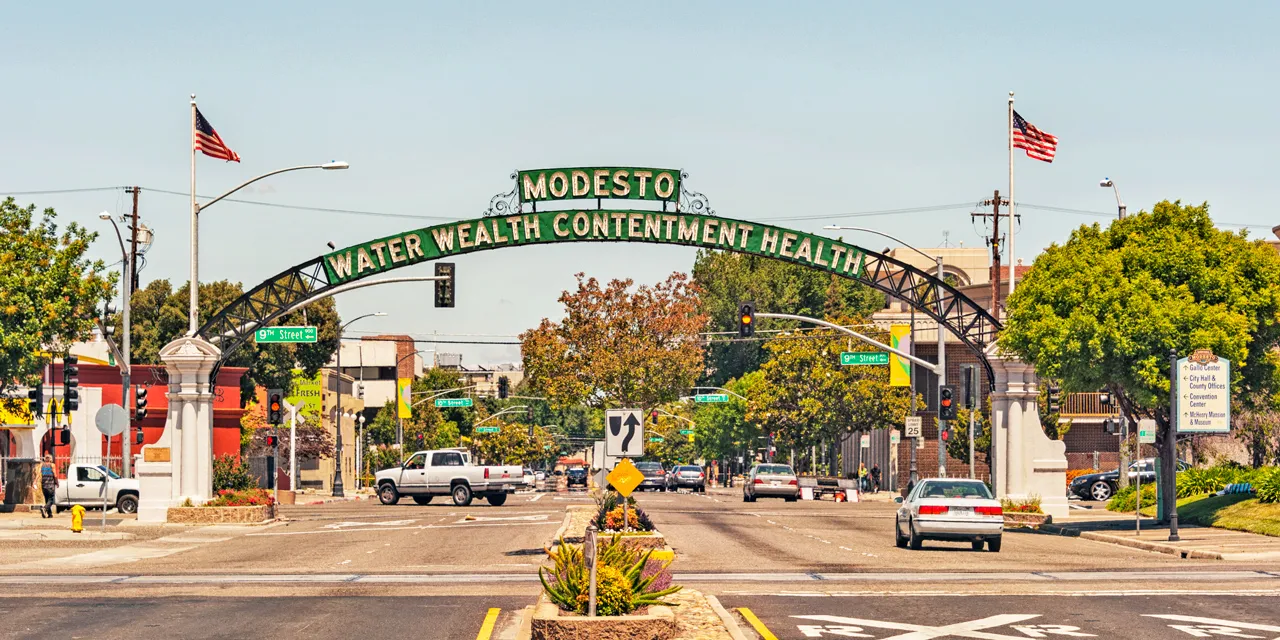
History of Modesto California
Modesto, California, sits in the heart of the Central Valley, a region known for agriculture, hard work, migration, community pride, and deep connections to the land. Located in Stanislaus County, Modesto grew from a small railroad town into one of the most important agricultural and cultural centers in inland California. Its history reflects many of the larger forces that shaped the American West, including Spanish and Mexican rule, the arrival of railroads, farming expansion, irrigation, immigration, suburban growth, and the rise of regional identity.
The name Modesto is often said to come from the Spanish word for “modest.” According to local tradition, the town was almost named after William C. Ralston, a powerful banker and one of the leading figures behind the Central Pacific Railroad. Ralston reportedly declined the honor, and the town was instead called Modesto because of his modesty. Whether the story has been embellished over time or not, the name became part of the city’s identity.
From its earliest years, Modesto was shaped by transportation and agriculture. The railroad gave the settlement a reason to exist, but water gave it a future. As irrigation transformed the surrounding land, Modesto became a center for crops, dairy, food processing, and farm-related business. Over time, the city also became known for its car culture, its connection to filmmaker George Lucas, and its place along the historic path of California’s inland growth.
The Land Before Modesto
Long before Modesto became a city, the region was home to Native peoples who lived across the rivers, grasslands, and oak woodlands of the Central Valley. The area that is now Stanislaus County was connected to Indigenous communities who relied on the natural environment for food, travel, trade, and seasonal settlement. Rivers such as the Tuolumne, Stanislaus, and San Joaquin supported fish, wildlife, plants, and movement through the valley.
The landscape was very different before large-scale farming changed it. Seasonal wetlands, grasslands, native plants, and riparian forests shaped the valley floor. Wildlife was abundant, and the rhythms of the land were tied to seasonal rains, dry summers, and river flows from the Sierra Nevada.
Spanish colonization changed California beginning in the late 1700s. Missions, military outposts, and land claims disrupted Native communities throughout the region. Later, under Mexican rule, large ranchos became central to land use in California. The Central Valley remained less densely settled by Europeans than the coastal areas for some time, but change accelerated after the United States took control of California in the mid 1800s.
The Gold Rush And Early Settlement
The California Gold Rush of 1849 transformed the entire state, even areas that were not major mining centers. Thousands of people moved through the Central Valley on their way to mining regions in the Sierra Nevada. Rivers and trails became important travel routes, and supply towns grew to serve miners, ranchers, and settlers.
Stanislaus County was officially created in the 1850s, and the region began to develop as ranching and farming land. Early settlers recognized that the valley soil was fertile, but water remained the key challenge. The Central Valley has long, hot, dry summers, and farming without irrigation was risky. Before major irrigation systems were built, the region supported dry farming, livestock grazing, and smaller agricultural operations.
As transportation improved, the land became more valuable. The Central Pacific Railroad and other rail lines opened the interior of California to faster movement of goods and people. This was the foundation for Modesto’s creation.
The Railroad Birth of Modesto
Modesto began as a railroad town in 1870, when the Central Pacific Railroad established a stop in the area. Like many towns in the American West, it grew because the railroad created a fixed point of commerce. Farmers, merchants, travelers, and workers needed a place to ship goods, receive supplies, and build homes.
The town was laid out along the rail line, and its early economy was tied closely to transportation. Businesses opened to serve railroad workers, settlers, and nearby farms. Stores, hotels, blacksmith shops, saloons, and small offices appeared as Modesto began to take shape.
The railroad did more than move people. It connected Modesto to broader markets. Agricultural products could be shipped out more efficiently, while manufactured goods and building materials could be brought in. This connection helped the young settlement grow from a stop on the map into a functioning town.
Modesto was incorporated as a city on August 6, 1884. By then, it had already become an important local center in Stanislaus County. The city’s future, however, depended on solving the problem that defined life in the Central Valley: water.
Irrigation And The Rise of Agriculture
The most important turning point in Modesto’s history was the development of irrigation. The fertile soil around the city could produce abundant crops, but only if farmers had dependable water. In the late 1800s, local leaders and farmers pushed for irrigation systems that could bring water from nearby rivers to the dry valley floor.
The creation of the Modesto Irrigation District in 1887 was a major milestone. It was one of the earliest irrigation districts in California and became central to the region’s growth. Along with the Turlock Irrigation District, it helped transform large areas of Stanislaus County into productive farmland.
Irrigation allowed farmers to grow more valuable and reliable crops. Orchards, vineyards, grains, nuts, vegetables, and feed crops expanded. Dairy farming also became increasingly important, supported by crops grown for animal feed. Over time, the Modesto area became known for almonds, walnuts, peaches, grapes, milk, poultry, and other agricultural products.
Water changed everything. It turned land that was difficult to farm into some of the most productive agricultural land in California. It attracted settlers, increased land values, supported businesses, and helped Modesto grow into a regional agricultural hub.
Growth in The Early 1900s
By the early 1900s, Modesto was growing steadily. Agriculture brought money into the city, and new industries developed around farming. Packing houses, canneries, grain warehouses, creameries, equipment suppliers, banks, and transportation companies became part of the local economy.
The city’s downtown grew as a commercial center. Streets filled with stores, theaters, churches, schools, civic buildings, and offices. Modesto became a place where farmers from surrounding areas came to shop, do business, attend events, and connect with local institutions.
Electricity, improved roads, and new forms of communication helped modernize the city. Automobiles became more common, changing how people moved through the region. The city also began developing public services, including police, fire protection, water systems, and schools.
During this period, Modesto reflected the character of many Central Valley towns: practical, agricultural, hardworking, and closely tied to family-owned farms. Its identity was not based on glamour or coastal wealth. It was built on production, land, labor, and local pride.
Immigration And Community Change
Modesto’s history cannot be separated from the history of migration. People came to the region from many backgrounds, including European immigrants, Mexican and Mexican American workers, Dust Bowl migrants, Portuguese families, Assyrian communities, Filipino workers, and later migrants from many parts of the world.
Agriculture required labor, and workers came in waves across different decades. Some arrived looking for seasonal work, while others settled permanently and built families, churches, businesses, and cultural organizations. These communities helped shape Modesto’s food, neighborhoods, religious life, schools, and workforce.
During the Great Depression of the 1930s, many families from Oklahoma, Arkansas, Texas, and other states moved west after drought and economic collapse devastated farming communities in the Great Plains and South. Some settled in the Central Valley, including the Modesto area, where agricultural labor offered a chance at survival even when conditions were difficult.
These migrations added new layers to Modesto’s identity. The city became a place where people worked hard to build stability, often under tough conditions. The story of Modesto is also the story of farmworkers, small business owners, laborers, families, and immigrants who helped keep the region moving.
World War II And Postwar Expansion
World War II brought major changes to California. The war economy increased demand for food, transportation, manufacturing, and labor. Agricultural production remained vital, and Central Valley communities helped feed the country and support wartime needs.
After the war, Modesto entered a period of growth. Like many California cities, it expanded as returning veterans, growing families, and new industries reshaped the community. Suburban neighborhoods spread outward from the older city center. Roads improved, shopping centers appeared, and car ownership became central to daily life.
The postwar years also brought population growth across California. People were drawn by jobs, weather, land, and opportunity. Modesto was not a coastal metropolis, but it offered more affordable living and access to regional employment. The city began to shift from a compact agricultural town into a larger urban center surrounded by farmland and growing suburbs.
Car Culture And American Graffiti
One of Modesto’s most famous cultural connections is its role in inspiring George Lucas’s 1973 film American Graffiti. Lucas was born in Modesto on May 14, 1944, and his memories of teenage life, cruising, music, and car culture helped shape the film. Although the movie was not filmed entirely in Modesto, its spirit is strongly tied to the city’s cruising scene.
In the 1950s and early 1960s, cruising was a major part of youth culture in Modesto. Teenagers and young adults drove along city streets, gathered at diners, listened to rock and roll, and showed off their cars. This culture reflected a broader American moment when automobiles symbolized freedom, status, rebellion, and social life.
Modesto has embraced this connection over time. The city celebrates its car culture through events, classic car gatherings, and references to American Graffiti. The slogan “Graffiti Summer” has become part of local identity, drawing visitors and residents into celebrations of vintage cars, music, and nostalgia.
This part of Modesto’s history gives the city a unique cultural marker. It links a Central Valley community to one of the most influential films about American youth culture.
Agriculture, Industry, And The Local Economy
Agriculture remains one of the most important parts of Modesto’s economy. Stanislaus County is one of California’s major agricultural counties, and Modesto has long served as a business and processing center for the surrounding farms.
The region is known for dairy production, almonds, walnuts, poultry, grapes, fruits, and other crops. Food processing companies, wineries, packing facilities, trucking firms, and agricultural suppliers have all played major roles in the local economy. The presence of the E. & J. Gallo Winery, founded in Modesto in 1933, is especially significant. It grew into one of the largest wine producers in the world and became one of the city’s most recognized business names.
Agriculture also shaped the city’s working class and middle class. Generations of residents found jobs in fields, dairies, warehouses, canneries, offices, and related industries. The economy has diversified over time, but farming and food production remain central to Modesto’s identity.
At the same time, dependence on agriculture has brought challenges. Water rights, drought, labor conditions, land use, housing costs, and environmental concerns have all affected the region. Modesto’s history is closely tied to the continuing debate over how California should manage water, growth, and farmland.
Downtown Modesto And Civic Life
Downtown Modesto has long been the historic heart of the city. It has served as the center for government, shopping, entertainment, restaurants, offices, and public gatherings. Over the decades, downtown has gone through periods of growth, decline, reinvestment, and revitalization.
Historic buildings, theaters, civic spaces, and public art help preserve the city’s older character. The Gallo Center for the Arts, opened in 2007, became an important cultural landmark, bringing concerts, plays, comedy, dance, and community events to the city. It strengthened downtown’s role as a place for arts and public life.
Modesto also has a history of community events, local festivals, farmers markets, parades, school activities, and neighborhood traditions. Civic organizations, churches, nonprofits, and service groups have played a major role in shaping the city’s public identity.
Like many mid-sized American cities, Modesto has faced challenges with downtown development, homelessness, crime, business turnover, and competition from suburban shopping areas. Still, downtown remains symbolic because it connects the modern city to its railroad-era roots.
Challenges of Growth
As Modesto grew, it faced many challenges common to Central Valley cities. Population growth increased demand for housing, schools, roads, water, jobs, and public services. Farmland at the edge of the city became pressure points for development. Subdivisions expanded into areas once dominated by orchards and open land.
The city also became part of the commuter belt for the San Francisco Bay Area. As Bay Area housing prices rose, many people moved inland to places like Modesto, Tracy, Manteca, and Stockton in search of more affordable homes. This brought growth but also traffic, longer commutes, and pressure on local infrastructure.
Economic inequality has also been an ongoing issue. While agriculture and business created wealth, many workers faced low wages, seasonal employment, and housing insecurity. The city has had to deal with poverty, public safety concerns, and uneven access to opportunity.
Environmental challenges are also part of Modesto’s story. Air quality in the Central Valley has long been affected by geography, vehicle emissions, agricultural activity, and industry. Water supply remains a major concern, especially during drought years. The same irrigation systems that helped build Modesto also connect the city to larger debates over rivers, reservoirs, farming, and conservation.
Modesto’s Place in California History
Modesto is sometimes overshadowed by California’s larger and more famous cities, but its history is deeply important to understanding the state. California is not only beaches, Hollywood, Silicon Valley, and San Francisco. It is also the Central Valley, where food is grown, communities are built around agriculture, and working families shape the backbone of the state.
Modesto represents inland California. It tells the story of railroads, irrigation, farming, migration, labor, suburbia, and cultural identity. It is a city where the past remains visible in the land, the economy, and the people.
Its history also shows how a place can be both modest and influential. Modesto helped feed California and the nation. It produced one of America’s most famous filmmakers. It became home to major agricultural businesses. It absorbed waves of migration and turned them into community life. It faced hardship and growth while maintaining a distinct Central Valley character.
A City Built on Land, Water, And Work
The history of Modesto, California, is ultimately a story of land, water, and work. The railroad gave the city its beginning. Irrigation gave it strength. Agriculture gave it identity. Migration gave it diversity. Growth gave it complexity.
From Native homelands to railroad settlement, from irrigation canals to dairy farms, from downtown storefronts to suburban neighborhoods, Modesto has changed many times. Yet its core identity remains tied to the Central Valley’s practical spirit. It is a place shaped by people who worked the land, built businesses, raised families, and adapted to changing times.
Today, Modesto continues to balance its agricultural roots with the realities of modern urban life. It remains a city of farms and freeways, history and growth, challenges and pride. Its story is not finished. Like the valley around it, Modesto continues to evolve while carrying the memory of everything that made it what it is.
Discover more from City Towner
Subscribe to get the latest posts sent to your email.